
Latest News
EU Parliament worried about ‘eruption of violence’ in Afghanistan

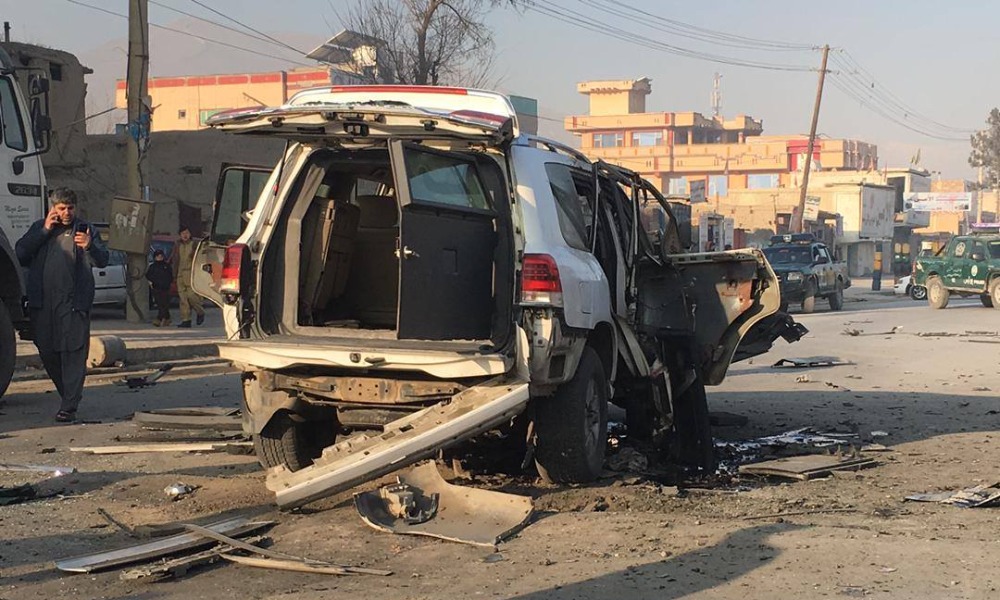
The EU has condemned targeted killings of journalists, human rights defenders, and civil society representatives and continuous violence in Afghanistan and called for an immediate ceasefire.
In a statement issued on Friday, the European Parliament called for a ceasefire and for parties to the conflict to continue the peace process in order to preserve the fundamental rights and principles in a future Afghanistan.
The statement comes days after three female media workers were assassinated in eastern Nangarhar province.
Chair of the Delegation for relations with Afghanistan Petras Austrevicius stated: “During the last months, we have seen an eruption of violence. It is very worrisome that this violence targets systematically those who contribute to an open and free society and who ensure the freedom of speech and media. Women are very often victims of these targeted attacks.”
“On behalf of the European Parliament, we condemn in the strongest terms the targeted assassinations of journalists, human rights defenders and civil society representatives,” Austrevicius said.
The European Parliament also called on the Afghan government to conduct thorough and transparent investigations and hold those responsible for the terrorist attacks accountable.
“The European Parliament urges all sides to stop the violence and put in place an immediate and permanent ceasefire. We call all sides to continue the peace negotiations,” he stated.
“The European Parliament insists that whatever the outcome of peace negotiations will be, a future constitution must guarantee the fundamental rights and principles of a free and open society, built upon the political, economic and social achievements of the people of Afghanistan,” the statement read.
Negotiations between the Afghan government and the Taliban have taken place since 12 September 2020 in Doha, the capital of Qatar to try to reach a peace agreement.
The EU stated that since then, the situation for civil society in the country has been rapidly deteriorating with at least fourteen targeted killings of journalists and human rights defenders by unidentified armed individuals or by explosive devices.


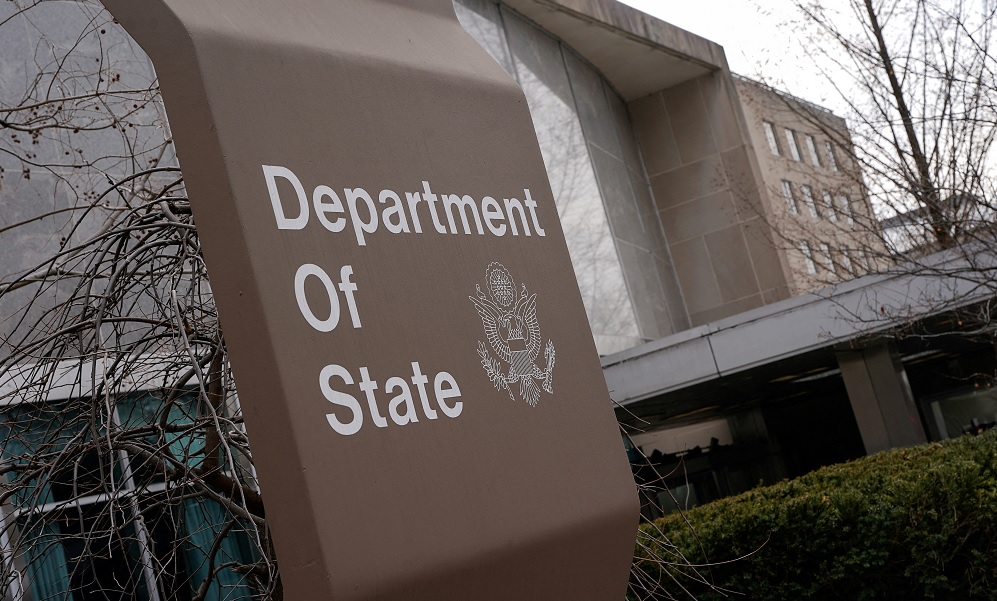
The U.S. State Department has rejected a $25 million funding request from the American University of Afghanistan for the next two years, The New York Times reported on Thursday.
The university has about 980 students, around three-quarters of them women, with about 90 percent based in Afghanistan. All students currently study online.
David Edwards, the university’s interim president, said the funding decision threatens one of the few remaining opportunities for Afghan women to pursue higher education from inside Afghanistan.
“We are the only venue for education for a whole generation of Afghans,” Edwards said.
The State Department said it would stop funding the university at the end of this year, citing what it described as a history of “repeated lack of accountability for millions of American taxpayer dollars.”
The university has been told that, as a condition for remaining open, it must partner with the American University of Central Asia in Kyrgyzstan. Edwards said he would work with the university, although its Kyrgyzstan campus does not offer remote instruction.
The State Department said the U.S. government remained committed to supporting education for Afghan women and girls through remote-learning programs and was working to identify organizations that could administer those programs.
The university faced allegations of financial mismanagement in 2019. Edwards said those issues had been addressed and that its audits have been clean since 2021.
Established in Kabul in 2006, the American University of Afghanistan received more than $225 million from the U.S. Agency for International Development since its founding.
Following the Islamic Emirate takeover in 2021, the university evacuated its foreign staff, while some students left Afghanistan and others remained in the country. Its Kabul campus is now used by the Afghan International Islamic University, according to the report.
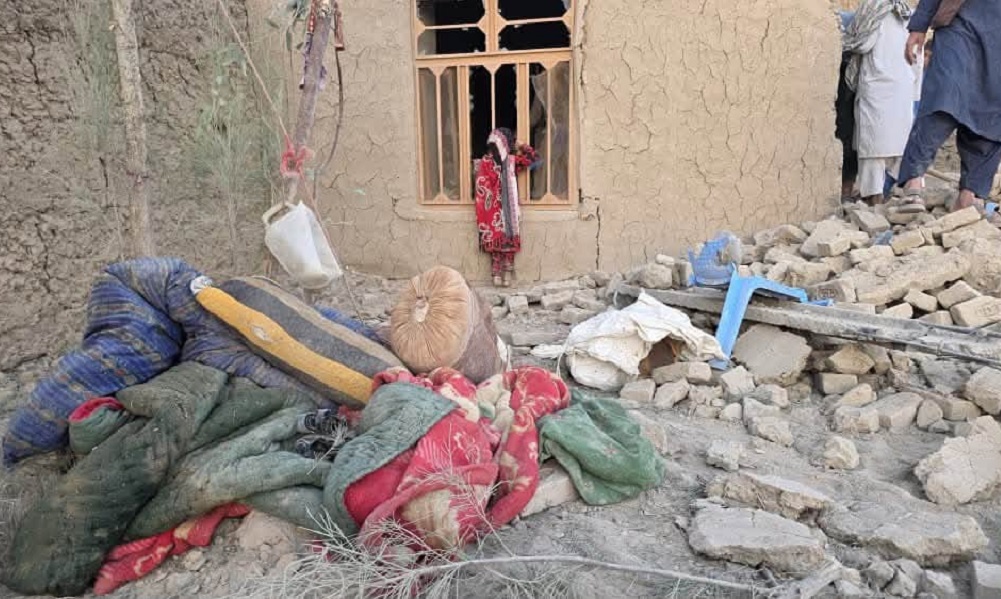
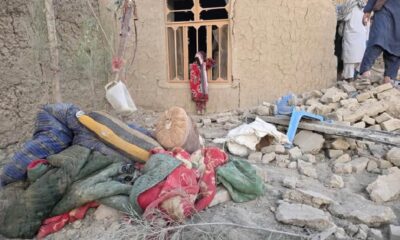
The European Union has condemns civilian deaths following Pakistani airstrikes in Afghanistan’s Kunar and Helmand provinces, calling on both sides to exercise restraint and engage in dialogue.
In a statement issued on Friday, the EU spokesperson said the UN Assistance Mission in Afghanistan (UNAMA) had confirmed that at least 10 civilians were killed, most of them children, while nine others were injured.
The EU urged both sides to show restraint and resolve their differences through dialogue.
The statement also called on the Islamic Emirate to take action against militant groups. The IEA has previously denied the presence of militant groups in Afghanistan.
The EU stressed that all parties must respect international law, including international humanitarian law, protect civilians and civilian infrastructure, and take all feasible measures to prevent civilian casualties.
Latest News
Russia expects to ease Afghanistan-Pakistan tensions at Moscow Format meeting
Kabulov added that Russia is ready to mediate between Kabul and Islamabad if both sides request its assistance, noting that Russian Foreign Minister Sergei Lavrov has previously expressed Moscow’s readiness to help resolve the dispute.
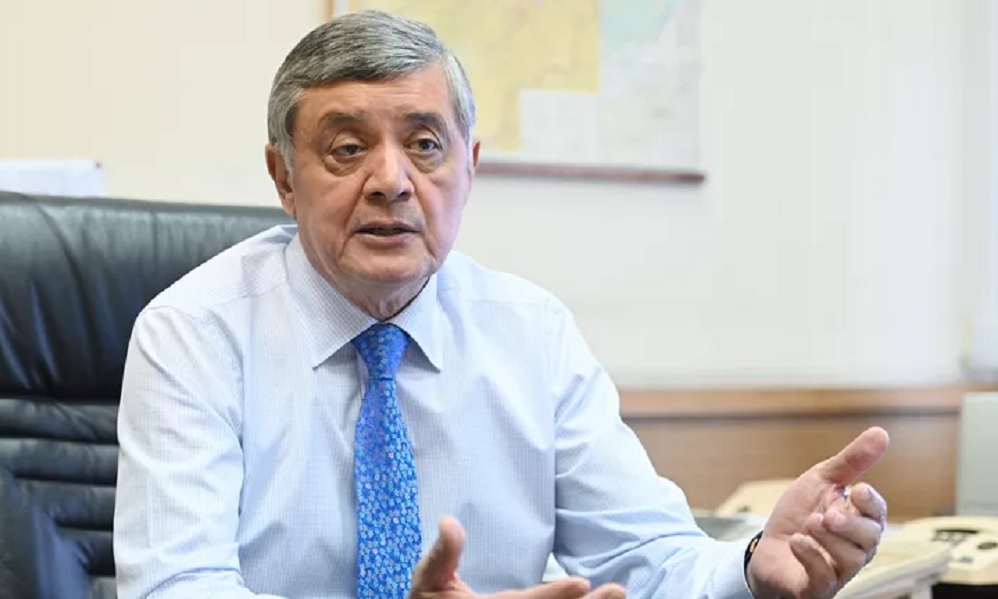
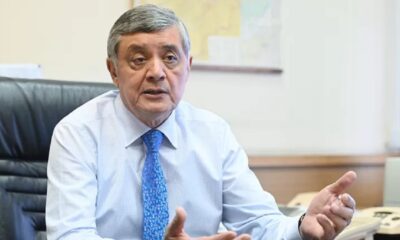
The latest escalation between Afghanistan and Pakistan will be urgently discussed at the upcoming meeting of the Moscow Format Consultations on Afghanistan, scheduled for October 5, Zamir Kabulov, Russia’s special presidential representative for Afghanistan, told Izvestia.
Kabulov said Russia is prepared to use the Moscow Format as a platform to help the two sides reach a compromise.
“Of course, this issue will certainly be raised, and we will be happy to use the Moscow platform to bring both conflicting parties to some reasonable compromises,” he said.
He added that Russia is ready to mediate between Kabul and Islamabad if both sides request its assistance, noting that Russian Foreign Minister Sergei Lavrov has previously expressed Moscow’s readiness to help resolve the dispute.
High-ranking officials from both countries are expected to attend the October 5 meeting. Afghanistan’s Foreign Minister Amir Khan Muttaqi will participate, while Pakistan will send its special representative for Afghanistan, along with its ambassador to Kabul and other senior foreign-policy officials, Kabulov said.
The Moscow Format, established in 2016, brings together regional countries to discuss Afghanistan’s security and political situation. Its participating countries include Russia, Afghanistan, China, Pakistan, India, Iran, Kazakhstan, Kyrgyzstan, Tajikistan, Turkmenistan and Uzbekistan. Belarus and Egypt have also been invited as guests to the upcoming meeting.
The latest tensions come amid continued disagreements between Kabul and Islamabad over security and cross-Durand Line militancy. Pakistan has repeatedly accused the Afghan authorities of allowing Tehrik-e-Taliban Pakistan (TTP), which Islamabad blames for attacks inside Pakistan, to operate from Afghan territory.
The Afghan authorities have denied supporting the TTP and have maintained that Pakistan’s internal security problems should not be blamed on Afghanistan.
Kabulov said the dispute remains difficult to resolve because both sides continue to maintain their positions.
The Moscow Format meeting comes after Pakistan carried out fresh airstrikes in Afghanistan on October 1. Afghan authorities said the strikes in Kunar and Helmand provinces killed nine civilians, including women and children, and wounded 11 others.
Afghanistan condemned the strikes as an act of aggression.


US rejects American University of Afghanistan’s funding request

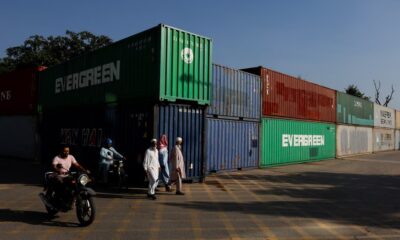
Cargo stacks up as Pakistan seizes containers to block capital routes

EU deplores civilian deaths following Helmand, Kunar airstrikes

Russia expects to ease Afghanistan-Pakistan tensions at Moscow Format meeting

DABS chief meets Tajikistan’s energy minister to discuss cooperation

Saudi energy group signs major Afghanistan deals covering gas exploration and pipeline plans

Khalilzad: Afghanistan ready to attract major investment

El Niño likely to intensify, may become strongest ever recorded, WMO says

Khyber Chamber demands reopening of Torkham crossing

Messi returns to Inter Miami after Argentina retirement

Tahawol: Pakistan’s airstrikes on civilians in Afghanistan discussed

Tahawol: Improvement in Afghanistan-China relations discussed

Saar: Expanding ties with regional and global countries discussed

Tahawol: Absence of Afghanistan’s envoy at UNGA discussed

Saar: Assessment of war between Afghanistan and US discussed
-
 Sport4 days ago
Afghanistan vs India Asian Games quarter-final abandoned without a toss
-
 Regional4 days ago
Floods, landslides kill 56 in India and 14 in Nepal
-

 World4 days ago
Trump says men arrested at UK air base used by US planned ‘big damage’
-
 Regional3 days ago
US, Iran separately talk with mediators in latest bid to end war
-
 World4 days ago
Serbia’s President Vucic resigns ahead of October parliamentary elections
-
 Business4 days ago
Afghanistan raises import tariffs on several goods to support domestic industry
-
 Latest News4 days ago
Khalilzad calls for end to Pakistan’s ‘double game’, urges new chapter with Afghanistan
-
 Latest News5 days ago
Afghanistan central bank and ACGF sign cooperation agreement