
Latest News
Germany apologizes for colonial-era genocide in Namibia

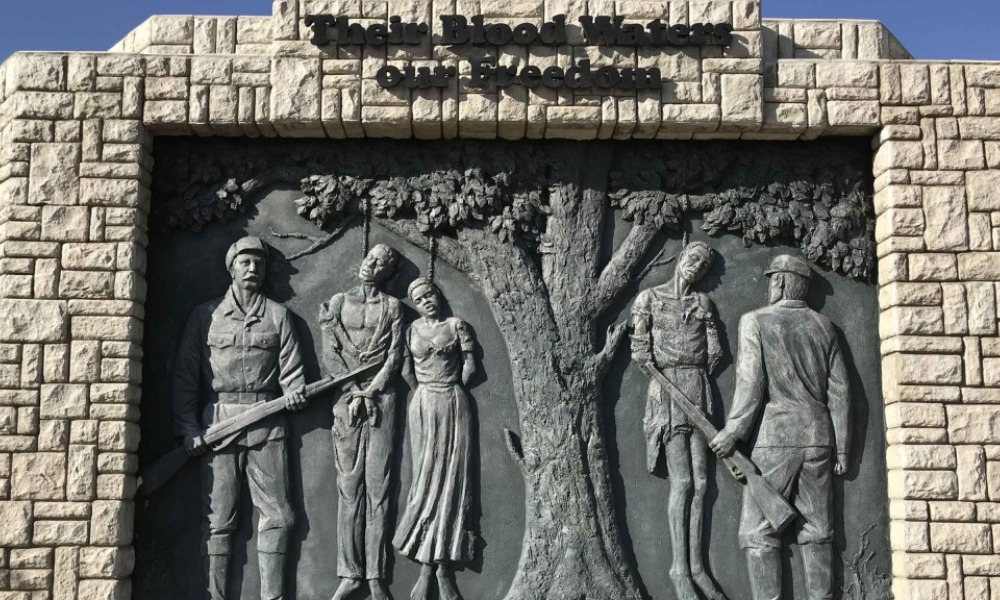
Germany apologized on Friday for its role in the slaughter of Herero and Nama tribespeople in Namibia more than a century ago and officially described the massacre as genocide for the first time, as it agreed to fund projects worth over a billion euros.
Namibia’s President Hage Geingob welcomed the “historic” move, but Herero paramount chief Vekuii Rukoro dismissed a deal agreed by the two governments as “an insult” because it did not include payment of reparations.
Instead, Germany will fund 1.1 billion euros ($1.3 billion) of reconstruction and development projects in Namibia, which German Foreign Minister Heiko Maas said would directly benefit the genocide-affected communities.
“That’s a black cat in the bag instead of reparations for a crime against humanity,” Rukoro told Reuters.
“No self-respecting African will accept such an insult in this day and age from a so-called civilized European nation.”
German soldiers killed some 65,000 Herero and 10,000 Nama people in a 1904-1908 campaign after a revolt against land seizures by colonists in what historians and the United Nations have long called the first genocide of the 20th century.
While Germany has previously acknowledged “moral responsibility” for the killings, it had avoided making an official apology for the massacres to avoid compensation claims.
In a statement announcing an agreement with Namibia following more than five years of negotiations, Maas said the events of the colonial period should be named “without sparing or glossing over them”.
“We will now also officially call these events what they were from today’s perspective: a genocide,” he added.
“In light of Germany’s historical and moral responsibility, we will ask Namibia and the descendants of the victims for forgiveness.”
Namibian media reported on Thursday that the funds promised by Germany would support infrastructure, healthcare, and training programs over 30 years.
Namibia’s president Geingob welcomed the move as a “step in the right direction”, his spokesman told Reuters.
“The apology on the part of Germany and acceptance there was a genocide is in itself historic and speaks to the moral responsibility Germany has towards Namibia and the communities affected by the first genocide of the 20th century,” Alfredo Hengari told Reuters.
Germany, which lost all its colonial territories after World War One, was the third biggest colonial power after Britain and France. However, its colonial past was ignored for decades while historians and politicians focused more on the legacy of Nazi crimes, including the Holocaust.
Sima Luipert, 52, who identified herself as of Namibia’s Nama people, said Germany should not have directed its apology to the Namibian state, which did not exist at the time of the genocide and was given no mandate to speak to Germany on behalf of traditional authorities.
“Germany must come to the Nama people, and to the Herero people, and to ask for forgiveness,” she said. “It is up to us to decide if that apology is genuine or not.
“This is not about money, it is about the restoration of human dignity.”







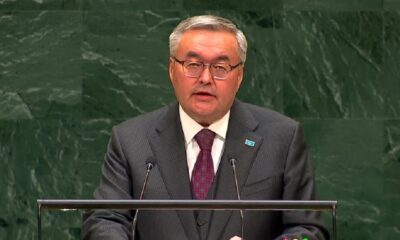




Kazakhstan’s Foreign Minister Mukhtar Tileuberdi has called for pragmatic and coordinated international engagement with Afghanistan, saying the country’s long-term stability is closely linked to the security and sustainable development of Central Asia.
Speaking during the general debate of the 81st session of the United Nations General Assembly in New York on Friday, Tileuberdi said humanitarian assistance to Afghanistan remains essential but alone cannot break the cycle of poverty, displacement and dependency.
He said Kazakhstan supports a “pragmatic, coordinated and step-by-step” approach to international engagement with Afghanistan, with the United Nations playing a central role.
Tileuberdi also said Kazakhstan is working with the UN to operationalize the United Nations Regional Centre for the Sustainable Development Goals for Central Asia and Afghanistan in Almaty.
He said the success of the centre should be measured by the results and assistance it delivers to the region.


Saar: Concerns over Pakistan’s political crisis discussed

Afghanistan Champions League: Omar Zawak Herat beat Toofan Herat 1-0

Blast in Pakistan’s Dera Ismail Khan kills 11, injures 30

Ariana Afghan Airlines increases Kabul-Delhi cargo flights

Khalilzad questions Pakistan’s commitment to Afghan welfare

Saudi energy group signs major Afghanistan deals covering gas exploration and pipeline plans

Trump floats idea of renaming Atlantic or Pacific Ocean

US hits Egyptian bank branches with Iran sanctions as war marks six months

Nepal flood rescue mission enters critical phase as thousands remain missing

Iranian clubs to face Gulf opponents at neutral venues in Asian Champions League Elite
Saar: Concerns over Pakistan’s political crisis discussed

Exclusive interview with Abdul Latif Mansoor, Minister of MRRD

Tawsia: Overview of Afghanistan’s iron mines

Tahawol: Discussion on fresh Pakistani airstrikes on Afghanistan

Saar: Calls for international support for Afghanistan discussed
-

 World5 days ago
CNN, MS NOW and Politico sue Trump, challenging White House ban
-

 Latest News3 days ago
Ariana Afghan Airlines ranks seventh among 45 Central Asian airlines
-

 Latest News4 days ago
UN reiterates call for respect for international law after Kunar airstrikes
-

 Regional3 days ago
US and Iran hold first talks since June after Trump’s ‘annihilation’ threat
-

 Latest News3 days ago
Silk Road highway in Wakhan corridor now reaches the China border
-

 Latest News4 days ago
Afghan Official: Pakistan’s airstrikes will not go unanswered
-

 Sport4 days ago
Afghan boxing referee heads to China for international festival
-

 Regional4 days ago
G7 foreign ministers call on Iran to stop arming Houthis