
Business
Hairatan customs officials record increase in export volumes


Balkh Customs officials said Sunday that export volumes from Afghanistan to central Asian countries via Hairatan port have increased considerably in recent weeks.
According to officials, hundreds of cargo trucks loaded with pine nuts, raisins, almonds, and potatoes have crossed the border in the last solar month.
Officials said in order to handle the increase in vehicles they have extended their working hours from 8 to 13 hours a day and that they are processing 600 vehicles a day.
“The export level is excellent. We sent 937 vehicles loaded with pine nuts, almonds, raisins, and potatoes recently. Efforts are underway to increase the export volume,” said Mawalawi Mohammad Matin, head of Balkh Custom’s Office.
Members of the Balkh Chamber of Commerce and Investment meanwhile said the Islamic Emirate of Afghanistan has assisted traders in the province and that they ironed out problems with some neighboring countries.
“Exports have increased against the past,” said Asadullah Asadi, acting head of the chamber.
“We had some problems with neighbors that have now been solved,” he said.
Balkh Chamber of Industries and Mines said that some factories have resumed operations in the province in recent weeks.
“We had almost 500 factories in Balkh, most of them stopped, but now some factories resumed their activities; we are optimistic for the future,” said Sayed Ismail Hussaini, a member of the chamber.


Business
IMF forecasts 1.3 percent regional economic contraction in 2026
However, it said the region’s economies could recover in 2027 if the conflict eases in early 2027 and regional trade gradually returns to normal.
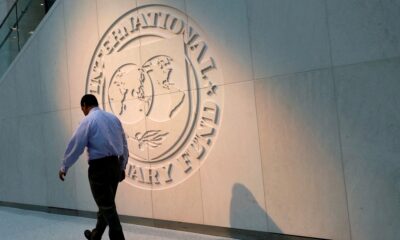
The International Monetary Fund (IMF) has projected a 1.3 percent economic contraction across the Middle East, North Africa, Afghanistan and Pakistan in 2026, citing the economic impact of the U.S.-Israeli conflict with Iran.
In its Regional Economic Outlook report released Thursday in Dubai, the United Arab Emirates, the IMF revised its forecast downward by about three percentage points compared with its April projection.
The fund said disruptions to energy production, shipping, trade and tourism caused by the conflict are expected to weigh on regional economic activity.
According to the report, all Gulf Cooperation Council member states, except Oman, are projected to experience economic contractions this year. Bahrain, Kuwait and Qatar are expected to record double-digit declines in economic output.
The IMF warned that the regional economic outlook remains highly uncertain. However, it said the region’s economies could recover in 2027 if the conflict eases in early 2027 and regional trade gradually returns to normal.
Business
Pakistan exporters suffer billions in losses as Afghanistan trade halt continues
Pakistan’s pharmaceutical sector is among the industries affected by the trade suspension, with Afghanistan serving as one of its major export destinations.
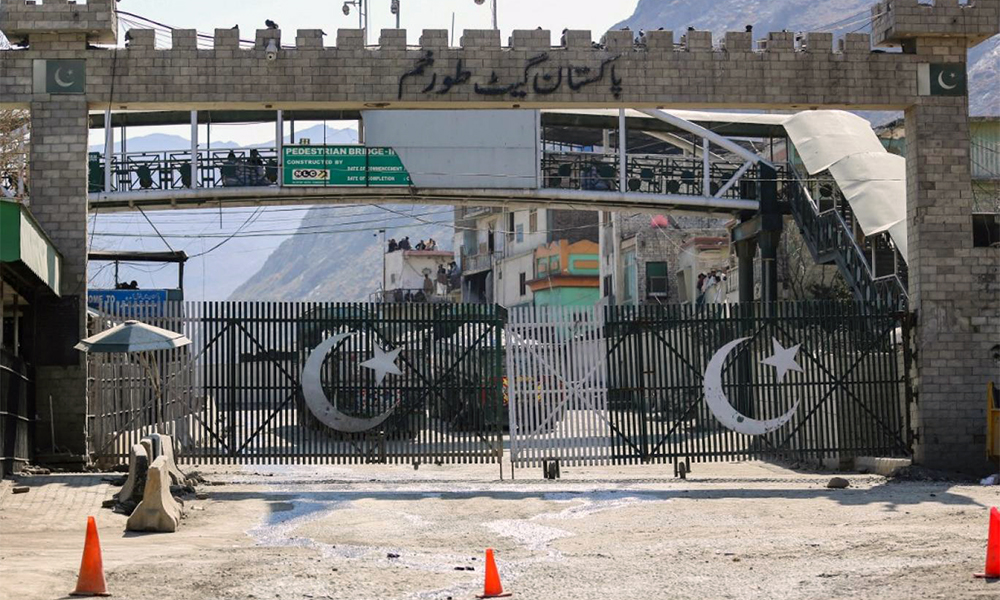
Pakistani exporters are facing mounting financial losses, stranded shipments and sharply rising transportation costs as the suspension of trade with Afghanistan continues to disrupt access to key regional markets.
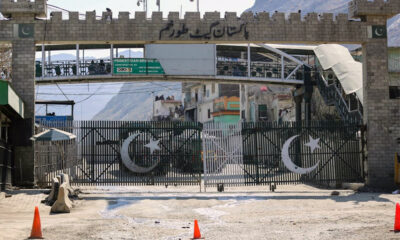
Trade between the two countries was halted in October 2025 following deadly clashes along their shared crossing. According to business groups cited in a report by CNA, more than $2.5 billion in trade has been lost since the suspension began.
Islamabad has accused militants based in Afghanistan of carrying out attacks inside Pakistan, allegations rejected by the Islamic Emirate of Afghanistan (IEA).
The prolonged disruption has affected pharmaceutical manufacturers, agricultural exporters, transport companies and businesses that depend on Afghanistan as a gateway to Central Asian markets.
Pharmaceutical Industry Faces Mounting Losses
Pakistan’s pharmaceutical sector is among the industries affected by the trade suspension, with Afghanistan serving as one of its major export destinations.
Junaid Altaf, chief executive of Fedro Pharmaceuticals in Peshawar, told CNA that approximately 70 percent of the medicines packaged at his factory were intended for Afghanistan and Central Asia.
He said the border closure left the company with pending orders, unfinished production and packaging materials that could no longer be used in their intended markets.
Packaging prepared in Persian and other region-specific languages became redundant, adding to the company’s financial losses.
Fedro is now attempting to expand domestic sales to compensate for the decline in exports.
Food and agricultural exporters have also reported substantial setbacks.
Manzoor Ellahi, chief executive and managing partner of MM Ellahi Traders, which exports rice, meat, citrus fruits and potatoes, said Afghanistan and Central Asia previously accounted for 80 percent of his company’s revenue. That share has since fallen to around five percent.
Alternative Routes Drive Up Shipping Costs
With trade through major crossings disrupted, Pakistani exporters have increasingly explored alternative routes to reach Central Asian markets, including transportation through Iran.
However, these alternatives involve longer transit times, higher costs and additional logistical challenges.
Muhammad Naeem, a Pakistani exporter, told CNA that shipments previously travelled from Pakistan through the Torkham crossing to Uzbekistan in approximately one week, costing between $2,000 and $3,000.
Transporting goods through Iran now takes nearly six weeks and costs an estimated $10,000 to $13,000, he said.
The longer journeys also increase the risk of perishable goods spoiling or products reaching their destinations after their expiration dates, potentially forcing exporters to discard entire shipments.
The disruption has also affected transport infrastructure and related businesses. A truck depot in Peshawar that previously handled 40 to 50 trucks a day transporting goods to Afghanistan has reportedly seen operations grind to a halt.
Security Disputes Continue to Block Trade
Pakistan has maintained that trade will not resume unless the IEA administration takes action against militants Islamabad accuses of operating from Afghan territory.
The Islamic Emirate denies the allegations, while continuing tensions have complicated efforts to restore normal commercial relations between the neighbouring countries.
Analysts warn that prolonged trade restrictions could further weaken Pakistan’s export performance at a time when the country is seeking to strengthen its foreign exchange reserves under an International Monetary Fund programme.
Vaqar Ahmed, research director at the international economic research network Partnership for Economic Policy, cautioned against allowing political disputes to undermine commercial activity.
He also highlighted concerns about Pakistan’s export performance and the need to strengthen its foreign exchange position.
Business Groups Call for Dialogue
Pakistani business groups have urged Islamabad and Kabul to resolve their differences through negotiations and restore trade.
The continuing suspension has affected not only exporters but also workers, customs clearance agents, transport operators and other businesses linked to regional commerce.
For Afghanistan, the disruption has further complicated access to established trade and transit routes through Pakistan. For Pakistani exporters, it has meant losing access to an important neighbouring market while facing higher costs to reach destinations farther into Central Asia.
Despite calls from business representatives for a negotiated solution, there are few clear signs that the trade impasse will end soon.
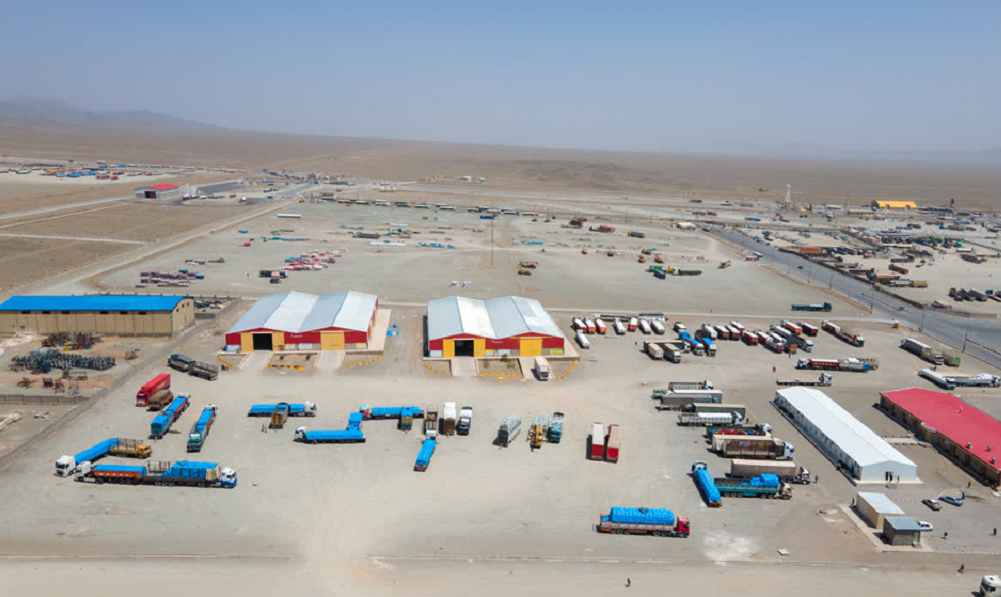
The transit of Afghan traders’ goods through the Sheikh Abu Nasr Farahi border crossing doubled in the first six months of the solar year 1405, reaching 805,000 tonnes, according to Iranian media.
Iran’s IRNA news agency quoted Mohammad Kuhgard, Director General of Customs in Iran’s South Khorasan Province, as saying transit volumes increased by 100 percent compared with the same period last year, strengthening the crossing’s role in regional trade.
Kuhgard also reported a sharp rise in goods handled under the “transit from origin” procedure at Mahirud Customs. Some 85,000 tonnes of goods passed through the facility during the period, an increase of more than 1,300 percent year-on-year.
Under this procedure, customs formalities for Afghan traders’ goods are completed at Mahirud before the shipments are transported to their intended destination countries.
Kuhgard said more than 65 kilometres of the road connecting Mahirud in Iran to Farah Province in Afghanistan have been asphalted. Completion of the route could help reduce transit times and transportation costs between the two countries.
The head of Iran’s Birjand Chamber of Commerce described Afghanistan as South Khorasan’s main export market and trading partner, saying stronger commercial ties, easier imports and the removal of customs barriers could further expand bilateral trade.


IMF forecasts 1.3 percent regional economic contraction in 2026
UNICEF urges continued efforts for polio-free Afghanistan
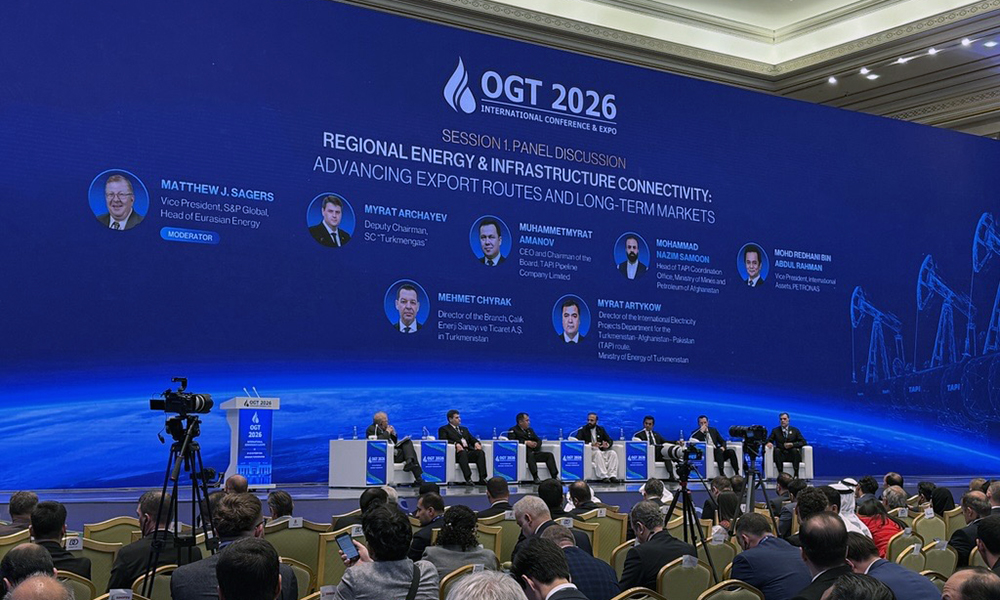
Turkmenistan says Kerki–Kabul power line could supply up to 800 MW to Afghanistan

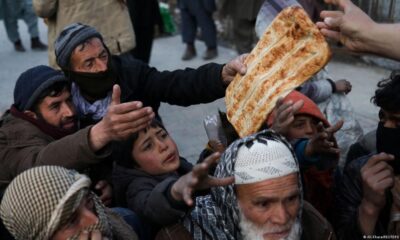
UN warns of worsening hunger crisis in Afghanistan, with millions facing food insecurity

UN says global cooperation is more urgent than ever amid rising crises

Cricket Bonanza: Afghanistan set for packed international schedule

Afghanistan says 28 killed, 32 captured in Nuristan operation

Afghanistan on climate front line as Kabul faces groundwater warning

ACB announces Afghanistan squads for Bangladesh, Zimbabwe series

Trump rejects Iranian proposal to open Hormuz and end fighting

Tahawol: Doha meeting and Afghanistan’s political and economic future discussed

Saar: Concerns over expansion of conflict between Iran and US discussed

Governments warn citizens over security risks in France after riots

Tahawol: Iran’s reaction to Pakistan’s mediation discussed

Saar: Review of SCO meeting in Tajikistan
-

 World4 days ago
Violent protests spread across Europe as Albanian PM blames ‘foreign hand’
-

 Sport4 days ago
Afghanistan finish runners-up after 6-0 defeat to Brazil in futsal final
-

 Sport5 days ago
Toofan Herat beat Istiqlal Kabul 2-0 in Afghanistan Champions League clash
-
 Business4 days ago
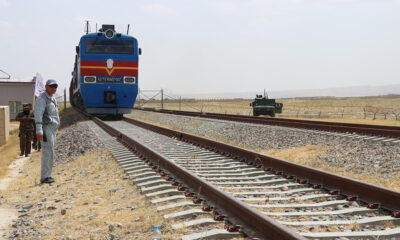
Iran calls for extending Herat railway to Uzbekistan border
-
 World4 days ago
Trump endorses Netanyahu in close Israeli election
-
 Latest News3 days ago
Russian troops arrive in Uzbekistan for joint military exercises
-
 Latest News2 days ago
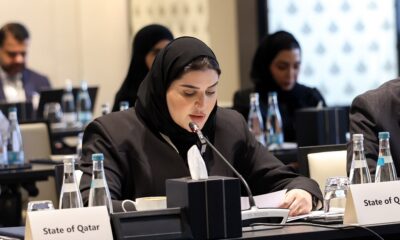
Qatar calls for shift from humanitarian aid to economic recovery in Afghanistan
-

 Tahawol5 days ago
Tahawol: Afghanistan’s empty seat at OIC Meeting