
Latest News
Imran Khan calls for urgent action in order to avoid ‘chaos’ in Afghanistan

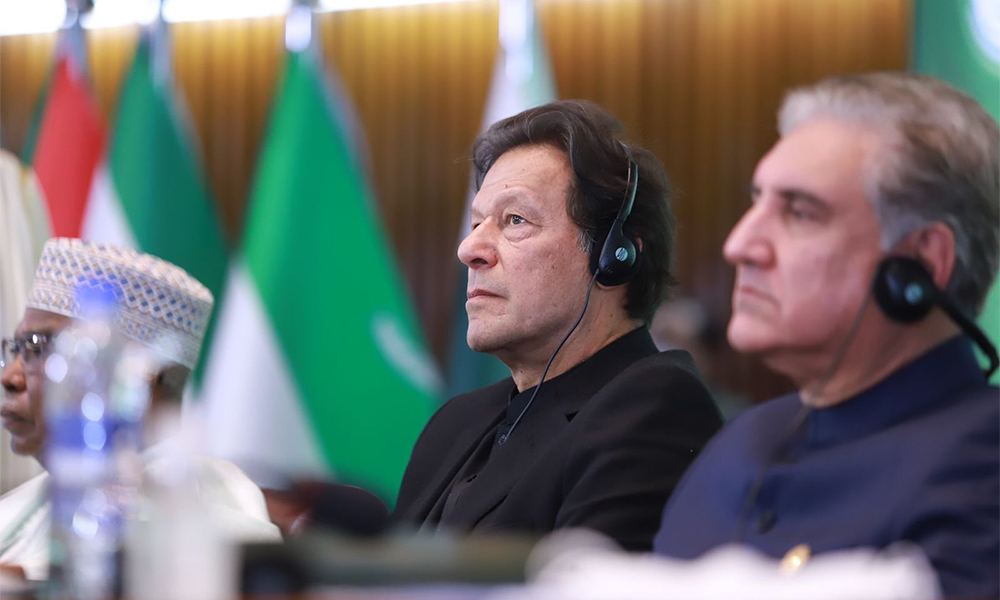
Pakistan’s Prime Minister Imran Khan warned on Sunday the situation in Afghanistan could lead to the biggest “man-made disaster” and that the country is “heading for chaos”.
Addressing delegates attending the 17th Extraordinary Session of the Council of Foreign Ministers of Organisation of Islamic Cooperation (OIC) in Islamabad, Khan urged the international community to take immediate action.
“Unless action is taken immediately, Afghanistan is heading for chaos. Any government when it cannot pay salaries to public servants, doctors and nurses is going to collapse. But chaos suits no one. It certainly does not suit the United States,” the prime minister added.
According to Pakistan’s the Tribune, Khan also said under the current circumstances the Afghan government is unable to fight terrorism, and that other countries may face a spillover impact.
Khan added that the situation in Afghanistan was due to years of corrupt government, suspension of foreign aid, freezing of foreign assets and a dysfunctional banking system, which, he said, could lead to the collapse of any state.
He said if the world failed to act timely, it will lead to the “biggest man-made disaster.”
Mechanism proposed
Pakistan also shared a six-point strategy to address Afghanistan’s humanitarian crisis, food security, and economic revival.
The strategy, proposed by Pakistan’s Foreign Minister Shah Mehmood Qureshi, who chaired the meeting, also proposed creating a mechanism within the OIC countries for sustainable humanitarian and financial support to the Afghanistan government.
According to Qureshi, the gathering of OIC leaders at short notice reaffirmed their commitment to addressing the humanitarian situation in Afghanistan.
Twenty foreign ministers and 10 deputy foreign ministers from across the Muslim world attended Sunday’s session. In total however, 70 delegates participated at the meeting, which was convened by Saudi Arabia and hosted by Pakistan.
Secretary-General of the OIC Hissein Brahim Taha also delivered a speech and said: “We urge the Member States and OIC institutions to provide humanitarian assistance through the OIC Mission in Kabul.”
He also called on all Afghan parties to “put the interests of their people first, protect their lives, keep away from violence and bring lasting peace in fulfilment of their aspirations and hopes for stability, decent living and prosperity”.
Taha said the OIC calls for promoting “the role of the OIC Mission in Kabul, providing it with financial, human and logistical resources to enable it to deliver its full responsibility of coordinating humanitarian and development aid operations for the Afghan people.
US Special Representative for Afghanistan Thomas West also confirmed his attendance in a tweet and said the meeting was a “timely” initiative.
West said the US is following a “clear-eyed policy” with the Islamic Emirate and that the people of Afghanistan remain the focus of the US. “While we continue clear-eyed diplomacy with the Taliban (IEA) – on human rights, terrorism, and educational access, among many other issues – the Afghan people will remain at the center of our considerations,” he said.











Kazakhstan’s Foreign Minister Mukhtar Tileuberdi has called for pragmatic and coordinated international engagement with Afghanistan, saying the country’s long-term stability is closely linked to the security and sustainable development of Central Asia.
Speaking during the general debate of the 81st session of the United Nations General Assembly in New York on Friday, Tileuberdi said humanitarian assistance to Afghanistan remains essential but alone cannot break the cycle of poverty, displacement and dependency.
He said Kazakhstan supports a “pragmatic, coordinated and step-by-step” approach to international engagement with Afghanistan, with the United Nations playing a central role.
Tileuberdi also said Kazakhstan is working with the UN to operationalize the United Nations Regional Centre for the Sustainable Development Goals for Central Asia and Afghanistan in Almaty.
He said the success of the centre should be measured by the results and assistance it delivers to the region.


Abu Muslim Farah defeat Khurasan Faryab 2-0 in ACL season six

Saar: Concerns over Pakistan’s political crisis discussed

Afghanistan Champions League: Omar Zawak Herat beat Toofan Herat 1-0

Blast in Pakistan’s Dera Ismail Khan kills 11, injures 30

Ariana Afghan Airlines increases Kabul-Delhi cargo flights

Saudi energy group signs major Afghanistan deals covering gas exploration and pipeline plans

Trump floats idea of renaming Atlantic or Pacific Ocean

US hits Egyptian bank branches with Iran sanctions as war marks six months

Nepal flood rescue mission enters critical phase as thousands remain missing

Iranian clubs to face Gulf opponents at neutral venues in Asian Champions League Elite
Saar: Concerns over Pakistan’s political crisis discussed

Exclusive interview with Abdul Latif Mansoor, Minister of MRRD

Tawsia: Overview of Afghanistan’s iron mines

Tahawol: Discussion on fresh Pakistani airstrikes on Afghanistan

Saar: Calls for international support for Afghanistan discussed
-

 World5 days ago
CNN, MS NOW and Politico sue Trump, challenging White House ban
-

 Latest News3 days ago
Ariana Afghan Airlines ranks seventh among 45 Central Asian airlines
-

 Latest News4 days ago
UN reiterates call for respect for international law after Kunar airstrikes
-

 Regional3 days ago
US and Iran hold first talks since June after Trump’s ‘annihilation’ threat
-

 Latest News3 days ago
Silk Road highway in Wakhan corridor now reaches the China border
-

 Latest News4 days ago
Afghan Official: Pakistan’s airstrikes will not go unanswered
-

 Sport4 days ago
Afghan boxing referee heads to China for international festival
-
 Regional5 days ago
G7 foreign ministers call on Iran to stop arming Houthis