
Latest News
Iran urges voters to take part in Friday’s presidential election

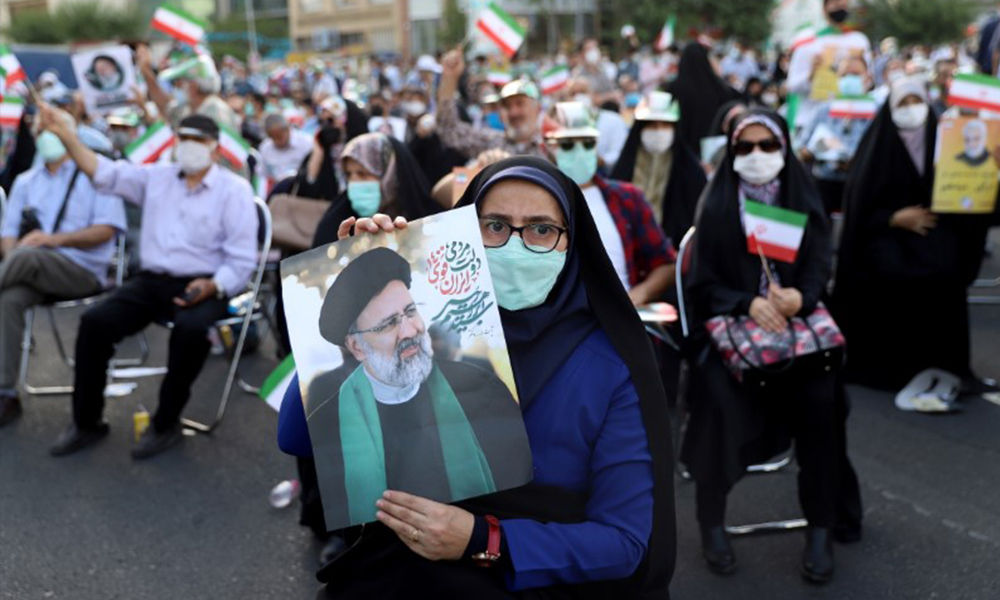
Iran’s president appealed to voters to set aside their grievances and take part in a presidential election on Friday that record numbers of people are expected to boycott due to economic hardship and frustration with hardline rule.
Hardline judiciary chief Ebrahim Raisi and moderate former Central Bank governor Abdolnaser Hemmati are the main contenders after the hardline Guardian Council disqualified several prominent candidates from running and others quit.
President Hassan Rouhani, a relative moderate, urged Iranians on Thursday, as campaigning ended, not to let the “shortcomings of an institution or a group” keep them from voting, an apparent reference to the Guardian Council.
“For the time being, let’s not think about grievances tomorrow,” Rouhani said in televised remarks.
Supreme Leader Ayatollah Ali Khamenei has already urged people to turn out in large numbers, saying that would help avert foreign pressures on the Islamic Republic.
Official opinion polls suggest turnout could be as low as 41%, significantly lower than in past elections.
In addition to anger over the disqualification of prominent moderates, grievances include economic hardship exacerbated by U.S. sanctions as well as official corruption, mismanagement and a crackdown on protests in 2019 triggered by rising fuel prices.
The accidental shooting down of a Ukrainian plane in Iran in January last year which killed 176 people also undermined public trust.
“Voting would be an insult to my intelligence,” 55-year-old Fatemeh said, declining to give her second name for fear of reprisals. “Raisi has already been selected by the government regardless who we vote for.”
Prominent dissidents inside and outside the country have called on fellow Iranians to snub the election, including exiled former crown prince Reza Pahlavi and opposition leader Mirhossein Mousavi, under house arrest since 2011.
On the other hand, many leading reformists have rallied behind Hemmati, including former President Mohammad Khatami, arguing that a massive boycott would guarantee a Raisi win.
Under the Iranian Constitution, the supreme leader, elected for life and responsible for choosing six of the 12-member Guardian Council, holds most of the powers of the state.
Khamenei has the final say on all matters of state and sets Iran’s foreign and nuclear policies.
The vote would have no impact on indirect talks between Tehran and Washington on reviving the 2015 Iran nuclear deal, the top Iranian negotiator, Deputy Foreign Minister Abbas Araqchi told Al Jazeera on Thursday.
Polling stations open at 7 a.m. local time and close at 2 a.m. on Saturday. The interior minister told state TV that due to the Covid-19 pandemic, voting will take place outside at 67,000 sites across the country, with social distancing and the donning of face masks. Voters are asked to bring their own pens.












Kazakhstan’s Foreign Minister Mukhtar Tileuberdi has called for pragmatic and coordinated international engagement with Afghanistan, saying the country’s long-term stability is closely linked to the security and sustainable development of Central Asia.
Speaking during the general debate of the 81st session of the United Nations General Assembly in New York on Friday, Tileuberdi said humanitarian assistance to Afghanistan remains essential but alone cannot break the cycle of poverty, displacement and dependency.
He said Kazakhstan supports a “pragmatic, coordinated and step-by-step” approach to international engagement with Afghanistan, with the United Nations playing a central role.
Tileuberdi also said Kazakhstan is working with the UN to operationalize the United Nations Regional Centre for the Sustainable Development Goals for Central Asia and Afghanistan in Almaty.
He said the success of the centre should be measured by the results and assistance it delivers to the region.


Abu Muslim Farah defeat Khurasan Faryab 2-0 in ACL season six

Saar: Concerns over Pakistan’s political crisis discussed

Afghanistan Champions League: Omar Zawak Herat beat Toofan Herat 1-0

Blast in Pakistan’s Dera Ismail Khan kills 11, injures 30

Ariana Afghan Airlines increases Kabul-Delhi cargo flights

Saudi energy group signs major Afghanistan deals covering gas exploration and pipeline plans

Trump floats idea of renaming Atlantic or Pacific Ocean

US hits Egyptian bank branches with Iran sanctions as war marks six months

Nepal flood rescue mission enters critical phase as thousands remain missing

Iranian clubs to face Gulf opponents at neutral venues in Asian Champions League Elite
Saar: Concerns over Pakistan’s political crisis discussed

Exclusive interview with Abdul Latif Mansoor, Minister of MRRD

Tawsia: Overview of Afghanistan’s iron mines

Tahawol: Discussion on fresh Pakistani airstrikes on Afghanistan

Saar: Calls for international support for Afghanistan discussed
-

 World5 days ago
CNN, MS NOW and Politico sue Trump, challenging White House ban
-

 Latest News3 days ago
Ariana Afghan Airlines ranks seventh among 45 Central Asian airlines
-

 Latest News5 days ago
UN reiterates call for respect for international law after Kunar airstrikes
-

 Regional4 days ago
US and Iran hold first talks since June after Trump’s ‘annihilation’ threat
-

 Latest News4 days ago
Silk Road highway in Wakhan corridor now reaches the China border
-

 Regional3 days ago
Iran airlines cancel flights as US sanctions hit
-

 Latest News5 days ago
Afghan Official: Pakistan’s airstrikes will not go unanswered
-

 Sport5 days ago
Afghan boxing referee heads to China for international festival