
Latest News
Islamabad mosque attack is the result of Pakistan’s policy of nurturing Daesh: Mujahid

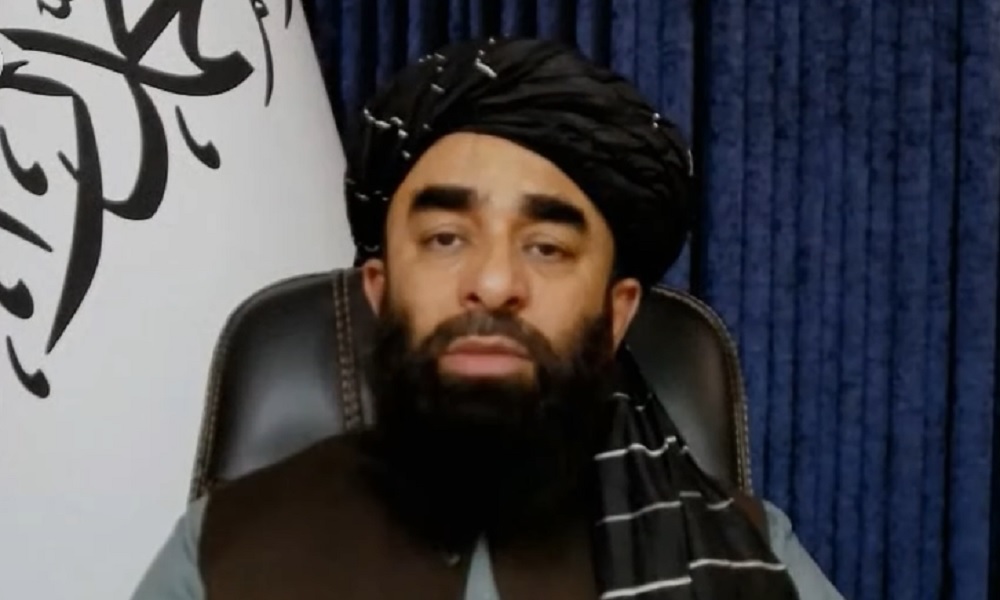
Zabihullah Mujahid, spokesperson for the Islamic Emirate, says the recent attack on a mosque in Islamabad was the consequence of Pakistan’s longstanding policy of “nurturing Daesh.”
The attack, carried out over a week ago, killed 31 people and injured 170 others.
In an interview with Iran Radio, Mujahid stated: “Daesh is an enemy like a snake; if you raise it in your sleeve, it will eventually bite you.”
He argued that Pakistan’s instrumental use of Daesh for “covert and intelligence-driven objectives” harms not only the people of Pakistan but also has negative repercussions for the people of Afghanistan.
Mujahid once again rejected allegations that the Islamic Emirate supports Tehrik-e Taliban Pakistan (TTP). He emphasized that no unauthorized armed individual is allowed to operate inside Afghanistan. According to him, the Islamic Emirate had expressed readiness to facilitate the return of “Waziristani migrants,” but Pakistan declined the offer. Instead, at Pakistan’s request, these families were relocated from areas near the Durand Line to other parts of Afghanistan.
Mujahid added that crossing closures have harmed traders in both countries, though he claimed Pakistan has suffered more. He said the crossings will not be reopened unless Pakistan provides a “guarantee” that it will not repeatedly close them due to political considerations.







Latest News
Trump dismisses report China entities helped Iran before attack that killed US troops
Trump on Sunday reiterated his view that he has a good relationship with Xi.
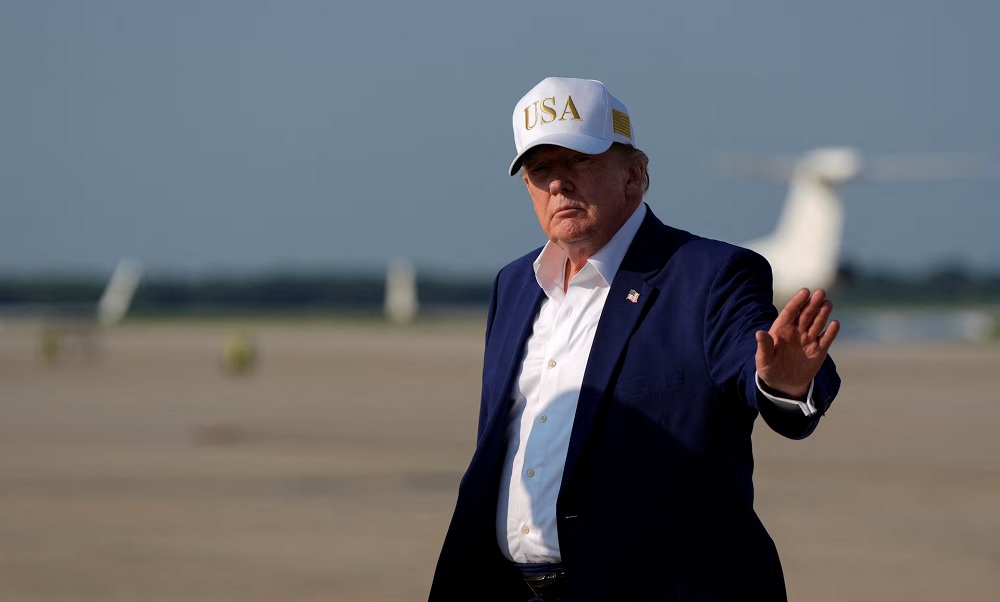
U.S. President Donald Trump on Sunday brushed aside a report that Iran acquired satellite images of a base in Jordan from Chinese entities before an attack that killed three U.S. troops there in July, Reuters reported.
A recent report in the Wall Street Journal cited unnamed U.S. officials about the attack in Jordan. Asked whether he would mention the issue at an upcoming meeting with Chinese President Xi Jinping, Trump did not directly answer, and instead equated the surveillance activities of China and the United States.
“They basically do what we do,” he told reporters aboard Air Force One. “When they say China spies on us, I say you’re right and we spy on them too.”
The Chinese and U.S. presidents are expected to meet in the United States on September 24, although China has yet to officially confirm that the meeting will take place.
Trump on Sunday reiterated his view that he has a good relationship with Xi.
“I think he’s behaved reasonably well, and we behave reasonably well,” Trump said as he flew back to the United States after a weekend trip to Ireland.
The Wall Street Journal report, which Reuters could not immediately verify, said the U.S. officials declined to identify the Chinese entities that supplied the imagery to Iran and did not allege direct involvement by Beijing.
Trump’s comments appeared consistent with the administration’s recent efforts to play down wide-ranging tensions between Washington and Beijing, despite U.S. frustration over Beijing’s close ties to Tehran.

The Islamic Emirate of Afghanistan (IEA) has rejected reports alleging that al-Qaeda and other militant groups are regrouping in the country, saying such groups are no longer present and that there is no evidence supporting the claims.
Hamdullah Fitrat, deputy spokesman for the Islamic Emirate, said groups that had previously been present in Afghanistan were linked to the circumstances and jihad of an earlier period, but that major regional developments had since changed the situation.
“Those groups are no longer present in Afghanistan, nor is there any need for their presence. There is also no evidence to prove the claims about their presence,” Fitrat said.
The comments came after The Washington Post reported Saturday, citing US and Western security officials and a United Nations organization, that al-Qaeda and other militant groups have been rebuilding their networks in Afghanistan since the Islamic Emirate returned to power in 2021.
Fitrat said such claims are made by certain intelligence circles that seek to portray Afghanistan as insecure and to make the region insecure.
He reiterated that the IEA will not allow Afghanistan’s soil to be used against any other country.
Latest News
Mujahid states Kabul seeks stronger ties with region and beyond
According to figures from Afghanistan’s Ministry of Foreign Affairs, the Islamic Emirate currently has 40 active diplomatic missions in different countries.
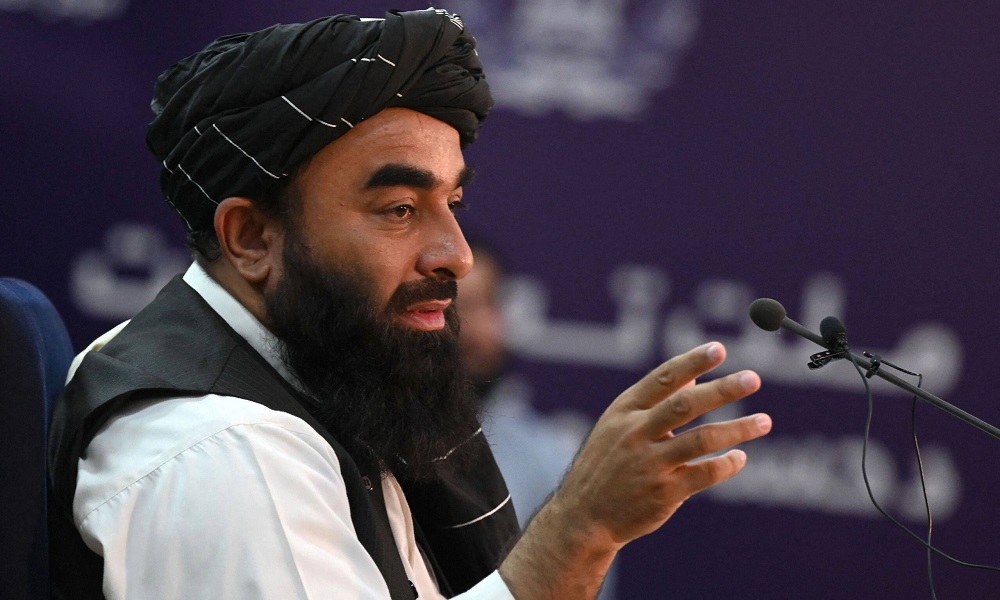
The Islamic Emirate says it is seeking to strengthen and expand Kabul’s relations with countries in the region and beyond, with its foreign policy focused on economic cooperation and regional connectivity.
Zabiullah Mujahid, spokesman for the Islamic Emirate, says Afghanistan’s current government has managed to establish trust-based relations with countries in the region and around the world over the past five years.
Mujahid says visits by senior officials from several countries to Afghanistan, along with expanding trade relations with a number of countries, demonstrate the growing trend of these interactions.
The Islamic Emirate spokesman stresses that Afghanistan needs the cooperation and effective role of neighboring and regional countries to strengthen regional cooperation and achieve its economic and regional connectivity objectives.
He also says the Islamic Emirate is seeking to further expand and consolidate Kabul’s relations with countries in the region.
According to figures from Afghanistan’s Ministry of Foreign Affairs, the Islamic Emirate currently has 40 active diplomatic missions in different countries.
Meanwhile, a number of international relations experts state that expanding Afghanistan’s engagement with the world could help reduce political isolation, strengthen diplomatic ties, attract investment, and ultimately foster the country’s economic growth.


Trump dismisses report China entities helped Iran before attack that killed US troops

India beat Afghanistan by seven wickets in first T20I

Tahawol: Calls for U.S. engagement with Afghanistan

Saar: End of Chinese ambassador’s mission in Kabul

IEA rejects claims of al-Qaeda presence in Afghanistan

Four mediators struggle to secure lasting Pakistan-Afghanistan ceasefire

Juma Khan Fateh surrenders to IEA forces in Badakhshan

Afghanistan’s trade diversification challenges Pakistan

Syria and Saudi Arabia condemn Kabul bombing, express solidarity with Afghanistan

Afghanistan crowned champions of five-match ODI series against Ireland
Tahawol: Calls for U.S. engagement with Afghanistan
Saar: End of Chinese ambassador’s mission in Kabul

Tahawol: Norwegian delegation’s call for engagement with Afghanistan discussed

Saar: Pakistan’s dual policy towards Afghanistan reviewed

Exclusive interview with ACB CEO Naseeb Khan
-
 Latest News5 days ago
Muttaqi and Bangladeshi delegation discuss expansion of bilateral ties
-

 Sport4 days ago
Afghanistan Champions League Season 6 kicks off today: Abu Muslim Farah face Sarsabz Yashlar
-
 Regional5 days ago
Iran attacks US base in Jordan, ships near Hormuz after tankers sunk
-
 World5 days ago
US Treasury ratchets up pressure on Iran with sweeping new aviation sanctions
-
 Business5 days ago
UAE firm eyes investment in Salang’s second tunnel and pharmaceutical factories
-

 Sport5 days ago
Afghanistan to host Bangladesh and Zimbabwe in the UAE in three-format home season
-
 Latest News5 days ago
Afghanistan, Bangladesh discuss expanding economic ties
-
 Latest News5 days ago
Mujahid calls Pakistan’s order to expel Afghan medical students ‘inhumane’