
World
Israel bombs Gaza home of top Hamas leader as fighting rages

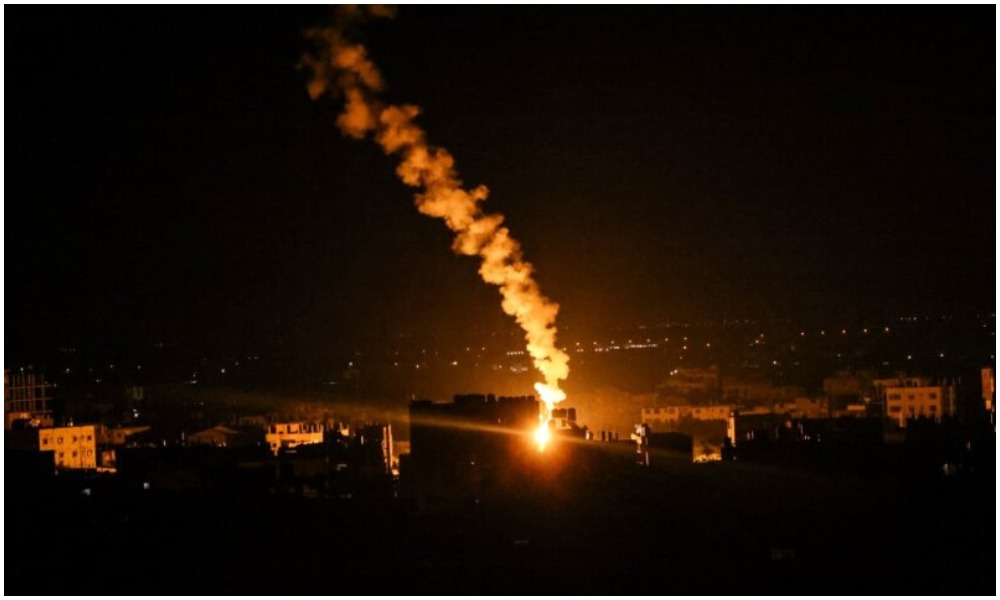
Israel bombed the home of Hamas’s chief in Gaza early on Sunday and the Islamist group fired rocket barrages at Tel Aviv as hostilities stretched into a seventh day with no sign of abating, Reuters reported.
At least four Palestinians were killed in Israeli air strikes across the coastal enclave, health officials said, and many were injured as the sounds of heavy bombardment roared through the night.
Reuters reported that Israelis dashed for bomb shelters as sirens warning of incoming rocket fire blared in Tel Aviv and the southern city of Beersheba. Around 10 people were injured while running for shelters, medics said.
At least 149 have been killed in Gaza since the violence began on Monday, including 41 children, health officials said. Israel has reported 10 dead, including two children.
Envoys from the United States, United Nations and Egypt were working to restore calm but have yet to show any signs of progress. The U.N. Security Council was due to meet later on Sunday to discuss the worst outbreak of Israeli-Palestinian violence in years.
Both Israel and Hamas have insisted they would continue their cross-border fire, a day after Israel destroyed a 12-storey building in Gaza City that had housed the U.S. Associated Press and Qatar-based Al Jazeera media operations.
The Israel military said the al-Jala building was a legitimate military target, containing Hamas military offices, and that it had given warnings to civilians to get out of the building before the attack.
The AP condemned the attack, and asked Israel to put forward evidence. “We have had no indication Hamas was in the building or active in the building,” the news organisation said in a statement.
In what it called a reprisal for Israel’s destruction of the al-Jala building, Hamas fired rockets at Tel Aviv and towns in southern Israel early on Sunday, Reuters reported.
Prime Minister Benjamin Netanyahu said late on Saturday that Israel was “still in the midst of this operation, it is still not over and this operation will continue as long as necessary.”
In a burst of air strikes early on Sunday, Israel targeted the home of Yehya Al-Sinwar, who since 2017 has headed the political and military wings of Hamas in Gaza, the group’s TV station said.
Another air strike killed a Gaza neurologist and wounded his wife and daughter, Palestinian medics and relatives said.
Hamas began its rocket assault on Monday after weeks of tensions over a court case to evict several Palestinian families in East Jerusalem, and in retaliation for Israeli police clashes with Palestinians near the city’s Al-Aqsa Mosque, Islam’s third holiest site, during the Muslim holy month of Ramadan.
Speaking to crowds of protesters in the Qatari capital of Doha, Hamas chief Ismail Haniyeh said late on Saturday that the underlying cause of the hostilities was Jerusalem.
“The Zionists thought … they could demolish Al-Aqsa mosque. They thought they could displace our people in Sheikh Jarrah,” said Haniyeh.
“I say to Netanyahu: do not play with fire,” he continued, amid cheers from the crowd. “The title of this battle today, the title of the war, and the title of the intifada, is Jerusalem, Jerusalem, Jerusalem,” using the Arabic word for ‘uprising’.
Reuters reported Hamas, Islamic Jihad and other militant groups have fired around 2,300 rockets from Gaza since Monday, the Israeli military said on Saturday. It said about 1,000 were intercepted by missile defences and 380 fell into the Gaza Strip.
Israel has launched more than 1,000 air and artillery strikes into the densely populated coastal strip, saying they were aimed at Hamas and other militant targets.





World
Trump says he is talking to Russia and China about denuclearization
Trump’s comments come months after the Strategic Arms Reduction Treaty expired earlier this year.

US President Donald Trump said on Thursday Washington is holding talks with Moscow and Beijing aimed at denuclearizing the countries with the biggest stockpiles of nuclear weapons.
Russia has the most stored nuclear warheads followed by the United States and China, according to the Stockholm International Peace Research Institute. The US outpaces Russia on its number of deployed warheads.
During an interview with Newsmax, Trump said he expects China to “catch up” with the US within the next five years.
“The whole thing is a shame, because I’d love to denuclearize if possible, but we’re actually talking to Russia about that, and we’re talking to China about that denuclearization,” Trump told the outlet.
Newsmax reported that Trump had spoken with Chinese President Xi Jinping about denuclearization.
Trump’s comments come months after the Strategic Arms Reduction Treaty expired earlier this year.
The New START treaty signed in 2010 allowed one single extension, which was agreed by former President Joe Biden and Russian President Vladimir Putin for five years. Any new extension would require an executive decision to voluntarily extend the limits of the treaty.
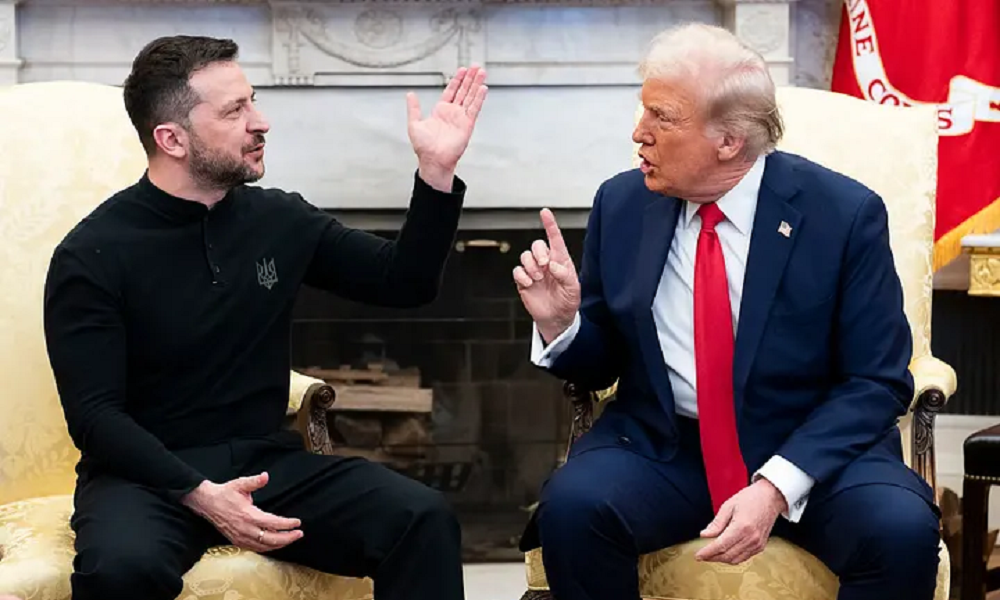
Ukrainian President Volodymyr Zelenskiy said in an interview on Wednesday that it was “painful” when Donald Trump took another side in Ukraine’s ongoing war with Russia, after the US President said Zelenskiy should be replaced.
Zelenskiy told Piers Morgan Uncensored: “It’s painful when President Trump chooses one side, not our side.”
He also said that he was OK with Trump being in the middle of Ukraine and Russia, but added: “If you are in the middle, you have to stay in the middle.”
Asked if he felt betrayed by Trump, who at the weekend called for Ukraine to get a new president having agreed to lift sanctions on Russian diesel exports, Zelenskiy replied: “Really, yes … but it’s a little bit more complicated than just my emotions or my feelings.”
“It’s a pity we are losing (a) strong partner,” he added.
Zelenskiy also said: “We are not selling our country … it’s not about business for us, it’s just our life and this is our country.”
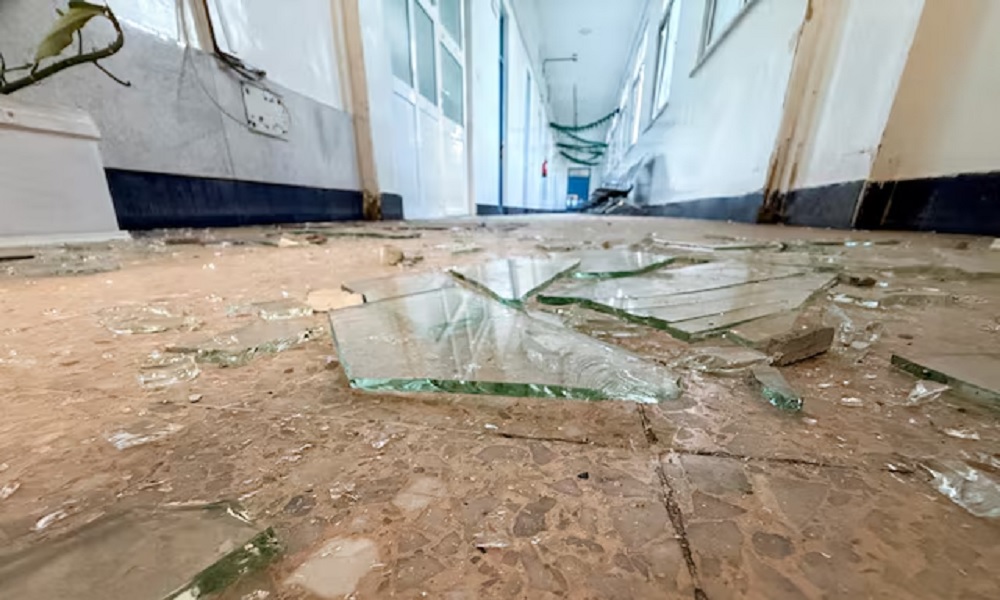
Hospitals across Yemen are struggling to cope with a sharp rise in war casualties as intensified fighting along multiple front lines strains its already fragile health system, the Red Cross said on Wednesday.
Front-line hospitals in areas including Marib, Taiz and Yemen’s Red Sea coast were seeing unprecedented numbers of weapon-wounded patients, with some facilities admitting more than 700 casualties in a single week, according to the humanitarian agency, Reuters reported.
More than 200,000 people have been displaced from their homes since fighting in the country began in recent weeks, sparked by renewed fighting between the Iran-backed Houthi group and Saudi-backed government forces in Yemen, according to the United Nations’ International Organization for Migration.
“Trauma care staff are under enormous pressure,” ICRC health coordinator Feras Abusamra said in a statement. Only a small proportion of Yemen’s functioning health facilities are capable of providing comprehensive trauma care, he said, while hospitals face large numbers of wounded people amid shortages of surgical supplies, anesthesia, oxygen and medicines.
Yemen’s health services, battered by more than a decade of conflict, economic crisis, displacement and disease outbreaks, may have limited capacity to absorb a new surge in mass casualties if fighting intensifies further, the ICRC warned.


Tawsia: Efforts to increase energy production capacity in Afghanistan

Afghanistan Champions League: Abu Muslim Farah beat Sarsabz Yashlar 3-1

IEA ambassador: Daesh leadership and centers ‘completely’ eliminated in Afghanistan

Regional partners seek progress on Trans-Afghan corridor and CASA railway

CSTO chief says IEA has become long-term political actor in Afghanistan

Cricket Bonanza: Afghanistan set for packed international schedule

Afghanistan says 28 killed, 32 captured in Nuristan operation

Silk Road highway in Wakhan corridor now reaches the China border

CNN, MS NOW and Politico sue Trump, challenging White House ban

Dogharoun handles 60% of Iran’s exports to Afghanistan
Tawsia: Efforts to increase energy production capacity in Afghanistan

Saar: Review of state officials’ visits to Kabul over past month discussed

Tahawol: Kyrgyzstan’s rejection of Afghan refugees discussed

Saar: Central Asia’s trade alternative to Pakistan discussed

Tahawol: Warnings over worsening insecurity in Pakistan discussed
-

 World5 days ago
One dead in new attack on Saudi airport, a day after Houthi strike kills 13
-

 Sport3 days ago
Afghan futsal coach: Brazil tournament is first step towards new goals and World Cup
-

 Latest News3 days ago
Afghan official says Durand Line crossings to remain closed until Islamabad accepts demands
-
 Regional5 days ago
Pakistan deploys military to Peshawar after emergency rule declared
-
 Business5 days ago
Afghanistan, US business leaders discuss trade and investment opportunities
-

 Sport5 days ago
Afghanistan U19 begin Asia Cup Preparations with Oman tour
-

 Latest News5 days ago
Mujahid accuses Pakistani military circles of sabotaging talks with Afghanistan
-
 Latest News5 days ago
Afghanistan calls for faster completion of CASA-1000 power project