
Latest News
Kabul University attackers “blew themselves up” to mask their identities: Saleh

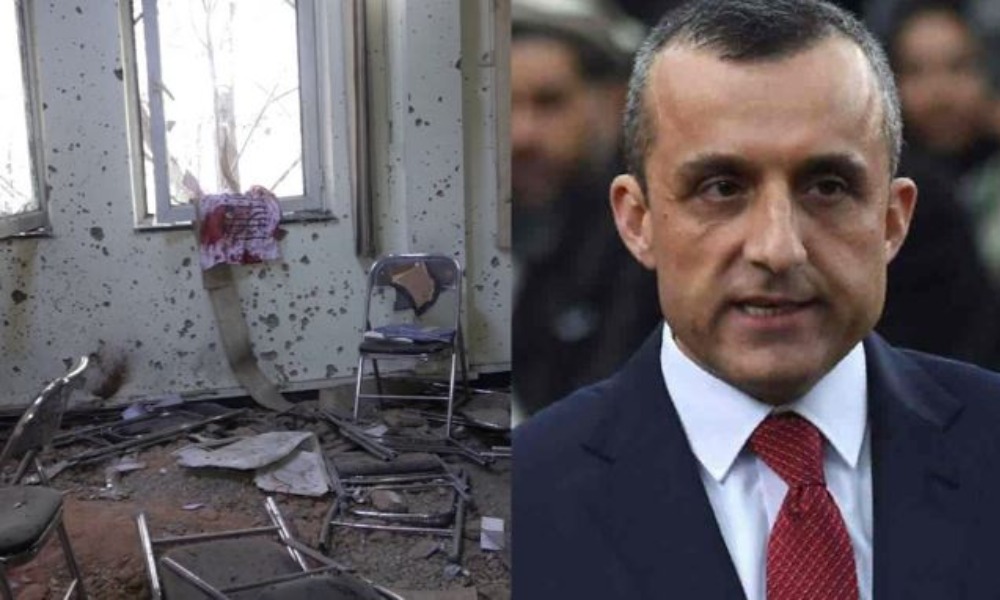
Amrullah Saleh, the first vice president, on Monday gave an update on last week’s attack on Kabul University and said attackers blew themselves up with handgrenades when they realised special forces were closing in on them through the roof of the building.
According to Saleh, the attackers had done this in a bid to erase their fingerprints so that they could not be identified.
He said they committed suicide in the end, using handgrenades.
Saleh also said efforts were being made using advanced technology with the help of foreign allies to identify the bodies, but stressed he could not disclose further progress due to the sensitivity of the investigation at this stage.
He also did not say how many attackers killed themselves.
Daesh (IS-K) claimed responsibility for the attack last Monday which resulted in the death of at least 30 civilians, mostly students.
Meanwhile, Saleh said that Yama Siawash, a former journalist and employee of the Central Bank, died in an explosion Saturday from an IED that was made with military grade RDX explosive material.
He said this was not “home made” explosive compounds.
Two kilograms was used in the explosive device which had been attached to his vehicle close to the fuel tank.
Siawash died along with two of his colleagues in Kabul city.
No group has claimed responsibility for the attack.







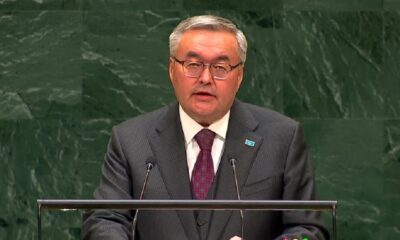




Kazakhstan’s Foreign Minister Mukhtar Tileuberdi has called for pragmatic and coordinated international engagement with Afghanistan, saying the country’s long-term stability is closely linked to the security and sustainable development of Central Asia.
Speaking during the general debate of the 81st session of the United Nations General Assembly in New York on Friday, Tileuberdi said humanitarian assistance to Afghanistan remains essential but alone cannot break the cycle of poverty, displacement and dependency.
He said Kazakhstan supports a “pragmatic, coordinated and step-by-step” approach to international engagement with Afghanistan, with the United Nations playing a central role.
Tileuberdi also said Kazakhstan is working with the UN to operationalize the United Nations Regional Centre for the Sustainable Development Goals for Central Asia and Afghanistan in Almaty.
He said the success of the centre should be measured by the results and assistance it delivers to the region.


Saar: Concerns over Pakistan’s political crisis discussed

Afghanistan Champions League: Omar Zawak Herat beat Toofan Herat 1-0

Blast in Pakistan’s Dera Ismail Khan kills 11, injures 30

Ariana Afghan Airlines increases Kabul-Delhi cargo flights

Khalilzad questions Pakistan’s commitment to Afghan welfare

Saudi energy group signs major Afghanistan deals covering gas exploration and pipeline plans

Trump floats idea of renaming Atlantic or Pacific Ocean

US hits Egyptian bank branches with Iran sanctions as war marks six months

Nepal flood rescue mission enters critical phase as thousands remain missing

Iranian clubs to face Gulf opponents at neutral venues in Asian Champions League Elite
Saar: Concerns over Pakistan’s political crisis discussed

Exclusive interview with Abdul Latif Mansoor, Minister of MRRD

Tawsia: Overview of Afghanistan’s iron mines

Tahawol: Discussion on fresh Pakistani airstrikes on Afghanistan

Saar: Calls for international support for Afghanistan discussed
-

 World5 days ago
CNN, MS NOW and Politico sue Trump, challenging White House ban
-

 Latest News3 days ago
Ariana Afghan Airlines ranks seventh among 45 Central Asian airlines
-

 Latest News4 days ago
UN reiterates call for respect for international law after Kunar airstrikes
-
 Latest News5 days ago
Khalilzad condemns Pakistan airstrikes, says current strategy is not working
-

 Regional3 days ago
US and Iran hold first talks since June after Trump’s ‘annihilation’ threat
-

 Latest News3 days ago
Silk Road highway in Wakhan corridor now reaches the China border
-

 Latest News4 days ago
Afghan Official: Pakistan’s airstrikes will not go unanswered
-

 Sport4 days ago
Afghan boxing referee heads to China for international festival