
World
Lavrov says Russia will continue Ukraine war till ‘the end’

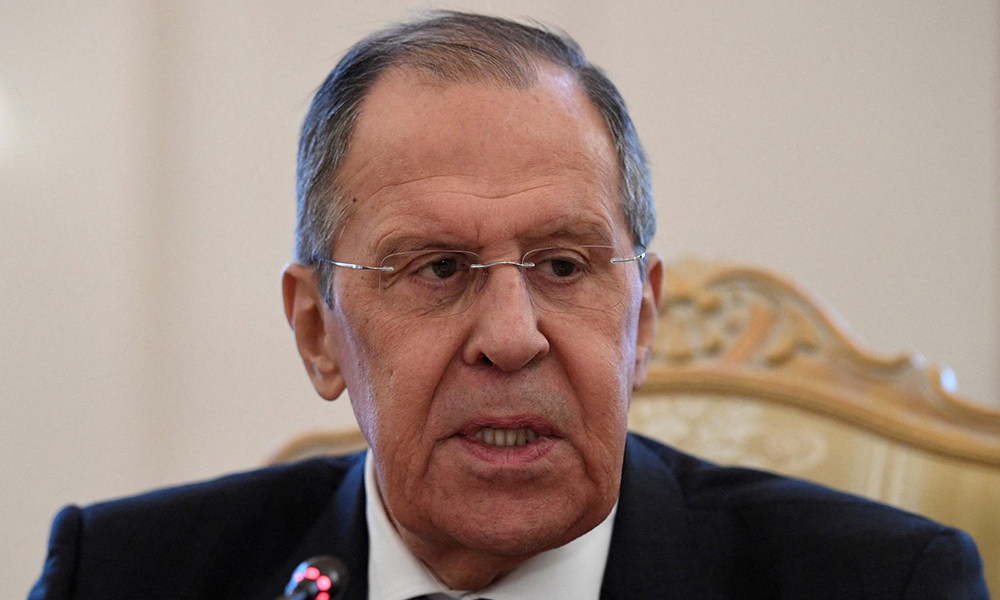
Russian Foreign Minister Sergei Lavrov said on Thursday he believed some foreign leaders were preparing for war against Russia and that Moscow would press on with its military operation in Ukraine until “the end”.
Lavrov also said Russia had no thoughts of nuclear war.
Offering no evidence to back up his remarks in an interview with state television, a week after Russian invaded Ukraine, he also accused Ukrainian President Volodymyr Zelenskiy, an ethnic Jew, of presiding over “a society where Nazism is flourishing”, Reuters reported.
He said he had no doubt that a solution to the crisis in Ukraine would be found, and a new round of talks were about to start between Ukrainian and Russian officials.
But he said Russia’s dialogue with the West must be based on mutual respect, accused NATO of seeking to maintain supremacy and said that while Russia had a lot of goodwill, it could not let anyone undermine its interests.
Moscow would not let Ukraine keep infrastructure that threatened Russia, he said.
Moscow could also not tolerate what he said was a military threat from Ukraine, he said, adding that he was convinced that Russia was right over Ukraine.
“The thought of nuclear is constantly spinning in the heads of Western politicians but not in the heads of Russians,” he said. “I assure you that we will not allow any kind of provocation to unbalance us.”
Russia did not feel politically isolated, and the question of how Ukraine lives should be defined by its people, he said.
Ukrainian officials have accused Russian forces of hitting civilian areas but Lavrov said Russian troops had strict orders to use high-precision weapons to destroy military infrastructure.
Offering no evidence, Lavrov said Russia had information that the United States was worried about the prospect of losing control over what he described as chemical and biological laboratories in Ukraine and accused Britain of building military bases there, Reuters reported.
Russian businessman places $1m bounty on Putin’s head
A Russian businessman has placed a $1 million bounty on Vladimir Putin’s head and urged the country’s military officers to bring the president to justice.
Entrepreneur Alex Konanykhin made the promise in a post on social media site LinkedIn and called it his “moral duty” to take action and help Ukraine.
The bounty offered by Konanykhin, who is now based in the US, places an even more direct target on the Russian leader as backlash over the invasion continues to escalate, Newsweek reported.
Konanykhin said in a Facebook post Tuesday that he promised to pay the officer or officers the money for arresting “Putin as a war criminal under Russian and international laws.”
An earlier version of Konanykhin’s post on LinkedIn included a photo of Putin with the words “Wanted: Dead or alive. Vladimir Putin for mass murder,” according to The Jerusalem Post. The post appears to have been taken down.



World
Trump signature to appear on US currency, ending 165-year tradition
The Treasury is still producing notes bearing the signatures of former President Joe Biden’s Treasury secretary, Janet Yellen, and former Treasurer Lynn Malerba.
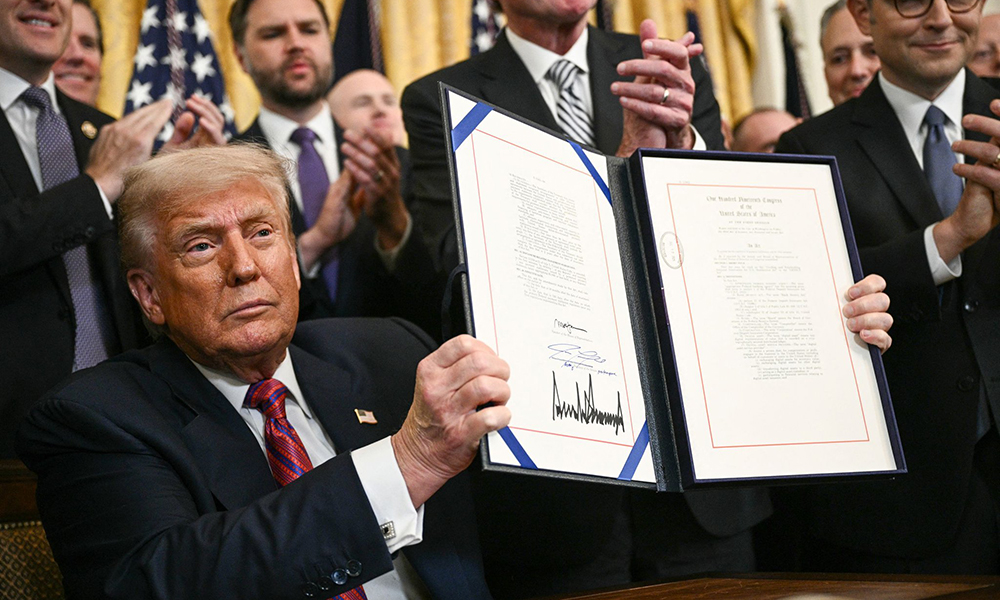
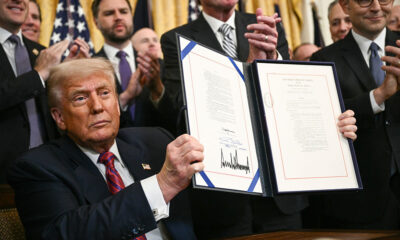
U.S. paper currency will bear President Donald Trump’s signature starting this summer, the first time a sitting president has signed American money, the Treasury Department said on Thursday.
The redesigned notes, planned to mark the 250th anniversary of American independence, will also for the first time in 165 years drop the signature of the U.S. treasurer, who reports to the Treasury Secretary and oversees the Bureau of Engraving and Printing, the U.S. Mint and other Treasury functions, Reuters reported.
The first $100 bills with Trump’s signature and that of U.S. Treasury Secretary Scott Bessent will be printed in June, followed by other bills in subsequent months. The new bills may take several weeks to circulate through banks.
The Treasury is still producing notes bearing the signatures of former President Joe Biden’s Treasury secretary, Janet Yellen, and former Treasurer Lynn Malerba.
Malerba will be the last of an unbroken line of treasurers whose signatures have appeared on U.S. federal currency since 1861, when the U.S. government first issued it.
The signature change is the latest effort by the Trump administration and its allies to put the president’s name on buildings, institutions, government programs, warships and coins. A federal arts panel, whose members Trump appointed, approved last week the design for a commemorative gold coin with Trump’s image.
Bessent said in a statement that the move was appropriate for the U.S. 250th anniversary, given strong U.S. economic growth and financial stability during Trump’s second term, read the report.
“There is no more powerful way to recognize the historic achievements of our great country and President Donald J. Trump than U.S. dollar bills bearing his name, and it is only appropriate that this historic currency be issued at the Semiquincentennial,” Bessent said.
An effort for a circulating $1 Trump coin was set back by laws prohibiting the depiction of living individuals on U.S. coins.
A statute governing the printing of Federal Reserve notes gives the Treasury broad discretion to change designs to guard against counterfeiting. The law requires keeping certain elements, including the words “In God We Trust,” and only allows portraits of deceased individuals.
The overall designs of bills will not change, except for Trump’s signature replacing the Treasurer’s, Treasury officials said. A mock-up of the $100 bill with Trump’s signature was not immediately available.
Malerba, the former treasurer, declined comment on the Trump administration’s move.
Her predecessor, Jovita Carranza, who served as treasurer in Trump’s first term, called the change “a powerful symbol of American resilience, the enduring strength of free enterprise and the promise of continued greatness.”
The current treasurer, Brandon Beach, whose name has not appeared on the currency, also issued a supportive statement, saying Trump was the architect of a “golden age economic revival.”
World
Trump to hit Iran harder if Tehran does not accept defeat, White House says
Talks with Iran were still under way, Leavitt said. “Talks continue. They are productive, as the president said on Monday, and they continue to be,” she added.
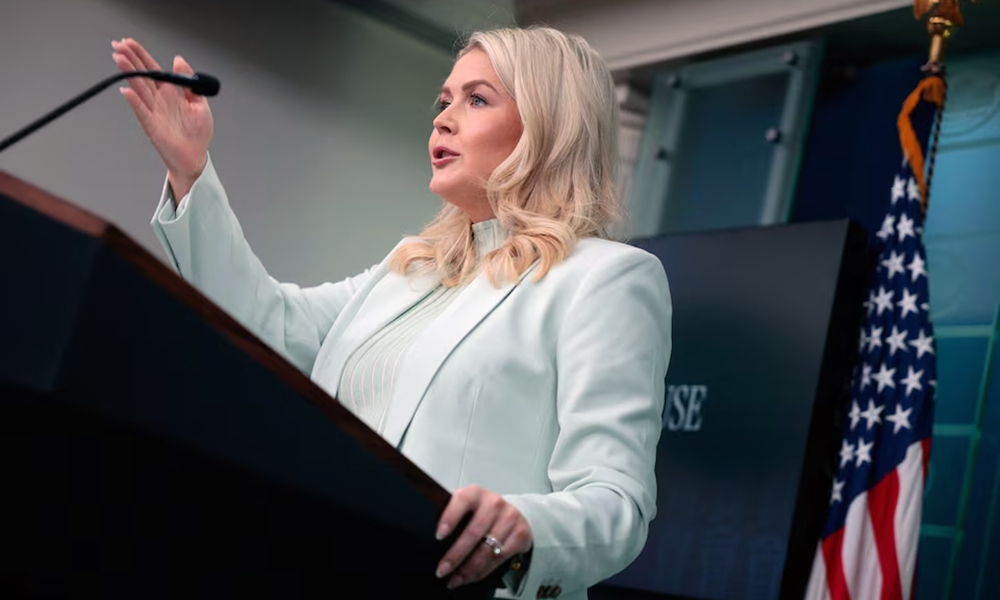
President Donald Trump will hit Iran harder if Tehran fails to accept that the country has been “defeated militarily,” White House press secretary Karoline Leavitt said on Wednesday.
“President Trump does not bluff and he is prepared to unleash hell. Iran should not miscalculate again,” Leavitt told reporters in a press briefing.
“If Iran fails to accept the reality of the current moment, if they fail to understand that they have been defeated militarily, and will continue to be, President Trump will ensure they are hit harder than they have ever been hit before,” she said.
As the joint U.S.-Israeli war on Iran entered its fourth week, there have been efforts by multiple countries such as Pakistan, Turkey and Egypt to mediate.
Iran is still reviewing a U.S. proposal to end the war, despite an initial response that was negative, a senior Iranian official told Reuters on Wednesday, indicating that Tehran had so far stopped short of rejecting it outright.
Talks with Iran were still under way, Leavitt said. “Talks continue. They are productive, as the president said on Monday, and they continue to be,” she added.
Citing unnamed sources, media outlets on Tuesday reported that Washington sent Tehran a 15-point plan on ending the war. Leavitt said on Wednesday that elements of the reports were not fully accurate, but she did not provide specifics.
“The White House never confirmed that full plan. There are elements of truth to it, but some of the stories I read were not entirely factual, so I am not going to negotiate on behalf of the president here at the podium,” Leavitt said.
Global equity markets regained some ground while oil prices dipped on Wednesday after the reports about the plan, with investors hoping for an end to a war that has disrupted global energy supplies and raised inflation concerns.
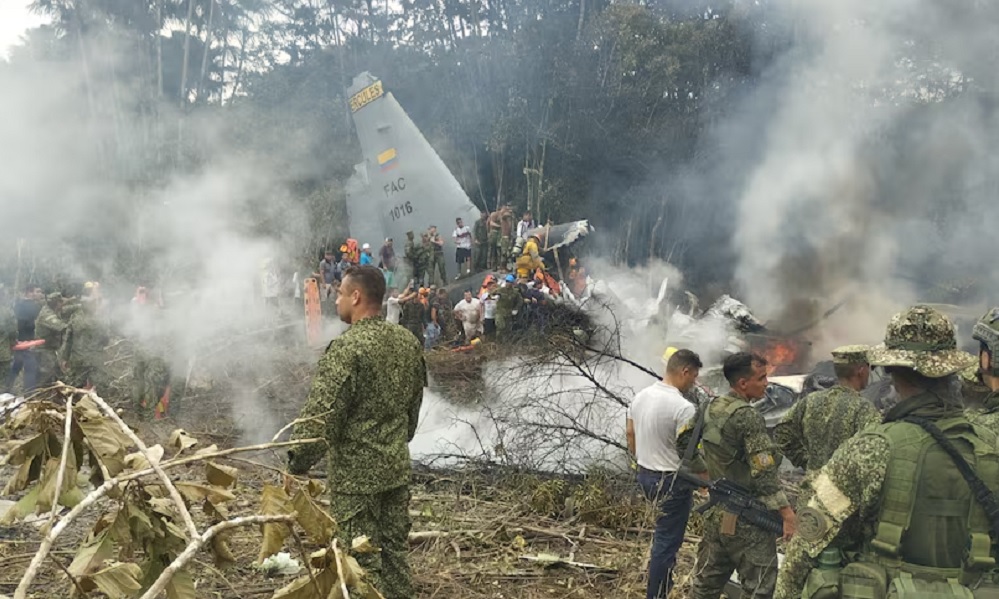
A Colombian military plane crashed in a takeoff disaster on Monday, killing 66 people as rescuers shuttled dozens of survivors to nearby hospitals and searched for four who were still missing, according to a top official.
The Lockheed Martin-built Hercules C-130 transport plane was carrying 128 people, including 11 Air Force members, 115 army personnel and two national police officers, according to Hugo Alejandro Lopez, head of the nation’s armed forces, Reuters reported.
The death toll was nearly double that of the previous figure given by authorities, who continued search and recovery efforts at the site of the deadly crash.
The accident occurred as the plane was taking off from Puerto Leguizamo, on the border with Peru, Defense Minister Pedro Sanchez said on X.
The plane was believed to have suffered an impact near the end of the runway as it was taking off, firefighter Eduardo San Juan Callejas told Caracol, with a wing of the plane later clipping a tree as it was plummeting.
The crash caused the plane to catch fire and detonate some sort of explosive devices on board, he added.
Residents of the remote area were the first to pull out survivors, with videos showing men speeding down a dirt road with wounded soldiers on the back of their motorcycles.
Military vehicles later arrived, though authorities said the crash site was difficult to reach, impeding rescue efforts.
Lopez said that 57 of the survivors had been hospitalized, with 30 of them in non-serious condition at a military clinic.
MODERNIZING THE MILITARY
President Gustavo Petro, in the twilight of his administration, on Monday criticized bureaucratic obstacles for delaying his plans to modernize the military.
“I will grant no further delays; it is the lives of our young people that are at stake,” he said in a post on X. “If civilian or military administrative officials are not up to this challenge, they must be removed.”
Several candidates in Colombia’s upcoming May 31 presidential election offered condolences and called for an investigation.
A spokesperson for Lockheed Martin said the company was committed to helping Colombia as it investigates the incident.
Hercules C-130 planes were first launched in the 1950s and Colombia acquired its first models in the late 1960s. It has more recently modernized some older C-130s with newer models sent from the U.S. under a provision that allows for the transfer of used or surplus military equipment.
Hercules C-130s are frequently used in Colombia to transport troops as part of the military’s operations amid a six-decade-long internal conflict that has claimed more than 450,000 lives.
The tail number of the plane that crashed on Monday matches that of the first of three planes delivered by the U.S. to Colombia in recent years.
At the end of February, another Hercules C-130 belonging to the Bolivian Air Force crashed in the populous city of El Alto, barely missing a residential block.
More than 20 people died in that incident and another 30 were injured, and banknotes from the plane’s cargo scattered around the crash site, prompting clashes between residents and security forces.


Russia deems US military presence in Afghanistan unacceptable

Over 2.13 million Afghan refugees repatriated from Pakistan

Human Rights Watch calls Pakistani airstrike on Kabul rehab center ‘unlawful’

Torkham crossing closes again hours after brief reopening

Trump signature to appear on US currency, ending 165-year tradition

Pakistani military jet downed in Afghanistan’s Jalalabad, pilot captured alive

Afghan Air Force conducts airstrikes in Islamabad, other cities

Prominent Muslim scholar issues fatwa calling for Afghanistan-Pakistan ceasefire

Afghan air force strikes key Pakistani military installations in retaliatory operation

IEA: Special circle in Pakistan has launched mission to destabilize region

Tahawol: Discussion on day 27 of Iran–US war

Saar: Islamic Emirate confident of Durand Line control

Tahawol: Efforts to release Mohammad Rahim from Guantanamo Bay Detention Camp

Saar: End of ceasefire between Afghanistan-Pakistan reviewed

Tahawol: Escalating threats between Iran-US discussed
-

 Latest News4 days ago
Pakistan seeks Russian mediation to resolve Afghanistan tensions
-
 Business5 days ago
Afghani strengthens nearly 10% against US dollar amid banking sector reforms
-

 Latest News4 days ago
World must re-engage to prevent all-out Afghanistan-Pakistan war: Financial Times
-

 Latest News3 days ago
Around 2.3 million tourists visited Afghanistan’s recreational areas during Eid: Ghufran
-

 Sport3 days ago
Afghanistan squad hit by withdrawals ahead of AFC Asian Cup Qualifiers
-

 Latest News3 days ago
Islamic Emirate releases American prisoner Dennis Coyle
-
 Latest News4 days ago
Airstrike on Kabul drug rehabilitation centre sparks legal concerns
-

 Latest News5 days ago
Water crisis deepens in Afghanistan as families struggle for access