
Latest News
More than $5 billion to be invested in first phase of Aynak Copper project in Logar province

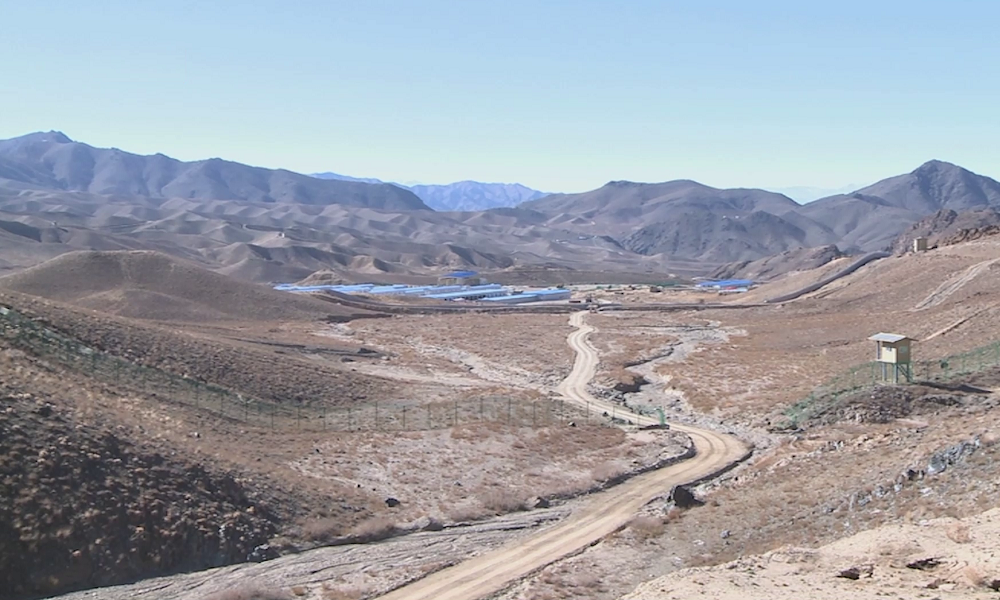
Mawlawi Abdul Kabir, Deputy Prime Minister for Political Affairs, met with Song Wen Bing, President of the Mes Aynak Copper Contracting Company, this week and emphasized that once copper starts being extracted, the country’s mining revenue will be boosted.
According to a statement issued by the ministry, Song reiterated the company’s commitment to ensuring the timely initiation of extraction activities in line with the agreed schedule and operational plan.
Song meanwhile stated that more than $5 billion will be invested in the first phase of the project, with initial mining operations expected to start once the road to the site has been constructed.
He said the necessary machinery is scheduled to be imported next year.
Song also noted that the project will create jobs for 3,000 Afghans and that a group of Afghans will be sent for vocational training in China.
He also said that the surrounding historical sites and changes in the mining plan have contributed to delays in the project.
The Aynak copper mine contains millions of tons of copper and is believed to have the second largest copper reserve in the world.
The contract for the Aynak copper mine was signed in 1999 with the Chinese company MCC for 30 years, but due to security issues and prolonged excavations of ancient relics in the area, the extraction of copper was delayed.
A critical road to the mine has also been a challenge, but construction work on this recently got underway.

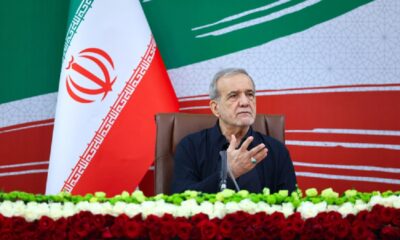


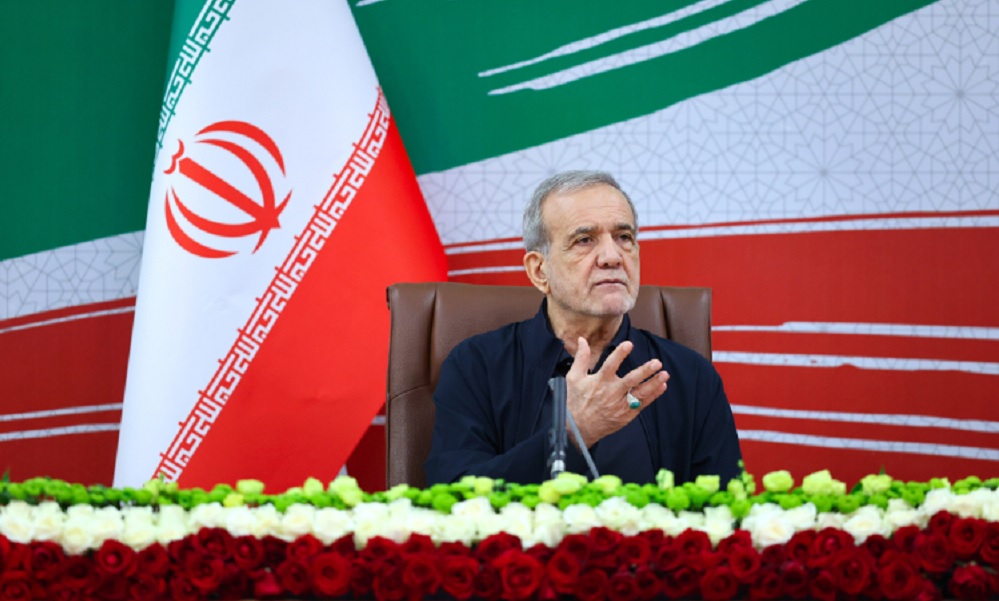
Iranian President Masoud Pezeshkian has said that Afghanistan and Pakistan cooperated with Tehran during the recent conflict to prevent individuals from using their territories to enter Iran and create unrest.
Speaking in a press conference on Saturday, Pezeshkian said Pakistan was cooperating with Iran “fully” while Afghanistan had also provided significant cooperation. He added that Turkmenistan, Russia and Iraq had helped Iran, while dialogue with Azerbaijan continued despite political differences.
Pezeshkian said regional cooperation had played an important role in helping Iran cope with the impact of the war and restrictions on the country.
The Iranian president also accused Iran’s adversaries of attempting to create insecurity along the country’s northwestern and southeastern borders, including plans to attack border posts and send armed individuals into Iran.
He said the plans were unsuccessful, partly because Iran responded to some of the efforts and because neighboring countries took measures to prevent individuals from using their territory to enter Iran.
Pezeshkian specifically highlighted the role of Afghanistan and Pakistan, saying both governments had deployed groups to monitor the situation along their territories.
According to the Iranian president, both countries had also made clear that no one would be permitted to use their soil to enter Iran and cause unrest inside the country.
Latest News
Ariana Airlines brings $2.3 million Boeing 737 engine from US to Kabul
The airline said the delivery represents an important step in strengthening its technical and operational capacity and supporting the continued operation of its fleet.
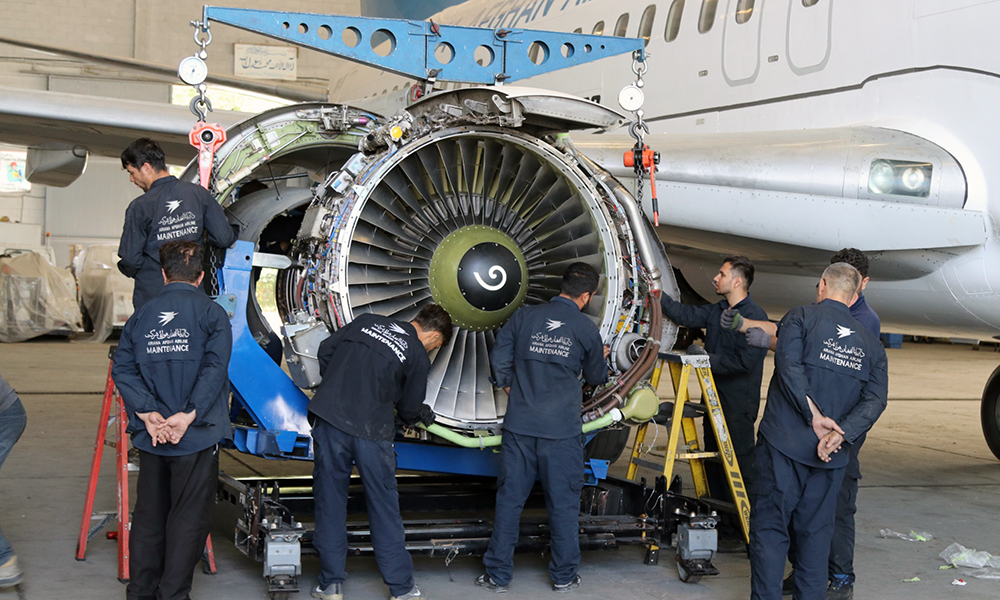
Ariana Afghan Airlines has brought a Boeing 737 aircraft engine from the United States to Kabul following continued efforts by the airline’s leadership to complete the shipment.
According to Ariana Afghan Airlines’ media office, the engine had been held up in the United States due to customs procedures. Following completion of the required process, the engine was cleared and transported to Kabul.
The engine was purchased from US-based Global Engine for $2.3 million. Ariana’s technical team is expected to install the engine on one of the airline’s Boeing 737 aircraft following its arrival.
The airline said the delivery represents an important step in strengthening its technical and operational capacity and supporting the continued operation of its fleet.
Ariana Afghan Airlines’ leadership said it is also working to accelerate the procurement of additional spare parts and technical equipment required to maintain and support the airline’s aircraft and operations.
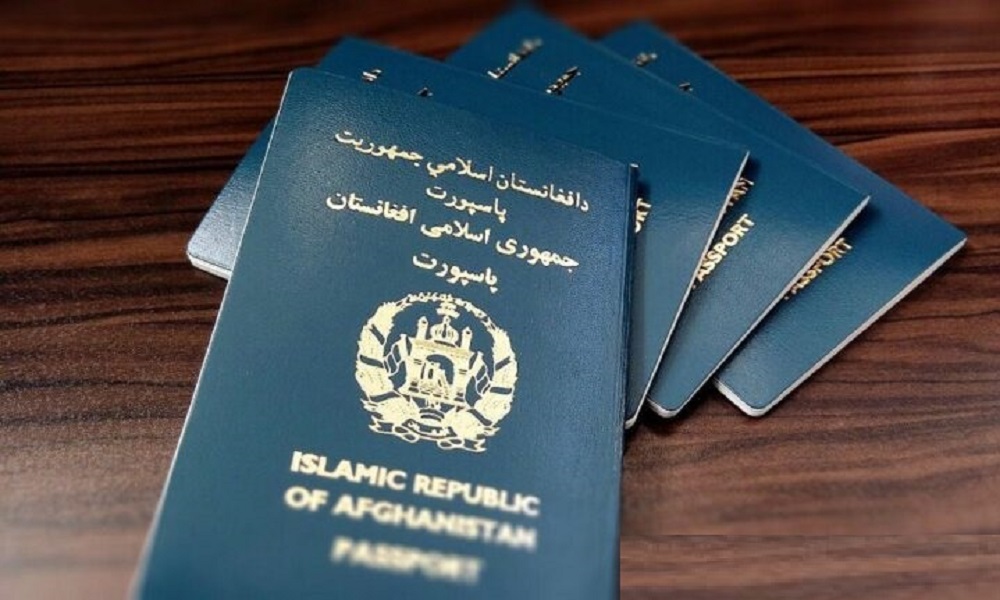
Zabihullah Mujahid, spokesperson for the Islamic Emirate, says more than 650,000 ordinary passports were issued across Afghanistan over the past Hijri year, while the visas of more than 16,000 foreign nationals were extended.
Mujahid made the remarks during the “Government in the Media Mirror” program, held under the theme “Public Services Week.”
According to him, the General Directorate of Statistics and Information also distributed nearly 2 million electronic national ID cards and around 1 million paper ID cards during the 1447 Hijri year.
Mujahid added that the agency provided hundreds of thousands of in-person and online services related to corrections and amendments to national ID cards over the past year.
The Islamic Emirate spokesperson said the General Directorate of Passports has sought to make services faster and easier by reducing the passport application form from nine pages to one page.
He also announced an expansion of services by the state-owned Afghan Post, saying the company delivered more than 5 million domestic mail items over the past year.
According to Mujahid, other measures to expand postal services included verifying and certifying hundreds of thousands of documents, launching express services, establishing a customer service center, and delivering documents directly to people’s homes.


Pezeshkian says Afghanistan, Pakistan helped Iran prevent infiltration into Iran

Abasin Defenders stun Kabul Zalmi in Kabul Premier League

Fire at Saudi factory kills 16 Bangladeshi migrant workers

Kabul Premier League gets underway with high-scoring opener

Iran ties Hormuz reopening to US concessions on several demands

Pakistan’s governance system has ‘collapsed’: Mohsin Naqvi

India offers 1,000 online scholarships for Afghan students for 2026-27 academic year

Turkey spent over $120 million to prepare airport for Qatar-donated U.S. presidential aircraft

FIFA’s inaugural YouTube Creator Cup to stream live on Ariana Television and Ariana Sport YouTube channels

FIFA World Cup semi-final line-up confirmed

Tahawol: Afghanistan: An Alternative to the Strait of Hormuz?

Saar: Pakistan-Saudi-Turkey Pact: Regional Impact

Tahawol: Escalating disputes over Iran war discussed

Saar: Turkey, Saudi Arabia and Pakistan defense pact reviewed

Tahawol: End of US sanctions waiver for Chabahar Port discussed
-

 Latest News5 days ago
First Afghanistan-Ireland ODI abandoned without a ball bowled
-
 Sport4 days ago
Afghanistan holds Russia to 3-3 draw, earns first point at Continental Futsal Championship
-

 Latest News5 days ago
Afghan boxer appears in Greek court over death of Scottish woman
-
 Business4 days ago
Uzbekistan’s Fergana region strengthens economic ties with Afghanistan
-
 Regional4 days ago
Iran threatens to hit Gulf states if US launches new strikes
-
 Regional2 days ago
Goods transporters to go on strike from Saturday after talks with Pakistan govt fail
-
 World2 days ago
US Senate passes Russia sanctions championed by Graham; US House next
-

 Sport2 days ago
Rashid Khan takes six as Afghanistan thrash Ireland by 92 runs