
Latest News
Muttaqi calls for cooperation in letter to US Congress

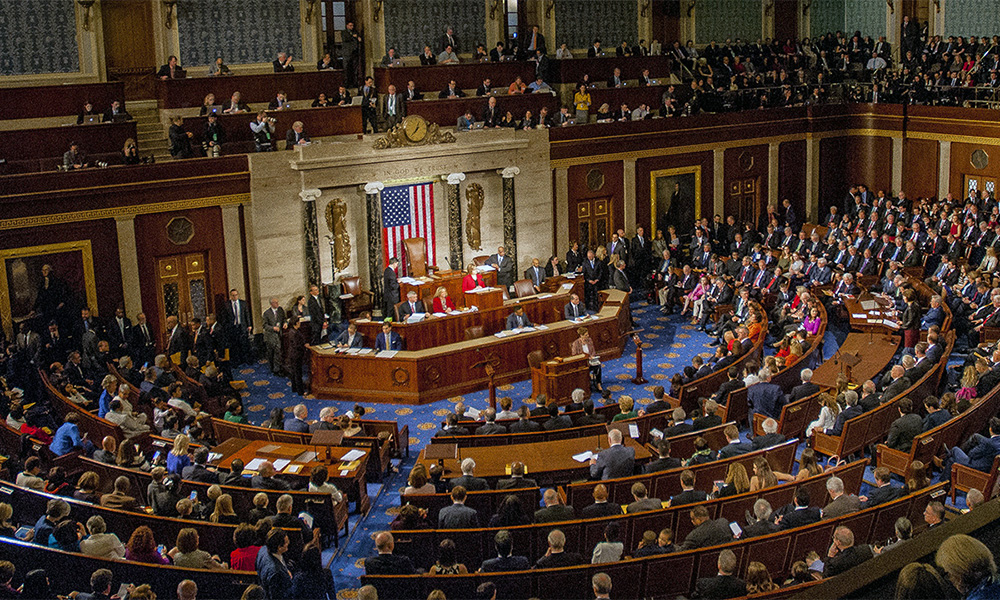
Afghanistan’s acting foreign minister Mawlawi Amir Khan Muttaqi warned Wednesday that continued “sanctions” will not help the current situation and could instead lead to a major crisis including a mass migration.
In a letter addressed to the United States Congress, Muttaqi said after suffering decades of war, the Afghan people now “have a right to financial security.”
“Currently the fundamental challenge of our people is financial security and the roots of this concern lead back to the freezing of assets of our people by the American government,” he said.
He also said that following the signing of the Doha Agreement in February last year, the Islamic Emirate of Afghanistan (IEA) “no longer find ourselves in direct conflict with one another nor are we a military opposition, what logic could possibly exist behind the freezing of our assets?”
“We believe that both sides have a great opportunity to build positive relations, moving forward and learn lessons from past bitter experiences. At a time when we have an excellent opportunity for positive relations, reaching for the option of sanctions and pressure cannot help improve our relations.”
He said the country now has a “united, responsible and non-corrupt government,” and that “practical steps have been taken towards good governance, security and transparency, islands of power have been eliminated, agents of corruption, embezzlement, usurpation and infringement of other rights have been neutralised, security has taken hold throughout the country, no threat is posed to the region or world from Afghanistan and a pathway has been paved for positive cooperation.”
“Afghanistan now has everything available for growth and development, and the United States of America can also invest in the manufacturing, agriculture and mining sectors of Afghanistan,” he said.
However, he said the IEA understands “the concerns of the international community and America, and it is necessary for both sides to take positive steps in order to build trust.”
Muttaqi also stated that freezing of assets and economic sanctions can harm health, education and other civil service systems and that this “will only harm the common Afghans and this will serve as the worst memory ingrained in Afghans at the hands of America.”
On the humanitarian crisis, Muttaqi stated that the country has already been hard hit by the coronavirus pandemic, drought, war and poverty and that the imposition of “sanctions” has hampered trade and impacted the process of providing humanitarian assistance.
“Assessments by the United Nations and other humanitarian organizations conclude that if these conditions continue, the Afghans will face a dire situation this winter,” he said.
He also pointed out that there was not “logical” justification for allowing women and children to suffer due to the lack of health services, food, shelter and other primary needs.
In calling for Afghanistan’s assets held by the United States to be released, he said he hopes Congress will take the matter seriously and consider the people.
“In conclusion, I request the government of the United States of America take responsible steps towards addressing the humanitarian and economic crisis unfolding in Afghanistan so that doors for future relations are opened, assets of Afghanistan’s Central Bank are unfrozen and sanctions on our banks are lifted.”












Kazakhstan’s Foreign Minister Mukhtar Tileuberdi has called for pragmatic and coordinated international engagement with Afghanistan, saying the country’s long-term stability is closely linked to the security and sustainable development of Central Asia.
Speaking during the general debate of the 81st session of the United Nations General Assembly in New York on Friday, Tileuberdi said humanitarian assistance to Afghanistan remains essential but alone cannot break the cycle of poverty, displacement and dependency.
He said Kazakhstan supports a “pragmatic, coordinated and step-by-step” approach to international engagement with Afghanistan, with the United Nations playing a central role.
Tileuberdi also said Kazakhstan is working with the UN to operationalize the United Nations Regional Centre for the Sustainable Development Goals for Central Asia and Afghanistan in Almaty.
He said the success of the centre should be measured by the results and assistance it delivers to the region.


Abu Muslim Farah defeat Khurasan Faryab 2-0 in ACL season six

Saar: Concerns over Pakistan’s political crisis discussed

Afghanistan Champions League: Omar Zawak Herat beat Toofan Herat 1-0

Blast in Pakistan’s Dera Ismail Khan kills 11, injures 30

Ariana Afghan Airlines increases Kabul-Delhi cargo flights

Saudi energy group signs major Afghanistan deals covering gas exploration and pipeline plans

Trump floats idea of renaming Atlantic or Pacific Ocean

US hits Egyptian bank branches with Iran sanctions as war marks six months

Nepal flood rescue mission enters critical phase as thousands remain missing

Iranian clubs to face Gulf opponents at neutral venues in Asian Champions League Elite
Saar: Concerns over Pakistan’s political crisis discussed

Exclusive interview with Abdul Latif Mansoor, Minister of MRRD

Tawsia: Overview of Afghanistan’s iron mines

Tahawol: Discussion on fresh Pakistani airstrikes on Afghanistan

Saar: Calls for international support for Afghanistan discussed
-

 World5 days ago
CNN, MS NOW and Politico sue Trump, challenging White House ban
-

 Latest News3 days ago
Ariana Afghan Airlines ranks seventh among 45 Central Asian airlines
-

 Latest News4 days ago
UN reiterates call for respect for international law after Kunar airstrikes
-

 Regional3 days ago
US and Iran hold first talks since June after Trump’s ‘annihilation’ threat
-

 Latest News3 days ago
Silk Road highway in Wakhan corridor now reaches the China border
-

 Latest News5 days ago
Afghan Official: Pakistan’s airstrikes will not go unanswered
-

 Sport4 days ago
Afghan boxing referee heads to China for international festival
-

 Regional5 days ago
G7 foreign ministers call on Iran to stop arming Houthis