
Pakistan threatens further action after border clashes with Afghanistan
Regional powers, including Iran, Saudi Arabia, and Qatar, have urged both sides to exercise restraint and settle disputes through dialogue to prevent a wider conflict.


Pakistan’s Deputy Prime Minister and Foreign Minister Ishaq Dar said on Sunday that Islamabad has carried out “befitting defensive strikes” against Islamic Emirate of Afghanistan (IEA) targets along the border following what he described as “unprovoked firing and raids” by Afghan forces.
In a statement posted on X, Dar said Pakistan was “deeply concerned over the developments on the Pak–Afghan border”, accusing the IEA of serious provocation and cross-border aggression.
“Unprovoked firing and raids along the Pak-Afghan border by the Taliban (IEA) Government is a serious provocation,” Dar wrote. “Pakistan’s befitting response and strikes are against Taliban (IEA) infrastructure and to neutralize Fitna-e-Khawarij and Fitna-e-Hindustan terrorist elements operating from Afghan soil.”
He added that Pakistan’s actions were defensive in nature and not directed toward civilians.
“Our defensive response is not targeted towards peace-loving Afghan civilians. Unlike Taliban (IEA) forces, we are exercising extreme caution to avoid loss of civilian lives,” he said.
Dar urged Kabul to “take concrete measures against terrorist elements and their perpetrators that wish to derail Pak–Afghan relations”, warning that Pakistan would continue to defend its sovereignty and citizens.
“Pakistan will take all possible measures to defend its own territory, sovereignty and its people,” he said.
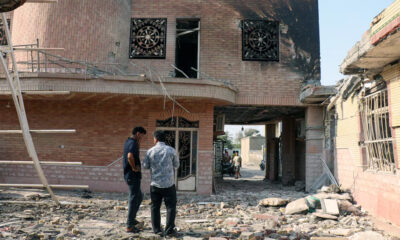
The statement came amid escalating clashes between Pakistani and Afghan forces along the Durand Line, particularly near Spin Boldak–Chaman and Kurram, where both sides have exchanged heavy fire since late Saturday night. Officials from Islamabad and Kabul have accused each other of initiating the hostilities.
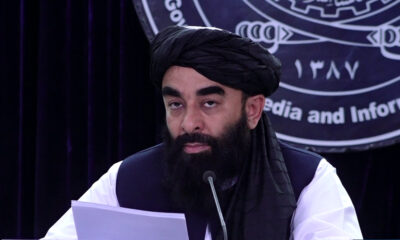
Earlier Sunday, Zabihullah Mujahid, spokesman for the Islamic Emirate of Afghanistan, claimed that 58 Pakistani soldiers were killed, 30 wounded, and more than 20 security posts captured in a “revenge operation.” He said the IEA had cancelled a planned visit by a Pakistani delegation following what it called violations of Afghan airspace. Pakistan has not confirmed those figures.
The flare-up marks one of the most serious border escalations since the IEA took power in 2021, threatening already strained relations between the two neighbours. Pakistan has repeatedly accused the IEA of harbouring Tehreek-e-Taliban Pakistan (TTP) fighters responsible for deadly attacks inside Pakistan — an allegation Kabul denies.
Regional powers, including Iran, Saudi Arabia, and Qatar, have urged both sides to exercise restraint and settle disputes through dialogue to prevent a wider conflict.
Analysts warn that sustained clashes could disrupt trade routes, trigger refugee flows, and further destabilize the region, especially as both governments grapple with internal security and economic pressures.







Latest News
Muttaqi, UN official discuss cooperation and Doha Process
The ministry said Muttaqi and DiCarlo also shared views on future engagement and cooperation regarding the Doha Process.

Afghanistan’s Foreign Minister Amir Khan Muttaqi held a phone call with Rosemary DiCarlo, the UN Under-Secretary-General for Political and Peacebuilding Affairs, the Ministry of Foreign Affairs said.
According to the ministry, the two sides discussed the overall state of cooperation between the Islamic Emirate and the United Nations and exchanged views on ways to further strengthen and expand future cooperation.
The ministry said Muttaqi and DiCarlo also shared views on future engagement and cooperation regarding the Doha Process.
No further details were provided about the timing of the next round of engagement or specific areas of cooperation.
Latest News
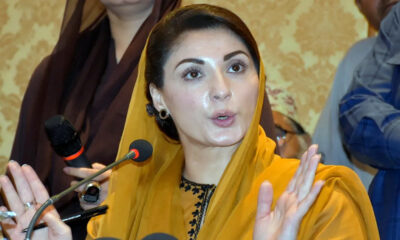
Maryam Nawaz says Punjab faces greater security threats from neighbouring provinces
Punjab shares borders with Khyber Pakhtunkhwa and Balochistan to the north and west, Sindh to the south and India to the east.
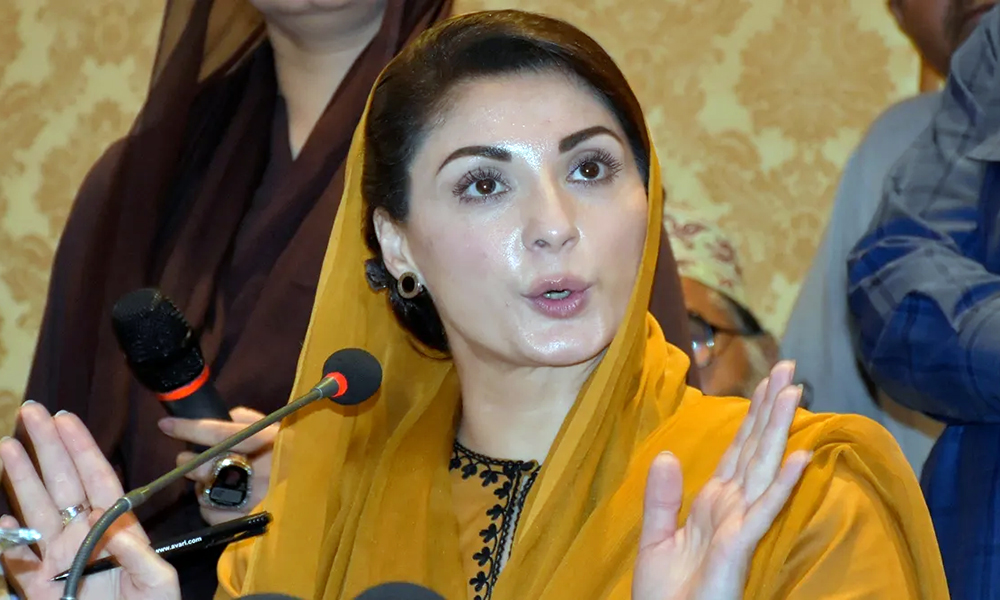
Punjab Chief Minister Maryam Nawaz Sharif says the province faces greater security threats from neighbouring Pakistani provinces than from neighbouring countries.
Speaking at an event in Lahore on Saturday, Maryam said her priority was to ensure that people in Punjab could sleep without fear.
“Threats to Punjab from neighbouring countries are fewer, while greater threats come from neighbouring provinces,” she said.
She added that terrorist attacks enter Punjab from these areas.
Punjab shares borders with Khyber Pakhtunkhwa and Balochistan to the north and west, Sindh to the south and India to the east.
Her comments come as Pakistan’s government has repeatedly accused India and the Islamic Emirate of Afghanistan of contributing to insecurity, particularly in Balochistan and Khyber Pakhtunkhwa.
The Islamic Emirate has rejected the allegations, saying insecurity in Pakistan stems from the country’s internal problems.
International Sports
Messi returns to Inter Miami after Argentina retirement
The Argentine superstar marked his return by creating both of Miami’s goals, underlining his continued importance to the club after revealing his decision to step away from the Argentina national team.

Lionel Messi returned to Inter Miami action on Saturday following his announcement that he is retiring from international football, helping the Major League Soccer champions to a 2-2 draw with Atlanta United.
The Argentine superstar marked his return by creating both of Miami’s goals, underlining his continued importance to the club just days after revealing his decision to step away from the Argentina national team.
The match was delayed by 90 minutes because of thunderstorms and lightning, but Messi provided plenty of fireworks once play finally got underway.
Miami opened the scoring in the 32nd minute when Brazilian midfielder Casemiro rose to head home Messi’s corner.
Atlanta hit back just three minutes later, with former Newcastle forward Miguel Almirón firing a low shot beyond the Miami defence.
Messi was again at the centre of the action just before half-time. He started a move down the left that eventually allowed former Liverpool and Barcelona striker Luis Suárez to calmly finish and restore Miami’s lead.
But Atlanta refused to surrender, with Swiss striker Breel Embolo converting an 87th-minute penalty to earn the visitors a point.
For Messi, the match represented his first appearance since announcing his international retirement and offered an early glimpse of the next chapter of his career, with his focus now firmly on Inter Miami.
The result came during a busy night of MLS action.
Toronto and Chicago played out a remarkable 4-4 draw, while Philadelphia defeated Montreal 2-0, with 16-year-old Cavan Sullivan scoring his fourth goal of the season.
Sullivan now has 11 goal contributions this season, surpassing Freddy Adu’s previous record of 10 for a 16-year-old.
In Orlando, Antoine Griezmann scored in the 28th minute to give the hosts a 1-0 victory over San Diego, while Austin rescued a 1-1 draw against San Jose through Guilherme Biro’s seventh-minute stoppage-time equaliser.


Muttaqi, UN official discuss cooperation and Doha Process

Maryam Nawaz says Punjab faces greater security threats from neighbouring provinces

Messi returns to Inter Miami after Argentina retirement

US and Iran exchange fire on vessels near Strait of Hormuz

Cuban and Afghan immigrants deported from US arrive in Guyana

Four mediators struggle to secure lasting Pakistan-Afghanistan ceasefire

HesabPay unveils new visa card and digital payment app in Kabul

AFC Champions League Elite draw nears as Al-Nassr seeded above Al-Hilal

Afghanistan secure direct qualification for 2027 Men’s ODI World Cup

WHO warns aid cuts disrupting healthcare services across Afghanistan

Tahawol: Afghanistan and great power rivalry in Central Asia discussed

Saar: Iran-US ongoing tensions in Middle East discussed

Tahawol: US rejection of Islamic Emirate’s proposal discussed

Saar: Pakistan’s conditions for improving ties with Afghanistan discussed

Tahawol: Shifting regional views on Islamic Emirate discussed
-

 International Sports4 days ago
Iranian clubs to face Gulf opponents at neutral venues in Asian Champions League Elite
-
 Latest News5 days ago
Putin: Russia in close contact with Tajikistan over Afghanistan security
-

 Sport4 days ago
Ariana Television Network secures exclusive rights to Afghanistan’s 2026/27 cricket series
-
 Latest News2 days ago
Khyber Chamber demands reopening of Torkham crossing
-
 Regional5 days ago
Pakistan to assume SCO presidency as Shehbaz signs summit declaration
-
 Latest News5 days ago
Afghan envoy says Kabul will not allow Afghan soil to be used against Pakistan
-
Latest News5 days ago
Crossing closures cost Pakistani traders billions
-
 Regional2 days ago
Syria begins destroying Assad-era chemical weapons