
Latest News
Pakistan’s actions target militants, not religious sites: Khawaja Asif
He rejected claims equating these operations with India’s alleged strikes on mosques and religious seminaries in Bahawalpur and Muridke, stressing that Pakistan does not target religious or civilian sites.

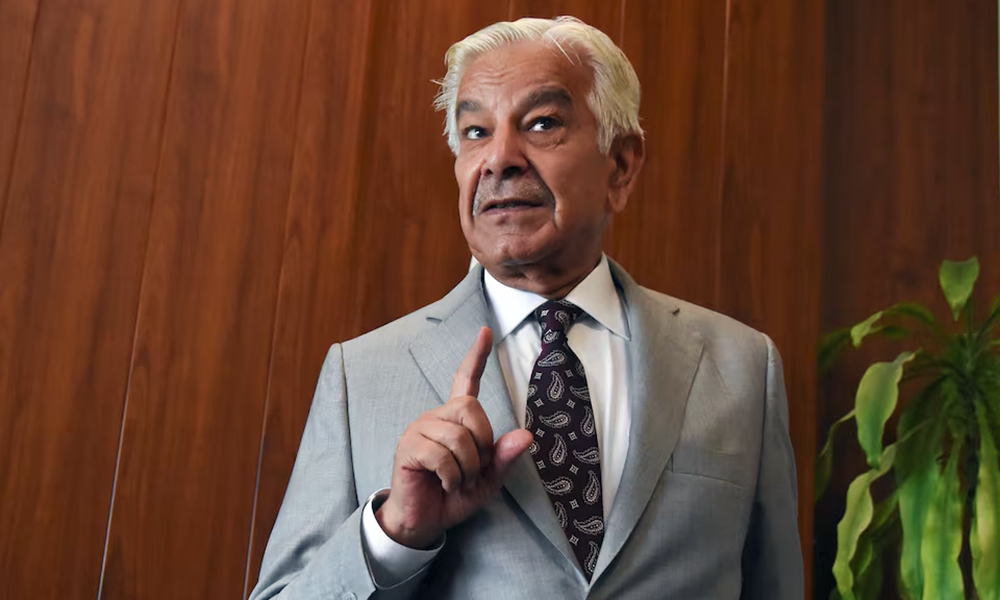
Pakistan’s Defence Minister Khawaja Muhammad Asif has dismissed comparisons between Pakistan’s counterterrorism operations along the disputed Durand Line and what he described as India’s attacks on religious sites, saying such parallels are “entirely wrong and inappropriate.”
In a statement issued Tuesday, Asif said Pakistan’s military actions are strictly aimed at verified camps belonging to Tehreek-e-Taliban Pakistan (TTP) militants operating from Afghanistan. He rejected claims equating these operations with India’s alleged strikes on mosques and religious seminaries in Bahawalpur and Muridke, stressing that Pakistan does not target religious or civilian sites.
The defence minister said the international community, including the United Nations, has repeatedly expressed concern over the threat of terrorism they claim is originating from Afghanistan. He said these concerns are reinforced by continued militant infiltration and attacks inside Pakistan, which, according to him, are carried out by armed groups entering from Afghan territory.
Referring to India’s allegations surrounding the Pahalgam incident, Asif said New Delhi has failed to present credible or verifiable evidence to support its claims. He added that Pakistan had offered to cooperate with an independent and impartial investigation, an offer that India declined.
Asif further said a recent United Nations report had described India’s actions as illegal and based on unsubstantiated claims, while affirming that Pakistan’s response was justified under international law. He said Pakistan has already addressed and clarified allegations regarding India, what he termed proxy extremist elements, and their alleged supporters.
Reiterating Pakistan’s stance, the defence minister said the country remains vigilant and determined to protect its sovereignty and national security. He emphasized that Pakistan will continue its counterterrorism efforts and will challenge what he described as baseless accusations and hostile narratives at all international forums.
Meanwhile, the Islamic Emirate of Afghanistan (IEA) has consistently rejected Pakistan’s accusations, maintaining that Afghanistan does not allow any group to operate from its soil. Afghan authorities have repeatedly stated that Pakistan’s security challenges are an internal matter and should be addressed domestically.









The United States and Israel are considering a possible land blockade of Iran as part of efforts to intensify economic pressure on Tehran, according to The Telegraph.
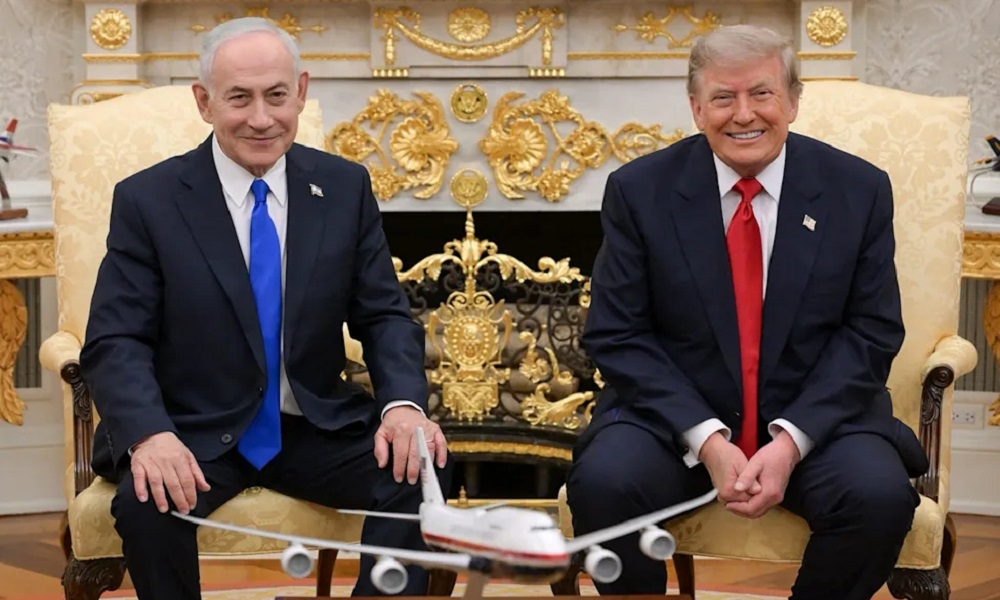
The proposal is among several options being discussed by US President Donald Trump and Israeli Prime Minister Benjamin Netanyahu after months of military strikes and pressure campaigns failed to force Iran to change its position.
Sources familiar with the discussions said Trump and Netanyahu talked about increasing pressure on Iran through both military and non-military measures during their meeting at the White House.
Under the proposed plan, Washington and Tel Aviv could seek cooperation from Iran’s neighbouring countries to restrict or close border crossings, limiting the movement of goods into and out of the country.
A senior Israeli official told The Telegraph that blocking Iran’s land routes could be one possible option, arguing that preventing imports and exports would place further strain on the country’s economy.
Retired US Lieutenant General Sean MacFarland said a land blockade would be extremely difficult to implement but could isolate Iran economically if its ability to trade was significantly reduced.
Iran shares land borders with Iraq, Turkey, Pakistan, Afghanistan, Turkmenistan, Armenia and Azerbaijan. Any such measure would require cooperation from several countries, some of which have close ties with Tehran.
Key border crossings, including routes linking Iran with Turkmenistan, could become targets under the plan. However, countries cooperating with the blockade could face economic losses and possible retaliation from Iran.
The proposal comes as Washington seeks new ways to pressure Tehran and potentially bring it back to negotiations. A land blockade would align with Trump’s “maximum pressure” strategy, which has focused on weakening Iran’s economy through sanctions and other measures.
The plan could also affect Iran’s ability to import military equipment, including reported deals with China for air defence systems and other weapons supplies.

Afghanistan’s economy continued to grow modestly in June 2026, supported by resilient domestic demand, stable prices and stronger revenue collection, but the pace of growth remains insufficient to improve living standards, according to the World Bank’s latest Afghanistan Economic Monitor.
The report said economic growth has failed to keep pace with rapid population growth, driven in part by the return of millions of Afghans, resulting in a 5.6% decline in per capita income and mounting pressure on household welfare.
Headline inflation eased to 7.6% in June from 8.0% in May, as food prices fell with the start of the domestic harvest season and continued imports. However, core inflation rose to 8.3%, reflecting persistent pressures from housing and healthcare costs.
The World Bank said the Afghan currency depreciated modestly to AFN 64.4 per U.S. dollar in June, although it remained stronger than a year earlier. It noted that improved inflation differentials with neighboring countries enhanced Afghanistan’s external price competitiveness.
The report also highlighted continued disruptions to regional trade caused by the closure of key Durand Line crossings with Pakistan and geopolitical tensions in the Middle East. While businesses increasingly relied on Central Asian transit routes, Afghanistan’s trade deficit widened 11% from the previous month and 19% year-on-year to $984.3 million in June.
Exports totaled $77.7 million in June, down 2% from May but up 19% compared with a year earlier. Textile exports surged 304% year-on-year, while food exports declined month-on-month and coal exports remained negligible. India remained Afghanistan’s largest export destination, accounting for 33.6% of total exports.
Imports rose to $1.06 billion, up 10% from May and 19% from a year earlier, driven by stronger demand and a shift toward Central Asian transit corridors, which accounted for 48% of imports. Iran remained Afghanistan’s largest import source, supplying 31% of total imports.
On public finances, domestic revenue reached AFN 17.3 billion in June, down from the previous month but 8.7% higher for the fiscal year to date, supported by improved tax administration and higher non-tax revenues. Public expenditure declined to AFN 17.5 billion, while the fiscal position remained in surplus as spending continued to be limited by available domestic revenues.


Tawsia: Efforts to increase Ghori cement production discussed

Israel and US consider Iran land blockade

Spain says migrant surge into Ceuta has eased as thousands return to Morocco

UN updates sanctions list for five IEA officials

Trump says deal reached to disarm Hamas, Israeli support for plan remains uncertain

India offers 1,000 online scholarships for Afghan students for 2026-27 academic year

Cricket world pays tribute to Afghanistan fast bowler Shapoor Zadran

Turkey spent over $120 million to prepare airport for Qatar-donated U.S. presidential aircraft

Thousands pay final respects as Afghan cricketer Shapoor Zadran buried in Kabul

Shapoor Zadran’s body returns to Kabul as family, teammates and officials pay tribute
Tawsia: Efforts to increase Ghori cement production discussed

Tahawol: Germany’s deportation of non-criminal Afghan refugees

Saar: Discussion on ongoing US-Iran tensions

Tahawol: Calls for implementation of development projects in Afghanistan

Saar: Deporting Afghan refugees from Germany discussed
-

 Latest News16 hours ago
Pakistan’s governance system has ‘collapsed’: Mohsin Naqvi
-
 Business5 days ago
Iran seeks to establish free trade zone with Afghanistan and China
-
 Latest News5 days ago
Uzbekistan issues 5,000 visas to Afghan citizens this year
-
 Latest News4 days ago
Afghanistan’s Swiss fund grows to $4.2 billion: Ahadi
-

 Latest News4 days ago
Badakhshan information chief killed in armed attack; tribal elder also slain in Nimroz
-
 Latest News4 days ago
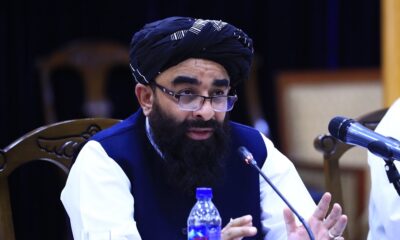
Islamic Emirate launches media initiative, says Badakhshan security situation under control
-

 Sport2 days ago
Afghanistan set for crucial five-match ODI series against Ireland
-
 Latest News3 days ago
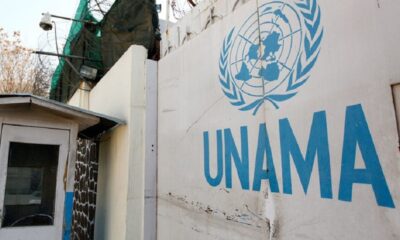
UNAMA: 57 civilians killed in Pakistan attacks in three months