
Latest News
Study finds almost 80% of Afghan girls missing out on education

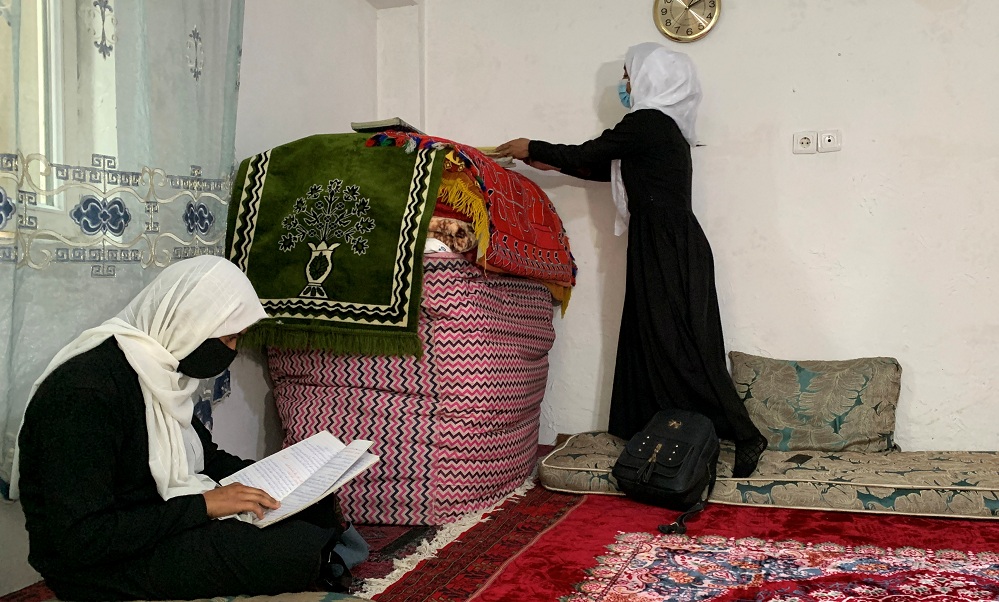
Almost 80% of Afghan girls are missing out on an education, Save the Children said Friday- almost a month after the Islamic Emirate of Afghanistan (IEA) issued a ban on teenage girls going to school.
A study by Save the Children, UNICEF and its Education Cluster partners has assessed who has returned to school in the past month across Afghanistan. The report shows the majority of secondary school girls – about 850,000 out of 1.1 million – are not attending classes.
Save the Children Afghanistan’s Acting Asia Regional Director, Olivier Franchi, said: “Girls were absolutely shattered last month when they arrived at classes – excited for the new school year – and were told to go home. Since then, Save the Children has spoken with girls who say they are depressed and heartbroken at being denied their fundamental right to learn.
“Education is a lifeline for all children, especially girls. Without it, they are at increased risk of violence, abuse, and exploitation, including early marriage. For the sake of girls’ survival in Afghanistan and for the future of the country, Save the Children is calling on the Taliban (IEA) to immediately allow girls of all ages to return to school. There is no issue – administrative, logistical or otherwise – that can possibly justify the continuation of a policy that denies girls access to their education.
“The international community also has an essential role to play and must continue to provide funding to support and protect girls who are still in school. The education system in Afghanistan is hanging by a thread and now is not the time to back away.”
Parvana (not her real name), 14, from Kabul province, is in grade seven. She hasn’t been able to attend formal schooling due to fears of violence but has instead been attending Save the Children-run community-based education classes. Parvana said: “When my brother was going to school and I couldn’t previously, I felt awful. All I wanted was to go to school, to study, to become someone in the future and make my family and the people from this area proud.
“Education is not only important for girls, but everyone should be educated. No one is born to stay at home. We are born to work hard, study and reach our goals.”
“These (Save the Children) classes can help girls left behind in their studies. Education is the most important thing in life. For my children, I hope they study and improve and get to live their dreams. For myself, I hope to become a good teacher and to serve the students of this society,” said one mother.
It’s estimated that almost 8 million school-aged children need support to access education right now in Afghanistan – an increase from 2.6 million compared to last year. Insecurity, poverty, cultural traditions, poor infrastructure, inadequate learning materials and a lack of qualified female and male teachers are continuing barriers to children accessing education.
To ensure children have still had access education during the last eight months, Save the Children has been running Community-Based Education classes and providing children and teachers with learning and classroom kits. The organisation has also been working with female secondary school graduates to support them to become teachers and to pass the university entrance exam.












Kazakhstan’s Foreign Minister Mukhtar Tileuberdi has called for pragmatic and coordinated international engagement with Afghanistan, saying the country’s long-term stability is closely linked to the security and sustainable development of Central Asia.
Speaking during the general debate of the 81st session of the United Nations General Assembly in New York on Friday, Tileuberdi said humanitarian assistance to Afghanistan remains essential but alone cannot break the cycle of poverty, displacement and dependency.
He said Kazakhstan supports a “pragmatic, coordinated and step-by-step” approach to international engagement with Afghanistan, with the United Nations playing a central role.
Tileuberdi also said Kazakhstan is working with the UN to operationalize the United Nations Regional Centre for the Sustainable Development Goals for Central Asia and Afghanistan in Almaty.
He said the success of the centre should be measured by the results and assistance it delivers to the region.


Trump rejects Iranian proposal to open Hormuz and end fighting

Abu Muslim Farah defeat Khurasan Faryab 2-0 in ACL season six

Saar: Concerns over Pakistan’s political crisis discussed

Afghanistan Champions League: Omar Zawak Herat beat Toofan Herat 1-0

Blast in Pakistan’s Dera Ismail Khan kills 11, injures 30

Saudi energy group signs major Afghanistan deals covering gas exploration and pipeline plans

Trump floats idea of renaming Atlantic or Pacific Ocean

US hits Egyptian bank branches with Iran sanctions as war marks six months

Nepal flood rescue mission enters critical phase as thousands remain missing

Iranian clubs to face Gulf opponents at neutral venues in Asian Champions League Elite
Saar: Concerns over Pakistan’s political crisis discussed

Exclusive interview with Abdul Latif Mansoor, Minister of MRRD

Tawsia: Overview of Afghanistan’s iron mines

Tahawol: Discussion on fresh Pakistani airstrikes on Afghanistan

Saar: Calls for international support for Afghanistan discussed
-

 Latest News4 days ago
Ariana Afghan Airlines ranks seventh among 45 Central Asian airlines
-

 Latest News5 days ago
UN reiterates call for respect for international law after Kunar airstrikes
-

 Regional4 days ago
US and Iran hold first talks since June after Trump’s ‘annihilation’ threat
-

 Latest News4 days ago
Silk Road highway in Wakhan corridor now reaches the China border
-

 Regional3 days ago
Iran airlines cancel flights as US sanctions hit
-

 Latest News5 days ago
Afghan Official: Pakistan’s airstrikes will not go unanswered
-

 Sport5 days ago
Afghan boxing referee heads to China for international festival
-
 Regional5 days ago
G7 foreign ministers call on Iran to stop arming Houthis