
Latest News
Taliban call on the world to recognize their movement

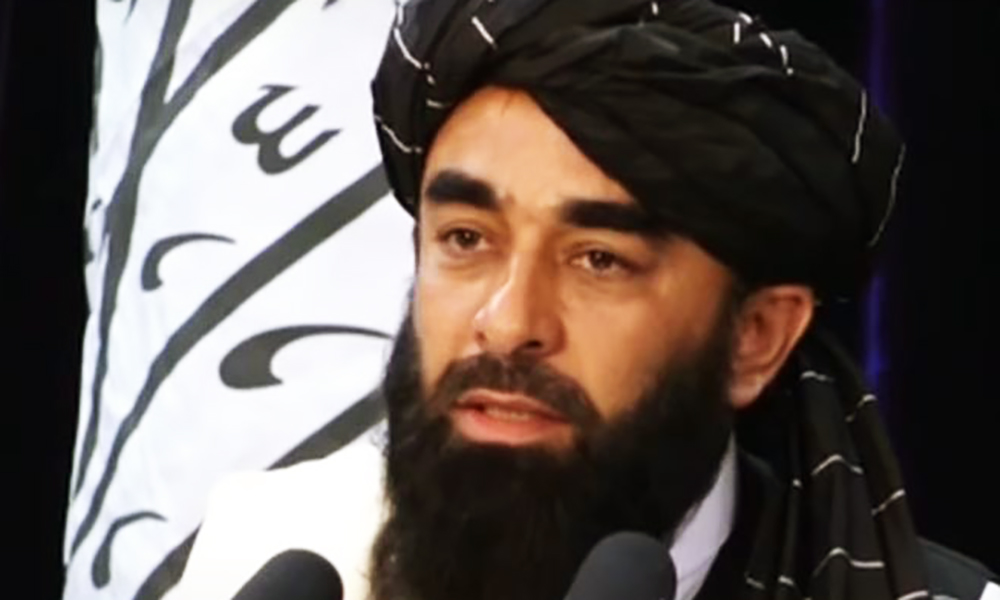
Taliban spokesman Zabihullah Mujahid said Thursday that the Taliban wants friendly relations with all countries around the world, especially the United States, and that they have not been hostile towards any country.
Speaking at a ceremony held to mark the 102nd anniversary of independence from British influence, Mujahid also called on the people to work with them in order to create an inclusive system and to prevent the country from being plunged into another crisis.
A number of Taliban members also said that this opportunity should be used to develop the country.
This year the Independence Day ceremony was held under the Taliban flag, and the Taliban called for the day to be respected.
Mujahid also spoke about political issues at the ceremony and called on countries around the world to recognize their movement.
Mujahid said they want friendly relations with all countries, but warned that if countries intervene again, they will rise up against them.
“The world should not be afraid of us. We must be recognized. We want friendly relations with all countries of the world, including the United States,” Mujahid said.
For the Taliban, Thursday’s celebration of independence took on a new dimension after they again defeated a major power.
“This year, we celebrate this day by defeating another superpower. All the people are happy that today our country was saved from foreign interventions,” said Sardar Mohammad Shakib, a member of the Taliban’s Cultural Affairs Commission.
The Taliban see their rule as an opportunity for the people and urge them to put aside their personal desires and seize the chance to help build a comprehensive system.
“We ask the people to cooperate with us in building the system and to put aside their personal desires. All problems can be solved in the light of Islam,” said Ahmadullah Wasiq, deputy head of the Taliban Cultural Affairs Commission.
The Taliban’s call for international recognition comes after a number of Western countries have said they will not recognize a new government that came into power by force.





Latest News
EU announces 15 million euros to strengthen livelihoods and food security in Afghanistan
Eric Beaume, Head of Cooperation at the EU Delegation, said the contribution reflects the EU’s continued commitment to Afghan communities, particularly women, children and vulnerable rural families.
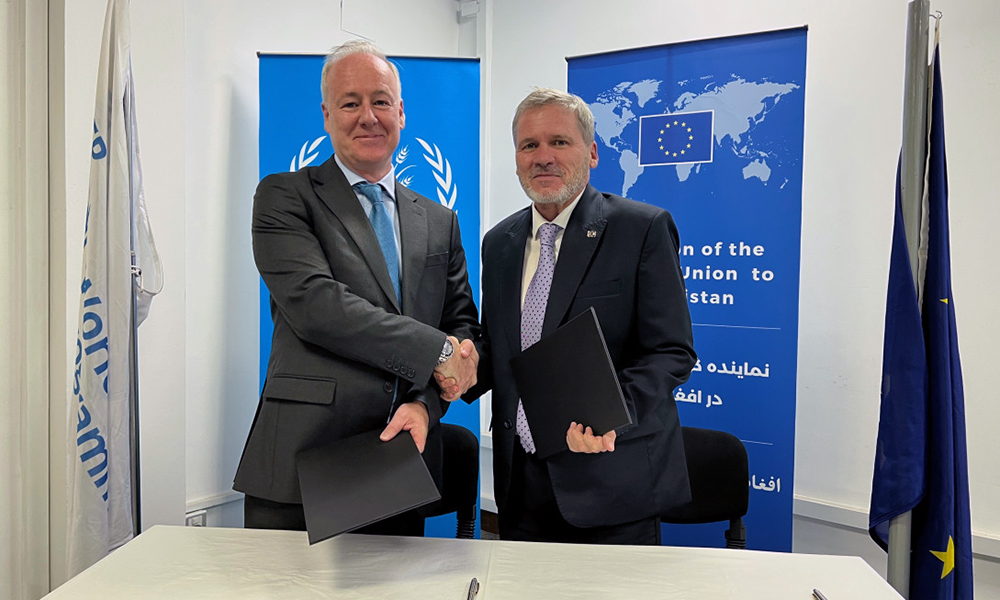
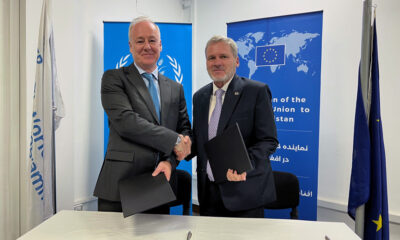
The European Union has announced an additional €15 million in funding for its ongoing partnership with the UN World Food Programme (WFP) to strengthen food security and climate resilience in Afghanistan.
The funding will support efforts to address food insecurity, malnutrition, poverty and the impacts of climate change by combining school feeding, climate-resilient livelihoods, sustainable natural resource management and private-sector development in agribusiness.
Eric Beaume, Head of Cooperation at the EU Delegation, said the contribution reflects the EU’s continued commitment to Afghan communities, particularly women, children and vulnerable rural families.
He said the investment in agribusiness, food value chains and school feeding will help improve nutrition, protect livelihoods and strengthen the economic resilience of vulnerable communities.
The additional funding will extend the programme for 12 months, with a greater focus on agribusiness, food safety and quality, while school feeding and climate-resilience activities will continue.
John Aylieff, WFP Representative and Country Director in Afghanistan, welcomed the EU’s support, saying it would help strengthen livelihoods, improve local food systems and create more opportunities for women and young people.
The EU said the new funding builds on its long-standing support for resilience and school feeding programmes in Afghanistan and aims to strengthen the local private sector through local procurement and stronger links with humanitarian programmes.
Latest News
IEA says US pressure preventing countries from recognizing Afghan government
He said some countries remain under the influence of major global powers, preventing them from making further progress in their relations with the Islamic Emirate.
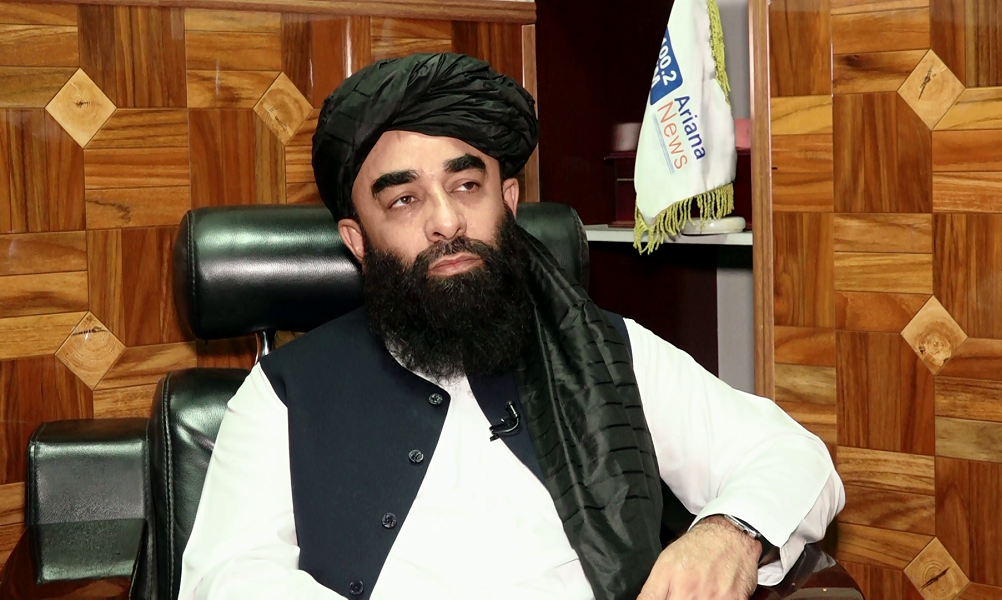
The Islamic Emirate says pressure from the United States on the United Nations and some countries has hindered formal recognition of its government in Afghanistan.
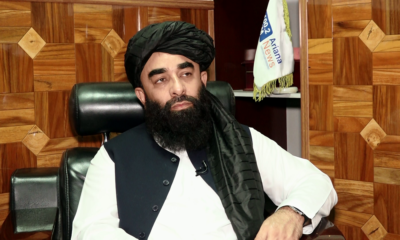
Zabihullah Mujahid, spokesman for the Islamic Emirate, told Ariana News on Monday that Washington is pressuring the UN and several countries to refrain from formal engagement with Kabul.
“They may not say it openly or have announced it, but overall it appears that pressure is being put on the United Nations and some other countries, preventing them from engaging with us. Otherwise, engagement should have taken place by now,” Mujahid said.
He said some countries remain under the influence of major global powers, preventing them from making further progress in their relations with the Islamic Emirate.
“Countries that were at war or in conflict with us, or some countries that are still under the influence of those major powers, naturally have not been able to make progress in engagement. The blame does not lie with Afghanistan, and their policies have not changed since the war,” he said.
Meanwhile, analysts say the United States continues to have significant influence over the foreign policies of many countries. They argue that unless Washington changes its approach toward the Islamic Emirate, further progress toward formal recognition is likely to remain difficult.
The Islamic Emirate, however, says its foreign policy is focused on economic interests and that Kabul seeks to expand relations with all countries.
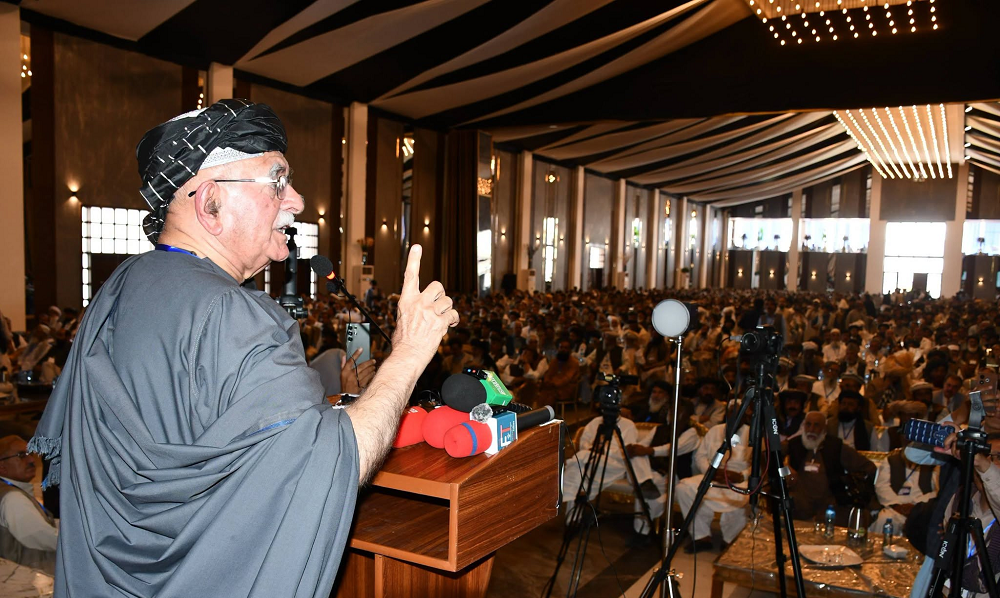
Mehmood Khan Achakzai, chairman of Pakistan’s Pakhtunkhwa Milli Awami Party (PkMAP) and opposition leader in the National Assembly, said Afghanistan continues to be viewed mainly through a security lens in regional forums.
Speaking at the opening session of a three-day public jirga in Southern Pakhtunkhwa on Sunday, Achakzai said Afghan people were not adequately represented in discussions about their country, including at the Shanghai Cooperation Organisation.
He said blaming Afghanistan alone for regional security challenges ignored the country’s history of decades of conflict, foreign interventions and proxy rivalries involving major and regional powers.
Achakzai also said the powers and proxies involved during the Cold War bear historical responsibility for the destruction of Afghanistan.


Lionel Messi announces retirement from international football

Tahawol: Five years since the US withdrawal from Afghanistan

Saar: IEA criticizes US for continuing hostile policies

EU announces 15 million euros to strengthen livelihoods and food security in Afghanistan

IEA says US pressure preventing countries from recognizing Afghan government

AFC confirms clubs for 2026/27 competitions; draw set for August 18

Four mediators struggle to secure lasting Pakistan-Afghanistan ceasefire

Only two days to go before Afghanistan and Ireland begin ODI series

Kabul opens cardiac hospital for children

Heavy monsoon rains claim lives across India as flooding and landslides continue
Tahawol: Five years since the US withdrawal from Afghanistan
Saar: IEA criticizes US for continuing hostile policies

Tahawol: Latest on Stalled Kabul-Islamabad Talks

Saar: Afghanistan’s Relations with Regional Countries

Tahawol: Islamic Emirate seeks to normalize US ties
-
 Latest News5 days ago
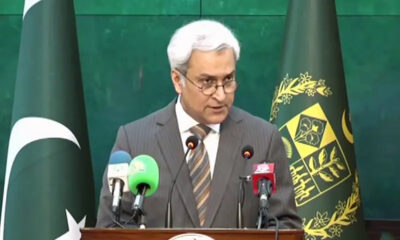
Pakistan open to state-to-state dialogue with Afghanistan on terrorism
-
 Sport5 days ago
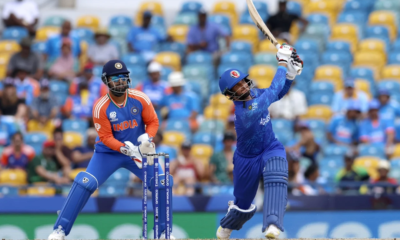
ATN secures exclusive rights to broadcast T20I series in India across Afghanistan
-

 Regional5 days ago
Qatar PM to visit Tehran to pursue mediation efforts
-
 World3 days ago
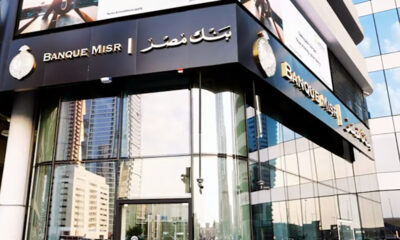
US hits Egyptian bank branches with Iran sanctions as war marks six months
-
 Latest News5 days ago
Trump says overnight US withdrawal from Bagram left Afghanistan vulnerable to collapse
-
 Latest News5 days ago
Standardized orthography for Dari and Pashto languages is essential: official
-
 Latest News4 days ago
Tajikistan to receive military equipment to strengthen Afghan border
-
 Business3 days ago
TAPI pipeline nears first gas sales in Afghanistan