
Latest News
Taliban leader says in Eid message there ‘will be an Islamic Emirate’

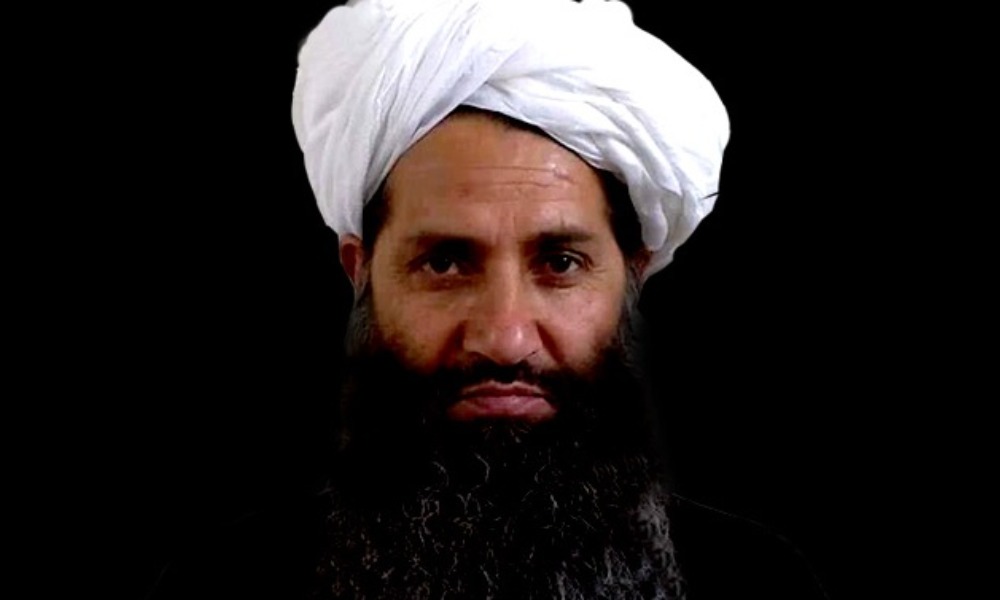
In his annual message ahead of Eid-ul-Fitr, Taliban leader Mawlawi Hibatullah Akhundzada on Sunday called on Afghans to “contribute to the redevelopment of our homeland” in order for there to be a prosperous and progressive country “in the shade of an Islamic system.”
“Let us attain this end by moving away from self-interests and pursuit of power, by making Islamic values and national interests our guiding principles, and by rebuilding as a strong and unified nation through forgiveness, reconciliation and compassion towards one another,” he said.
He also stated that once foreign troops have withdrawn – what he called “the end of occupation” – there shall be an “Afghan-inclusive Islamic system.”
Emphasizing that there would be an Islamic Emirate, he said: “This land is the shared home of all Afghans. We must unite upon Islamic injunctions and protect ourselves from all discord and prejudice.
This comes after the Afghan government, international stakeholders and regional countries have all come out in strong support of maintaining a Republic system.
The Taliban leader however went on to state: “The arms of the Islamic Emirate are wide open for all Afghans that have previously stood in opposition to us.
“We are extending our hand of amnesty and affection, and inviting them to join the path of truth. Stubbornness, vindictiveness and enmity will not amount to anything, but conversely, nations attain honor and glory through tolerance, self-restraint and embracing the truth,” he said.
He also said the group considers the withdrawal of US and NATO forces “a good step and strongly urge that all parts of the Doha agreement be implemented.”
He called for the Doha agreement, signed in February last year between the Taliban and the US, to be fully implemented stating that the deal had been violated by the US.
“Contrary to commitments, the remaining prisoners that were set to be released three months after the launch of negotiations have yet to be freed and the names of officials of the Islamic Emirate yet to be removed from sanctions and rewards lists.”
He said the Taliban “stands ready to protect the independence and sovereignty of its homeland at any cost as it has proven over the past two decades.”
He also said the Taliban has “prioritize negotiations” and has “dispatched a powerful negotiation team for these negotiations to move intra-Afghan negotiations forward.
“However, the Kabul administration has repeatedly tried to sabotage the ongoing political process through various means and continues to engage in such activity,” he said.
He acknowledged there was territory under the control of the Taliban and also said the “Islamic Emirate safeguards and supports all public projects, facilities and infrastructure, and strives to strengthen, grow and advance them.”
Akhundzada said the Taliban supports educational processes and has “assigned a special commission for this purpose”.
According to him, harm to civilians and loss of life in war “is upsetting and regrettable”.
It is distressing that civilians are still being killed and harmed in the raids, blind bombardments, artillery strikes and other attacks of the opposing side, which remains utterly unacceptable by any means.












Kazakhstan’s Foreign Minister Mukhtar Tileuberdi has called for pragmatic and coordinated international engagement with Afghanistan, saying the country’s long-term stability is closely linked to the security and sustainable development of Central Asia.
Speaking during the general debate of the 81st session of the United Nations General Assembly in New York on Friday, Tileuberdi said humanitarian assistance to Afghanistan remains essential but alone cannot break the cycle of poverty, displacement and dependency.
He said Kazakhstan supports a “pragmatic, coordinated and step-by-step” approach to international engagement with Afghanistan, with the United Nations playing a central role.
Tileuberdi also said Kazakhstan is working with the UN to operationalize the United Nations Regional Centre for the Sustainable Development Goals for Central Asia and Afghanistan in Almaty.
He said the success of the centre should be measured by the results and assistance it delivers to the region.


Abu Muslim Farah defeat Khurasan Faryab 2-0 in ACL season six

Saar: Concerns over Pakistan’s political crisis discussed

Afghanistan Champions League: Omar Zawak Herat beat Toofan Herat 1-0

Blast in Pakistan’s Dera Ismail Khan kills 11, injures 30

Ariana Afghan Airlines increases Kabul-Delhi cargo flights

Saudi energy group signs major Afghanistan deals covering gas exploration and pipeline plans

Trump floats idea of renaming Atlantic or Pacific Ocean

US hits Egyptian bank branches with Iran sanctions as war marks six months

Nepal flood rescue mission enters critical phase as thousands remain missing

Iranian clubs to face Gulf opponents at neutral venues in Asian Champions League Elite
Saar: Concerns over Pakistan’s political crisis discussed

Exclusive interview with Abdul Latif Mansoor, Minister of MRRD

Tawsia: Overview of Afghanistan’s iron mines

Tahawol: Discussion on fresh Pakistani airstrikes on Afghanistan

Saar: Calls for international support for Afghanistan discussed
-

 World5 days ago
CNN, MS NOW and Politico sue Trump, challenging White House ban
-

 Latest News3 days ago
Ariana Afghan Airlines ranks seventh among 45 Central Asian airlines
-

 Latest News5 days ago
UN reiterates call for respect for international law after Kunar airstrikes
-

 Regional4 days ago
US and Iran hold first talks since June after Trump’s ‘annihilation’ threat
-

 Latest News4 days ago
Silk Road highway in Wakhan corridor now reaches the China border
-

 Regional3 days ago
Iran airlines cancel flights as US sanctions hit
-

 Latest News5 days ago
Afghan Official: Pakistan’s airstrikes will not go unanswered
-

 Sport5 days ago
Afghan boxing referee heads to China for international festival