
World
Trump says deal to end war will be signed on Sunday, Iran questions timing
Trump discussed the efforts to end the Iran conflict in a call with British Prime Minister Keir Starmer, Downing Street said on Saturday.

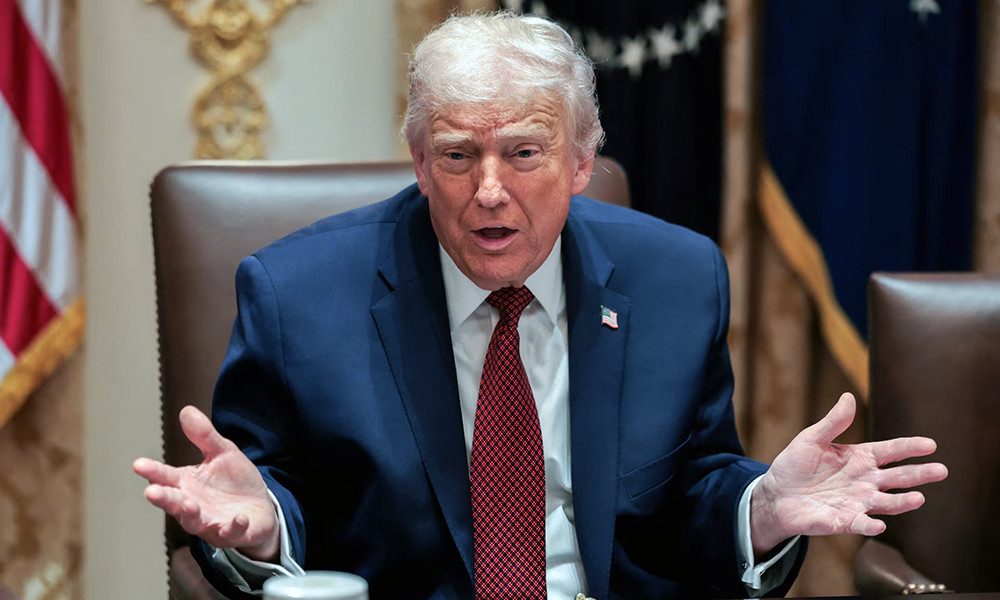
U.S. President Donald Trump and mediator Pakistan said on Saturday an initial deal to end the war in the Middle East would be signed on Sunday, although Iran denied the signing would take place so soon, Reuters reported.
Pakistani Prime Minister Shehbaz Sharif said the two sides had agreed on a framework for a peace deal and that Islamabad was preparing for an electronic signing on Sunday, to be followed by technical-level talks next week.
Trump said in a social media post that the deal with Iran was scheduled to be signed on Sunday and that the Strait of Hormuz, a vital artery for global oil supplies which Iran has blocked, would be immediately “open to all” after it was signed.
Earlier on Saturday, Iranian Foreign Ministry spokesperson Esmaeil Baghaei cautioned against commenting on the timing of the signing.
“We will have to wait and see about the exact date of the signing of the memorandum of understanding, although it will not be tomorrow,” state media quoted Baghaei as saying.
“The possibility of this happening in the coming days cannot be ruled out. However, due to the hesitation of the other side, we must be cautious in making any comments about this process.”
A U.S. official who spoke to reporters later declined to be drawn on the timing but said: “It’s a great deal and a very strong deal.”
It is not the first time the two sides have appeared close to an initial agreement on ending the war that began on February 28 with joint U.S.-Israeli strikes on Iran. Sharif said on X: “We are closer to a peace deal than ever before.”
The war has sent global energy prices sharply higher and killed thousands of people, mostly in Iran and Lebanon, where the war has revived a conflict between Israel and Iran-aligned Hezbollah militants.
On Friday, Iranian Foreign Minister Abbas Araqchi said that while changes in the deal were still possible, the tentative agreement showed his country had emerged stronger from the conflict, read the report.
Hours after those remarks, U.S. forces shot down multiple Iranian one-way attack drones heading toward the Strait of Hormuz, a source familiar with the matter told Reuters, which first reported the shootdowns.
The source, who spoke on condition of anonymity, said the drones had posed a threat to commercial traffic. U.S. Central Command later confirmed the action and said the strait, a major artery for global oil supplies, was open.
Iran has for months effectively blockaded the strait, and the U.S. navy has blocked Iranian ports to reduce its oil exports.
As pro-government night rallies continued across Iran for more than 100 nights, residents and news agencies reported slogans being chanted by opponents of the agreement with the U.S.
A resident in the northeastern city of Mashhad told Reuters in Dubai that some protesters chanted: “Death to the compromiser,” in an apparent reference to Foreign Minister Araqchi. “Compromiser, resign, resign.”
The proposed memorandum of understanding calls for reopening the strait and lifting the U.S. naval blockade, sources on all sides of the talks said. Negotiations over Iran’s nuclear program – Trump’s stated rationale for starting the war – would take place afterwards.
“Iran is going to open up the Strait of Hormuz, that’s a requirement. It could be open with no tolls. As they do that, we will lift our blockade,” said the U.S. official who spoke on Saturday.
“It’s going to happen in conjunction, and part of the next step, the phase after that, is going to be the demining of the straits,” the official said, indicating countries in the Group of Seven major powers could have a role in this.
Trump discussed the efforts to end the Iran conflict in a call with British Prime Minister Keir Starmer, Downing Street said on Saturday.
Draft terms described to Reuters by multiple sources indicate the U.S. would begin releasing billions of dollars in frozen Iranian assets and waive sanctions on its oil exports, in return for Iran opening the strait.
Iran’s Fars news agency quoted Baghaei as saying the release of Iran’s frozen assets was an integral part of the agreement and also that Iran would have to charge for services in the Strait of Hormuz, Reuters reported.
Fars also quoted him as saying foreign military bases in the region must end without providing details.
Iran’s nuclear program would be addressed during a 60-day period of talks. A U.S. official said the agreement would ultimately lead to the dismantling of Iran’s nuclear program, with its stockpile of highly enriched uranium to be destroyed and removed.
But Araqchi said that Iran, which sources said has not accepted the dismantling of its nuclear program, wanted to retain the uranium in diluted form.
The proposals also include discussion of possible war reparations for Tehran and dropping longstanding U.S. demands for limits on Iran’s missile program, the sources said. The U.S. official disputed that account.
Israeli Prime Minister Benjamin Netanyahu said his country would not be party to the agreement. He has clashed with Trump over U.S. demands that Israel curb military action in Lebanon to allow Washington to reach a deal with Tehran.
Araqchi said the agreement would end the war in Lebanon, implying an Israeli withdrawal from occupied areas.
Israel’s defence minister said it would not withdraw. A senior Israeli official said Israel expects to retain its freedom to act against threats.
Iran’s supreme leader, Ayatollah Ali Khamenei, was killed in an airstrike on the first day of the war and later replaced in the role by his son Mojtaba. Khamenei’s funeral will begin in Tehran on July 4 and conclude with his burial in his hometown, the northeastern holy city of Mashhad, on July 9, Iranian state media reported on Saturday.


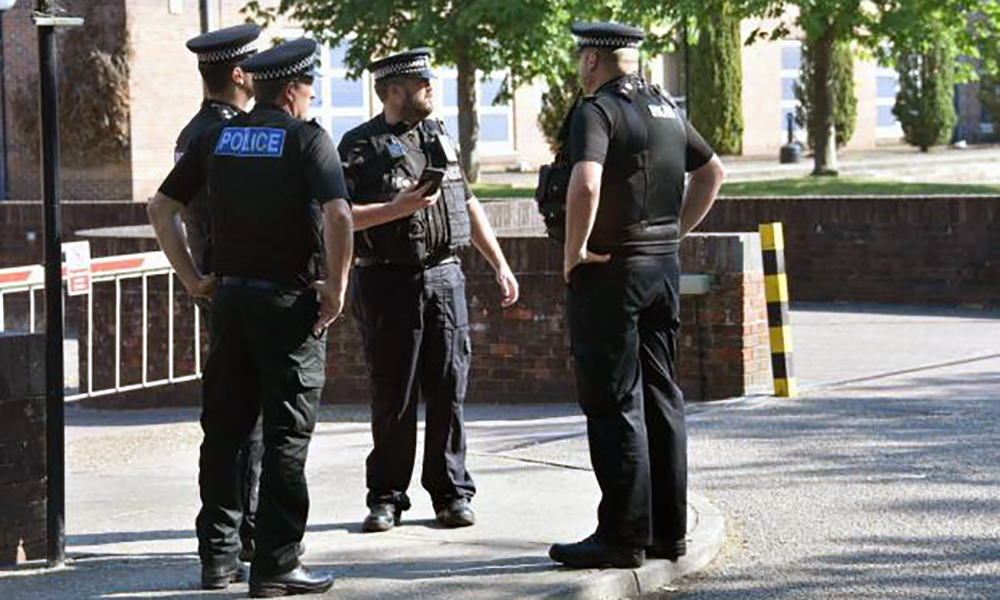
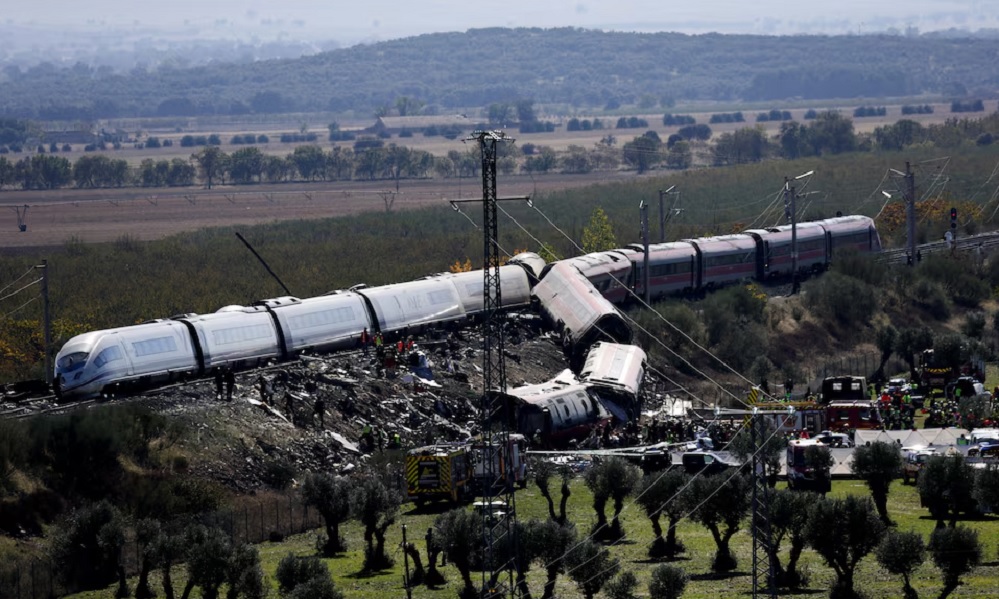
At least 68 people died when a Spanish high-speed express slammed into a stationary train on Wednesday, with rescuers scouring mangled carriages for more bodies after Spain’s second fatal rail crash this year and Europe’s deadliest since 2013.
Prime Minister Pedro Sanchez said “all of Spain” was in mourning after the collision, which the transport minister said happened after a Renfe service was authorised to proceed despite an active red signal due to a stationary train ahead, Reuters reported.
Oscar Puente told reporters in Madrid that the red signal was issued due to a computer communications failure, which automatically stopped traffic, but an erroneous decision was then taken to restart the Renfe train.
Sanchez said in a televised address from near the site south of Madrid that the “terrible tragedy” would be investigated and vowed to address any failures that came to light, adding that the causes of the two crashes appeared to be unrelated.
“If we need to further strengthen safety in order to rebuild confidence in our high-speed rail system, we will do so, because what is unacceptable for a country like Spain is to suffer two high-speed rail accidents in the same year,” Sanchez said.
Spain’s opposition People’s Party said it had cancelled all campaign events for the day, ahead of elections next month.
TRAPPED AMONG SEATS
At the scene in rural Castilla-La Mancha, ambulances, funeral home vans and helicopters assembled beside one of the trains on an elevated stretch of track, while twisted metal and wreckage lay scattered down an embankment where at least three carriages had plunged.
The head of the regional government, Emiliano García-Page, said the death toll had risen to 68, while rescuers searching for other victims as darkness fell did not know if other fatalities would be discovered once the carriages were moved.
Passengers, some splattered with blood or bandaged, were evacuated along a nearby road after the crash, which Spain’s health minister, Monica Garcia, said had injured 80 people, 15 of them very seriously.
Salvador Arriza described the chaos in his carriage.
“I was very close to the door, but (other passengers) were breaking the windows to be able to get out. Some people practically couldn’t move because they were trapped amongst the seats,” said the 62-year-old.
INVESTIGATION UNDER WAY
The disaster, the deadliest train accident in Europe since a 2013 derailment in Spain’s Santiago de Compostela in which 80 people died, follows another fatal accident in January involving high-speed trains operated by the same companies on the same line, in which 46 people died.
In that collision, a train derailed and smashed into an oncoming train, prompting a debate over investment in railway maintenance.
Renfe said on Wednesday that after being authorised to continue its journey, its train had crashed into the Iryo train that had remained stationary “for reasons we don’t know”.
“The Renfe train continued on its way as instructed, and a collision occurred. The exact sequence of events, the traffic conditions and the circumstances of the impact will have to be established by the investigation,” Renfe said in a statement.
Iryo, which said it had activated emergency protocols, and state-owned infrastructure operator Adif did not respond to requests for comment.
PASSENGERS SENT FLYING
A Castilla-La Mancha government spokesperson said 147 people were on board the Iryo train and 397 on the Renfe service when the collision occurred at about 9 a.m. (0800 GMT), derailing two Iryo carriages.
Passenger Rafael Barcelo said he felt lucky as he had stepped away from his seat for a coffee, adding there had been at least eight victims from his carriage.
“We were having breakfast, drinking a coffee when we felt a very strong impact and we were sent flying,” he said.
At a school in Urda where relatives had been directed, a woman who gave her name as Ana fought back tears as she said there was still no news of her husband, Pepe. His name was not among those identified, although police had found their dog, Trece.
Renfe said it had opened a special line for families of victims. The railway operator said it had suspended ticket sales on the Madrid-Andalusia high-speed corridor until December 13.
MAINTENANCE SPENDING
A preliminary Civil Guard report in February pointed to defects in the track, rail or a weld between two sections of track as the leading theory behind January’s accident, though investigators kept seven other possibilities open.
Spain’s railway safety authority has reported that accidents, including derailments and collisions, increased from 45 in 2016 to 57 in 2024 and 69 last year.
A Reuters analysis of data from the Spanish competition authority showed some 25 million passengers used a high-speed train in Spain in the first half of 2026, a drop of around 14% compared with the same period last year.
Meanwhile, European Commission data shows Spain’s maintenance investment in its roughly 4,000 km (2,485 miles) of high-speed lines has lagged other large European countries.
Although Spain spent an average of about €1.5 billion a year on its high-speed network between 2018 and 2022, more than any other European country, most of that money went toward new construction. Only about 16% was earmarked for maintenance, renewals and upgrades.
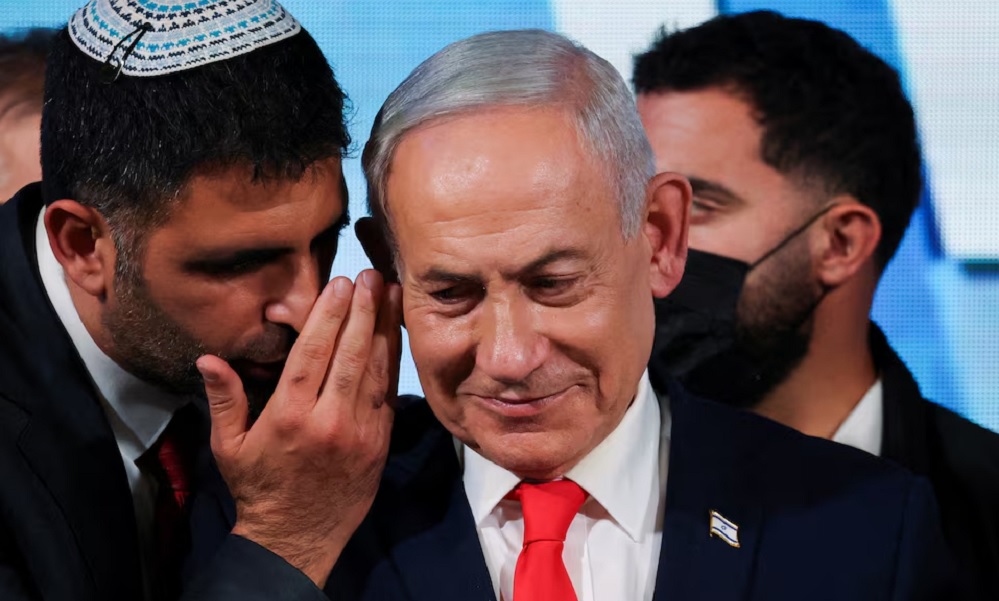
Prime Minister Benjamin Netanyahu and rival Gadi Eisenkot offered competing claims to lead Israel after Tuesday’s election, with Netanyahu calling for a right-wing government and Eisenkot saying voters had rejected the longtime Israeli leader, even as exit polls left their blocs deadlocked.
Netanyahu called for the formation of “a strong, right-wing national government,” while Eisenkot said the public had voted against Netanyahu remaining prime minister and called on him to retire from politics. Neither of them claimed victory, Reuters reported.
Neither declaration resolved the electoral arithmetic.
With actual votes trickling in, Kan 11 and Channel 13 exit polls had the blocs tied at 51-51, while Channel 12 gave Netanyahu’s Likud-led bloc a narrow 52-49 edge. None left either side with the 61 seats needed for a majority in the 120-seat Knesset.
The deadlock could work in Netanyahu’s favour, leaving him in office as a caretaker prime minister during what are likely to be prolonged coalition negotiations or even until another election can be held.
Far-right religious parties led by Itamar Ben-Gvir and Bezalel Smotrich were projected to take a combined 13 seats within Netanyahu’s bloc – with no major gains for either of them.
Arab parties outside the two main blocs could hold the balance of power. But Eisenkot, leader of the Yashar party and a former military chief, has all but ruled out forming a government with them, complicating his path to power.
SECURITY FIGHT SHARPENS
Netanyahu highlighted Israel’s military successes and raised the prospect of renewed joint action with US President Donald Trump against Iran as he addressed party faithful after 3 a.m. (0100 GMT) at Likud election headquarters in Jerusalem.
“Israel faces a singular historical opportunity, together with our partner President Trump, to remove the existential threat of Iran once and for all. But ulterior motives must not divert us from this sacred mission,” he said.
Eisenkot earlier warned Netanyahu not to use Israel’s security for political purposes.
“Netanyahu is a caretaker prime minister, without a mandate or the people’s trust,” Eisenkot said, calling on the security establishment to “stand firm” against any attempt to put political interests ahead of Israel’s security.
Voter turnout was 77.7%, Israel’s Central Elections Committee said, the highest in more than two decades and around 7 percentage points higher than in 2022.
Final results are expected on Thursday or Friday, and Israel’s fragmented political system leaves smaller parties potential kingmakers in coalition negotiations that have run to weeks or months after past elections. If neither bloc can form a government, another vote may need to be held, something Eisenkot opposed given the high voter turnout.
Yohanan Plesner, president of the Israel Democracy Institute, called the exit polls a major defeat for Netanyahu’s coalition but cautioned that Eisenkot had not emerged as a clear winner and much could change as votes were counted.
NETANYAHU SETBACK, NO CLEAR WINNER
If the exit poll projections hold, Netanyahu’s nationalist-religious coalition, which at its height held 68 seats, would fall far short of the 61 needed to govern, leaving him with no clear path to forming a government.
Eisenkot, 66, who lost a son and two nephews in the Gaza war, emerged as Netanyahu’s strongest challenger, stressing his security credentials while positioning himself as a centrist domestically.
He entered politics only four years ago and joined Netanyahu’s war cabinet after the 2023 Hamas attack, but quit eight months later, criticising the prime minister’s leadership.
Eisenkot offers a break with Netanyahu’s leadership and far-right allies, but not with the hawkish approach to security that has become more entrenched since the 2023 Hamas attack. He opposes Palestinian statehood and says Hamas’ military wing must be destroyed or dismantled.
Eisenkot says Israel’s response — a war that has killed more than 74,000 Palestinians, according to Gaza health authorities — was a failure because Hamas remains in charge.
The headquarters of the Joint List, an alliance of several Arab parties, burst into whistles and applause when exit polls were released, on a historic night for turnout among Palestinian citizens of Israel.
“We refuse the occupation and racism, and we will remain here,” said Faten Gattas, a candidate in the Joint List, in a speech at the alliance’s headquarters in Nazareth. Candidates hoped high Arab turnout would allow them to play a decisive role in blocking Netanyahu’s coalition from returning to power.
A WARTIME VERDICT
Voters grappled with the trauma of Israel’s deadliest day, when Hamas killed 1,200 people and took 251 hostage, and the wars in Gaza and with Lebanon’s Hezbollah and Iran that followed.
While Netanyahu was criticised for the country’s biggest security failure, he argued that he had made Israel and the world safer by killing top leaders of Hamas, Hezbollah and Iran.
The policies of Netanyahu’s right-wing coalition have been divisive at home and deepened Israel’s international isolation, but he has portrayed himself as the leader with the mettle to face down Israel’s foes.
Netanyahu, 77, has served as prime minister for nearly 19 of the past 30 years and has repeatedly survived political crises. His opponents have managed to wrest the premiership from him only once since 2009, after four inconclusive elections in two years. Eighteen months later, he was back.
He entered the election facing long-standing corruption charges, which he denies, and criticism over intelligence failures that allowed Hamas-led militants to carry out their attack.
Yemen’s Houthis have kept up their attacks on Saudi Arabia as senior officials from the kingdom, Turkey and Pakistan are due to hold high-stakes talks with Iran in Tehran on Monday, following warnings of a return to war, AFP reported.
Fresh explosions rattled Riyadh overnight, along with a text message warning to residents, after the Iran-allied Houthis claimed a new attack on the Saudi capital’s international airport on Sunday.
Saudi Arabia, the world’s top oil exporter, has become deeply embroiled in the eight-month war since hostilities in its long-running conflict with the Iran-allied Houthis resumed in July.
Defence Minister Prince Khalid bin Salman is among the delegations travelling to Tehran, made up of officials from the three countries that signed a defence alliance in Mecca in August.
Their visit follows warnings by the United States, Iran and Israel that hostilities could resume.
Tensions have increased ahead of Israel’s pivotal election on Tuesday and next week’s US mid-terms, where US President Donald Trump’s Republicans are battling to keep control of both chambers of the US Congress.
Iran’s security chief Mohsen Rezaei will take part in Monday’s meeting with Prince Khalid, Pakistani army chief General Asim Munir and Turkish intelligence chief Ibrahim Kalin, the deputy secretary of Iran’s Supreme National Security Council, Ali Bagheri Kani, told state TV.
“This historic meeting in Tehran may be the last chance before escalation spirals out of control, an attempt to impose a path of de-escalation before it’s too late,” Hesham Alghannam, a Saudi security analyst and researcher, posted on X.
“The presence of military and security figures at this level together means that the remaining time is extremely limited.”
‘Serious tensions’
On Sunday, as blasts rang out over Riyadh and authorities sent texts warning residents of a “hostile aerial threat”, the Saudi-led coalition fighting the Houthis said it struck missile launchers and storage facilities in Yemen.
The Houthis said they had attacked Riyadh’s King Khalid International Airport once again. The repeatedly targeted facility has been largely closed since 13 people were killed and more than 300 wounded in a major attack this month.
Mediation efforts between the US and Iran have been led by Qatar and Pakistan. A Qatari delegation visited Tehran on Sunday, Iran’s foreign ministry spokesman Esmaeil Baqaei said.
“Our region is in the grip of serious tensions, and neighbouring countries are striving to convey a message and put forward initiatives,” Baqaei said on Monday.
Andreas Krieg of London-based risk consultancy MENA analytica said Prince Khalid’s presence in Tehran was “hugely significant”, calling him the “strategic mastermind of Saudi Arabia”.
Prince Khalid, brother of Saudi de facto ruler Crown Prince Mohammed bin Salman, has emerged as one of Saudi Arabia’s key diplomatic interlocutors, dispatched on sensitive regional missions.
“For him to go to Iran directly in this very sensitive time is a very, very strong signal that the kingdom is not just… sitting and waiting for things, events to unfold,” Krieg told AFP.
“There’s a clear effort by the Mecca alliance to signal to Iran that they’re ready to work together to defend the kingdom and defend the kingdom’s borders,” he added.
“And so should Iran think to escalate, which they will likely do if Israel and the US strikes, and they will most likely strike Saudi Arabia, Iran will have to bear the consequences.”
‘Don’t test us’
Comments by senior officials have raised speculation about renewed hostilities.
Iran’s Foreign Minister Abbas Araghchi said on Sunday “there has been talk of a new war” but that Tehran’s policies remain unchanged.
Trump said on Friday that Washington “may do another little Epic Fury”, referring to the US-Israeli campaign against Iran that began on February 28.
On Sunday, Israeli Prime Minister Benjamin Netanyahu warned that Iran may try to disrupt the Israeli elections, where he is in a close-fought race to stay in power.
“We have intelligence signs that our enemies, Iran and its proxies, could challenge us with attacks in order to disrupt the elections,” Netanyahu said.
“Don’t test us. You will suffer disproportionate blows,” added Netanyahu, who has campaigned heavily on his security credentials.
The remarks came as Israel’s Channel 12, citing unnamed sources, reported a confrontation between Netanyahu and army chief Eyal Zamir over an unspecified new directive in the war with Iran, which the premier denied.

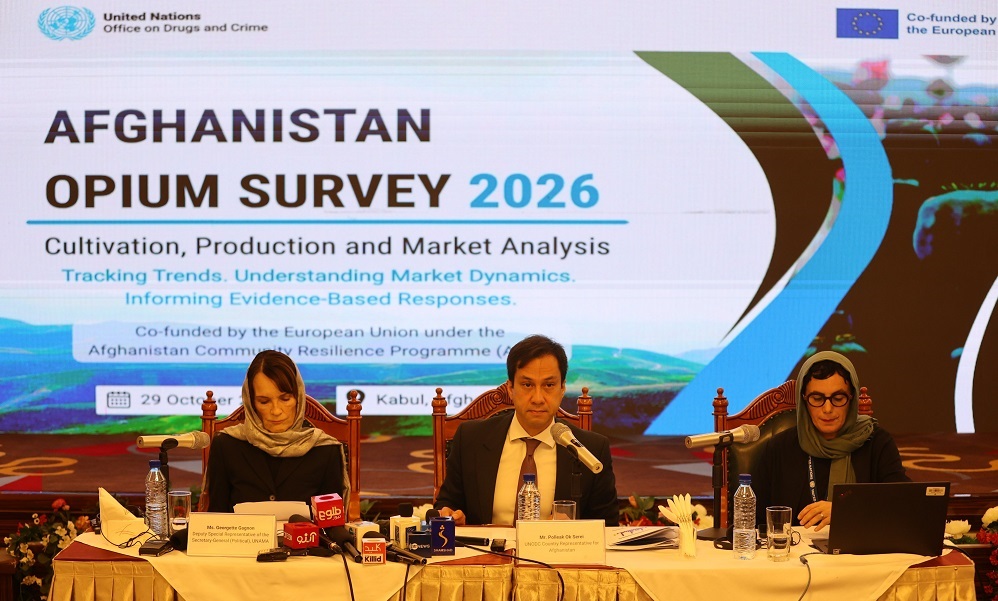
Afghanistan rejects UN report showing fourfold rise in poppy cultivation
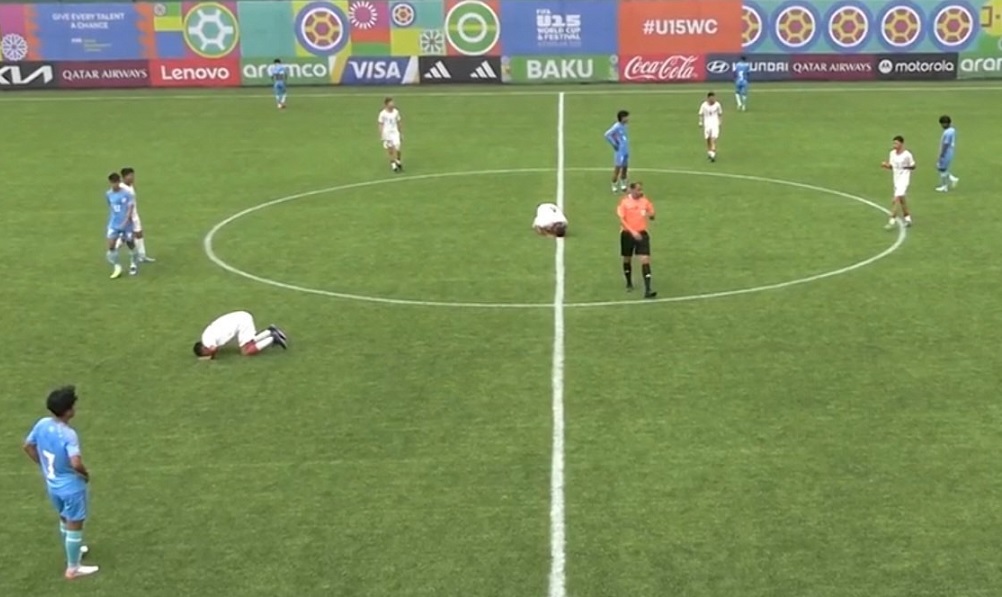
Afghanistan beat India 2-1 at FIFA U-15 World Cup & Festival
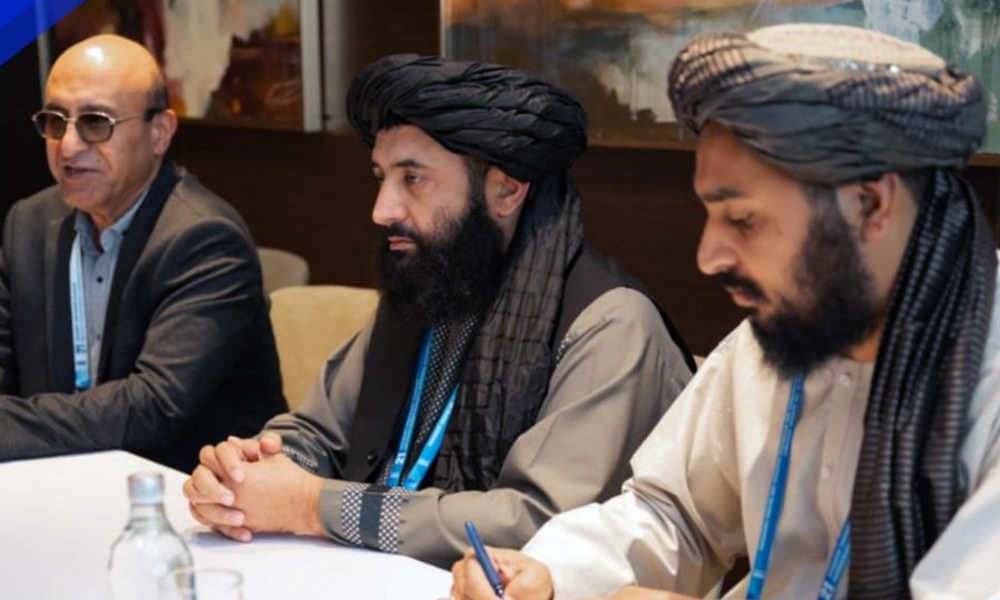
Afghanistan seeks stronger standards cooperation with Turkey and regional partners
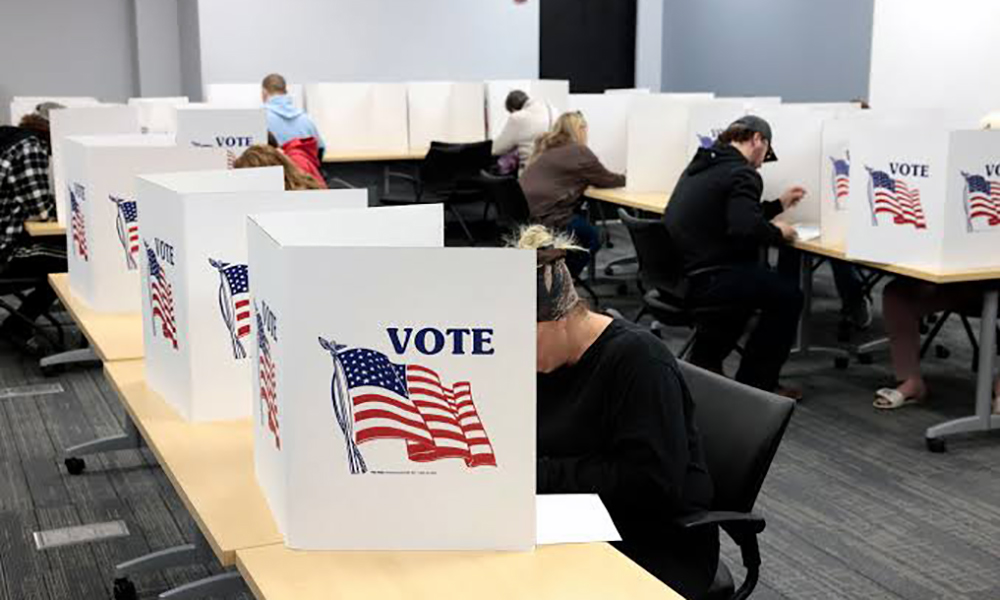
Afghan woman charged in Nevada over alleged illegal voting in US election
At least 68 people dead in Spain’s second major train crash this year

Cricket Bonanza: Afghanistan set for packed international schedule

ACB announces Afghanistan squads for Bangladesh, Zimbabwe series

Afghanistan to face Pakistan, India and Australia at 2027 Cricket World Cup

Four members of one family killed in Helmand in Pakistan airstrike

US imposes sanctions on 13 tied to Iran weapons procurement
Tahawol: Interest in joining pro-Russian forces discussed
Saar: Refugee returns to Afghanistan ahead of winter discussed
Tahawol: Emphasis on security cooperation at Tehran talks discussed
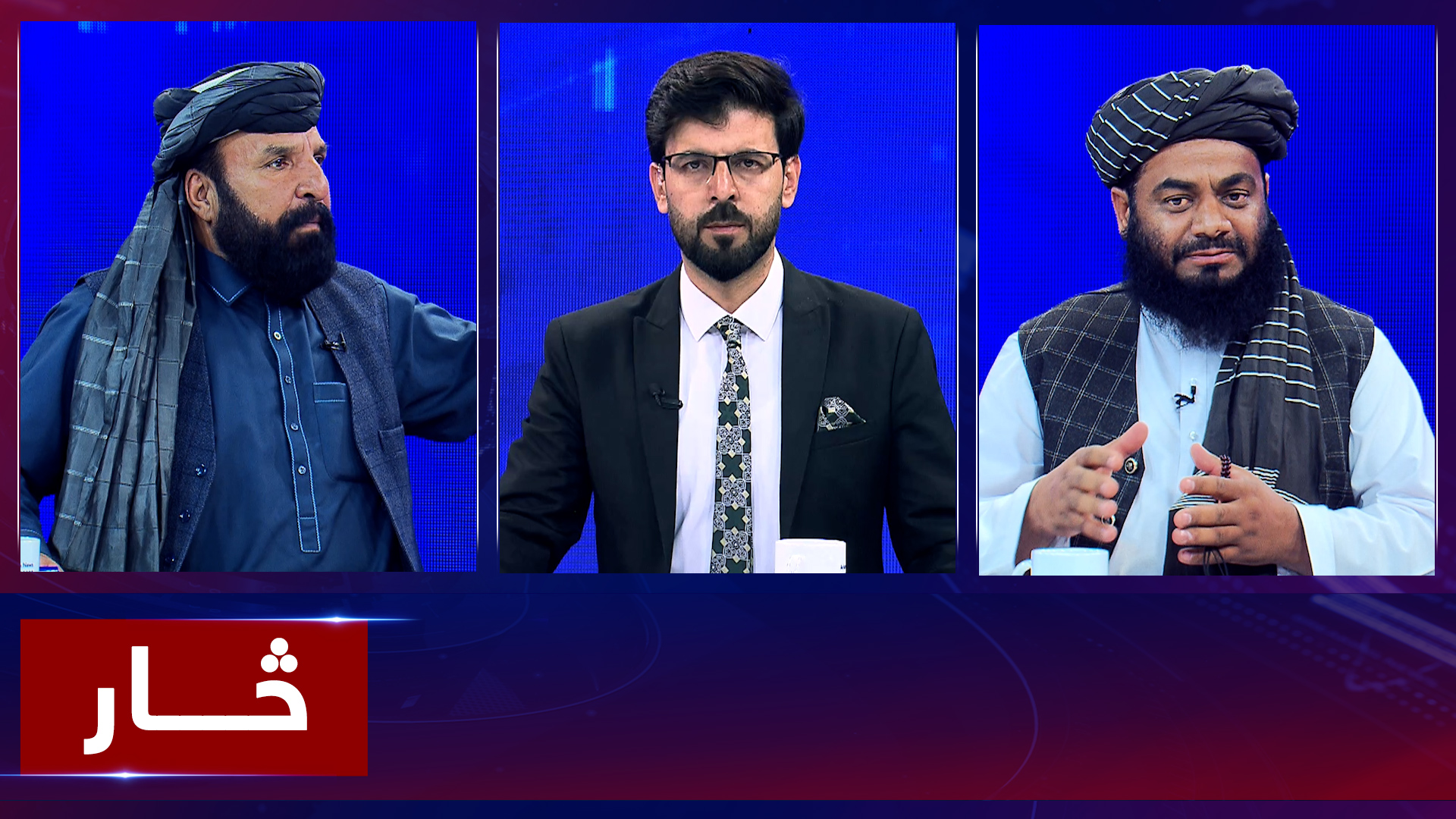
Saar: Pakistan threatening strikes on Afghanistan

Iran says outcome of Israeli elections ‘makes no difference’
-
 Sport4 days ago
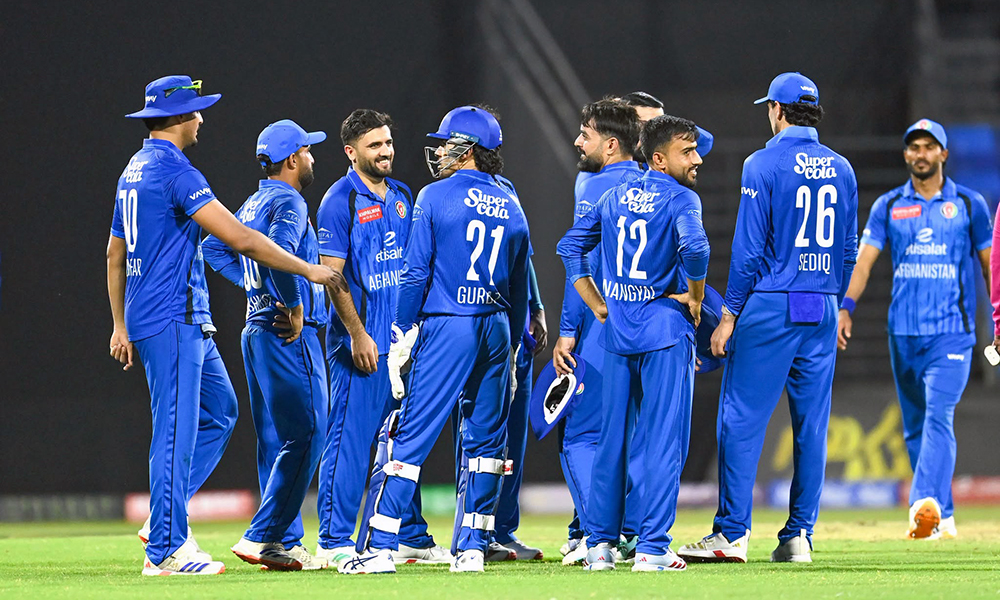
Afghanistan rise above England to match their highest-ever ODI ranking
-
 Business4 days ago
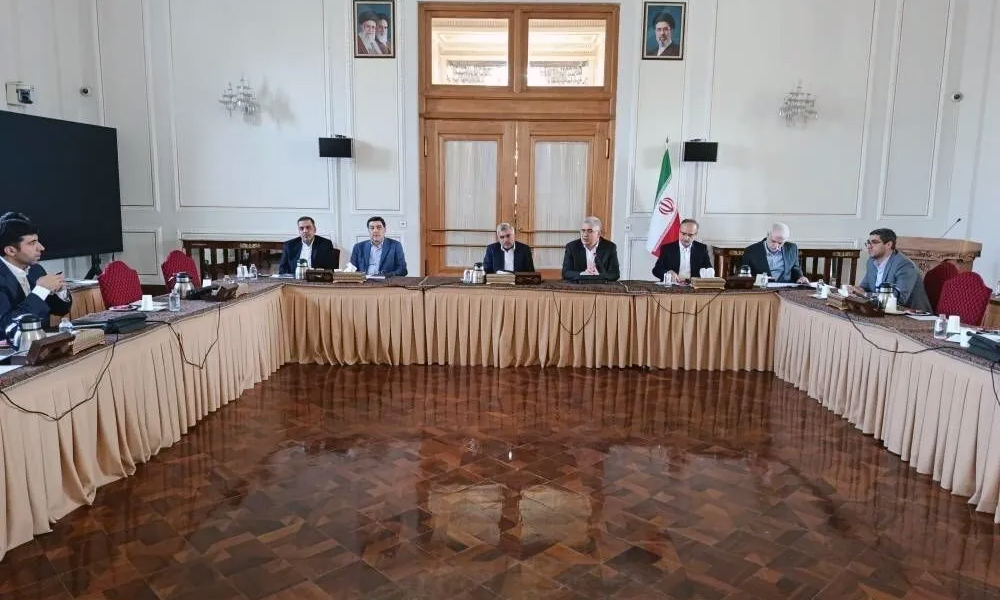
Iran moves to ease export barriers to Afghanistan, Pakistan and Iraq
-
 Latest News4 days ago
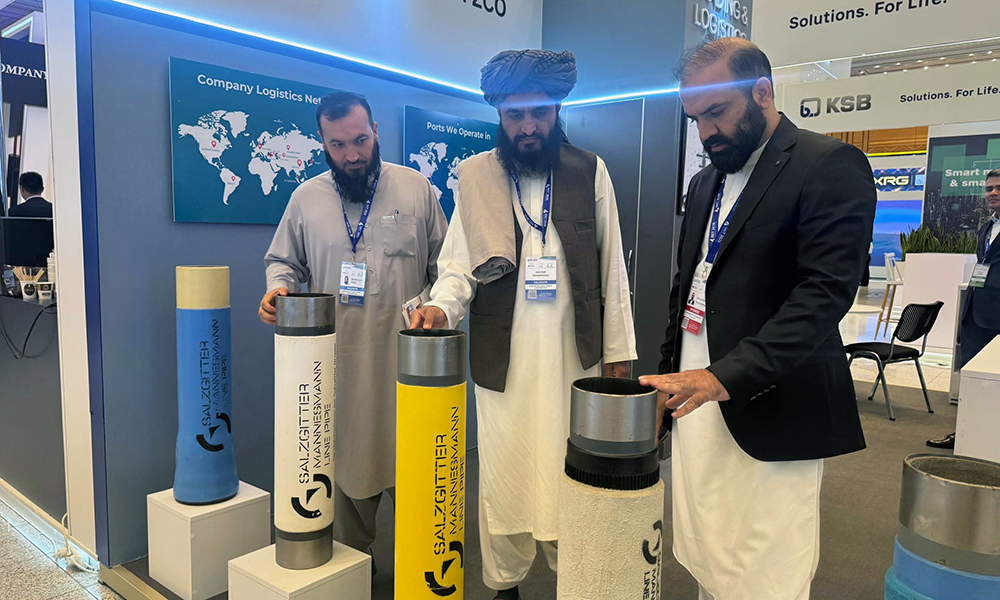
Afghanistan, Turkmenistan discuss Herat gas pipeline expansion and distribution networks
-
 Latest News4 days ago
Balkhi: 1,119 Afghan civilians killed or injured in Pakistani attacks since 2022
-
 International Sports4 days ago
ATN secures exclusive rights to broadcast ILT20 Season 5 in Afghanistan
-
 Regional3 days ago
Officials from Mecca pact countries to meet Iranian officials in Tehran
-
 World4 days ago
Four ways US foreign policy could change if Democrats win in November
-
 Latest News4 days ago
Afghan migrants in Türkiye seek solutions to residency and consular challenges