
Regional
Trump says Iran war deal close as Strait of Hormuz tensions linger
Trump said on social media the agreement had been approved by countries including Israel, Saudi Arabia, Qatar and the United Arab Emirates.

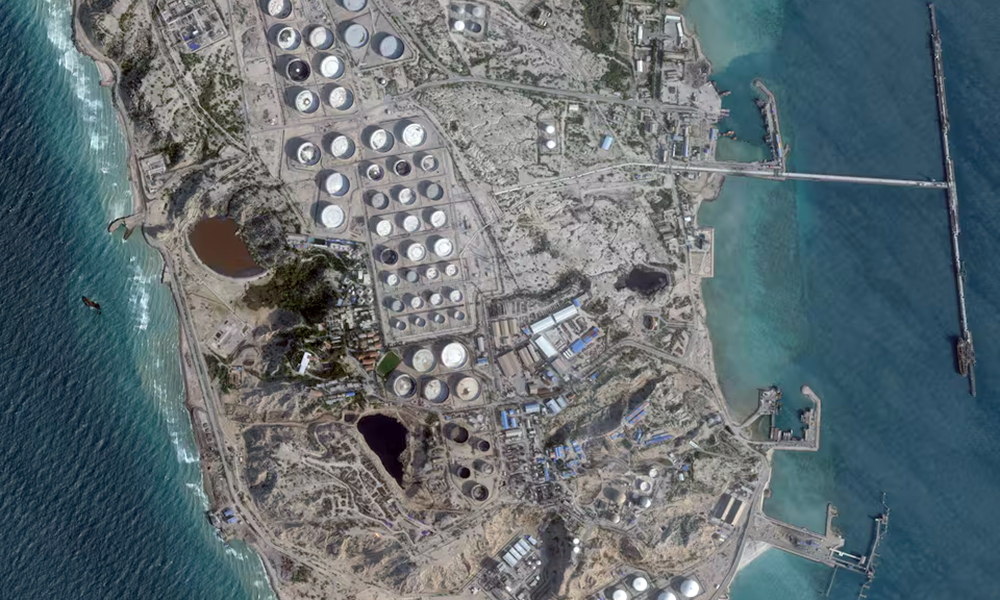
Hopes grew on Friday for peace between Iran and the United States after President Donald Trump said a deal could be signed as soon as this weekend, even as Tehran said it had not made a final decision on a pact, Reuters reported.
The deal, if confirmed, would be the most significant diplomatic breakthrough yet to end the three-month-old war, which has killed thousands and sent global energy prices sharply higher after Iran all but closed the Strait of Hormuz to shipping.
“We just made a great settlement of the war with Iran,” Trump told reporters at the White House on Thursday.
“The strait will officially open as soon as we sign, which could be soon, very soon, maybe over the weekend in Europe,” he said, adding that Vice President JD Vance would attend the deal signing.
Asked if Iran’s Supreme Leader Ayatollah Mojtaba Khamenei had approved the deal, Trump said, “I understand the answer is yes.”
Since mid-March, Trump has repeatedly claimed a deal with Iran to end the war was close. The two sides have traded strikes this week, straining a ceasefire announced in April.
Iranian media reported Foreign Ministry spokesperson Esmaeil Baghaei as saying large parts of the agreement have been finalized, but Iran would not compromise on its red lines.
“We have not reached a final conclusion on this matter,” he said. “This is a very important issue that is currently being reviewed by the relevant decision-making bodies.”
Asian stocks joined a strong global rally on Friday on hopes that a peace deal may finally materialise, while oil prices fell to two-month lows.
Still, tension remained high around the Strait of Hormuz, with U.S. forces shooting down two Iranian one-way attack drones after Tehran attempted to strike commercial ships transiting the vital waterway, a U.S. official said.
Iran’s military stopped a tanker from transiting the strait, state media said, reporting the sound of explosions early on Friday.
Trump’s announcement came after he called off planned military strikes on Iran, citing progress in talks.
“It’s a very strong memorandum of understanding that is a little conceptual,” Trump told reporters.
Trump has repeatedly said any peace deal must ensure Iran cannot develop a nuclear weapon. Iran denies it is seeking such a weapon, read the report.
Iran’s demands include the lifting of international sanctions, the release of billions of dollars in frozen assets and recognition of its control of the Strait of Hormuz.
“The big thing is there will be no nuclear weapons in Iran. That means not developed and not purchased,” Trump later said during a campaign event held by telephone.
Earlier on Thursday, Trump said the United States would hit Iran “very hard tonight” and wanted eventually to take its oil infrastructure hub, Kharg Island.
The conflict has become a political headache for the White House, with polls showing Trump’s approval ratings sinking amid voter anger over high gasoline prices.
Some Republicans have openly worried that the war’s unpopularity could cost them control of Congress in November’s midterm elections.
But Trump’s political considerations also include satisfying Iran hawks within his Republican Party, who scuttled a prior effort, that any agreement closes Tehran’s path to developing a nuclear weapon.
The reaction of other Middle East powers will also be crucial.
Trump said on social media the agreement had been approved by countries including Israel, Saudi Arabia, Qatar and the United Arab Emirates.
Prime Minister Benjamin Netanyahu’s office said in a statement after the Israeli leader and Trump spoke that Israel was not a party to the memorandum of understanding with Iran.
Netanyahu expressed his appreciation for Trump’s commitment to securing a deal that includes removing enriched material, dismantling enrichment infrastructure, limiting missile output and ending support for regional proxies, the summary showed.
Tehran has been demanding an end to Israeli attacks in Lebanon, where fighting has continued in a parallel war between Israel and Iran-backed Hezbollah militants.








Regional
Oman presents Iran with Gulf-backed plan for voluntary fees to use Hormuz
Washington launched fresh strikes earlier this month to break Iran’s grip on the strait, through which about a fifth of global oil and liquefied natural gas flowed before the war.
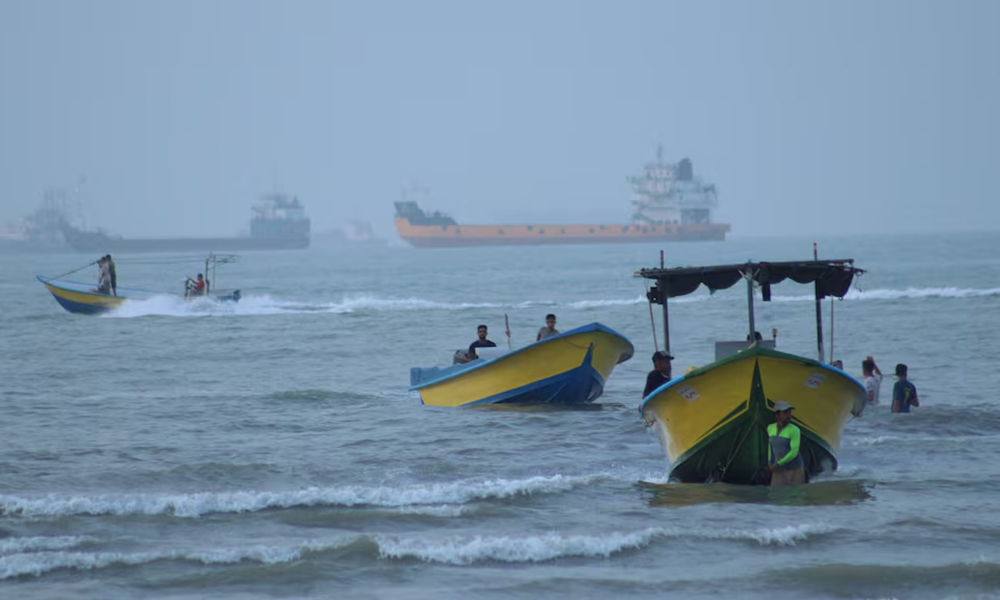
Oman has presented Iran with a plan backed by Gulf states to manage the Strait of Hormuz, including collecting voluntary fees for using it, a Gulf source and a Western diplomat told Reuters on Tuesday.
The Omani proposals are intended to serve as a basis to end the disruption to trade through the strait caused by the U.S.-Israeli war on Iran.
But a U.S. official on Tuesday again rejected the idea of tolls or fees for ships transiting the strait, reiterating that it is an international waterway that should be free of Iranian control or restrictions. The official told Reuters that the deal under discussion would not include any tolls or fees.
President Donald Trump, who abruptly called off a two-week U.S. bombing campaign over the weekend in his latest strategic U-turn, said there were “good talks” under way with Iran but threatened to restart strikes unless negotiations deliver. Iran has denied seeking to resume talks with the United States.
Iran has said it would hold fire as long as Washington does. But U.S. Central Command said on Tuesday that Iran had launched multiple ballistic missiles “in an attempted surprise attack on U.S. forces based in the Middle East,” and that the missles were successfully intercepted
Saudi Arabia said on Tuesday that its air defences intercepted and destroyed several drones targeting oil facilities. The attacks were launched from Iraqi territory by Iran-backed terrorist militias, Saudi Defence Ministry spokesperson Turki al-Maliki said.
Drone attacks were reported in Jordan, Saudi Arabia and northern Iran on Monday, and Jordan reported another drone being downed on Tuesday.
Washington launched fresh strikes earlier this month to break Iran’s grip on the strait, through which about a fifth of global oil and liquefied natural gas flowed before the war.
Iran effectively shut the strait to ships other than its own after the United States and Israel attacked on February 28. A deal last month between the United States and Iran partially reopened it, with future talks planned to resolve larger issues including Iran’s nuclear program.
But the agreement collapsed in early July after Iran fired on ships using a channel it does not approve.
Iran has said it wants to manage the strait alongside Oman, which controls the opposite shore, and charge service fees to ships that use it. Washington wants to return to the status quo prior to the war, when ships were able to pass freely with no payments, and says charging mandatory fees would be illegal.
Iran’s Deputy Foreign Minister Kazem Gharibabadi said Tehran had proposed to Oman that Iran manage one-way shipping through its side of the strait and Muscat manage part but not all of the opposite direction.
Under the Omani proposal, Iran would not exercise sole control and fees would be voluntary, the Gulf source and a Western diplomat briefed on the matter told Reuters.
The system would be analogous to one in place on Asia’s Strait of Malacca, where Indonesia, Malaysia and Singapore ask ships to pay voluntary contributions to fund navigation, environmental protection and search-and-rescue operations.
The Western diplomat compared it to a voluntary carbon tax for flights, where anyone buying a plane ticket can choose to tick a box if they want to pay to offset their emissions.
Gulf Cooperation Council foreign ministers met via video call on Tuesday to discuss the latest developments in the conflict, including ways to intensify cooperation on issues related to freedom and safety of vessels through the waterway, a statement from the Qatari Foreign Ministry said.
Iran’s joint military command again rejected a plan put forward by Trump for damages to vessels to be paid from frozen Iranian assets, state media reported. It said that any country or company that accepted such payments would be denied passage through the Strait of Hormuz by Iran’s armed forces.
Adding to the challenges for shipping in the region, the Iran-aligned Houthis in Yemen opened a new front against the U.S. and its allies on July 20, when they declared a blockade of Saudi ports on the Red Sea.
Late on Tuesday, the Houthis said they had fired ballistic missiles at a Saudi oil tanker, which they said was forced to turn back.
Trump called off more airstrikes after receiving advice from military commanders that the strategy had run its course. The 13 nights of renewed U.S. bombing killed scores in Iran and destroyed bridges and tunnels across the south as well as military targets.
Iran responded with attacks on U.S. bases in neighbouring countries that killed four service members as well as strikes on civil infrastructure in Gulf states that it said were in response to U.S. strikes on civilian targets.
In an interview with Fox News on Tuesday ahead of a meeting with Israeli Prime Minister Benjamin Netanyahu in Washington, Trump said the U.S. was in a strong position right now. He reiterated he was prepared to strike more Iranian targets but said he would prefer to avoid doing so.
Trump also repeated a threat to potentially target Iran’s Pickaxe Mountain, a fortified facility buried deep underground near one of Tehran’s main nuclear sites, saying: “If we don’t make a deal, we’ll take it out very easily”.
Iran says it has not sought any new negotiations with the United States, which it accuses of violating the agreement reached last month on a framework for talks to end the war.
Trump met Netanyahu amid strained relations between the two leaders. Israel was involved in the initial bombing campaign but has not been part of subsequent peace talks.
The end of the U.S. bombing campaign over the weekend sent oil prices tumbling by around 8% on Monday, and the fall continued on Tuesday. Brent crude futures were down 5.1% at less than $84 a barrel.
Regional
Syria president tells Al Jazeera his country seeks security deal with Israel
Sharaa’s comments coincided with U.N. Secretary-General Antonio Guterres visiting Syria, the first trip by a United Nations chief to the country since 2009.
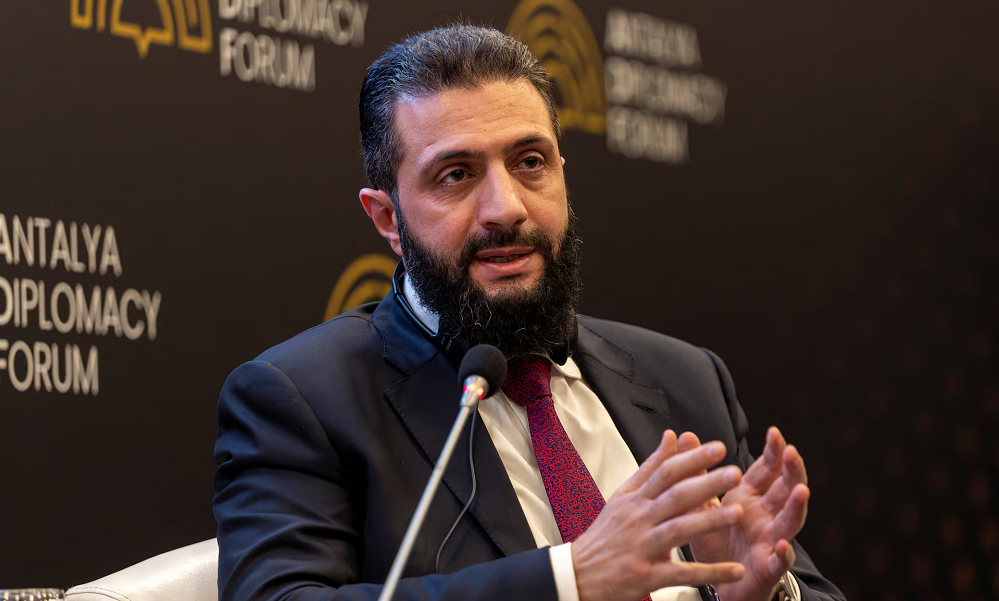
Syria is seeking to reach a security agreement with Israel, Syrian President Ahmed al-Sharaa said in an interview with Al Jazeera on Sunday.
He said a deal could pave the way for comprehensive peace between the two countries without compromising Syria’s right to the Golan Heights, an area that Israel captured from Syria in the 1967 Six-Day War and annexed in 1981.
“We are avoiding getting into confrontations,” he added.
Soon after former Syrian President Bashar Al Assad fell to rebel forces advancing under Sharaa’s leadership in December 2024, Israeli troops pushed into Syria and seized strategic territories. Israeli troops moved into a demilitarized zone inside Syria, including the Syrian side of Mount Hermon, which overlooks the capital Damascus.
Since then, the Israeli military has launched strikes on Syria and detained individuals from within the country. Israel has also intervened in what it calls missions to protect ethnic minority Druze in southwestern Syria.
On Sunday, Israeli forces shelled areas in Syria and destroyed an electrical transformer in the village of Maariyah, depriving homes of power, Syria’s state news agency SANA said.
Sharaa’s comments coincided with U.N. Secretary-General Antonio Guterres visiting Syria, the first trip by a United Nations chief to the country since 2009.
In a statement on X on Sunday, Guterres called for respect for Syria’s sovereignty, independence, unity and territorial integrity.
“Violations by Israel of the 1974 Disengagement of Forces Agreement are unacceptable & must stop,” Guterres said.
Last year, Sharaa, who is trying to rehabilitate Syria’s image, became the first Syrian president since 1967 to take part in the U.N. General Assembly in New York. His government is seeking to rebuild international ties and the local economy after nearly 14 years of war and decades of isolation and death under Assad family rule.
Sharaa also said his government is “not considering military interventions” in Lebanon. The Iran-backed Shiite Lebanese militant group Hezbollah and Sharaa fought on opposing sides of the Syrian civil war.
Earlier this year, U.S. President Donald Trump said he had spoken to Sharaa about combating Hezbollah, after criticizing Israel for killing too many civilians in Lebanon.
Regional
US pauses strikes on Iran as diplomatic efforts gather pace amid regional tensions
Despite the diplomatic push, violence has spread beyond the Gulf.
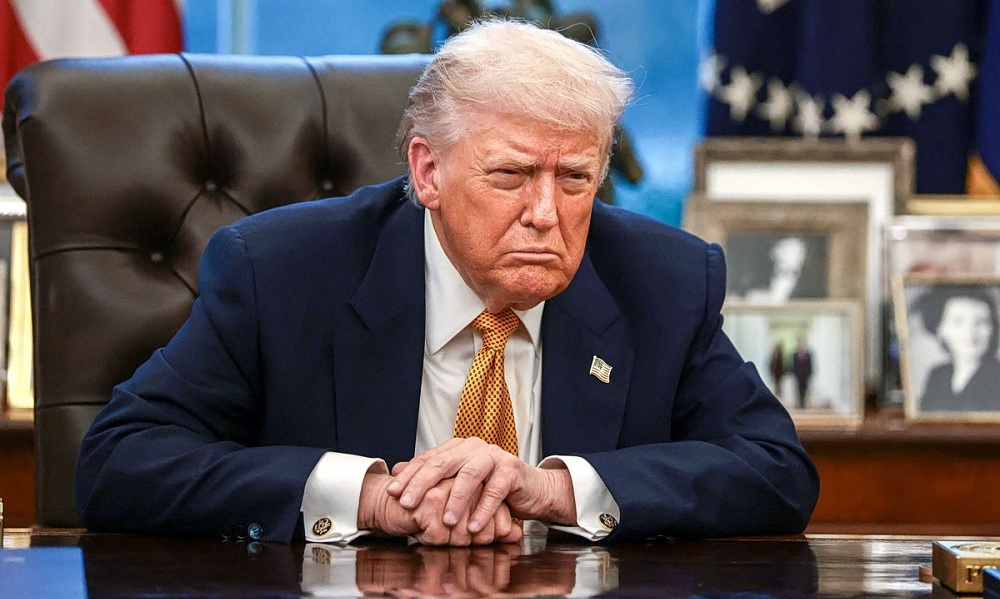
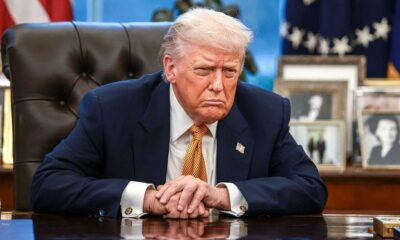
The United States has paused military strikes on Iran as diplomatic efforts to prevent a wider regional conflict gain momentum, although tensions remain high across the Middle East.
U.S. President Donald Trump said Washington is continuing talks with Tehran and expressed optimism that Iranian officials are becoming “more serious” about negotiations after weeks of escalating hostilities.
The pause in military action follows nearly two weeks of intensified fighting that raised fears of a broader regional war. According to reports, the White House opted to prioritize diplomacy while maintaining military pressure through a continued U.S. naval presence in the region.
Despite the diplomatic push, violence has spread beyond the Gulf.
Yemen’s Houthi movement has launched attacks on Saudi oil facilities along the Red Sea coast, threatening key energy infrastructure and increasing concerns over the security of international shipping routes. The renewed attacks have also raised fears of further disruption to global oil supplies.
Meanwhile, Iran has accused Ukraine of carrying out an attack on one of its commercial vessels in the Caspian Sea and has summoned Ukrainian diplomats to protest the incident, adding another layer of tension to the already volatile regional situation.
Diplomatic efforts are continuing through regional mediators as both Washington and Tehran seek to avoid a return to full-scale conflict. However, analysts warn that the situation remains fragile, with any new military incident capable of derailing negotiations.
The conflict has already affected global energy markets, with continued uncertainty surrounding shipping through the Strait of Hormuz—one of the world’s most important oil transit routes—keeping governments and investors on alert.


Oman presents Iran with Gulf-backed plan for voluntary fees to use Hormuz

Germany deports first Afghan without criminal record since 2021, Reuters reports

Tahawol: Iran–US relations amid recent developments

Saar: Attack in Pakistan-controlled Chitral

Qosh Tepa and Akhawat to face off in AWPL final

India offers 1,000 online scholarships for Afghan students for 2026-27 academic year

Cricket world pays tribute to Afghanistan fast bowler Shapoor Zadran

Turkey spent over $120 million to prepare airport for Qatar-donated U.S. presidential aircraft

Thousands pay final respects as Afghan cricketer Shapoor Zadran buried in Kabul

Afghanistan U-15 team qualifies for FIFA U-15 World Cup
Tahawol: Iran–US relations amid recent developments
Saar: Attack in Pakistan-controlled Chitral

Tahawol: Afghanistan–Uzbekistan Economic Cooperation Enters New Phase

Saar: Growing Criticism in Pakistan Over Islamabad’s Afghanistan Policy

Tahawol: Trump halting major Iran escalation
-
 Latest News3 days ago
Badakhshan Governor, Army Chief reaffirm commitment to Afghanistan’s security
-
 Latest News5 days ago
Five armed men killed while attempting to cross Durand Line into Badakhshan
-
 Latest News4 days ago
U.S. government plan to interview Afghan refugees raises deportation concerns
-
 Latest News5 days ago
Iran reiterates call for inclusive government in Afghanistan
-
 Latest News4 days ago
Afghanistan, Turkey discuss expanding agricultural cooperation
-
 Regional3 days ago
US pauses strikes on Iran as diplomatic efforts gather pace amid regional tensions
-
 Business5 days ago
Over 205,000 Afghans visit Uzbekistan for trade and business in six months
-
 Business2 days ago
Iran seeks to establish free trade zone with Afghanistan and China