Connect with us

Latest News

Trump’s move to veto defense bill could impact troop withdrawal

Published

on

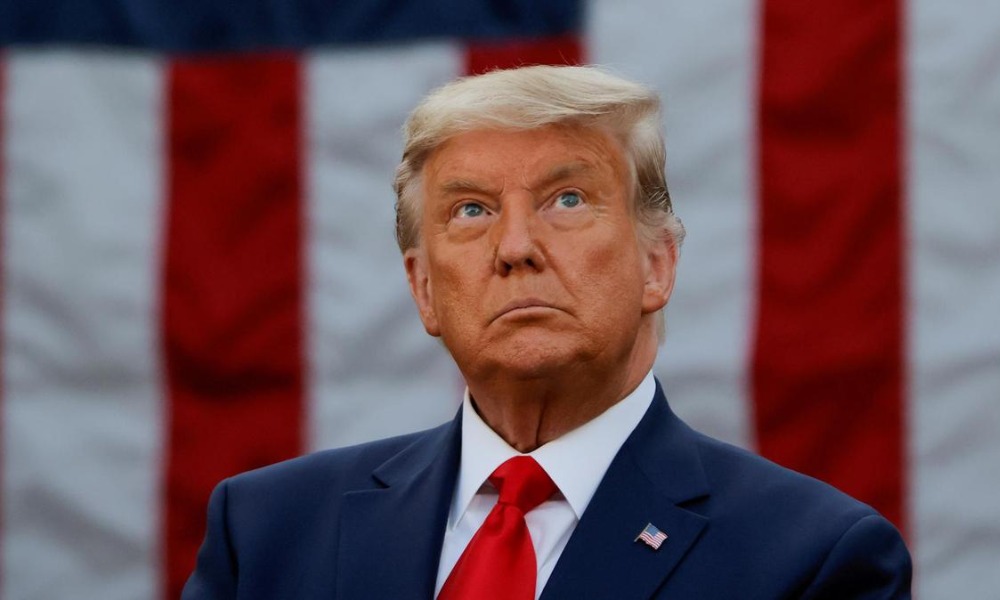
US President Donald Trump has vetoed a $740bn defence spending bill that was passed by Congress this month after objecting to certain provisions including that which will limit troop withdrawals from Afghanistan.
 
Lawmakers however passed the bill with an overwhelming majority and could override Trump’s rejection.
 
Bills passed by Congress need a president’s signature to become law. On rare occasions, a president may choose to veto – or reject – legislation because of some policy disagreement.
 
Lawmakers can override a presidential veto and enact bills into law by mustering two-thirds of votes in both chambers of Congress – the House of Representatives and the Senate.
 
If Congress does not override Mr Trump’s veto in this case, it would be the first time in 60 years that the National Defense Authorization Act (NDAA) does not become law.
 
Trump called the 4,500-page act, which has been nearly a year in the making, a “gift to China and Russia”.
 
“Unfortunately, the Act fails to include critical national security measures, includes provisions that fail to respect our veterans and our military’s history, and contradicts efforts by my administration to put America first in our national security and foreign policy actions,” he said in a statement.
 
Trump also said the bill’s measures to limit bringing troops home was “bad policy” and “unconstitutional”.
 
House Speaker Nancy Pelosi, the most powerful congressional Democrat, said Trump’s veto was “an act of staggering recklessness that harms our troops, endangers our security and undermines the will of the bipartisan Congress”, BBC reported.
 
According to the report, some of the outgoing president’s advisers had cautioned him against rejecting the bill, as he is expected to be overruled by Congress.
 
He is due to leave office on 20 January, when he will be replaced by Democrat Joe Biden.
 
The defence bill sets the Pentagon’s policy. It also determines decisions affecting weapons, personnel, troop deployments and other security measures. A number of military initiatives will stall if the bill does not become law.

Latest News

Former US officials urge halt to plan relocating Afghan refugees from Qatar to Congo

Published

on

Hundreds of former U.S. officials are calling on Washington to cancel a reported plan to relocate Afghan refugees from Qatar to the Democratic Republic of the Congo.

In an open letter addressed to the U.S. State Department, more than 600 former civilian and military officials, along with around 100 organizations, urged the administration to stop the proposed transfer. The letter was sent to Marco Rubio.

The signatories argue that the Afghan nationals in question were brought to Qatar by the United States to complete legal immigration procedures after undergoing extensive security vetting. The letter states that while the individuals were cleared for resettlement in the United States, they are now being considered for relocation to Congo, a country for which they were never screened.

“Those individuals were vetted and approved for the United States, not for the Democratic Republic of the Congo,” the letter reads.

According to the report, more than 1,100 Afghan allies and their family members are currently being held at Camp As Sayliyah in Qatar under U.S. supervision. Around 800 of them have already completed all security checks and received authorization to travel to the United States. More than half are women and children, and many have remained in transit limbo for over 15 months.

The situation has drawn criticism from former officials and policy observers, who describe the proposed relocation as a betrayal of Afghan allies who supported U.S. missions and risked their lives during the war in Afghanistan. Critics also warn that the move could damage U.S. credibility with future partners.

Several members of the U.S. Congress had previously expressed opposition to the proposal, cautioning that it could significantly undermine trust in the United States among its allies.

Continue Reading

Latest News

Ex-Pakistan envoy Durrani urges non-interference in Afghanistan’s internal affairs

Published

on

Asif Durrani, Pakistan’s former special envoy for Afghanistan, has said that no country should interfere in Afghanistan’s internal affairs, stressing that it is up to Afghans themselves to bring about any change in their country.

In a post on X, Durrani said Afghans should be “left to their own devices” and that they would eventually “find the way out” of their challenges.

However, he warned that instability inside Afghanistan could have negative consequences for neighbouring countries, adding that Afghan leaders and their supporters should take responsibility to address such risks.

Durrani described his remarks as a simple expression of goodwill and best wishes for the Afghan people and their future.

Continue Reading

Latest News

Uzbekistan and Japan discuss joint projects for Afghanistan’s socio-economic development

Published

on

The Special Representative of the President of the Republic of Uzbekistan for Afghanistan, Ismatulla Irgashev, has met with Tetsuya Yamada, Director General of the South Asia Department at the Japan International Cooperation Agency (JICA), to discuss cooperation on Afghanistan-related development projects.

According to Uzbekistan’s Ministry of Foreign Affairs, both sides focused on the implementation of joint initiatives aimed at supporting the socio-economic development of Afghanistan.

During the meeting, the Japanese side praised Uzbekistan’s “pragmatic approach” toward Afghanistan, as well as the infrastructure developed in the border city of Termez.

Japan also expressed interest in utilizing the Termez facilities for future humanitarian and development projects in Afghanistan, particularly in the fields of education, healthcare, agriculture, private sector development, and counter-narcotics efforts.

Both sides emphasized that such cooperation is aimed at improving the living conditions and overall well-being of the Afghan people.


Continue Reading
Advertisement
Advertisement
Advertisement
Advertisement

Trending

Copyright © 2025 Ariana News. All rights reserved!