
Latest News
U.S. Senate passes $770 billion defense bill, Biden’s signature next

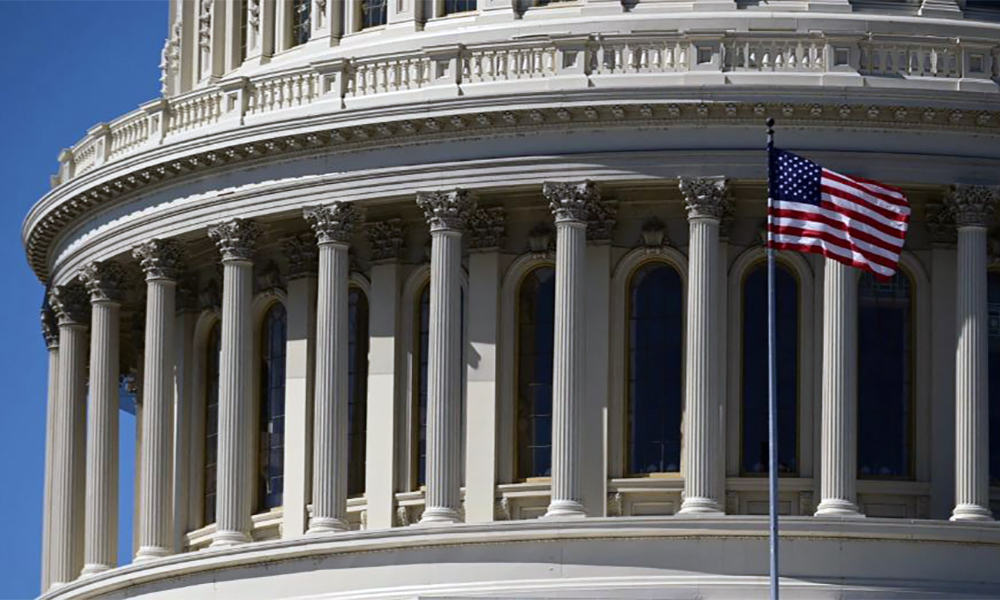
The U.S. Senate voted overwhelmingly on Wednesday for a version of the National Defense Authorization Act, or NDAA, that authorizes $770 billion in defense spending – $25 billion more than requested by President Joe Biden – sending the measure to the White House for the president’s signature, Reuters reported.
The vote was 88-11, with strong support from both Democrats and Republicans for the annual legislation setting policy for the Department of Defense. The House of Representatives passed it by 363-70 last week.
According to the report the tally had been 89-10 but Democratic Senator Cory Booker changed his vote later on Wednesday.
Biden is expected to sign the bill, but the White House did not respond to requests for comment on Wednesday, read the report.
The NDAA is closely watched by a broad swath of industry and other interests because it is one of the only major pieces of legislation that becomes law every year and because it addresses a wide range of issues.
The NDAA has become law every year for six decades, Reuters reported.
Authorizing about 5% more military spending than last year, the fiscal 2022 NDAA is a compromise after intense negotiations between House and Senate Democrats and Republicans after being stalled by disputes over China and Russia policy.
According to Reuters it includes a 2.7% pay increase for the troops, and more aircraft and Navy ship purchases, in addition to strategies for dealing with geopolitical threats, especially Russia and China.
The NDAA includes $300 million for the Ukraine Security Assistance Initiative, which provides support to Ukraine’s armed forces, $4 billion for the European Defense Initiative and $150 million for Baltic security cooperation.
On China, the bill includes $7.1 billion for the Pacific Deterrence Initiative and a statement of congressional support for the defense of Taiwan, as well as a ban on the Department of Defense procuring products produced with forced labor from China’s Xinjiang region.
It creates a 16-member commission to study the war in Afghanistan. Biden ended the conflict – by far the country’s longest war – in August, Reuters reported.
This year’s NDAA includes an overhaul of the military justice system to take decisions on whether to prosecute cases of rape, sexual assault and some other major crimes out of the hands of military commanders.
The change was a partial victory for activists because it did not strip military commanders of the authority to prosecute all felonies. It came after advocates led by Democratic Senator Kirsten Gillibrand waged a years-long effort to change the system in response to the thousands of cases of sexual assault among service members, many of which are never prosecuted.
According to the report the bill does not include some provisions included in earlier versions, notably one that would have required women to register for the military draft. The proposal had faced stiff opposition from a handful of socially conservative Republican lawmakers who thought it would erode traditional gender roles, threatening to stymie the entire NDAA.












Kazakhstan’s Foreign Minister Mukhtar Tileuberdi has called for pragmatic and coordinated international engagement with Afghanistan, saying the country’s long-term stability is closely linked to the security and sustainable development of Central Asia.
Speaking during the general debate of the 81st session of the United Nations General Assembly in New York on Friday, Tileuberdi said humanitarian assistance to Afghanistan remains essential but alone cannot break the cycle of poverty, displacement and dependency.
He said Kazakhstan supports a “pragmatic, coordinated and step-by-step” approach to international engagement with Afghanistan, with the United Nations playing a central role.
Tileuberdi also said Kazakhstan is working with the UN to operationalize the United Nations Regional Centre for the Sustainable Development Goals for Central Asia and Afghanistan in Almaty.
He said the success of the centre should be measured by the results and assistance it delivers to the region.


Abu Muslim Farah defeat Khurasan Faryab 2-0 in ACL season six

Saar: Concerns over Pakistan’s political crisis discussed

Afghanistan Champions League: Omar Zawak Herat beat Toofan Herat 1-0

Blast in Pakistan’s Dera Ismail Khan kills 11, injures 30

Ariana Afghan Airlines increases Kabul-Delhi cargo flights

Saudi energy group signs major Afghanistan deals covering gas exploration and pipeline plans

Trump floats idea of renaming Atlantic or Pacific Ocean

US hits Egyptian bank branches with Iran sanctions as war marks six months

Nepal flood rescue mission enters critical phase as thousands remain missing

Iranian clubs to face Gulf opponents at neutral venues in Asian Champions League Elite
Saar: Concerns over Pakistan’s political crisis discussed

Exclusive interview with Abdul Latif Mansoor, Minister of MRRD

Tawsia: Overview of Afghanistan’s iron mines

Tahawol: Discussion on fresh Pakistani airstrikes on Afghanistan

Saar: Calls for international support for Afghanistan discussed
-

 World5 days ago
CNN, MS NOW and Politico sue Trump, challenging White House ban
-

 Latest News4 days ago
Ariana Afghan Airlines ranks seventh among 45 Central Asian airlines
-

 Latest News5 days ago
UN reiterates call for respect for international law after Kunar airstrikes
-

 Regional4 days ago
US and Iran hold first talks since June after Trump’s ‘annihilation’ threat
-

 Latest News4 days ago
Silk Road highway in Wakhan corridor now reaches the China border
-

 Regional3 days ago
Iran airlines cancel flights as US sanctions hit
-

 Latest News5 days ago
Afghan Official: Pakistan’s airstrikes will not go unanswered
-

 Sport5 days ago
Afghan boxing referee heads to China for international festival