
Latest News
UNHCR alarm over forced Afghan refugees returns from Tajikistan


On Thursday, UNHCR, the UN refugee agency, warned of the danger faced by Afghan refugees who continue to be detained and deported from Tajikistan, reiterating that it’s illegal to force those fleeing persecution back to their homeland.
In the latest incident, some five Afghans, including a family comprising three children and their mother, were returned home to Afghanistan, despite UNHCR’s protests.
“Tajikistan must stop detaining and deporting refugees, an action that clearly puts lives at risk,” said Elizabeth Tan, UNHCR’s Director of International Protection. “Forced return of refugees is against the law and runs contrary to the principle of non-refoulement, a cornerstone of international refugee law.”
Separate from legal ramifications, the UN Food and Agriculture Organization (FAO) also expressed concern on Thursday over the ability of returning refugees to make a living.
Richard Trenchard, Representative of the Food and Agriculture Organization of the United Nations (FAO) in Afghanistan, warned that, “almost half the total population face acute food insecurity – hunger on a daily basis.”
The legal and physical perils faced by returning refugees have therefore been compounded by the ongoing food insecurity crisis, which has become more acute in the year since the Taliban takeover.
To combat this nascent crisis, the United States Government has announced an $80 million grant to the FAO. Specifically, the grant will be used to build Afghan resilience and bolster efforts to provide food security in the face of continuing drought, economic crisis and conflict.
The five-year contribution from the US Agency for International Development (USAID) will meet farmers’ immediate needs and build healthier, more climate-smart and resilient livelihoods.
Through increasing nutritious food production, fostering environmental sustainability, promoting climate-smart agricultural practices and supporting the diversification of household incomes, FAO aims to revive struggling food markets.
As Mr. Trenchard reflected, “USAID’s generous support will help Afghanistan’s farmers to begin seeing beyond the current crisis and start laying foundations for future recovery.”
The direct outcome of investments by the US and FAO will be the increased production and processing of nutritious food. However, the butterfly effect of such development will be improved economic resilience, enhanced public health, and strengthed community security.
Significant environmental benefits will also be achieved through the planting of new forests, climate-smart pasture development, river bank management and reducing soil erosion.
The projects have been designed to encourage engagement by historically oppressed groups in safe income-generating activities.
FAO fosters gender inclusive and intergenerational collaboration to enhance access to local markets and create microfinancing opportunities.
These initiatives target various products including dairy, livestock, crops and aim both to give people tools such as zero-energy cold storages, micro solar dryers and equipment for safe collection and handling of milk and to expand frayed market infrastructures.
Therefore, these schemes are essential because they will not only meet immediate needs, but also eliminate the potential for future insecurity, FAO said.


Latest News
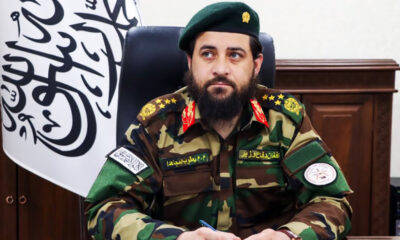
Defense Minister: Afghan forces will protect the country at all costs
Mujahid also warned that no one would be allowed to disrupt security across Afghanistan.
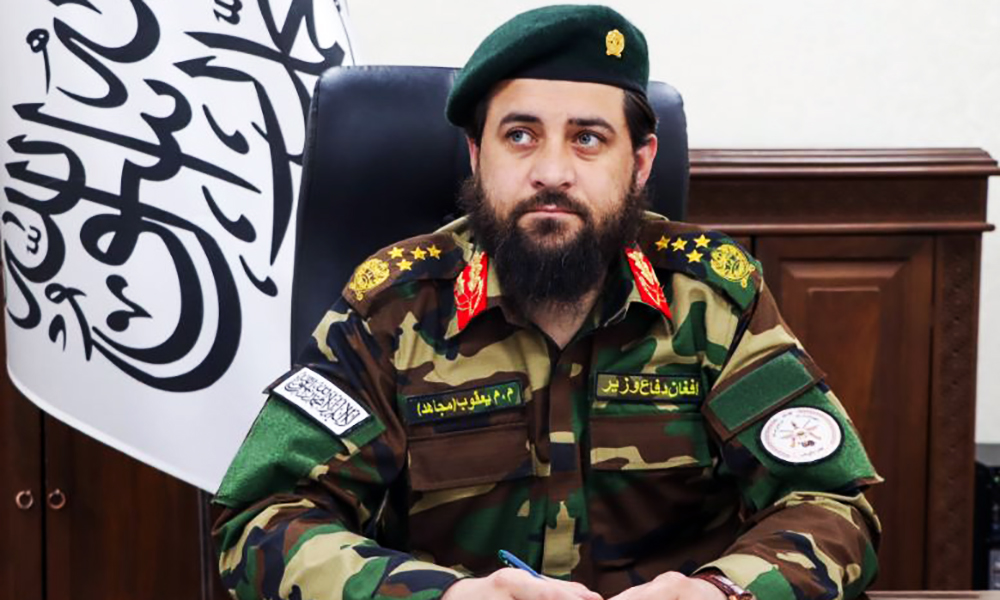
Afghanistan’s Defense Minister Mohammad Yaqoob Mujahid says the country’s security and defense forces are fully prepared to protect Afghanistan’s territorial integrity, independence and Islamic system.
In a message marking the August 15, 2021, anniversary of the collapse of the US-backed government and withdrawal of foreign troops, Mujahid assured Afghans that the security forces will use their full strength to protect the lives, property and dignity of the people.
“We assure the nation that with all our strength and capability, we will protect the country, its people, their property and dignity, as well as the Islamic system,” he said.
Mujahid also warned that no one would be allowed to disrupt security across Afghanistan.
Latest News
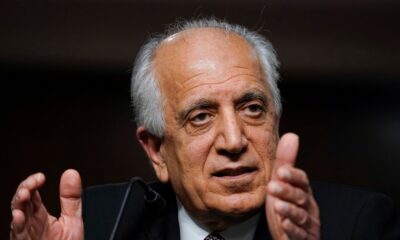
IEA has outperformed expectations on infrastructure, agriculture and regional diplomacy: Khalilzad
Khalilzad urged Washington to expand its engagement with Afghanistan, warning that a limited U.S. presence could create a strategic vacuum.
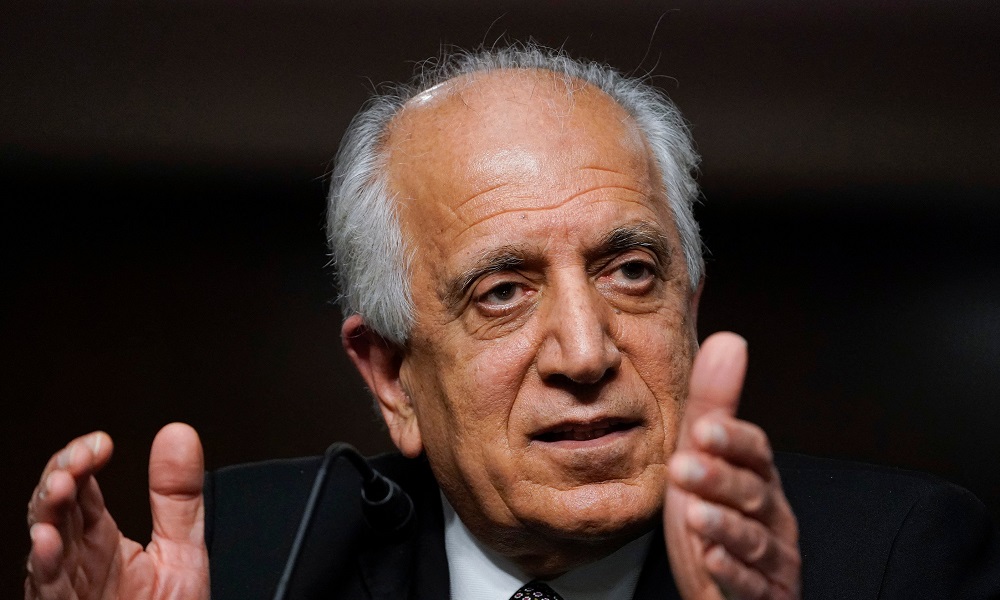
Former U.S. special representative for Afghanistan Zalmay Khalilzad has called for stronger U.S.-Afghanistan relations, saying improved ties are essential to bringing Afghanistan back into the international community while urging both Washington and Kabul to address key outstanding issues.
Speaking in an interview with The National of the United Arab Emirates, Khalilzad said Afghanistan should first address U.S. concerns over American citizens believed to be detained or missing in the country.
He said there are three major obstacles to improving relations between Washington and Kabul.
The first is the fate of three American citizens whom he said are either being held in Afghanistan or have gone missing. Khalilzad said Washington needs clearer information about their cases and a mechanism to deal with similar issues.
The second challenge, he said, is continued U.S. disappointment and frustration over the outcome of its 20-year involvement in Afghanistan. He said addressing those concerns would take time and require both sides to confront the realities of the past as well as future U.S. interests.
The third challenge is IEA policies, particularly restrictions on girls’ education. Khalilzad described the restrictions as a major symbol of the issues the United States had sought to address during its two decades in Afghanistan, calling the policy morally wrong and socially short-sighted.
At the same time, Khalilzad urged Washington to expand its engagement with Afghanistan, warning that a limited U.S. presence could create a strategic vacuum.
He said reduced engagement could allow U.S. rivals to increase their influence in Afghanistan, create opportunities for terrorist groups and further harm ordinary Afghans who have already endured decades of conflict.
“Turning our backs on Afghanistan and limiting engagement to a minimum is, at best, a mistake,” Khalilzad said, according to his comments published by The National.
Assessing Afghanistan five years after the IEA returned to power, Khalilzad said developments had differed from what many had expected.
He said concerns that Afghanistan would become a much greater source of terrorism, face worsening internal security or experience economic collapse after the end of large-scale foreign assistance had not fully materialized.
Khalilzad also said the IEA had demonstrated greater-than-expected capabilities in areas including infrastructure development, agriculture and regional diplomacy, particularly in its relations with Central Asian countries such as Uzbekistan.
However, he said the deterioration in Afghanistan-Pakistan relations had been unexpected. He criticized what he described as Pakistan’s increasingly hostile approach and its return to policies of supporting opponents of the Afghan authorities.
Khalilzad also identified Afghanistan’s prolonged political transition as a major challenge, saying there is still no clear roadmap for establishing a permanent constitution or political system.
His comments come as Afghanistan marks five years since the IEA took control of Kabul.
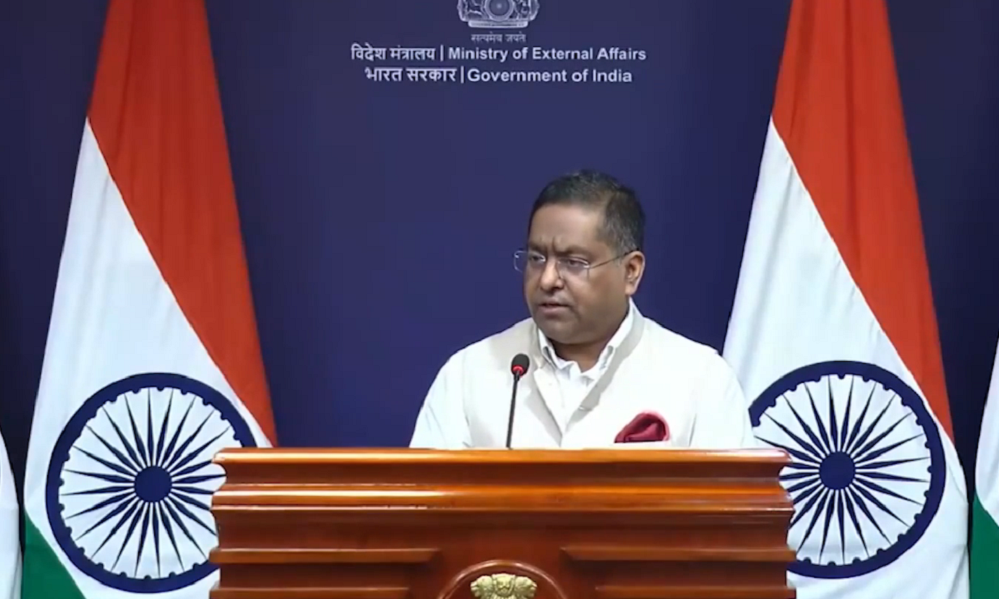
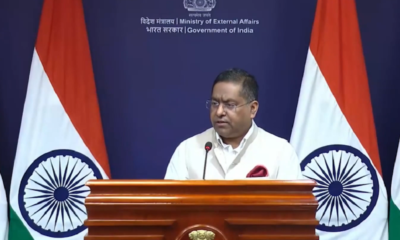
India reaffirmed its “longstanding ties” with Afghanistan and the Afghan people, a day before the fifth anniversary of the Islamic Emirate’s return to power in Kabul.
At a bi-weekly media briefing on Friday, India’s Ministry of External Affairs spokesperson Randhir Jaiswal said New Delhi had maintained regular engagement with Afghanistan over the past year, including several ministerial visits.
“In the last few months and over a year now, we have had several engagements and several ministerial visits from Afghanistan to India and these have led to strengthening of partnerships in several areas including in development cooperation, trade, connectivity”.
“We have longstanding ties with Afghanistan and the Afghan people, and we look forward to strengthening these ties,” he added.
Jaiswal was responding to a question about reported plans by the Afghan Embassy in New Delhi to hold an event marking the IEA’s return to power in August 2021.
India’s foreign ministry did not confirm whether any representative would be present.
Several senior officials from the Islamic Emirate have visited India over the past year, including Foreign Minister Amir Khan Muttaqi, Industry and Commerce Minister Nooruddin Azizi, Public Health Minister Noor Jalal Jalali and Agriculture Minister Ataullah Omari.


Five killed in Michigan shooting; suspect found dead after manhunt

Defense Minister: Afghan forces will protect the country at all costs

IEA has outperformed expectations on infrastructure, agriculture and regional diplomacy: Khalilzad

India reaffirms ‘longstanding ties’ with Afghanistan

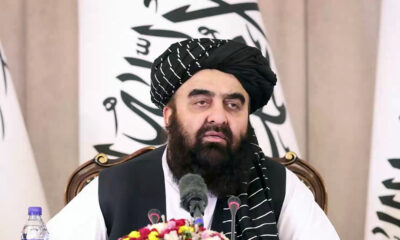
Muttaqi urges U.S. to reopen Kabul embassy, invest in Afghanistan’s mines

Pakistan’s governance system has ‘collapsed’: Mohsin Naqvi

Spain sweep FIFA World Cup player awards after historic triumph

Afghanistan temporarily eases fuel import standards to help curb rising prices

First Chinese transit shipment arrives in Herat via Iran’s railway corridor

Afghanistan, India discuss ways to boost trade and investment ties

Tawsia: $420M investment in TAPI gas distribution network in Herat discussed

Tahawol: Trade cooperation between Afghanistan and Iran discussed

Saar: Discussion on Islamic Emirate’s five-year journey

Tahawol: Afghanistan’s future in the global press discussed

Saar: The Islamic Emirate’s five-year rule discussed
-
 Latest News2 days ago
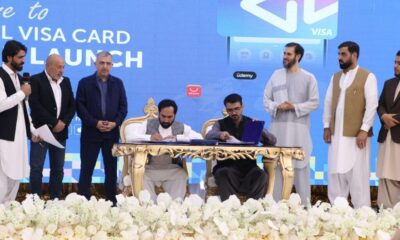
HesabPay unveils new visa card and digital payment app in Kabul
-

 Sport5 days ago
Afghanistan beat Ireland by 3 wickets in third ODI
-
 Latest News5 days ago
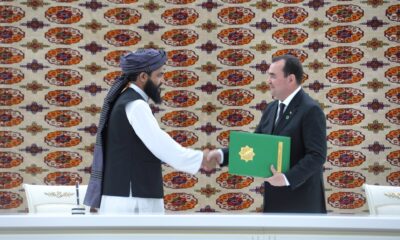
MoU on TAPI gas purchase signed between Afghan Gas and Türkmengaz
-

 International Sports2 days ago
AFC Champions League Elite draw nears as Al-Nassr seeded above Al-Hilal
-

 Sport3 days ago
Afghanistan to host India for three-match T20I series in Delhi
-
 Sport4 days ago
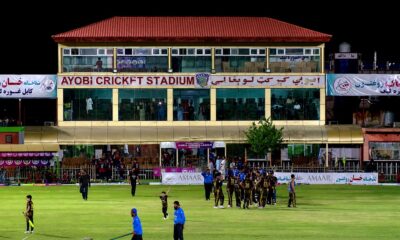
Abasin Defenders beat Shamshad Eagles by four wickets in Kabul Premier League
-
 Sport3 days ago
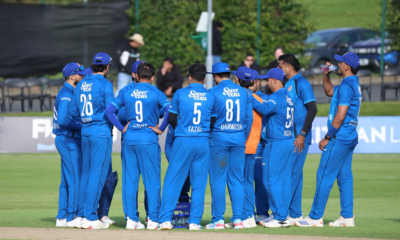
Afghanistan face Ireland with series win in sight
-
 Latest News2 days ago
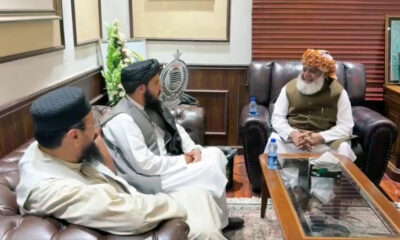
Afghan envoy invites Fazlur Rehman to embassy event marking IEA’s return to power