
Regional
US and Iran presidents sign ceasefire agreement, but Trump says he could still resume attacks
The 14-point agreement extends a ceasefire announced in April by another 60 days, including in Lebanon, to allow the two sides to negotiate a final truce.

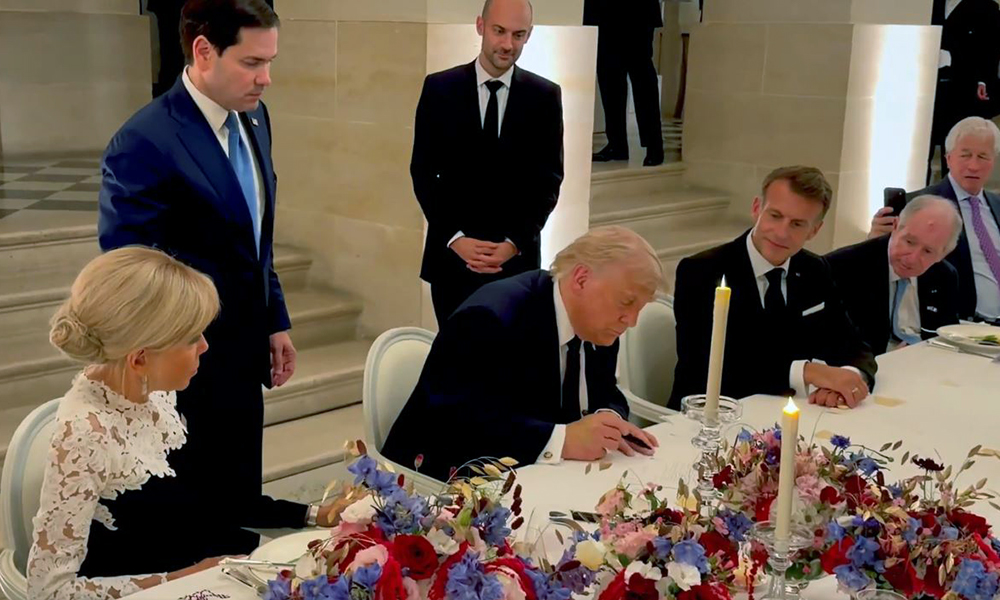
The U.S. and Iran released the text of an interim agreement their presidents have signed to end their war on Wednesday, with U.S. President Donald Trump threatening to resume attacks and kill Iranian officials if they failed to honour their commitments, Reuters reported.
Trump, attending the G7 with other leaders in France, also withdrew at least one of his stated rationales for attacking Iran in the first place, saying it would be “unfair” for Tehran not to have ballistic missiles, having previously vowed to obliterate them.
“We’re going to bomb the hell out of them if they violate the agreement,” Trump said of Iran at a press conference. “I don’t want them to. I want them to honor the agreement.” He also called Iranians “smart people” as U.S. and Iranian negotiators work on a permanent truce over the coming 60 days, which Trump said he hoped would usher in peace in the Middle East and lower oil prices.
Earlier, he had said: “If I don’t like it, if they don’t behave, we’ll go right back to dropping bombs right smack in the middle of their head, OK?”
Iran’s leaders did not address the new threats while celebrating the moment, releasing photographs of what is believed to be the first agreement signed by both a U.S. and Iranian president since the Islamic Republic’s founding in 1979.
“Everything we sought to achieve through military action, we obtained several times over through negotiation; it was not even comparable,” Iran’s lead negotiator Mohammad Baqer Qalibaf told state television about the agreement, which includes the unfreezing of billions of dollars in Iranian assets.
The U.S. and Israel launched the war on Iran on February 28, assassinating the 86-year-old Supreme Leader Ayatollah Ali Khamenei and military leaders on the first day. It quickly spiralled into a regional conflict that has killed more than 7,000 people, mostly in Iran and Lebanon; driven up energy prices; renewed inflationary pressures and sparked concerns about a major food supply crisis in developing countries.
The 14-point agreement extends a ceasefire announced in April by another 60 days, including in Lebanon, to allow the two sides to negotiate a final truce. Both Trump and Iranian President Masoud Pezeshkian have digitally signed the memorandum in English and Farsi, U.S. and Iran officials said, with Iran’s foreign ministry saying the agreement was already in effect as of Wednesday, read the report.
Trump signed just before a grand dinner with French President Emmanuel Macron at the Palace of Versailles, the site of the signing of the eponymous treaty that formally ended World War One.
The memorandum includes an immediate end to the war on all fronts, including Lebanon, the full resumption of maritime traffic “with no charge” in the Strait of Hormuz, the lifting of a U.S. blockade of Iranian ports, the waiving of U.S. sanctions on Iran, the unfreezing of its assets, and a $300 billion investment fund for the Islamic Republic’s post-war reconstruction.
Oil prices fell again on Wednesday on prospects for the reopening of the Hormuz, the slender, vital waterway between Iran and Oman, with Brent crude futures below $80, at their lowest level since the war’s start. They later regained more than 1% after Trump threatened renewed violence.
Iran also undertakes not to build nuclear weapons, reaffirming a vow it had made for decades. It also agreed to the on-site “down-blending” of its stockpile of enriched uranium under the supervision of the International Atomic Energy Agency, although Trump had wanted to take it out of the country, which Iran has rejected.
Despite his combative rhetoric, Trump appears to have achieved little of what he said he wanted in going to war, while Iran appears much closer to sanctions relief worth billions of dollars than before it was attacked.
Iran’s theocratic government remains in place, its stockpile of highly enriched uranium has not been surrendered, its ballistic missile capabilities have not been destroyed and it has not ended its support for anti-Israel militias like Hezbollah in Lebanon.
Trump recanted his February promise to destroy all of Iran’s missiles and “raze their missile industry to the ground.”
“I’m saying that if other countries have them, it’s a little bit unfair for them not to have some,” Trump told reporters in Paris after leaving the summit.
G7 leaders hailed the agreement at their summit, held in the French town of Evian-les-Bains, an hour’s drive along the shore of Lake Geneva from where the U.S. has said a formal signing ceremony for the U.S.-Iran agreement was due to be held across the Swiss border on Friday, Reuters reported.
But Iranian foreign ministry spokesperson Esmaeil Baghaei cast doubt on this, telling IRIB’s News Network that, because the two presidents had already signed, “No signing ceremony will be held in Switzerland.”
European leaders share U.S. concerns about Iran’s nuclear program, but never endorsed his decision to go to war without United Nations authorization, and worry Iran has gained leverage by withstanding the superpower onslaught and asserting control over the strait.
The leaders of France, Germany, Britain, Japan, Italy, Canada and the U.S. demanded in a joint statement an immediate ceasefire in Lebanon, where the memorandum calls for a halt to hostilities between Israel and the Iran-backed Hezbollah group that have killed thousands of people and displaced more than a million more.
Fighting there has abated but not ceased since the agreement was reached on Sunday, and Israel, which was not part of the negotiations and whose military is occupying southern Lebanon, says it retains the right to use force.
Trump on Wednesday gently rebuked Israeli Prime Minister Benjamin Netanyahu, who has distanced Israel from the U.S.-Iran agreement, over his tactics in Lebanon against Hezbollah. The two men have repeatedly clashed over Israel’s refusal to constrain its pursuit of Hezbollah in Lebanon, where a cessation of hostilities is a key Iranian demand, read the report.
“Netanyahu happens to be a good man, gets a little excited sometimes,” Trump told reporters. “We have a little dispute over Lebanon. I say you can do a little softer touch, Bibi,” he said, using Netanyahu’s nickname. “You don’t have to knock down a building every time somebody walks into it that’s from Hezbollah.”
Lebanese state media reported fresh Israeli air strikes and artillery fire in several southern towns throughout Wednesday. Lebanese security sources said Hezbollah had also launched two drone attacks on Israeli forces in the south. The group did not publicly claim the attacks.
Israel later said five of its soldiers had been injured in two Hezbollah drone attacks in southern Lebanon.






Regional
Saudi Arabia calls alleged Mecca attack a ‘red line’ as Houthis deny involvement
Saudi Arabia’s recently announced defense cooperation with Turkey and Pakistan has not been activated in response to the reported incident.
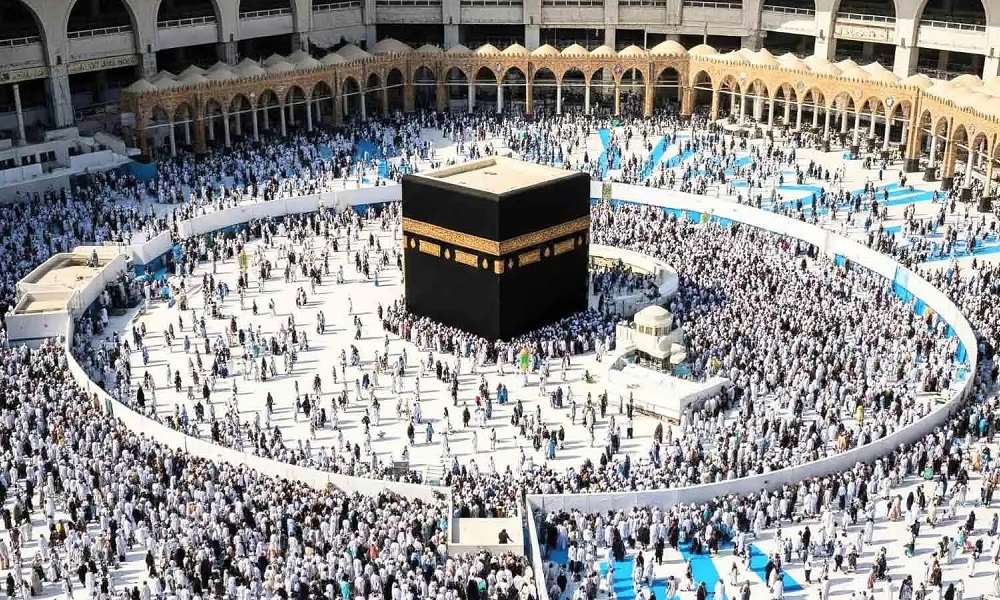
Saudi Arabia has accused Yemen’s Iran-backed Houthi movement of attempting to launch a drone attack toward Mecca, declaring the holy city a “red line,” while the Houthis have denied carrying out the attack.
Saudi authorities said the drone was intercepted and destroyed before it entered the airspace over Mecca, Islam’s holiest city. The Houthis denied launching drones toward the city.
The reported incident has drawn condemnation from several countries and the Organization of Islamic Cooperation (OIC), which said any attempt to target the holy sites violates their sanctity.
Saudi-led coalition spokesperson Col. Turki al-Maliki said the incident was the second alleged Houthi attempt to target Mecca, following a ballistic missile launch toward the city in 2017.
The development comes as Saudi Arabia faces renewed security pressures linked to the wider regional conflict. The Houthis have also carried out attacks against Saudi infrastructure and shipping in the Red Sea, according to the report.
Turkey and Pakistan say no Saudi request for military support
Saudi Arabia’s recently announced defense cooperation with Turkey and Pakistan has not been activated in response to the reported incident.
Officials from Turkey and Pakistan told The Associated Press that Riyadh had not requested military assistance. A Turkish official said efforts to establish the alliance’s operational framework still need to be completed.
Pakistan’s Prime Minister Shehbaz Sharif condemned the reported attack and said Pakistan and Saudi Arabia stand “shoulder to shoulder.”
Houthis claim they shot down Saudi fighter jet
The Houthis later claimed they had shot down an F-15 fighter jet operated by the Saudi-led coalition over Yemen’s central Marib province.
Houthi military spokesperson Brig. Gen. Yahya Saree provided no details on when the incident allegedly occurred. The Associated Press said it could not independently verify the claim.
U.S. officials have indicated that Washington does not currently intend to become directly involved in the conflict. President Donald Trump said the Houthis had indicated they did not want to fight the United States, while Vice President J.D. Vance said Washington remained in contact with both Saudi Arabia and the Houthis.
Meanwhile, Iranian Foreign Minister Abbas Araghchi was visiting China, with discussions expected to include the regional conflict and shipping through the Strait of Hormuz.
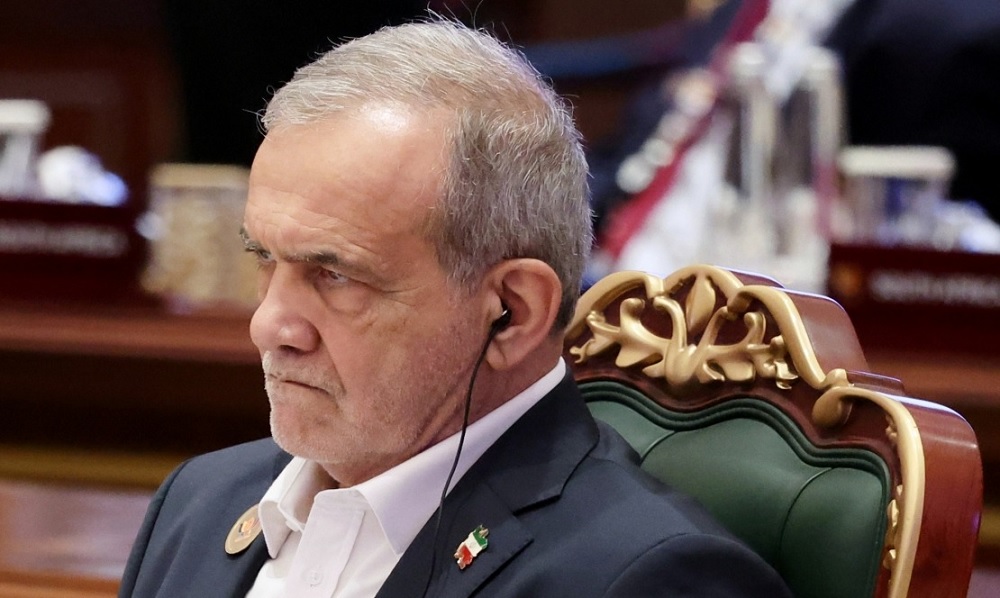
Arab states in the Gulf called off a meeting with Iran planned for Monday, while Yemen’s Houthis launched a new attack on Saudi Arabia after fighting that has extended the Middle East war to another theatre and further jeopardised global oil supplies.
The Iran-aligned Houthis in Yemen said they fired dozens of missiles and drones on Monday at a Saudi military airbase in Khamis Mushait, near the border, hitting aircraft hangars, radar systems, runways and ammunition depots. They described the attack as retaliation for hundreds of Saudi airstrikes on Yemen in recent days, Reuters reported.
Saudi authorities announced brief emergency alerts there and in three other southern cities which have previously come under Houthi fire.
The Houthis launched a lightning advance last week in Yemen, culminating in the seizure of an island in the mouth of the Red Sea on Friday. A separate attack that day, which Riyadh blamed on Iran-backed fighters in Iraq, knocked out Saudi Arabia’s east-west pipeline, the main route for Middle East oil bypassing the blockaded Strait of Hormuz.
OIL PRICES JUMP
Crude oil prices rose more than 3% on Monday, when the market reopened after the weekend, while the politically sensitive average retail price of diesel in the United States hit a new all-time high above $6.23 a gallon.
Traders say the closure of the Saudi pipeline could cut off as much as 4% of global oil supply unless it is reopened within days. Images from space show sections of the pipeline damaged by blazes. Riyadh has not given a firm estimate for how long it will be shut.
Oman had been due to host a meeting on Monday with Iran and Gulf states to discuss negotiations aimed at reopening Hormuz, the world’s most important oil shipping lane, largely closed since the U.S. and Israel attacked Iran at the end of February.
But Oman’s Foreign Minister Sayyid Badr Albusaidi announced overnight that the meeting had been postponed “in the interests of consensus”. Iran said the postponement was at the request of Saudi Arabia.
Meanwhile, Iran issued a list of 77 ships it said had violated its protocols for operating in the Strait of Hormuz. Any ship on the list would face “restrictions on future passages, including fines, detention, or confiscation”, and other ships that assisted them by accepting transfers of cargo would be added to the list.
EXPANSION OF WAR TO YEMEN POSES DILEMMA FOR TRUMP
The upsurge of fighting in Yemen poses a dilemma for Washington, which is under pressure to aid its Saudi allies but anxious not to expand the costly war to a new theatre.
Saudi Arabia has led an Arab coalition battling the Houthis for more than a decade, after the mountain fighters captured Yemen’s capital in 2014. The war there had largely been quiet under a ceasefire for the past few years, but fighting has now resumed, with the Houthis driving back forces from a Saudi-backed government based in the south.
Thousands of Yemenis have fled inland from the coast to escape fighting as the Houthis swept into cities including the historic Red Sea port of Mocha last week.
Aisha Muhammad, an elderly woman burning twigs to heat a kettle in government-held territory near Taiz, told Reuters she had left behind two daughters and three sons who had been unable to escape.
“They can’t even go out to the market to get food and drinking water. They are being blocked and shot at, so they are trapped inside their homes,” she said. “They cannot reach us, and we cannot return to them. This is a trial from God.”
On Friday the Houthis captured Perim Island, inside the Bab el-Mandeb, the “Gate of Tears” strait, at the mouth of the Red Sea.
U.S. President Donald Trump is under pressure to end the war to relieve the global energy shortage and lower prices that are hurting the fortunes of his Republican Party ahead of mid-term elections in November.
Three sources have told Reuters that Washington has so far rebuffed pleas from Saudi Arabia’s Crown Prince Mohammed bin Salman to intervene in Yemen. Trump confirmed over the weekend that he had spoken to the prince, and said the Houthis had also phoned asking Washington to keep out of the dispute.
The United States bombed the Houthis in 2025 for two months, but Trump called off that campaign after reaching a ceasefire with the group, which he said had promised not to attack ships in the Red Sea.
Trump, who attended a golf tournament at one of his resorts in Ireland, said he expected the Iran war to end shortly after the elections in November, after which the price of oil would “drop like a rock”.
Regional
Hormuz shipping traffic remains below 10-day average at weekend, data shows
A U.S. blockade of Iran-related shipping has halted Iranian crude oil exports since it was reimposed in mid-July.
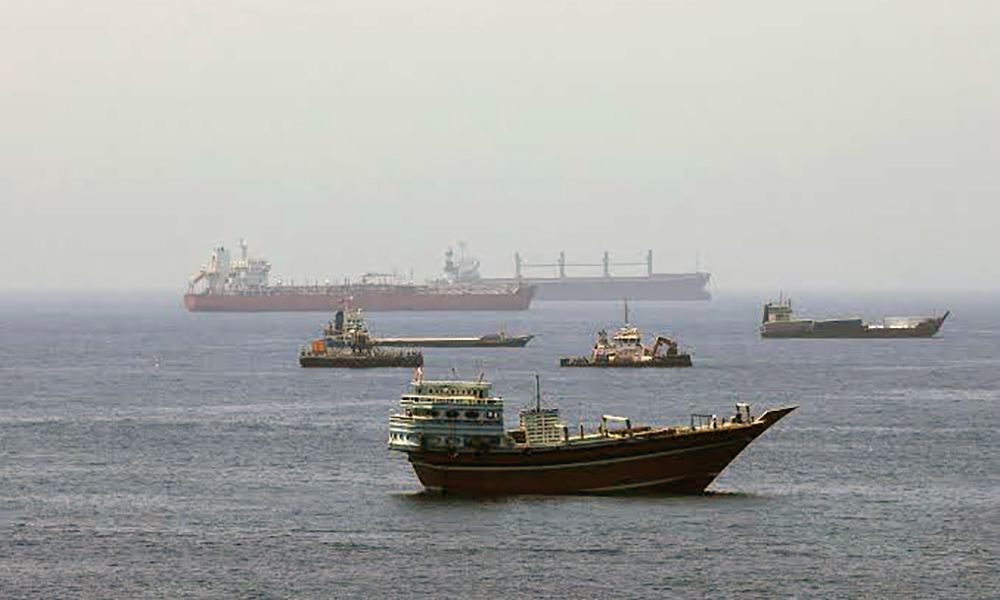
Commodity vessel transits through the Strait of Hormuz fell to a single digit per day at the weekend, preliminary shiptracking data showed on Monday, well below a 10-day average of 14, Reuters reported.
Over the weekend, four vessels exited the Gulf through the strait, including a Handysize vessel sailing in ballast, a Handy vessel carrying LPG, a Supramax carrying fertilizer and a Suezmax laden with crude or condensate.
Ten vessels entered the Gulf, including a mini-bulker carrying minor bulk commodities, a Handymax carrying grain, a Panamax carrying metals and a Supramax carrying dry bulk cargo, the data showed.
The figures exclude any vessels that might have crossed the strait with their Automatic Identification System transponders turned off to avoid detection.
A vessel was struck by an unknown projectile while transiting the Strait of Hormuz, the United Kingdom Maritime Trade Operations said early on Sunday.
It said the crew’s status, damage assessment and environmental impact were unknown.
Meanwhile, the vital East-West oil pipeline in Saudi Arabia, which has helped relieve the logjam in the Strait of Hormuz, was temporarily shut down by a drone attack coming from Iraq, Saudi officials said.
Before the Iran war started on February 28, the strait typically handled about 125 large, commercial vessels per day, including tankers, gas carriers, bulkers and container vessels, accounting for some 20% of the world’s daily crude oil and liquefied natural gas supply, read the report.
A U.S. blockade of Iran-related shipping has halted Iranian crude oil exports since it was reimposed in mid-July.
In the Bab el-Mandeb strait, 24 and 27 commodity vessels travelled through respectively on Saturday and Sunday, tracking data showed, compared with an average of around 27 ships over the last 10 days.


Saudi Arabia calls alleged Mecca attack a ‘red line’ as Houthis deny involvement

Five Years On: IEA touts economic growth despite international isolation

UN warns of mounting humanitarian and human rights pressures in Afghanistan

India take 2-0 lead in 3-match series against Afghanistan

Tahawol: Afghanistan at the center of UN discussions

Four mediators struggle to secure lasting Pakistan-Afghanistan ceasefire

Juma Khan Fateh surrenders to IEA forces in Badakhshan

Afghanistan’s trade diversification challenges Pakistan

Syria and Saudi Arabia condemn Kabul bombing, express solidarity with Afghanistan

Saudi energy group signs major Afghanistan deals covering gas exploration and pipeline plans
Tahawol: Afghanistan at the center of UN discussions

Saar: Afghanistan’s relations with regional countries discussed

Tahawol: Houthis’ return to regional power dynamics

Tahawol: Calls for U.S. engagement with Afghanistan

Saar: End of Chinese ambassador’s mission in Kabul
-
 Sport3 days ago
Zadran calls on Afghan fans to rally behind team against India
-

 Sport5 days ago
Omar Zawak, Toofan Herat secure victories in Afghanistan Champions League
-
 Latest News3 days ago
Khalilzad warns US risks losing influence in Afghanistan to China and Russia
-

 Regional4 days ago
Saudis shut down oil pipeline as Houthis tighten grip on Red Sea shipping
-
 Business3 days ago
EU and FAO launch €5m programme to strengthen Afghanistan’s agrifood sector
-

 Latest News5 days ago
Pakistan court blocks expulsion of Afghan medical students
-
 World3 days ago
Houthi advance in Yemen puts U.S. in a new bind
-

 Latest News4 days ago
Afghan official highlights Badakhshan operation at China security forum