
Regional
US and Iran presidents sign ceasefire agreement, but Trump says he could still resume attacks
The 14-point agreement extends a ceasefire announced in April by another 60 days, including in Lebanon, to allow the two sides to negotiate a final truce.

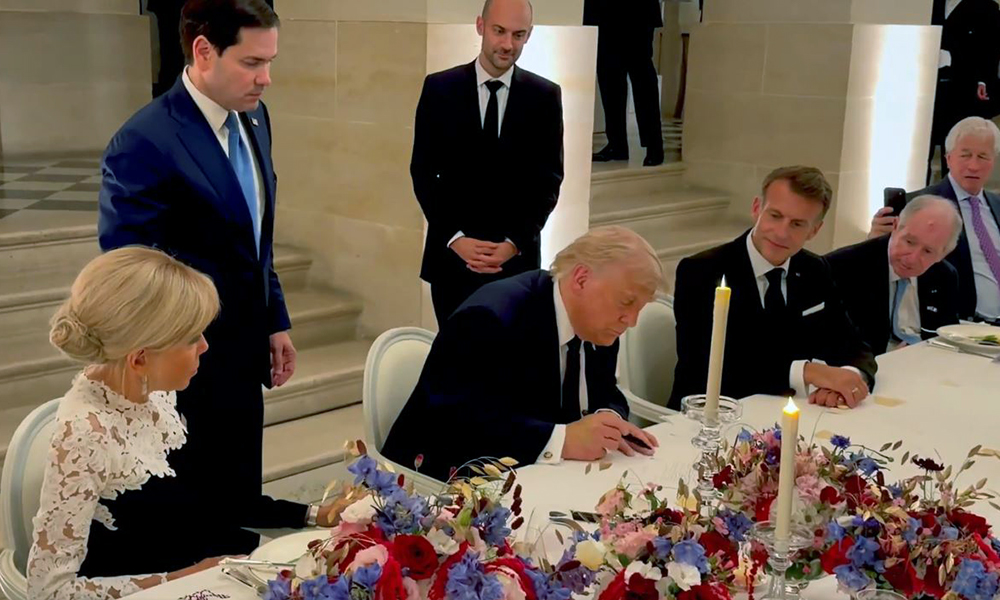
The U.S. and Iran released the text of an interim agreement their presidents have signed to end their war on Wednesday, with U.S. President Donald Trump threatening to resume attacks and kill Iranian officials if they failed to honour their commitments, Reuters reported.
Trump, attending the G7 with other leaders in France, also withdrew at least one of his stated rationales for attacking Iran in the first place, saying it would be “unfair” for Tehran not to have ballistic missiles, having previously vowed to obliterate them.
“We’re going to bomb the hell out of them if they violate the agreement,” Trump said of Iran at a press conference. “I don’t want them to. I want them to honor the agreement.” He also called Iranians “smart people” as U.S. and Iranian negotiators work on a permanent truce over the coming 60 days, which Trump said he hoped would usher in peace in the Middle East and lower oil prices.
Earlier, he had said: “If I don’t like it, if they don’t behave, we’ll go right back to dropping bombs right smack in the middle of their head, OK?”
Iran’s leaders did not address the new threats while celebrating the moment, releasing photographs of what is believed to be the first agreement signed by both a U.S. and Iranian president since the Islamic Republic’s founding in 1979.
“Everything we sought to achieve through military action, we obtained several times over through negotiation; it was not even comparable,” Iran’s lead negotiator Mohammad Baqer Qalibaf told state television about the agreement, which includes the unfreezing of billions of dollars in Iranian assets.
The U.S. and Israel launched the war on Iran on February 28, assassinating the 86-year-old Supreme Leader Ayatollah Ali Khamenei and military leaders on the first day. It quickly spiralled into a regional conflict that has killed more than 7,000 people, mostly in Iran and Lebanon; driven up energy prices; renewed inflationary pressures and sparked concerns about a major food supply crisis in developing countries.
The 14-point agreement extends a ceasefire announced in April by another 60 days, including in Lebanon, to allow the two sides to negotiate a final truce. Both Trump and Iranian President Masoud Pezeshkian have digitally signed the memorandum in English and Farsi, U.S. and Iran officials said, with Iran’s foreign ministry saying the agreement was already in effect as of Wednesday, read the report.
Trump signed just before a grand dinner with French President Emmanuel Macron at the Palace of Versailles, the site of the signing of the eponymous treaty that formally ended World War One.
The memorandum includes an immediate end to the war on all fronts, including Lebanon, the full resumption of maritime traffic “with no charge” in the Strait of Hormuz, the lifting of a U.S. blockade of Iranian ports, the waiving of U.S. sanctions on Iran, the unfreezing of its assets, and a $300 billion investment fund for the Islamic Republic’s post-war reconstruction.
Oil prices fell again on Wednesday on prospects for the reopening of the Hormuz, the slender, vital waterway between Iran and Oman, with Brent crude futures below $80, at their lowest level since the war’s start. They later regained more than 1% after Trump threatened renewed violence.
Iran also undertakes not to build nuclear weapons, reaffirming a vow it had made for decades. It also agreed to the on-site “down-blending” of its stockpile of enriched uranium under the supervision of the International Atomic Energy Agency, although Trump had wanted to take it out of the country, which Iran has rejected.
Despite his combative rhetoric, Trump appears to have achieved little of what he said he wanted in going to war, while Iran appears much closer to sanctions relief worth billions of dollars than before it was attacked.
Iran’s theocratic government remains in place, its stockpile of highly enriched uranium has not been surrendered, its ballistic missile capabilities have not been destroyed and it has not ended its support for anti-Israel militias like Hezbollah in Lebanon.
Trump recanted his February promise to destroy all of Iran’s missiles and “raze their missile industry to the ground.”
“I’m saying that if other countries have them, it’s a little bit unfair for them not to have some,” Trump told reporters in Paris after leaving the summit.
G7 leaders hailed the agreement at their summit, held in the French town of Evian-les-Bains, an hour’s drive along the shore of Lake Geneva from where the U.S. has said a formal signing ceremony for the U.S.-Iran agreement was due to be held across the Swiss border on Friday, Reuters reported.
But Iranian foreign ministry spokesperson Esmaeil Baghaei cast doubt on this, telling IRIB’s News Network that, because the two presidents had already signed, “No signing ceremony will be held in Switzerland.”
European leaders share U.S. concerns about Iran’s nuclear program, but never endorsed his decision to go to war without United Nations authorization, and worry Iran has gained leverage by withstanding the superpower onslaught and asserting control over the strait.
The leaders of France, Germany, Britain, Japan, Italy, Canada and the U.S. demanded in a joint statement an immediate ceasefire in Lebanon, where the memorandum calls for a halt to hostilities between Israel and the Iran-backed Hezbollah group that have killed thousands of people and displaced more than a million more.
Fighting there has abated but not ceased since the agreement was reached on Sunday, and Israel, which was not part of the negotiations and whose military is occupying southern Lebanon, says it retains the right to use force.
Trump on Wednesday gently rebuked Israeli Prime Minister Benjamin Netanyahu, who has distanced Israel from the U.S.-Iran agreement, over his tactics in Lebanon against Hezbollah. The two men have repeatedly clashed over Israel’s refusal to constrain its pursuit of Hezbollah in Lebanon, where a cessation of hostilities is a key Iranian demand, read the report.
“Netanyahu happens to be a good man, gets a little excited sometimes,” Trump told reporters. “We have a little dispute over Lebanon. I say you can do a little softer touch, Bibi,” he said, using Netanyahu’s nickname. “You don’t have to knock down a building every time somebody walks into it that’s from Hezbollah.”
Lebanese state media reported fresh Israeli air strikes and artillery fire in several southern towns throughout Wednesday. Lebanese security sources said Hezbollah had also launched two drone attacks on Israeli forces in the south. The group did not publicly claim the attacks.
Israel later said five of its soldiers had been injured in two Hezbollah drone attacks in southern Lebanon.




Regional
Trump says he will hold off on fresh Iran attack in hope of quick deal
The Saudi crown prince spoke to Trump, a White House official told Reuters, but did not provide details.
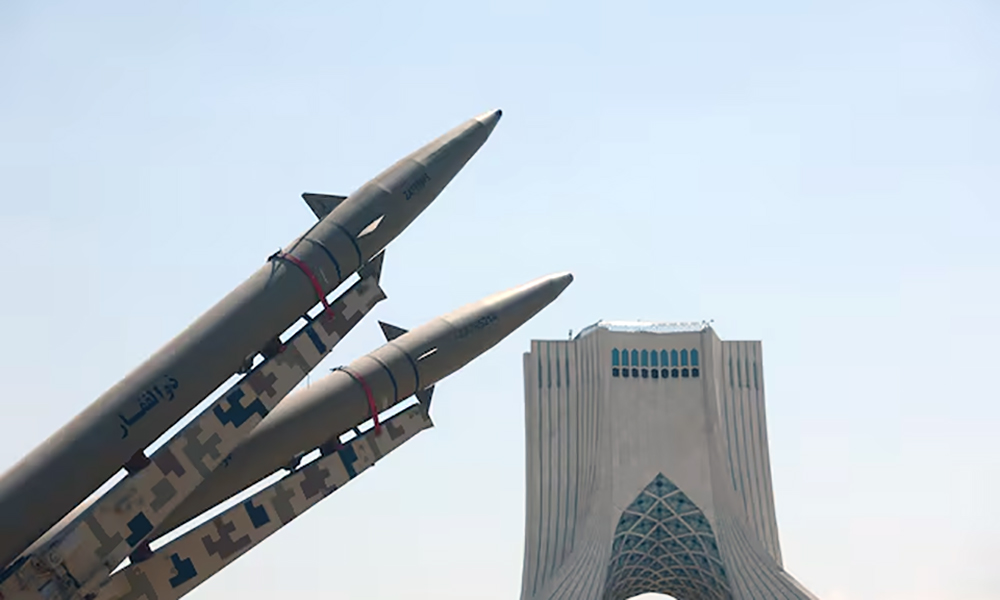
U.S. President Donald Trump said late on Saturday he would hold off on a fresh attack on Iran as long as a deal could be reached quickly to halt Iran’s nuclear ambitions and reopen the Strait of Hormuz, Reuters reporte.
Iran and “other Middle Eastern Countries” asked for a time to complete a deal that would lead to “the Immediate, Complete and Total” reopening of the Strait and “an end to Iran’s nuclear threat,” Trump wrote on his Truth Social platform. “Based on this request, I have agreed, for the future benefit of the WORLD and, likewise, the survival of a successful and prosperous Iran, to cancel the attack, subject to being able to rapidly make a DEAL.”
Israel “joins me in this commitment,” Trump wrote. Israel did not immediately make a public statement on the issue.
Iran warned the U.S. this weekend against any “adventurous action” and said it would retaliate decisively if American forces followed through on Trump’s threats of fresh attacks on Iranian targets.
Iranian Foreign Minister Abbas Araqchi’s comments in separate phone calls on Saturday with senior Turkish, Pakistani and Saudi officials came just hours after Kuwait’s army said it destroyed hostile drones launched by Iran against several vital facilities.
Speaking to Pakistan’s Army Chief Field Marshal Asim Munir and Turkish Foreign Minister Hakan Fidan, Araqchi said Iran would respond decisively to any “aggression” and discussed the consequences of “destabilizing actions” by the U.S., as well as prospects for heightened regional insecurity, according to Araqchi’s Telegram account.
Araqchi later told Saudi Foreign Minister Prince Faisal bin Farhan that any attacks by the U.S. and Israel or participation by regional countries in such actions would be met with a “proportionate response.” Saudi Crown Prince Mohammed bin Salman spoke to Trump on Saturday and “expressed concern and asked for clarity” about U.S. plans for Iran, a U.S. official told Axios.
The Saudi crown prince spoke to Trump, a White House official told Reuters, but did not provide details.
Nournews, a media outlet affiliated with Iran’s top security body, said on Saturday that U.S. attacks on Iranian energy infrastructure would prompt Iranian strikes on oil fields in Saudi Arabia and the United Arab Emirates, as well as the gas fields of Qatar and Israel, saying, “all will be burned to ashes.”
At a cabinet meeting on Friday at the Camp David retreat, Trump said he believed U.S. negotiators, including his son-in-law Jared Kushner, special envoy Steve Witkoff and Secretary of State Marco Rubio, could still reach a deal with Iran, read the report.
But Trump also said he was losing faith in the Iranians, saying, “They break their word so often” — a claim Tehran has frequently leveled at Washington — and said he would be “hitting them.”
Oil prices have stayed high since U.S. and Israeli forces started the war with strikes on Iran on February 28. Trump has argued that his stated goal of keeping Iran from gaining nuclear weapons justifies higher fuel costs in the near term, but the economic pain has put political pressure on him to find a way to end the war.
Benchmark Brent crude futures rose 24% in July, and analysts polled by Reuters expect prices to rise further this year.
The risk of Iranian attacks has deterred most shipping through the Strait of Hormuz, an important conduit for global energy supplies, since the start of the conflict, sending shockwaves through the world economy.
A government facility in northern Kuwait and civilian property belonging to a company on Bubiyan Island were hit on Saturday, with falling shrapnel causing material damage but no casualties, the Kuwaiti army said.
Adding to the energy industry’s concerns, Iran’s Houthi allies in Yemen recently began threatening the Bab el-Mandeb, the strait at the other end of the Red Sea from the Suez Canal, another export route for Saudi crude.
The United Kingdom Maritime Trade Operations said on Saturday it had received reports of two maritime incidents off Oman, including one in which a tanker was struck by an unknown projectile that damaged the engine room. In the other incident, the master of a tanker reported seeing a large splash and an explosion close to the vessel, though no damage was reported.
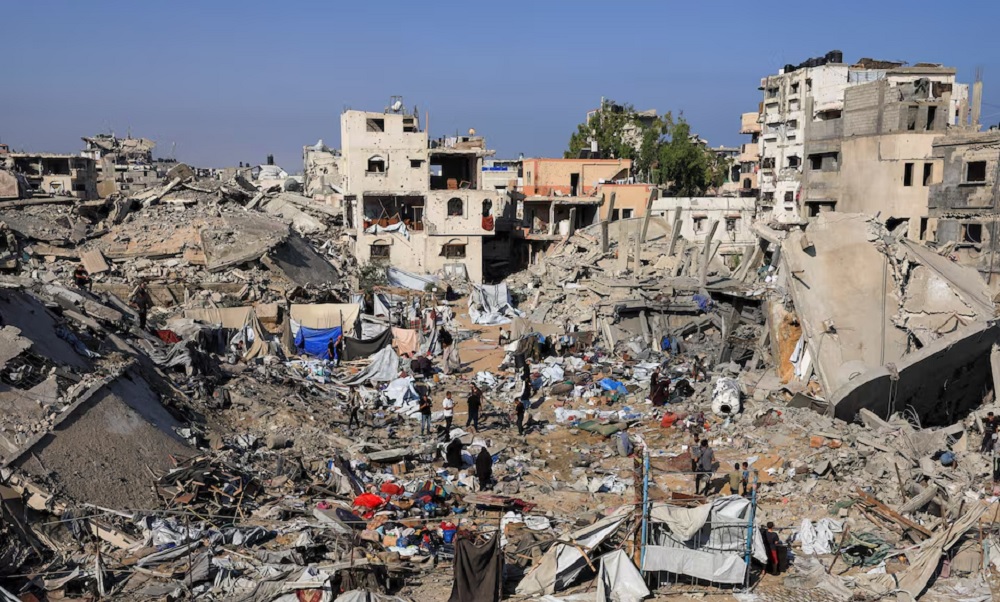
U.S. President Donald Trump said talks in Cairo between mediators and Hamas leaders on Thursday have led to a phased disarmament agreement in Gaza, but a Hamas official described the deal as a draft and U.S. officials said Israel was skeptical the militant Palestinian group would surrender its weapons.
What is Trump’s ‘Board of Peace’?
“Today, the Board of Peace reached a HISTORIC agreement for the COMPLETE DISARMAMENT of Hamas and all other armed groups in Gaza,” Trump said in a social media post, adding that the disarmament would come in phases. “This is a monumental step toward lasting PEACE and SECURITY.”
The agreement was a critical step towards Gaza being governed by a new Palestinian government that will work closely with the so-called Board of Peace, Trump said. “At the same time, Israel will have the security it deserves, with Gaza no longer used as a base for terror attacks,” he added, Reuers reported.
A Hamas source told Reuters the “draft agreement” stipulates that heavy weapons would only be stored and kept under the control of a Palestinian administration, and the weapons cannot be transferred to Israel.
“We will not take any action regarding disarmament prior to Israel’s withdrawal from the Strip,” Ghazi Hamad, a member of the Hamas negotiating team, told Al Jazeera.
A U.S. official on Thursday told reporters that Israel is “very skeptical that Hamas will disarm.”
“We’re very confident they will adhere to it,” the U.S. official added. “If they don’t, obviously President Trump would be very, very disappointed.”
There were also questions about how long the process would take. A Board of Peace official gave an estimate of 200 to 320 days, but a U.S. official played down that timeline.
An Israeli official, who declined to be identified, said before Trump’s announcement Israel had rejected a proposal.
“Israel demands the complete disarmament of Hamas, including the removal of weapons from Gaza and the complete demilitarization of the Strip as a precondition for any process,” the official said earlier on Thursday.
“The 15-point document in question does not provide a satisfactory response to these demands and Israel conveyed its objections.”
Earlier, Israeli strikes killed at least six Palestinians in Gaza, including two children, medics said.
A ROADMAP TOWARDS HAMAS DISARMAMENT?
Hamas leaders held talks with mediators from Egypt, Qatar and Turkey on the second phase of Trump’s Gaza plan, as presented to them by his Board of Peace.
Trump set up the board to oversee a plan to end Israel’s war in Gaza and rebuild the devastated territory. He appointed members of the board with himself as chair and said last year that the board will supervise Gaza’s temporary governance.
“Ahead of us is a Gaza rebuilt, governed by Palestinians and at peace with Israel an a political horizon to a meaningful resolution the Israeli Palestinian conflict,” Nickolay Mladenov, Trump’s Board of Peace envoy for Gaza, said in a statement after the president’s post.
Officials involved in the talks shared few details about plans to rebuild Gaza.
The plan also calls for a surge in humanitarian aid, governance by a civilian Palestinian administration, the withdrawal of Israeli forces from Gaza and the deployment of an international force to help maintain security.
HANDOVER OF WEAPONS COULD BE STICKING POINT
The reality on the ground in Gaza, so far, remains far from the goals of the agreement.
Hamas wants Israel to commit to ending attacks on Gaza and withdraw its forces.
It is not yet clear what will happen regarding light or personal weapons or whether the new Hamas stance will be accepted by Israel or the Board of Peace.
The plan includes the elimination of tunnels, arms stockpiles and weapons production facilities, a diplomat involved in the talks said, adding that by the end of the process there would be no remaining militant infrastructure in Gaza.
“This isn’t really a trust deal,” a U.S. official said on Thursday, calling the agreement a “conditions-based deal.”
The Israeli military has continued to expand its military occupation of Gaza, with Prime Minister Benjamin Netanyahu saying that Israel intends to expand the area under its control to 70% of the enclave.
It remains unclear how many forces would be available to deploy with the planned International Stabilization Force, and whether Israeli troops would withdraw from the enclave.
ATTACKS CONTINUE
Health officials said separate Israeli strikes had killed at least two children, a woman and three men in Gaza on Thursday. The Israeli military said it struck Hamas militants in the enclave.
The ceasefire in Gaza has been repeatedly violated, with more than 1,200 Palestinians, mostly civilians, being killed by Israeli attacks and four Israeli soldiers being killed by militants since the truce began in October, according to Gaza health officials and Israeli authorities, respectively.
Hamas does not usually disclose its losses.
Regional
Seven police officers killed in fresh militant assault on Pakistan checkpoint
Pakistan has repeatedly accused militants of operating from Afghan territory, an allegation the Islamic Emirate of Afghanistan (IEA) has consistently denied.

At least 15 people, including seven police officers and eight suspected militants, were killed in a late-night attack on a security checkpoint in Pakistan’s northwestern Khyber Pakhtunkhwa province, according to local authorities.
The attack took place on Wednesday evening in Hangu district, Geo News reported, citing District Police Officer Tariq Habib. Authorities said an additional 22 police personnel were wounded in the assault, prompting security forces to launch a clearance operation in the area.
No group has immediately claimed responsibility for the attack.
The latest violence comes just days after another deadly assault on a security checkpoint in Tank district, also in Khyber Pakhtunkhwa, where unidentified militants rammed an explosives-laden vehicle into the facility.
According to Pakistan’s military, the attack on Friday killed 15 people, including soldiers, police officers, and other government personnel, while security forces said they killed 12 militants during the ensuing operation.
Khyber Pakhtunkhwa, has witnessed a sharp rise in militant violence in recent years. Pakistani authorities have repeatedly blamed the outlawed Tehreek-i-Taliban Pakistan (TTP) for many of the attacks.
Pakistan has repeatedly accused militants of operating from Afghan territory, an allegation the Islamic Emirate of Afghanistan (IEA) has consistently denied.


Karzai voices concern over reported visa problems facing Afghan students in Pakistan

AFC confirms clubs for 2026/27 competitions; draw set for August 18

Mujahid: Afghanistan-Pakistan tensions benefit neither side

EU holds landmark migration talks with Islamic Emirate delegation

Heavy monsoon rains claim lives across India as flooding and landslides continue

Pakistan’s governance system has ‘collapsed’: Mohsin Naqvi

India offers 1,000 online scholarships for Afghan students for 2026-27 academic year

Cricket world pays tribute to Afghanistan fast bowler Shapoor Zadran

Turkey spent over $120 million to prepare airport for Qatar-donated U.S. presidential aircraft

Thousands pay final respects as Afghan cricketer Shapoor Zadran buried in Kabul

Saar: Trade shifts from Pakistan to Central Asia and Iran discussed

Tawsia: Efforts to increase Ghori cement production discussed

Tahawol: Germany’s deportation of non-criminal Afghan refugees

Saar: Discussion on ongoing US-Iran tensions

Tahawol: Calls for implementation of development projects in Afghanistan
-
 Latest News2 days ago
Pakistan’s governance system has ‘collapsed’: Mohsin Naqvi
-

 Sport4 days ago
Afghanistan set for crucial five-match ODI series against Ireland
-

 Sport4 days ago
Afghanistan futsal team heads to Thailand for Continental Championship
-
 Latest News4 days ago
MSF urges Pakistan to halt forced returns of Afghan refugees
-
 Business4 days ago
Afghanistan exports first stone shipment to US in $100,000 trade milestone
-

 Sport3 days ago
Qosh Tepa crowned champions of inaugural Afghanistan Wrestling Premier League
-

 International Sports5 days ago
Zidane appointed France head coach after 2026 World Cup
-

 Regional4 days ago
Oman presents Iran with Gulf-backed plan for voluntary fees to use Hormuz