
Latest News
US cancels talks with IEA over U-turn on girls’ education

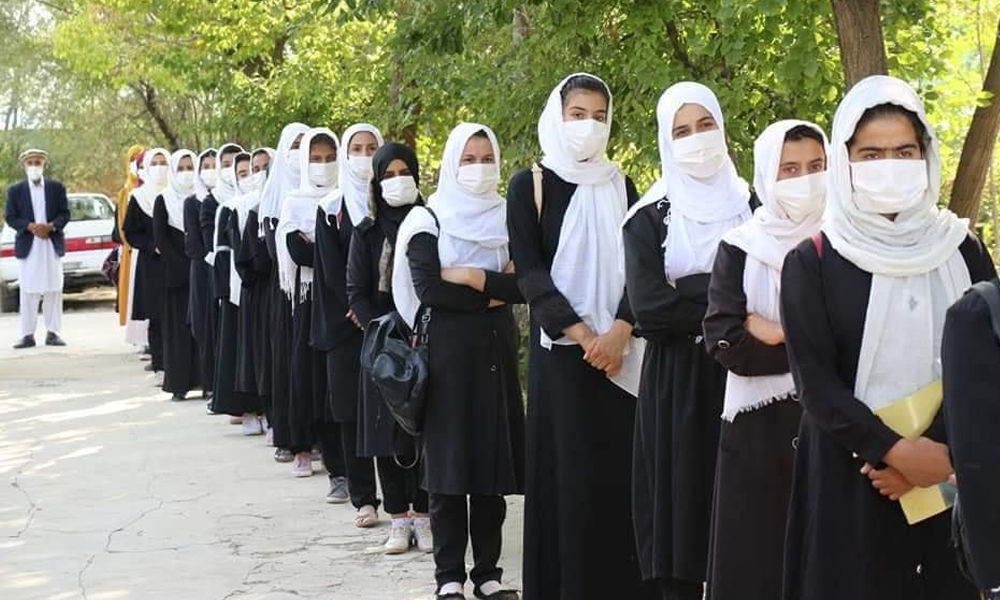
The United States abruptly cancelled meetings with the Islamic Emirate of Afghanistan (IEA), in Doha that were set to address key economic issues, officials said on Friday, after Afghanistan’s IEA rulers reversed a decision to allow all girls to return to high school classes, Reuters reported.
The cancellation of talks was the first concrete sign that recent IEA moves on human rights and inclusivity could directly impact the international community’s willingness to help the group, some of whose leaders are under U.S. sanctions.
“Their decision was a deeply disappointing and inexplicable reversal of commitments to the Afghan people, first and foremost, and also to the international community,” a U.S. State Department spokesperson told Reuters.
“We have cancelled some of our engagements, including planned meetings in Doha, and made clear that we see this decision as a potential turning point in our engagement.”
Three sources familiar with the matter told Reuters that the series of meeting between U.S. and IEA administration officials were set to take place on the sidelines of a conference in Qatar’s capital on Saturday and Sunday.
Some of the meetings were to have included United Nations and World Bank representatives, the sources added.
An Afghan foreign ministry spokesman confirmed that an IEA delegation, including the acting foreign minister, had been expecting to go to Doha, Reuters reported.
The talks were designed to cover issues including the independence of the Afghan central bank and the printing of Afghani currency bank notes.
Also up for discussion were a humanitarian exchange facility to free up cash and hundreds of millions of dollars of funding currently held in a World Bank Trust Fund that is earmarked for Afghanistan’s education sector, according to the three sources.
They declined to be named because they were not authorised to speak with the media.
“The Qatari jet that was meant to collect Muttaqi’s delegation in Kabul has not turned up,” said a diplomatic source, referring to Acting Foreign Minister Amir Khan Muttaqi.
The Qatari government’s communications office did not immediately respond to a request for comment.
The move shows the headwinds the Islamic Emirate (IE)
administration faces in accessing foreign aid and freeing up the banking sector. Hard currency shortages have fuelled inflation and worsened the economic crisis.
The IEA have also been unable to access billions of dollars in foreign reserves held overseas as governments including the United States refuse to fully recognise them.
In addition to the crippled financial system, the sharp drop in development funding that once amounted to billions of dollars and helped the Afghan government to function has exacerbated food shortages and poverty.
Roughly 23 million people are experiencing acute hunger and 95% of the population are not eating enough food, according to the United Nations.
Washington and its allies have insisted that the IEA, who banned girls from school and most women from work the last time they ruled, improve their human rights record.
The Islamic Emirate (IE) says it will honour everyone’s rights within its interpretation of Islamic law and has vowed to investigate specific allegations of abuse.
The IEA on Wednesday backtracked on their previous commitment to open high schools to girls, saying that they would remain closed until a plan was drawn up for them to reopen.
The U-turn shocked many, leaving students in tears and sparking small protests by girls in Kabul. It also drew condemnation from humanitarian agencies and foreign governments.
“They are definitely shooting themselves in the foot,” said Graeme Smith, a senior consultant at International Crisis Group, of the decision on girls’ education.
A major donor summit for humanitarian aid is set to take place this month, co-hosted by Britain, in an effort to help raise $4.4 billion in funding the United Nations says it needs to meet urgent needs in the country.
Diplomats and aid groups fear that the war in Ukraine, combined with the IEA’s decision on girls’ schooling, will make it harder to raise the money.
“The decision is understandable,” John Sifton of Human Rights Watch said of the U.S. move. “The U.S. and other donors need to communicate to the Taliban that their actions are unacceptable.”
“At the same time, the cancellation of this important meeting is tragic … The Afghan economy has collapsed, and millions are facing acute malnutrition. People are dying of starvation every day.”






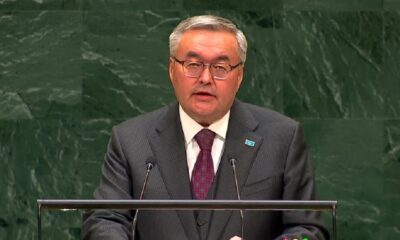

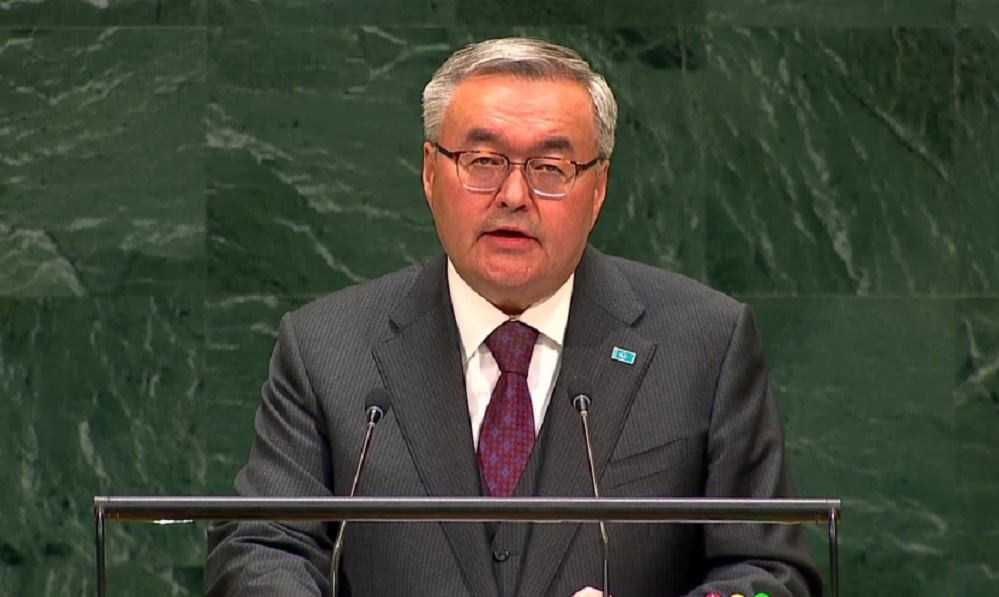
Kazakhstan’s Foreign Minister Mukhtar Tileuberdi has called for pragmatic and coordinated international engagement with Afghanistan, saying the country’s long-term stability is closely linked to the security and sustainable development of Central Asia.
Speaking during the general debate of the 81st session of the United Nations General Assembly in New York on Friday, Tileuberdi said humanitarian assistance to Afghanistan remains essential but alone cannot break the cycle of poverty, displacement and dependency.
He said Kazakhstan supports a “pragmatic, coordinated and step-by-step” approach to international engagement with Afghanistan, with the United Nations playing a central role.
Tileuberdi also said Kazakhstan is working with the UN to operationalize the United Nations Regional Centre for the Sustainable Development Goals for Central Asia and Afghanistan in Almaty.
He said the success of the centre should be measured by the results and assistance it delivers to the region.


Afghanistan Champions League: Omar Zawak Herat beat Toofan Herat 1-0

Blast in Pakistan’s Dera Ismail Khan kills 11, injures 30

Ariana Afghan Airlines increases Kabul-Delhi cargo flights

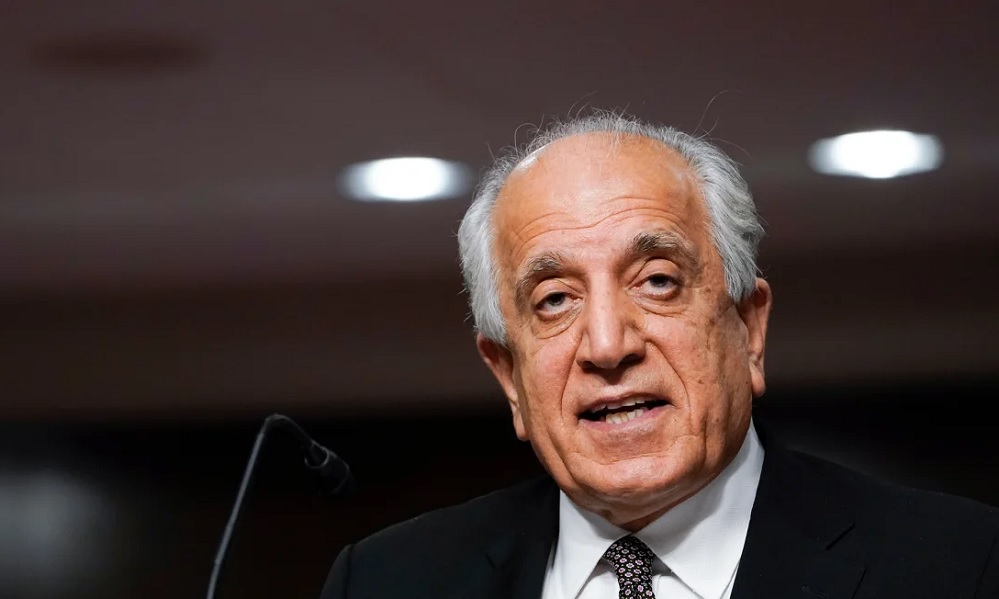
Khalilzad questions Pakistan’s commitment to Afghan welfare

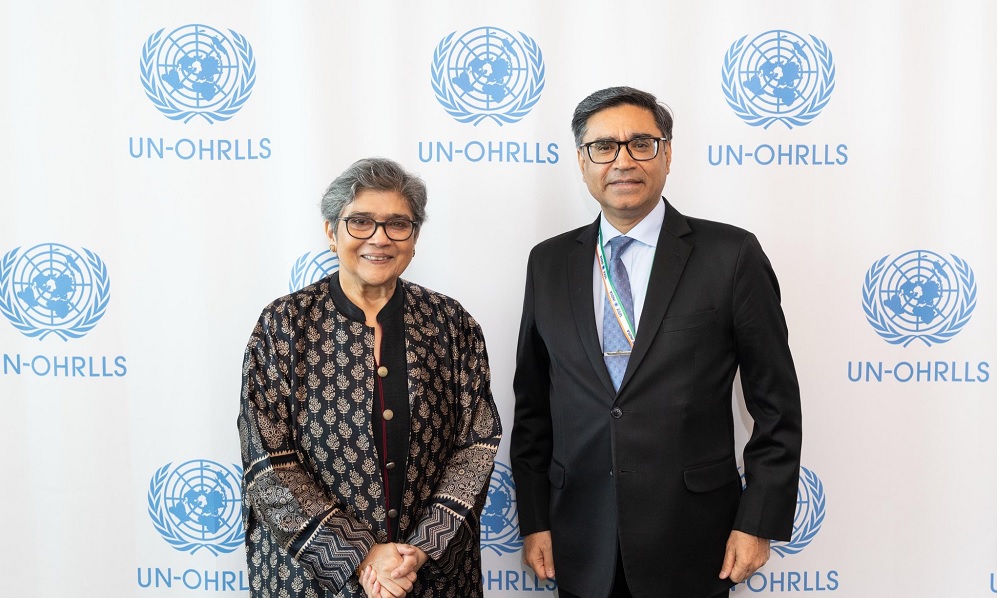
India, UN envoy discuss Afghanistan’s humanitarian needs

Saudi energy group signs major Afghanistan deals covering gas exploration and pipeline plans

Trump floats idea of renaming Atlantic or Pacific Ocean

US hits Egyptian bank branches with Iran sanctions as war marks six months

Nepal flood rescue mission enters critical phase as thousands remain missing

Iranian clubs to face Gulf opponents at neutral venues in Asian Champions League Elite

Exclusive interview with Abdul Latif Mansoor, Minister of MRRD

Tawsia: Overview of Afghanistan’s iron mines

Tahawol: Discussion on fresh Pakistani airstrikes on Afghanistan

Saar: Calls for international support for Afghanistan discussed

Tahawol: Opening of the 81st UN General Assembly Session
-

 World5 days ago
CNN, MS NOW and Politico sue Trump, challenging White House ban
-

 Latest News3 days ago
Ariana Afghan Airlines ranks seventh among 45 Central Asian airlines
-

 Latest News4 days ago
UN reiterates call for respect for international law after Kunar airstrikes
-
 Latest News5 days ago
Khalilzad condemns Pakistan airstrikes, says current strategy is not working
-

 Regional3 days ago
US and Iran hold first talks since June after Trump’s ‘annihilation’ threat
-

 Latest News3 days ago
Silk Road highway in Wakhan corridor now reaches the China border
-

 Latest News4 days ago
Afghan Official: Pakistan’s airstrikes will not go unanswered
-
 Regional4 days ago
G7 foreign ministers call on Iran to stop arming Houthis