
Latest News
US cancels talks with IEA over U-turn on girls’ education

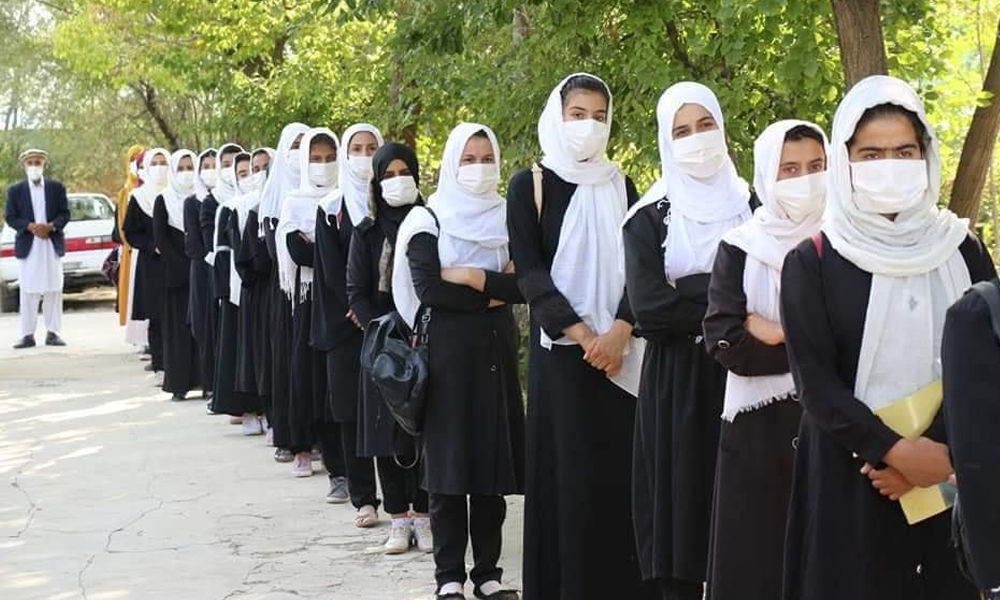
The United States abruptly cancelled meetings with the Islamic Emirate of Afghanistan (IEA), in Doha that were set to address key economic issues, officials said on Friday, after Afghanistan’s IEA rulers reversed a decision to allow all girls to return to high school classes, Reuters reported.
The cancellation of talks was the first concrete sign that recent IEA moves on human rights and inclusivity could directly impact the international community’s willingness to help the group, some of whose leaders are under U.S. sanctions.
“Their decision was a deeply disappointing and inexplicable reversal of commitments to the Afghan people, first and foremost, and also to the international community,” a U.S. State Department spokesperson told Reuters.
“We have cancelled some of our engagements, including planned meetings in Doha, and made clear that we see this decision as a potential turning point in our engagement.”
Three sources familiar with the matter told Reuters that the series of meeting between U.S. and IEA administration officials were set to take place on the sidelines of a conference in Qatar’s capital on Saturday and Sunday.
Some of the meetings were to have included United Nations and World Bank representatives, the sources added.
An Afghan foreign ministry spokesman confirmed that an IEA delegation, including the acting foreign minister, had been expecting to go to Doha, Reuters reported.
The talks were designed to cover issues including the independence of the Afghan central bank and the printing of Afghani currency bank notes.
Also up for discussion were a humanitarian exchange facility to free up cash and hundreds of millions of dollars of funding currently held in a World Bank Trust Fund that is earmarked for Afghanistan’s education sector, according to the three sources.
They declined to be named because they were not authorised to speak with the media.
“The Qatari jet that was meant to collect Muttaqi’s delegation in Kabul has not turned up,” said a diplomatic source, referring to Acting Foreign Minister Amir Khan Muttaqi.
The Qatari government’s communications office did not immediately respond to a request for comment.
The move shows the headwinds the Islamic Emirate (IE)
administration faces in accessing foreign aid and freeing up the banking sector. Hard currency shortages have fuelled inflation and worsened the economic crisis.
The IEA have also been unable to access billions of dollars in foreign reserves held overseas as governments including the United States refuse to fully recognise them.
In addition to the crippled financial system, the sharp drop in development funding that once amounted to billions of dollars and helped the Afghan government to function has exacerbated food shortages and poverty.
Roughly 23 million people are experiencing acute hunger and 95% of the population are not eating enough food, according to the United Nations.
Washington and its allies have insisted that the IEA, who banned girls from school and most women from work the last time they ruled, improve their human rights record.
The Islamic Emirate (IE) says it will honour everyone’s rights within its interpretation of Islamic law and has vowed to investigate specific allegations of abuse.
The IEA on Wednesday backtracked on their previous commitment to open high schools to girls, saying that they would remain closed until a plan was drawn up for them to reopen.
The U-turn shocked many, leaving students in tears and sparking small protests by girls in Kabul. It also drew condemnation from humanitarian agencies and foreign governments.
“They are definitely shooting themselves in the foot,” said Graeme Smith, a senior consultant at International Crisis Group, of the decision on girls’ education.
A major donor summit for humanitarian aid is set to take place this month, co-hosted by Britain, in an effort to help raise $4.4 billion in funding the United Nations says it needs to meet urgent needs in the country.
Diplomats and aid groups fear that the war in Ukraine, combined with the IEA’s decision on girls’ schooling, will make it harder to raise the money.
“The decision is understandable,” John Sifton of Human Rights Watch said of the U.S. move. “The U.S. and other donors need to communicate to the Taliban that their actions are unacceptable.”
“At the same time, the cancellation of this important meeting is tragic … The Afghan economy has collapsed, and millions are facing acute malnutrition. People are dying of starvation every day.”



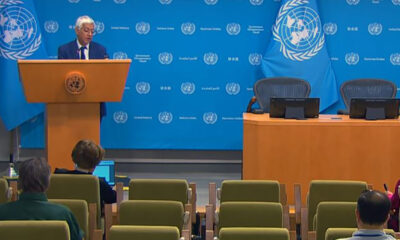


Human Rights Watch in a statement on Wednesday called for the release of two UN staffers and six NGO workers in Afghanistan.
HRW said that six male staff working with the Women and Children Legal Research Foundation (WCLRF) had been “forcibly disappeared” from the NGO’s Kabul office last month. The NGO has been involved in aid programmes and advocacy on women’s and children’s rights, HRW said.
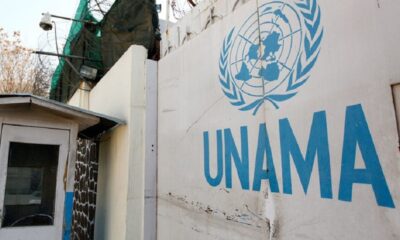
In a separate incident, Human Rights Watch also called for the release of two Afghan staff members of the UN’s Assistance Mission in Afghanistan (UNAMA), who were detained by IEA officials in the western city of Herat on Sunday.
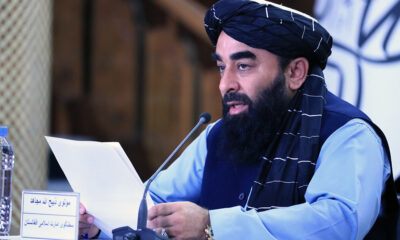
The IEA’s spokesman, Zabihullah Mujahid, told Reuters that he was “trying to gather details” about the recent detentions, but had “not received final clarity.”
The UN confirmed the detention of two of its staffers earlier this week. “UNAMA has not been informed of the charges against them and has not been permitted to visit them,” Farhan Haq, deputy spokesman for the UN Secretary-General, said in a briefing on Wednesday.
Fereshta Abbasi, Afghanistan Researcher at Human Rights Watch, said in a statement that the detentions of UNAMA staff threatened the UN’s “ability to deliver lifesaving aid.”
As the UN’s political mission in Afghanistan, UNAMA is involved in human rights monitoring and data gathering. Its reports have frequently been criticised by the IEA government in the past.
Latest News
Mujahid rejects UN sanctions monitoring team’s report on foreign militant groups in Afghanistan
Regarding the Tehrik-e-Taliban Pakistan (TTP), Mujahid said the group operates in Pakistan, while claiming that al-Qaeda is not present in the region and “does not exist at all” in Afghanistan.
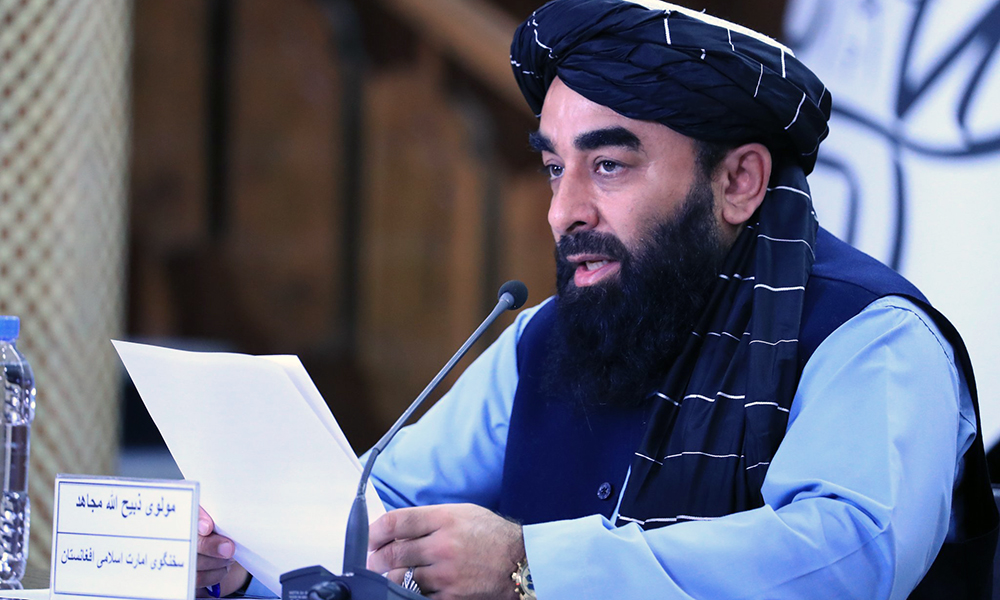
Zabihullah Mujahid, spokesperson for the Islamic Emirate, has rejected a report by the United Nations Security Council’s Sanctions Monitoring Team concerning the presence and activities of foreign groups in Afghanistan.
In a message to Ariana News, Mujahid said Afghanistan is not hosting any foreign groups and that the groups named in the report have no connection with Afghanistan.
Regarding the Tehrik-e-Taliban Pakistan (TTP), Mujahid said the group operates in Pakistan, while claiming that al-Qaeda is not present in the region and “does not exist at all” in Afghanistan.
Mujahid also stressed that the East Turkestan Islamic Movement is not permitted to operate in Afghanistan and cannot conduct activities in the country.
Commenting on Daesh, the Islamic Emirate spokesperson said the group is actively fighting against the Islamic Emirate and therefore claims about its presence and activities in Afghanistan are incorrect.
Mujahid further said he believes the allegations are being made by intelligence circles seeking to destabilise the region. He also criticised the UN Security Council’s Sanctions Monitoring Team for relying on what he described as such information.
The reaction came after; the UN Security Council’s Sanctions Monitoring Team has expressed concern in its report over security threats arising from the activities of militant groups in Afghanistan and the wider region.
Latest News
Afghanistan’s future depends on inclusive progress and sustained international engagement: UNAMA
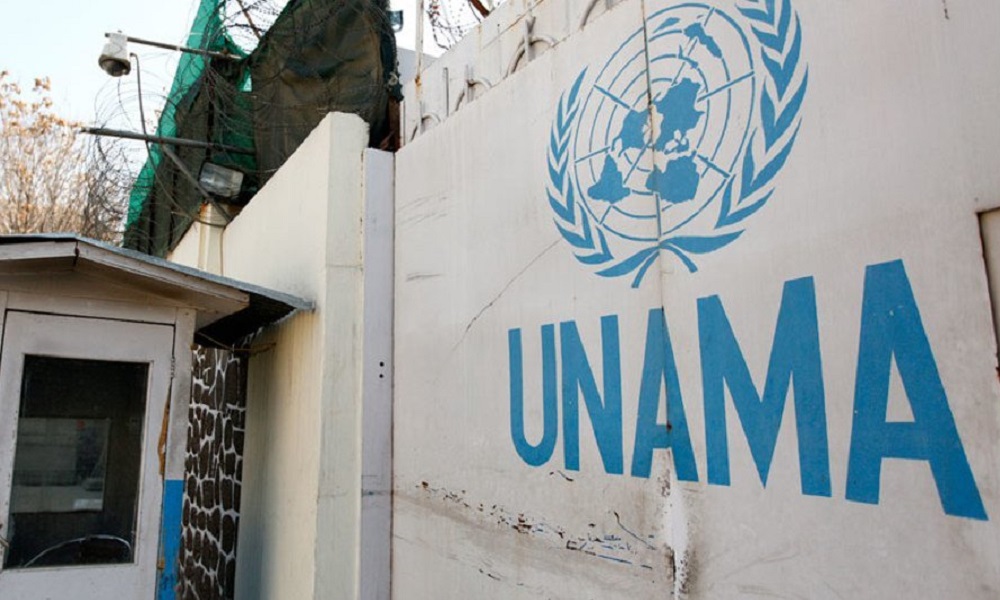
Five years after the Islamic Emirate returned to power, the United Nations Assistance Mission in Afghanistan (UNAMA) said on Thursday that improved security has brought some benefits to Afghans but warns that major challenges continue to hinder the country’s long-term stability and international reintegration.
In a statement, UNAMA said the decline in armed conflict has created greater opportunities for recovery, development and regional economic cooperation. It also pointed to the ban on opium poppy cultivation as one of the positive steps taken in recent years.
However, the UN said severe restrictions on women and girls, along with ongoing concerns over terrorism, remain major obstacles to Afghanistan’s progress toward lasting peace and closer relations with the international community.
“The last five years have shown that Afghans deeply value peace and stability after decades of war,” said Georgette Gagnon, UNAMA’s Deputy Special Representative of the Secretary-General and Officer-in-Charge.
“But sustainable peace and prosperity require more than just an absence of conflict. Afghanistan’s future depends on building a society in which the rights and potential of all Afghans are realised and institutions are responsive and accountable,” she said.
Since 2021, the United Nations has continued to engage with the de facto authorities while providing humanitarian assistance, supporting basic services and addressing political and human rights issues.
UNAMA said this engagement has helped maintain a degree of stability and provided a possible pathway for Afghanistan’s gradual reintegration into the international community, based on respect for human rights and the inclusion of all Afghans.
The UN mission called on the IEA to lift restrictions on women and girls and allow them to participate fully in education, employment and public life. It also urged greater protection of fundamental rights and freedoms and action to address international concerns over security and terrorism.
UNAMA warned that restrictions on women and girls are imposing serious social and economic costs on Afghanistan and causing both immediate and long-term harm to the population.
The restrictions have also become a major barrier to wider international engagement and investment. UNAMA said limits on civic space, freedom of expression and the work of female humanitarian and UN personnel further reduce Afghanistan’s ability to benefit from international support.
Meanwhile, terrorism-related concerns continue to complicate Afghanistan’s relations with neighbouring countries and the wider international community. Although engagement with regional countries has created some economic opportunities, the UN said broader international cooperation is needed to address risks threatening stability in Afghanistan and the region.
UNAMA urged the international community to maintain principled and practical engagement with Afghanistan and to support the aspirations of its people.
The UN mission said a comprehensive approach focused on inclusion, human rights, security and economic development would be essential for Afghanistan to achieve lasting stability and gradually reintegrate into the international community.


Human Rights Watch urges IEA to release detained UN, NGO staff

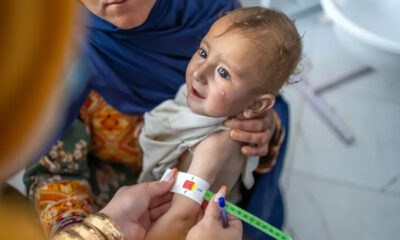
Save the Children warns of rising child malnutrition amid funding cut crisis

AFC Champions League Elite draw nears as Al-Nassr seeded above Al-Hilal

Mujahid rejects UN sanctions monitoring team’s report on foreign militant groups in Afghanistan

Afghanistan’s future depends on inclusive progress and sustained international engagement: UNAMA

Pakistan’s governance system has ‘collapsed’: Mohsin Naqvi

Spain sweep FIFA World Cup player awards after historic triumph

Iran, Afghanistan and Tajikistan discuss expanding regional transit cooperation

Afghanistan temporarily eases fuel import standards to help curb rising prices

Afghan health minister, Gavi discuss expanding routine immunization

Tahawol: Afghanistan’s future in the global press discussed

Saar: The Islamic Emirate’s five-year rule discussed

Tahawol: Hamid Karzai’s call for Afghan reconciliation discussed

Saar: Preparations for IEA’s fifth anniversary discussed

Tahawol: Iran’s acknowledgment of Afghanistan’s cooperation discussed
-

 Sport4 days ago
Afghanistan secure direct qualification for 2027 Men’s ODI World Cup
-
 Latest News4 days ago
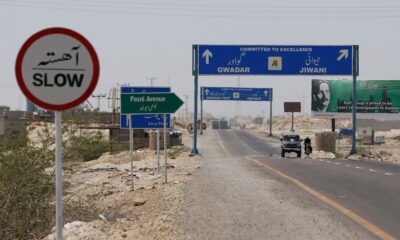
Pakistan-backed armed groups in Balochistan using former Afghan government forces: report
-
 Sport3 days ago
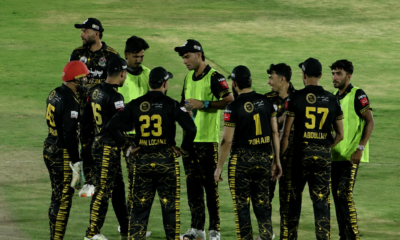
Abasin Defenders stun Kabul Zalmi in Kabul Premier League
-
 Regional4 days ago
Turkey, Pakistan, Saudi Arabia defence pact technically same as NATO’s Article 5, Turkish minister says
-

 Sport3 days ago
Kabul Premier League gets underway with high-scoring opener
-
 Latest News4 days ago
Russia eyes railway route via Afghanistan as alternative to Strait of Hormuz
-
 Latest News4 days ago
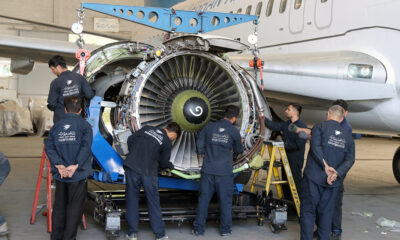
Ariana Airlines brings $2.3 million Boeing 737 engine from US to Kabul
-
 Latest News4 days ago
Afghanistan issues more than 650,000 passports in one year