
Latest News
Violence and terrorism key concerns noted in Heart of Asia declaration

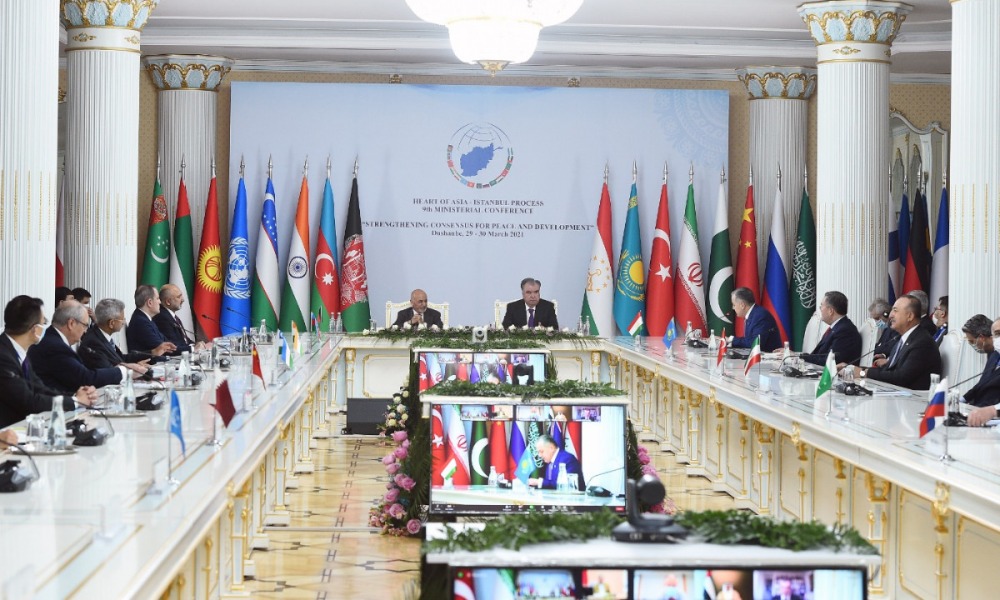
Delegates attending the Heart of Asia-Istanbul Process ministerial meeting in Dushanbe, Tajikistan, signed a declaration on Tuesday on a number of key issues including the concern around the high levels of violence in Afghanistan and the continued relations between the Taliban and international terrorist groups, including Al-Qaeda.
In their declaration, the participating countries expressed their “concerns about the continued relations between the Taliban and international terrorist groups, including Al-Qaeda”.
“While taking note of the recent announcement made by the Taliban to have ordered its members across Afghanistan not to allow foreign fighters in their ranks, we reaffirm the importance of ensuring that the territory of Afghanistan is not used as safe havens for any terrorist groups, foreign terrorist entity, including Daesh/ISIS, Al-Qaeda or other regional and international terrorist groups and their affiliates,” the declaration read.
The participating countries also stated they “remain determined to counter all forms and manifestations of terrorism and extremism by reinforcing our collective efforts.
“We reiterate our resolve to work together to prevent and suppress terrorist acts through increased regional and international solidarity and cooperation, in accordance with the UN Charter and obligations under international law, including international human rights law, international humanitarian law, and where applicable the international refugee law, as well as through the full implementation of the UN Security Council Resolutions.”
In this regard, the participating countries said they “strongly call for concerted regional and international cooperation to ensure dismantling of terrorist sanctuaries and safe havens, preventing and interdicting the movement of terrorists and terrorist groups, including foreign terrorist fighters, across the countries of the HoA Region and anywhere else, as well as disrupting all financial, tactical, logistical or any other form of support for terrorism without any distinction.”
Also in line with security, the declaration noted that all participating countries welcome efforts to forge peace in Afghanistan and that they were all committed to a safe and secure Afghanistan.
The declaration noted that a comprehensive and permanent ceasefire in Afghanistan will enable all sides to reach an agreement on a political settlement, which the participatory countries stated that any political settlement must protect the rights of all Afghans, including women, youth and minorities.
“It should also respect the strong desire of Afghans to achieve durable peace and prosperity, and must respond to their strong desire to sustain and build on the economic, social, political and development gains achieved since 2001, including respect for Afghanistan’s international obligations,” the statement read.
On the topic of narcotics, the declaration noted the HoA countries were concerned about the high level of illicit cultivation and production of opium in Afghanistan, the volume of drug trafficking, illicit drug trade, trafficking of precursors, the new prevalence of methamphetamine, the rising demand for illicit narcotics and the rising drug abuse in the region and beyond.
“This poses a threat to the socio-economic development, security and stability not only in Afghanistan, but also in the surrounding region and the world as a whole.
“Further eradication of opium cultivation, promotion of alternative livelihoods, law enforcement, prevention, treatment, rehabilitation and public information efforts are required as part of a comprehensive and integrated strategy to address this common challenge, based on the principle of common and shared responsibility, and consistent with the international drug control conventions.
“We call upon the international community to continue to assist the Government of Afghanistan in implementing its National Drug Control Strategy and National Drug Action Plan and its efforts to eliminate the cultivation and production of, trafficking in and consumption of illicit drugs, increase support for Afghan law enforcement and criminal justice agencies, agricultural and rural development for the creation of improved alternative, licit livelihoods for farmers and demand-reduction support, increase public awareness of counter-narcotics issues and build the capacity of drug control institutions, and care and treatment centers for drug users.”
The declaration also noted that participating countries “stress the urgent need to respond to the serious challenges posed by the nexus between revenue from illicit narcotics and financial support for anti-government actors and terrorist entities in Afghanistan and the HoA Region.”
The declaration also noted joint efforts to advance Afghanistan’s economy and that of the region were welcomed and they acknowledged the historical role of Afghanistan as a land bridge in promoting regional connectivity and economic integration.
The HoA-IP declaration also stated participating countries “recognize the central and impartial role of the United Nations in promoting peace and stability in Afghanistan”.
Member nations also said they appreciate the continued efforts of the OIC and its Member States in support of the Afghan Peace Process and their call for an immediate and comprehensive ceasefire.
“We also welcome the declarations of the Muslim countries calling for an end of violence and calling the ongoing war and bloodshed in Afghanistan religiously illegitimate.”
Confidence-building measures to enhance trust and cooperation was also noted in the declaration with member nations calling for participating countries to continue implementing such measures that are in place.
The declaration was adopted in Dushanbe on Tuesday, 30 March 2021, by the Foreign Ministers and high-level representatives of the Participating Countries of the HoA-IP.
These included Afghanistan, Azerbaijan, China, India, Iran, Kazakhstan, Kyrgyz Republic, Pakistan, Russia, Saudi Arabia, Tajikistan, Turkey, Turkmenistan, the United Arab Emirates, and Uzbekistan.
The declaration was also supported by Australia, Canada, Denmark, Egypt, Finland, France, Germany, Iraq, Italy, Japan, Poland, Norway, Spain, Sweden, the United Kingdom, the United States, and more than ten organizations including NATO and the UN.





Latest News
Khalilzad calls for end to Pakistan’s ‘double game’, urges new chapter with Afghanistan
“Playing this double game must stop,” Khalilzad wrote, adding that it was time for Afghanistan and Pakistan to “turn a new page.”
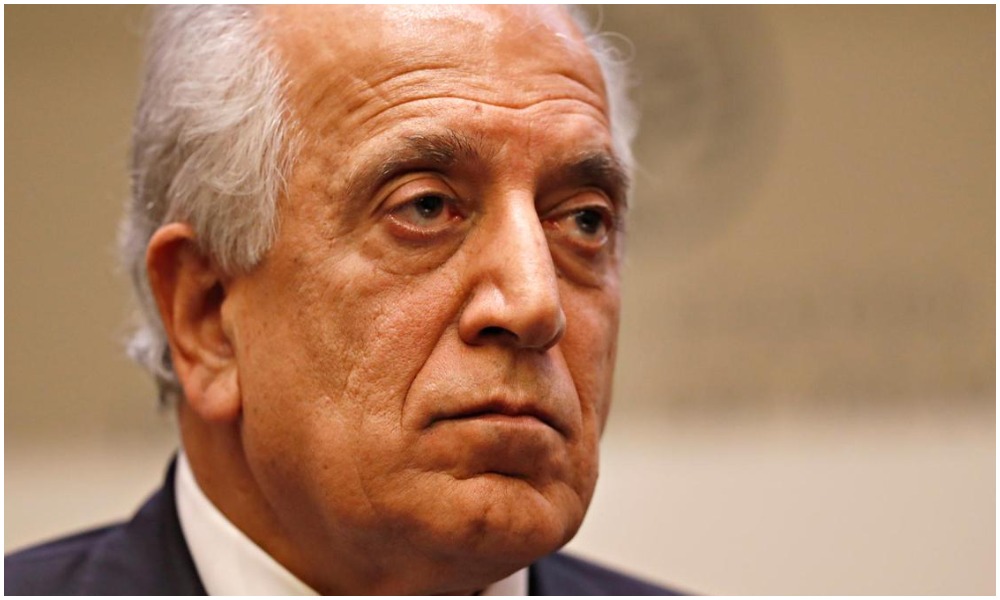
Former U.S. Special Representative for Afghanistan Reconciliation Zalmay Khalilzad has called for an end to what he described as Pakistan’s “double game” over its alleged support for militant groups operating in Afghanistan, urging the two neighbouring countries to open a new chapter in their relations.
In a post on X, Khalilzad said he believed the past 30 years had demonstrated a significant gap between Pakistan’s public statements and its actions regarding armed groups involved in fighting in Afghanistan.
Referring to the period of the U.S. military presence in Afghanistan, Khalilzad alleged that Pakistan provided sanctuary and support to militants fighting U.S. and Afghan forces while publicly denying doing so.
“Playing this double game must stop,” Khalilzad wrote, adding that it was time for Afghanistan and Pakistan to “turn a new page.”
He called for greater economic cooperation and development between the two countries and said they should agree not to allow their respective territories to be used to threaten each other’s security.
Khalilzad’s comments come amid renewed tensions between Kabul and Islamabad over cross-border militancy and security allegations.
Pakistan has repeatedly accused the Islamic Emirate of Afghanistan of allowing Tehreek-e-Taliban Pakistan (TTP) and other militant groups to operate from Afghan territory. Kabul has denied providing sanctuary to groups planning attacks against Pakistan.
The dispute has increasingly spilled into military confrontation. Pakistan carried out airstrikes in Afghanistan on September 21, saying it had targeted militant positions, while Afghan officials and the United Nations said three civilians, including a woman and a girl, were killed. Pakistan said the strikes killed 28 militants.
Islamabad has also continued to accuse Kabul of failing to prevent attacks originating from Afghan territory. Pakistani authorities have said their military actions are carried out in response to security threats and in self-defence.
Pakistan, meanwhile, has rejected recent Afghan allegations that its security forces or intelligence agencies were involved in violence in Afghanistan’s Nuristan province, calling the claims baseless.
Against this backdrop, Khalilzad said improved relations should focus on economic cooperation, development and mutual security guarantees, with neither country allowing its territory to be used against the other.
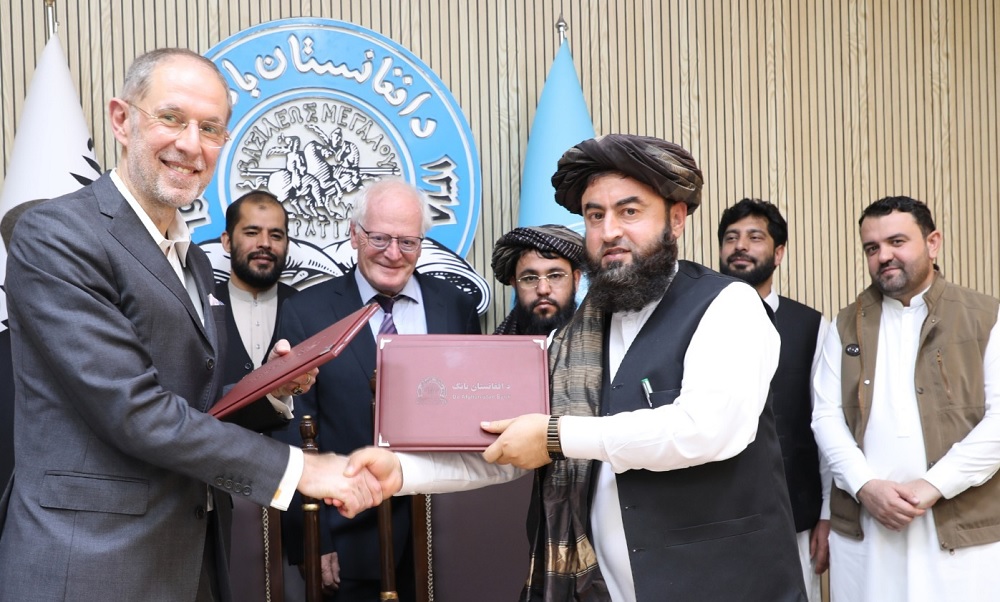
Da Afghanistan Bank (DAB) and the Afghan Credit Guarantee Foundation (ACGF) have signed a cooperationmemorandum of understanding (MoU) aimed at strengthening the financial sector and expanding access to financial resources for small, medium and large businesses.
The agreement was signed during a ceremony at the DAB Supreme Council Hall, where DAB First Deputy Governor Sediqullah Khalid said such agreements create opportunities to provide suitable and diverse Islamic financial services to citizens and expand access to financing for small and medium-sized enterprises.
Khalid said that under the agreement, banks and financial institutions will initially receive technical and professional support. He added that five banks and one microfinance institution will receive grants worth around $1 million in the first phase to support financing for small and medium-sized businesses.
He said other banks and financial institutions that meet the required criteria would benefit from the grants and related facilities in later phases.
Khalid also said that attention would be given to facilitating the creation and financing of small businesses for Afghans returning from other countries.
Under the agreement, the two sides will cooperate on strengthening the financial sector, expanding access to financial resources for businesses, promoting Islamic financial services and building the capacity of financial institutions.
Technical and professional assistance, training programs and capacity-building opportunities will also be provided to banking and non-banking financial institutions.
Roger Thomas Piltzer, chairman of the ACGF Board of Trustees, also welcomed the agreement and stressed the importance of continuing and expanding cooperation with Da Afghanistan Bank.
The agreement aims to establish a framework for cooperation between the two sides to strengthen Afghanistan’s financial sector, expand access to Islamic financial services and provide financial resources for small and medium-sized businesses.
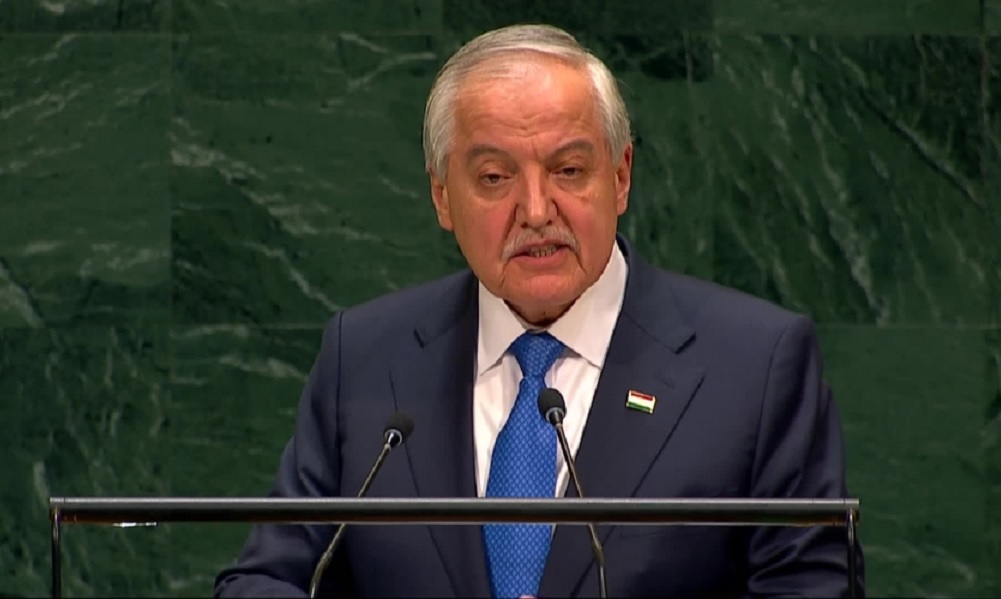
Tajikistan has reaffirmed its support for the Afghan people, stressing that peace, stability and economic opportunities in Afghanistan are closely linked to security and sustainable development in the region.
Speaking at the 81st session of the United Nations General Assembly in New York on Saturday, Tajik Foreign Minister Sirodjiddin Muhriddin said lasting security and sustainable development in the region are closely connected to the situation in Afghanistan.
“Afghanistan needs peace, stability and economic opportunity,” Muhriddin said.
He added that Tajikistan would continue to support the Afghan people and constructive regional cooperation aimed at achieving a peaceful and stable Afghanistan.
“When Tajikistan speaks about peace, we also speak from experience,” Muhriddin said.


Health minister visits Belarus to expand medical cooperation

Afghanistan vs India Asian Games quarter-final abandoned without a toss

Afghanistan raises import tariffs on several goods to support domestic industry

Khalilzad calls for end to Pakistan’s ‘double game’, urges new chapter with Afghanistan

Afghanistan-Kazakhstan trade reaches $581 million in six months

Saudi energy group signs major Afghanistan deals covering gas exploration and pipeline plans

Trump floats idea of renaming Atlantic or Pacific Ocean

Nepal flood rescue mission enters critical phase as thousands remain missing

Iranian clubs to face Gulf opponents at neutral venues in Asian Champions League Elite

Khalilzad: Afghanistan ready to attract major investment

Saar: Afghanistan’s image at UNGA

Saar: Concerns over Pakistan’s political crisis discussed

Exclusive interview with Abdul Latif Mansoor, Minister of MRRD

Tawsia: Overview of Afghanistan’s iron mines

Tahawol: Discussion on fresh Pakistani airstrikes on Afghanistan
-

 Latest News5 days ago
Ariana Afghan Airlines ranks seventh among 45 Central Asian airlines
-

 Regional4 days ago
Iran airlines cancel flights as US sanctions hit
-

 Sport4 days ago
Afghanistan open Asian Games cricket campaign with win over Japan
-
 World4 days ago
Trump welcomes Chinese President Xi as US-China summit gets underway
-
 Latest News1 day ago
Afghanistan says 28 killed, 32 captured in Nuristan operation
-
 World1 day ago
Trump rejects Iranian proposal to open Hormuz and end fighting
-
 Latest News4 days ago
Khalilzad warns Pakistan-Afghanistan tensions likely to worsen after fresh airstrikes
-

 Sport1 day ago
Afghan bodybuilder Ali Bilal finishes runner-up at Mr Olympia for third straight year