
Latest News
45 journalists and media staff killed in work-related incidents during 2021: IFJ

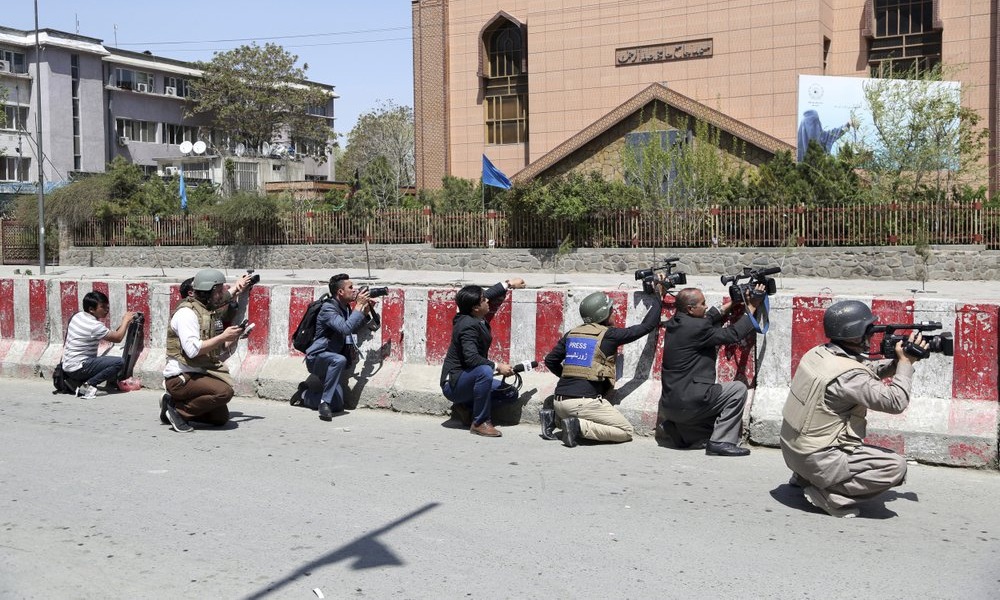
The International Federation of Journalists (IFJ) said on Friday that 45 journalists and media staff had been killed in work-related incidents during 2021, with the highest number of them killed in Afghanistan.
According to the IFJ, nine media workers were killed in Afghanistan last year.
The annual list reported killings in 20 countries and recorded a drop from 65 killings in 2020 to 45 in 2021. Since 1991, 2,721 journalists have been killed around the world.
Last year’s figure represents one of the lowest death tolls since the IFJ began publishing annual reports on journalists killed in work-related incidents, including targeted killings, crossfire fatalities as well as bomb attacks.
For 2021, the Asia Pacific region tops the regional list with 20 killings, before the Americas (10), Africa (8), Europe (6) and the Middle East and Arab World on just one. There was also a deadly accident which cost the lives of two journalists in Iran.
While this decrease is welcome news, it is small comfort in the face of continued violence which claimed lives of journalists in countries like Afghanistan (9), Mexico (8), India (4) and Pakistan (3), the IFJ stated.
This also provides further evidence for a recurring finding in these publications that more journalists and media workers more often than not are killed for exposing corruption, crime and abuse of power in their communities, cities and countries.
The IFJ also noted that risks associated with armed conflict have reduced in recent years due to limited exposure for media professionals who are increasingly fewer in reporting close up from war theater.
At the same time, the threats of crime gang and drug cartels’ rule from the slums in Mexico to the streets of European cities in Greece and the Netherlands continue to increase and account for many targeted killings of media workers in 2021, IFJ reported.
“These 45 colleagues we lost to violence this year remind us of the terrible sacrifice journalists across the world continue to pay for serving the public interest and we remain in the debt to them and thousands of others who paid the ultimate price,” said IFJ General Secretary Anthony Bellanger.
“The IFJ believes that the only tribute fit for the cause to which they gave their lives should be unrelenting pursuit for justice to them. That’s why we continue to advocate for the adoption of a new United Nations Convention for the protection of journalists which would ensure accountability for journalists’ killings,” he said.






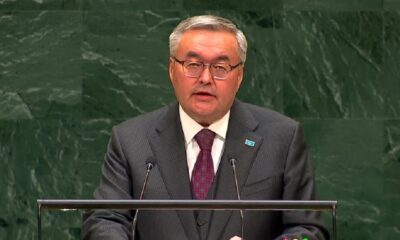




Kazakhstan’s Foreign Minister Mukhtar Tileuberdi has called for pragmatic and coordinated international engagement with Afghanistan, saying the country’s long-term stability is closely linked to the security and sustainable development of Central Asia.
Speaking during the general debate of the 81st session of the United Nations General Assembly in New York on Friday, Tileuberdi said humanitarian assistance to Afghanistan remains essential but alone cannot break the cycle of poverty, displacement and dependency.
He said Kazakhstan supports a “pragmatic, coordinated and step-by-step” approach to international engagement with Afghanistan, with the United Nations playing a central role.
Tileuberdi also said Kazakhstan is working with the UN to operationalize the United Nations Regional Centre for the Sustainable Development Goals for Central Asia and Afghanistan in Almaty.
He said the success of the centre should be measured by the results and assistance it delivers to the region.


Afghanistan Champions League: Omar Zawak Herat beat Toofan Herat 1-0

Blast in Pakistan’s Dera Ismail Khan kills 11, injures 30

Ariana Afghan Airlines increases Kabul-Delhi cargo flights

Khalilzad questions Pakistan’s commitment to Afghan welfare

India, UN envoy discuss Afghanistan’s humanitarian needs

Saudi energy group signs major Afghanistan deals covering gas exploration and pipeline plans

Trump floats idea of renaming Atlantic or Pacific Ocean

US hits Egyptian bank branches with Iran sanctions as war marks six months

Nepal flood rescue mission enters critical phase as thousands remain missing

Iranian clubs to face Gulf opponents at neutral venues in Asian Champions League Elite

Exclusive interview with Abdul Latif Mansoor, Minister of MRRD

Tawsia: Overview of Afghanistan’s iron mines

Tahawol: Discussion on fresh Pakistani airstrikes on Afghanistan

Saar: Calls for international support for Afghanistan discussed

Tahawol: Opening of the 81st UN General Assembly Session
-

 World4 days ago
CNN, MS NOW and Politico sue Trump, challenging White House ban
-

 Latest News3 days ago
Ariana Afghan Airlines ranks seventh among 45 Central Asian airlines
-

 Latest News4 days ago
UN reiterates call for respect for international law after Kunar airstrikes
-
 Latest News5 days ago
Khalilzad condemns Pakistan airstrikes, says current strategy is not working
-

 Regional3 days ago
US and Iran hold first talks since June after Trump’s ‘annihilation’ threat
-

 Latest News3 days ago
Silk Road highway in Wakhan corridor now reaches the China border
-

 Latest News4 days ago
Afghan Official: Pakistan’s airstrikes will not go unanswered
-

 Sport4 days ago
Afghan boxing referee heads to China for international festival