
Latest News
Poverty is a multi-dimensional and historic issue in Afghanistan: Ghani

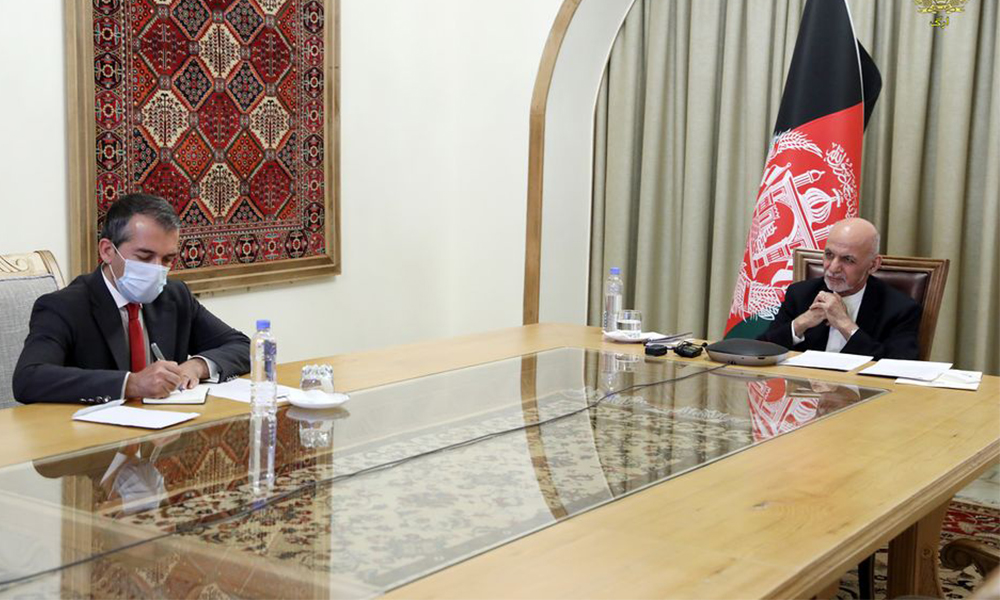
President Ghani says that the Covid-19 pandemic has plunged the world into turmoil, uncertainty, and unprecedented risk.
Addressing a side event – Poverty at the Cross Road: Using leadership and the multidimensional poverty index to build back better – on the sideline of the 75th session of United Nation General Assembly on Thursday, Ghani said that the pandemic has exposed existing vulnerabilities and shortcomings in our systems and normal modes of conduct.
“It wreaked havoc on lives and livelihoods, particularly for the poor and disadvantaged. It posed an unparalleled challenge to our scientific and technological capabilities, and an existential threat to our medical professionals who have been on the front lines of a war for which we were not prepared,” Ghani added.
“The virus arrived in Afghanistan at the end of February in Herat province, on the border with Iran. The virus peaked in June with an infection rate of 76%. As of September 23, we had recorded 1,446 deaths from the virus. Today, with the virus on the decline, the infection rate is fluctuating daily between 6% and 25%.”
Ghani stated that poverty is one of the most pervasive and complex problems the Afghan people face today and the COVID-19 pandemic” made that even worse for many people.”
He added that the most pressing issue facing people living in poverty is food insecurity.
“In February, it looked challenging because country after country was closing its borders and its economies. We were fortunate, however, to secure the full cooperation of our central Asian neighbors to keep the supply chains functioning.”
Ghani highlighted that poverty is a multi-dimensional and historic issue in Afghanistan. He said it certainly did not start with COVID-19, “so our policy response must also be multi-faceted and must also look far beyond the pandemic.”
President suggests the following priorities for responding to poverty in the country:
First, we need to reach the poor as directly as possible. The Citizen’s Charter is the vehicle of our national community development programs, including the implementation of the National Meal Program. The Citizen’s Charter program is a network of elected community councils in all 34 provinces, where 50% of council members are women.
We are determined to complete the issuance of electronic IDs to every citizen of the country so we can increase their access to mobile money. The goal is that within a year to 18 months, we will be able to reach the poor directly.
Second, we have to enhance our citizen’s assets. The key to this is increasing the productivity of land, labor, and water.
Third, we must align the goals of the market building, state-building, and nation-building. The unifying element here is investing in education, particularly girls’ education and the generation that was denied an education because of 40 years of conflict. Hence the need for a human capital strategy that is tailored to specific contexts.
Fourth, we must utilize our immense natural wealth, ranging from water, sun, and wind, for the generation of renewable energy, and we must tap into the equitable and efficient utilization of our estimated 1 trillion dollars worth of mineral wealth.
Fifth and most importantly, we have to make peace and continue to build peace. We are a country in conflict, losing hundreds of our people every week. Reaching an inclusive peace is the fundamental step in addressing the far-reaching roots of poverty in Afghanistan. The pain inflicted on Afghan society has left scars on each of us as individuals, and on our nation’s collective consciousness.
MPI’s utility lies both in providing a solid basis for policy formation and monitoring of policy implementation. We have, therefore, decided that our National Statistics and Information Authority should use and update it regularly.









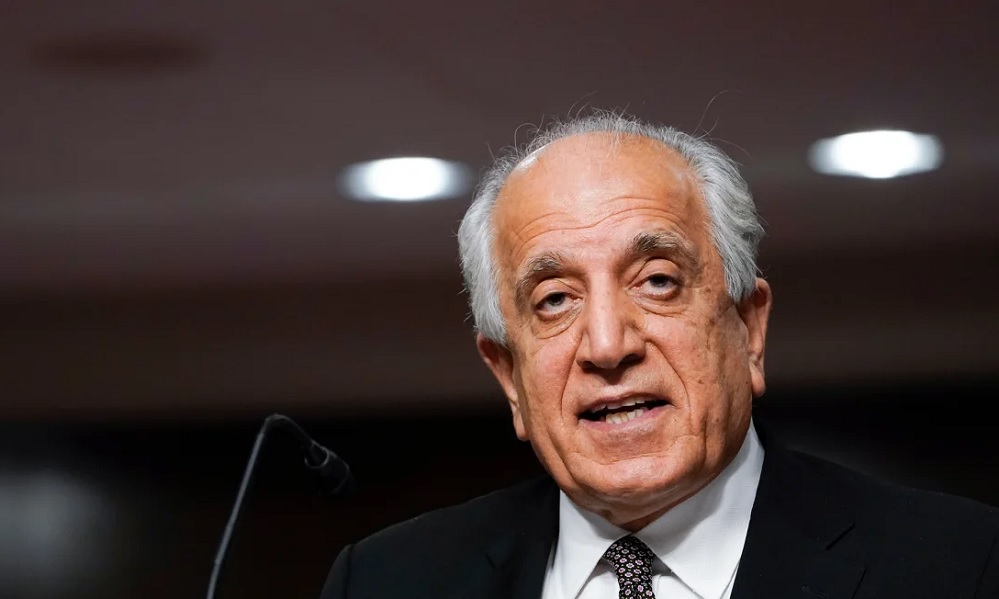
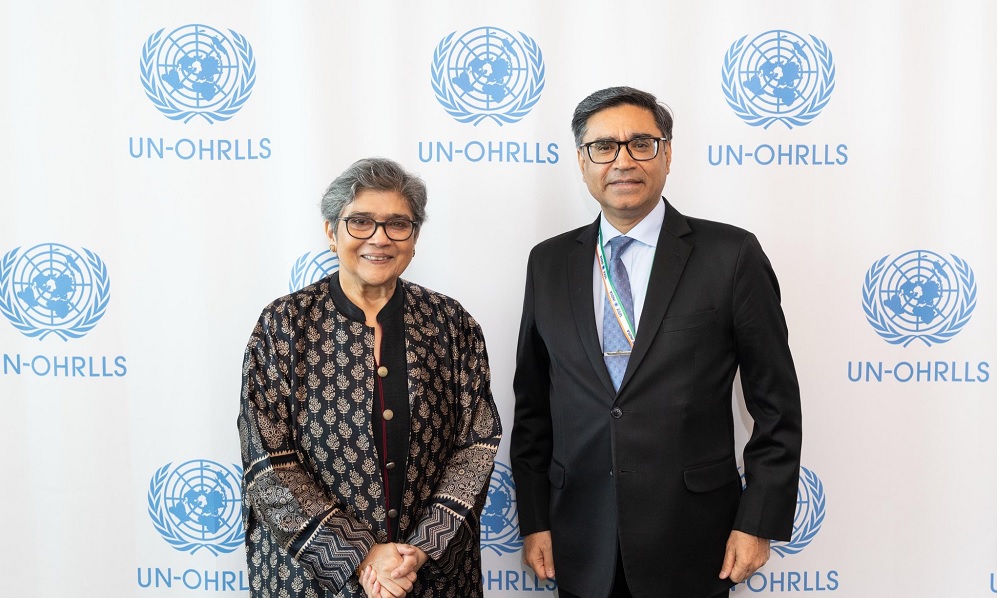
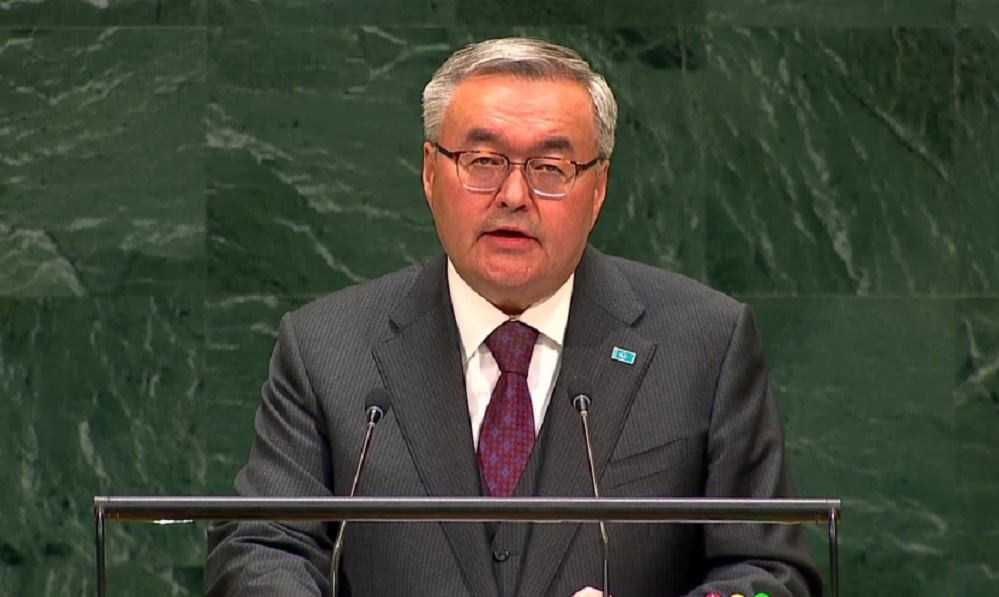
Kazakhstan’s Foreign Minister Mukhtar Tileuberdi has called for pragmatic and coordinated international engagement with Afghanistan, saying the country’s long-term stability is closely linked to the security and sustainable development of Central Asia.
Speaking during the general debate of the 81st session of the United Nations General Assembly in New York on Friday, Tileuberdi said humanitarian assistance to Afghanistan remains essential but alone cannot break the cycle of poverty, displacement and dependency.
He said Kazakhstan supports a “pragmatic, coordinated and step-by-step” approach to international engagement with Afghanistan, with the United Nations playing a central role.
Tileuberdi also said Kazakhstan is working with the UN to operationalize the United Nations Regional Centre for the Sustainable Development Goals for Central Asia and Afghanistan in Almaty.
He said the success of the centre should be measured by the results and assistance it delivers to the region.


Abu Muslim Farah defeat Khurasan Faryab 2-0 in ACL season six

Saar: Concerns over Pakistan’s political crisis discussed

Afghanistan Champions League: Omar Zawak Herat beat Toofan Herat 1-0

Blast in Pakistan’s Dera Ismail Khan kills 11, injures 30

Ariana Afghan Airlines increases Kabul-Delhi cargo flights

Saudi energy group signs major Afghanistan deals covering gas exploration and pipeline plans

Trump floats idea of renaming Atlantic or Pacific Ocean

US hits Egyptian bank branches with Iran sanctions as war marks six months

Nepal flood rescue mission enters critical phase as thousands remain missing

Iranian clubs to face Gulf opponents at neutral venues in Asian Champions League Elite
Saar: Concerns over Pakistan’s political crisis discussed

Exclusive interview with Abdul Latif Mansoor, Minister of MRRD

Tawsia: Overview of Afghanistan’s iron mines

Tahawol: Discussion on fresh Pakistani airstrikes on Afghanistan

Saar: Calls for international support for Afghanistan discussed
-

 World5 days ago
CNN, MS NOW and Politico sue Trump, challenging White House ban
-

 Latest News3 days ago
Ariana Afghan Airlines ranks seventh among 45 Central Asian airlines
-

 Latest News4 days ago
UN reiterates call for respect for international law after Kunar airstrikes
-

 Regional3 days ago
US and Iran hold first talks since June after Trump’s ‘annihilation’ threat
-

 Latest News3 days ago
Silk Road highway in Wakhan corridor now reaches the China border
-

 Latest News4 days ago
Afghan Official: Pakistan’s airstrikes will not go unanswered
-

 Sport4 days ago
Afghan boxing referee heads to China for international festival
-
 Regional5 days ago
G7 foreign ministers call on Iran to stop arming Houthis