
Latest News
Afghanistan scores dismally on Corruption Perception Index


Afghanistan has been ranked 165 out of 180 countries in Transparency International’s 2020 Corruption Perceptions Index (CPI) which was released on Thursday.
The watchdog stated that Afghanistan scored only 19 out of 100 points in terms of prohibiting corruption.
The Corruption Perceptions Index ranks 180 countries and territories by their perceived levels of public sector corruption, according to experts and business people.
The 2020 CPI report highlights the impact of corruption on government responses to COVID-19, comparing countries’ performance in the index to their investment in health care and the extent to which democratic norms and institutions have been weakened during the pandemic.
In it’s report Thursday, Transparency International stated persistent corruption has had a profound impact on health care systems around the world during the pandemic.
“COVID-19 is not just a health and economic crisis. It is a corruption crisis. And one that we are currently failing to manage,” said the watchdog’s chairperson, Delia Ferreira Rubio.
“The past year has tested governments like no other in memory, and those with higher levels of corruption have been less able to meet the challenge. But even those at the top of the CPI must urgently address their role in perpetuating corruption at home and abroad,” she said.
The watchdog stated that countries that perform well on the index invest more in health care, are better able to provide universal health coverage and are less likely to violate democratic norms and institutions or the rule of law.
Denmark and New Zealand top the index, with 88 points. Syria, Somalia and South Sudan come last, with 14, 12 and 12 points, respectively.
Since 2012, the earliest point of comparison in the current CPI methodology, 26 countries significantly improved their CPI scores, including Ecuador (39), Greece (50), Guyana (41), Myanmar (28) and South Korea (61).
Twenty-two countries significantly decreased their scores, including Bosnia and Herzegovina (35), Guatemala (25), Lebanon (25), Malawi (30), Malta (53) and Poland (56).
Nearly half of countries have been stagnant on the index for almost a decade, indicating stalled government efforts to tackle the root causes of corruption. More than two-thirds score below 50, the report stated.
According to the watchdog, the past year highlighted integrity challenges among even the highest-scoring countries, proving that no country is free of corruption.







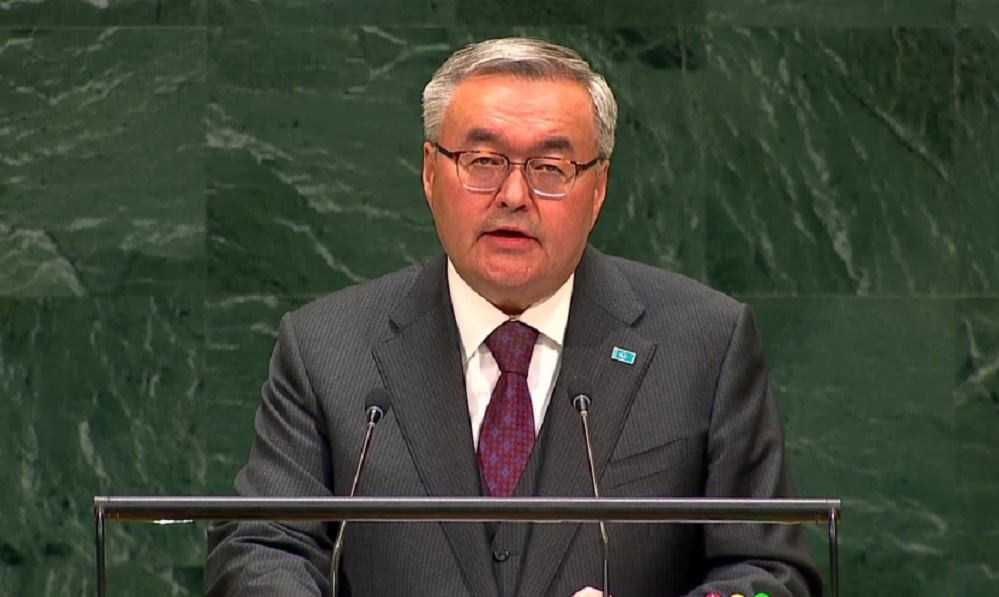
Kazakhstan’s Foreign Minister Mukhtar Tileuberdi has called for pragmatic and coordinated international engagement with Afghanistan, saying the country’s long-term stability is closely linked to the security and sustainable development of Central Asia.
Speaking during the general debate of the 81st session of the United Nations General Assembly in New York on Friday, Tileuberdi said humanitarian assistance to Afghanistan remains essential but alone cannot break the cycle of poverty, displacement and dependency.
He said Kazakhstan supports a “pragmatic, coordinated and step-by-step” approach to international engagement with Afghanistan, with the United Nations playing a central role.
Tileuberdi also said Kazakhstan is working with the UN to operationalize the United Nations Regional Centre for the Sustainable Development Goals for Central Asia and Afghanistan in Almaty.
He said the success of the centre should be measured by the results and assistance it delivers to the region.


Abu Muslim Farah defeat Khurasan Faryab 2-0 in ACL season six

Saar: Concerns over Pakistan’s political crisis discussed

Afghanistan Champions League: Omar Zawak Herat beat Toofan Herat 1-0

Blast in Pakistan’s Dera Ismail Khan kills 11, injures 30

Ariana Afghan Airlines increases Kabul-Delhi cargo flights

Saudi energy group signs major Afghanistan deals covering gas exploration and pipeline plans

Trump floats idea of renaming Atlantic or Pacific Ocean

US hits Egyptian bank branches with Iran sanctions as war marks six months

Nepal flood rescue mission enters critical phase as thousands remain missing

Iranian clubs to face Gulf opponents at neutral venues in Asian Champions League Elite
Saar: Concerns over Pakistan’s political crisis discussed

Exclusive interview with Abdul Latif Mansoor, Minister of MRRD

Tawsia: Overview of Afghanistan’s iron mines

Tahawol: Discussion on fresh Pakistani airstrikes on Afghanistan

Saar: Calls for international support for Afghanistan discussed
-

 World5 days ago
CNN, MS NOW and Politico sue Trump, challenging White House ban
-

 Latest News3 days ago
Ariana Afghan Airlines ranks seventh among 45 Central Asian airlines
-

 Latest News5 days ago
UN reiterates call for respect for international law after Kunar airstrikes
-

 Regional4 days ago
US and Iran hold first talks since June after Trump’s ‘annihilation’ threat
-

 Latest News4 days ago
Silk Road highway in Wakhan corridor now reaches the China border
-

 Regional3 days ago
Iran airlines cancel flights as US sanctions hit
-

 Latest News5 days ago
Afghan Official: Pakistan’s airstrikes will not go unanswered
-
 Regional5 days ago
G7 foreign ministers call on Iran to stop arming Houthis