
Latest News
Biden calls on Afghans to ‘decide their future’ as withdrawal nears end

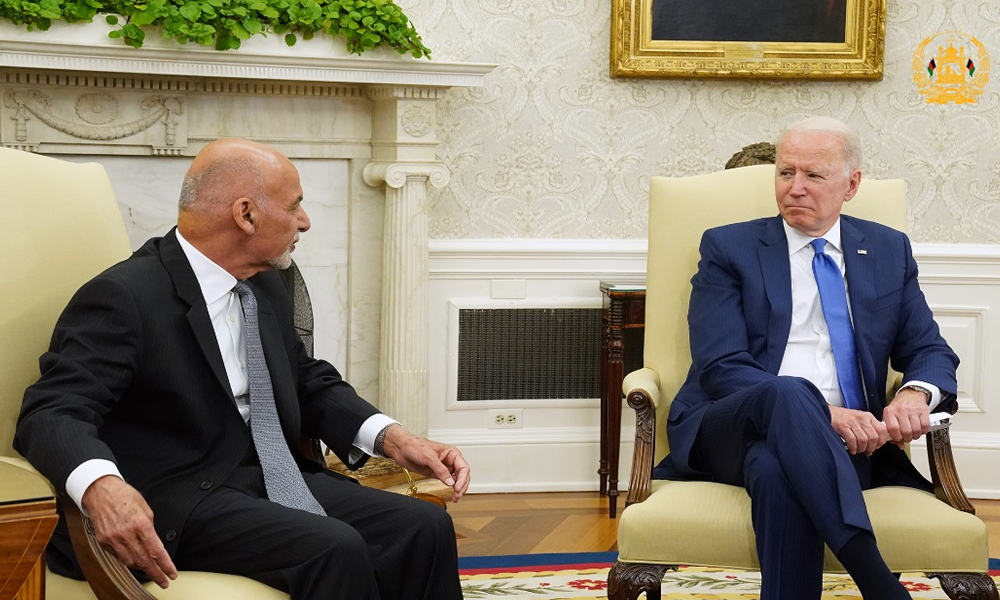
U.S. President Joe Biden met Afghan President Ashraf Ghani and High Council for National Reconciliation chairman Abdullah Abdullah on Friday at the White House where he called on Afghans to decide the future of their country as the last U.S. troops pack up after 20 years of war and government forces struggle to repel Taliban advances.
Biden, seated beside Ghani and Abdullah in the Oval Office, called them “two old friends” and said U.S. support for Afghanistan was not ending but would be sustained despite the U.S. pullout, Reuters reported.
“Afghans are going to have to decide their future, what they want,” said Biden, saying the “senseless violence has to stop.”
Ghani said Afghan security forces had retaken six districts on Friday. He said he respected Biden’s decision and that the partnership between the United States and Afghanistan is entering a new phase.
“We are determined to have unity, coherence,” he said.
Speaking with reporters after the meeting, Ghani said the United States’ decision to withdraw troops was a sovereign one and it was Kabul’s job to “manage consequences.”
He added that Biden had clearly articulated that the U.S. embassy would continue to operate and security aid would continue and in some cases move on an accelerated schedule, Reuters reported.
Abdullah said in a Reuters interview after the Biden meeting that stalled intra-Afghan talks on a political settlement to decades of strife should not be abandoned unless the insurgents themselves pull out.
“I think we shouldn’t shut the door unless it’s completely shut by the Taliban,” Abdullah said. “We can’t say no to talks despite a lack of progress or in spite of what’s happening on the ground.”
The Oval Office meeting could be as valuable to Ghani for its symbolism as for any new U.S. help because it will be seen as affirming Biden’s support for the beleaguered Afghan leader as he confronts Taliban gains, bombings and assassinations, a surge in COVID-19 cases and political infighting in Kabul.
“At a time when morale is incredibly shaky and things are going downhill, anything one can do to help shore up morale and shore up the government is worth doing,” said Ronald Neumann, a former U.S. ambassador to Kabul. “Inviting Ghani here is a pretty strong sign that we’re backing him.”
Biden’s embrace, however, comes only months after U.S. officials were pressuring Ghani to step aside for a transitional government under a draft political accord that they floated in a failed gambit to break a stalemate in peace talks.
Biden has asked Congress to approve $3.3 billion in security assistance for Afghanistan next year and is sending 3 million doses of vaccines there to help it battle COVID-19, Reuters reported.
U.S. officials have been clear that Biden will not halt the American pullout – likely to be completed in the coming weeks -and he is unlikely to approve any U.S. military support to Kabul to halt the Taliban’s advances beyond advice, intelligence, and aircraft maintenance.
Earlier, the Afghan leaders met for a second day on Capitol Hill, where Biden’s withdrawal decision met objections from many members of both parties.
U.S. House of Representatives Speaker Nancy Pelosi, welcoming Ghani to a bipartisan leadership meeting, said she looked forward to hearing about what more can be done with U.S. humanitarian aid, especially for women and girls.
Many lawmakers and experts have expressed deep concerns that the Taliban – if returned to power – will reverse progress made on the rights of women and girls, who were harshly repressed and barred from education and work during the insurgents’ 1996-2001 rule.






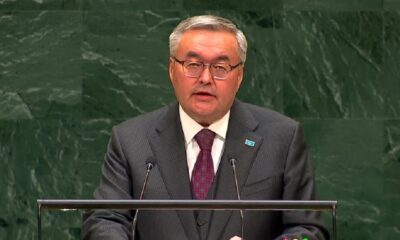




Kazakhstan’s Foreign Minister Mukhtar Tileuberdi has called for pragmatic and coordinated international engagement with Afghanistan, saying the country’s long-term stability is closely linked to the security and sustainable development of Central Asia.
Speaking during the general debate of the 81st session of the United Nations General Assembly in New York on Friday, Tileuberdi said humanitarian assistance to Afghanistan remains essential but alone cannot break the cycle of poverty, displacement and dependency.
He said Kazakhstan supports a “pragmatic, coordinated and step-by-step” approach to international engagement with Afghanistan, with the United Nations playing a central role.
Tileuberdi also said Kazakhstan is working with the UN to operationalize the United Nations Regional Centre for the Sustainable Development Goals for Central Asia and Afghanistan in Almaty.
He said the success of the centre should be measured by the results and assistance it delivers to the region.


Afghanistan Champions League: Omar Zawak Herat beat Toofan Herat 1-0

Blast in Pakistan’s Dera Ismail Khan kills 11, injures 30

Ariana Afghan Airlines increases Kabul-Delhi cargo flights

Khalilzad questions Pakistan’s commitment to Afghan welfare

India, UN envoy discuss Afghanistan’s humanitarian needs

Saudi energy group signs major Afghanistan deals covering gas exploration and pipeline plans

Trump floats idea of renaming Atlantic or Pacific Ocean

US hits Egyptian bank branches with Iran sanctions as war marks six months

Nepal flood rescue mission enters critical phase as thousands remain missing

Iranian clubs to face Gulf opponents at neutral venues in Asian Champions League Elite

Exclusive interview with Abdul Latif Mansoor, Minister of MRRD

Tawsia: Overview of Afghanistan’s iron mines

Tahawol: Discussion on fresh Pakistani airstrikes on Afghanistan

Saar: Calls for international support for Afghanistan discussed

Tahawol: Opening of the 81st UN General Assembly Session
-

 World4 days ago
CNN, MS NOW and Politico sue Trump, challenging White House ban
-

 Latest News3 days ago
Ariana Afghan Airlines ranks seventh among 45 Central Asian airlines
-

 Latest News4 days ago
UN reiterates call for respect for international law after Kunar airstrikes
-
 Latest News5 days ago
Khalilzad condemns Pakistan airstrikes, says current strategy is not working
-

 Regional3 days ago
US and Iran hold first talks since June after Trump’s ‘annihilation’ threat
-

 Latest News3 days ago
Silk Road highway in Wakhan corridor now reaches the China border
-

 Latest News4 days ago
Afghan Official: Pakistan’s airstrikes will not go unanswered
-

 Sport4 days ago
Afghan boxing referee heads to China for international festival