
Business
Afghanistan exports goods to Europe for first time since IEA takeover

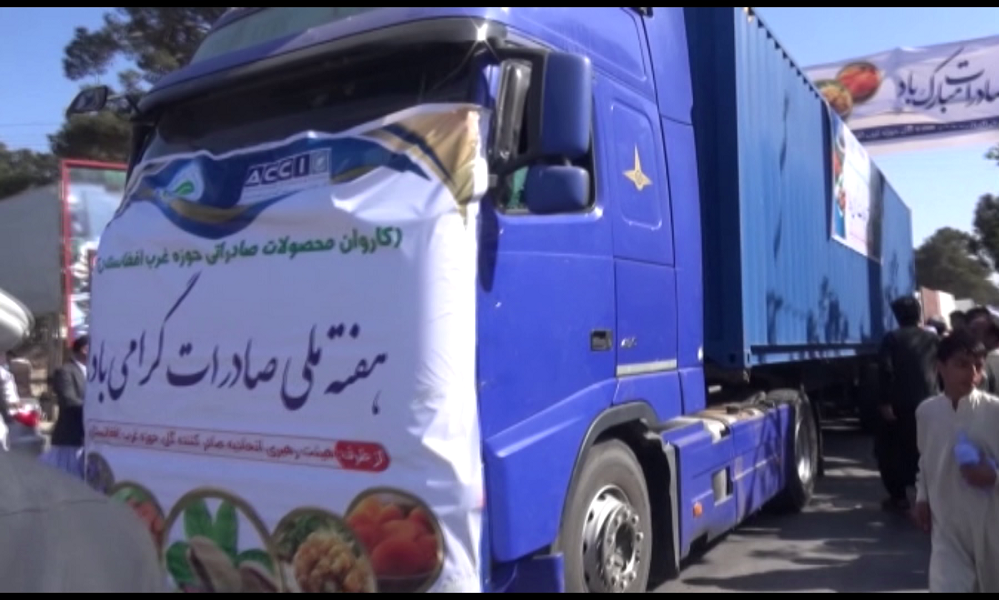
Dozens of cargo trucks left Afghanistan on Monday in what marked the first consignment of exports to Europe since the Islamic Emirate took over the country in August last year.
The convoy left from the western province of Herat and will travel through the Lapis Lazuli route, an international trade route that was inaugurated in 2018.
The shipment involves nearly 30 trucks carrying commodities such as pistachios, sesame, cumin, carpets and almonds, said Yonus Qazizada, the provincial director of trade and investment in Herat.
He said that the commodities worth $5 million are bound for European and Arab countries.
The Lapis Lazuli corridor begins from Torghundi in Herat and continues to Turkmenistan, Azerbaijan, Georgia and Turkey.
This is the second Afghan convoy of exports through Lapis Lazuli since the corridor was inaugured in December 2018.
The first convoy carried dried fruits, herbs and textiles.
Meanwhile, the union of exporters in the western zone said exports increased by 40 percent in 1400 solar year as compared to the previous year.
“This suggests that expectations have grown and economic activities have increased. Unlike the propaganda that is spread, it is a great achievement to dispatch a convoy abroad,” said Mohammad Rafiq Shahir, head of the experts’ council of Herat.





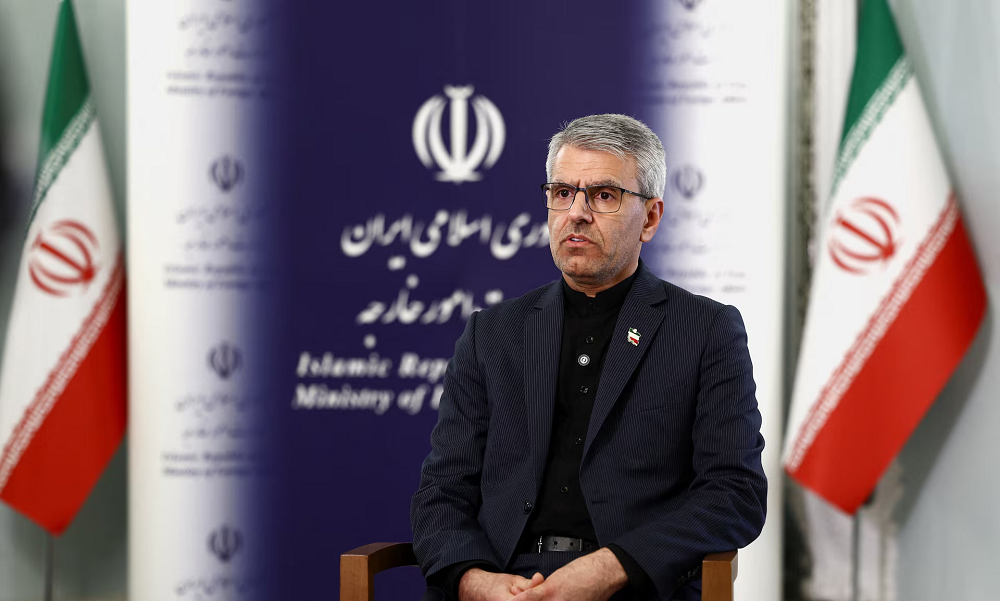
Iran says reducing border and customs barriers is essential to increasing trade and economic exchanges with Afghanistan, as officials report a sharp rise in rail freight between the two countries.
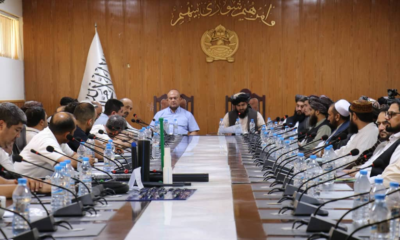
Iranian Foreign Ministry spokesman Esmail Baghaei said at a weekly press briefing that Tehran and Kabul have discussed ways to facilitate economic and commercial cooperation, particularly by reducing customs and border obstacles.
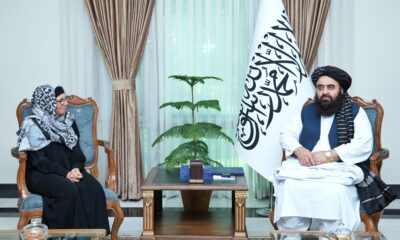
Baghaei said the issue was discussed during a meeting between Afghanistan’s Deputy Prime Minister for Economic Affairs and Iran’s president. He added that important measures have since been placed on the agenda and that constructive exchanges have continued at the ministerial level.
The Iranian official expressed hope that the process would help increase bilateral trade and remove existing obstacles to the movement of goods between the two countries.
Meanwhile, Jabbar Ali Zakari, Iran’s deputy minister of roads and urban development and head of the country’s railway company, said rail freight between Iran and Afghanistan has increased significantly.
Zakari said less than 15,000 tonnes of goods were transported by rail between the two countries annually in the past, while the figure has now reached around 130,000 tonnes per month.
He said Iran expects the volume to reach approximately 1.5 million tonnes annually if the current trend continues.
Iranian officials say expanding railway links with Afghanistan and other regional countries could further strengthen trade, transit and connectivity between Iran, Afghanistan and Central Asia.
Business
Afghanistan’s trade diversification challenges Pakistan
The disruption affects both sides of the border, including farmers, transporters, commission agents, wholesalers and retailers.
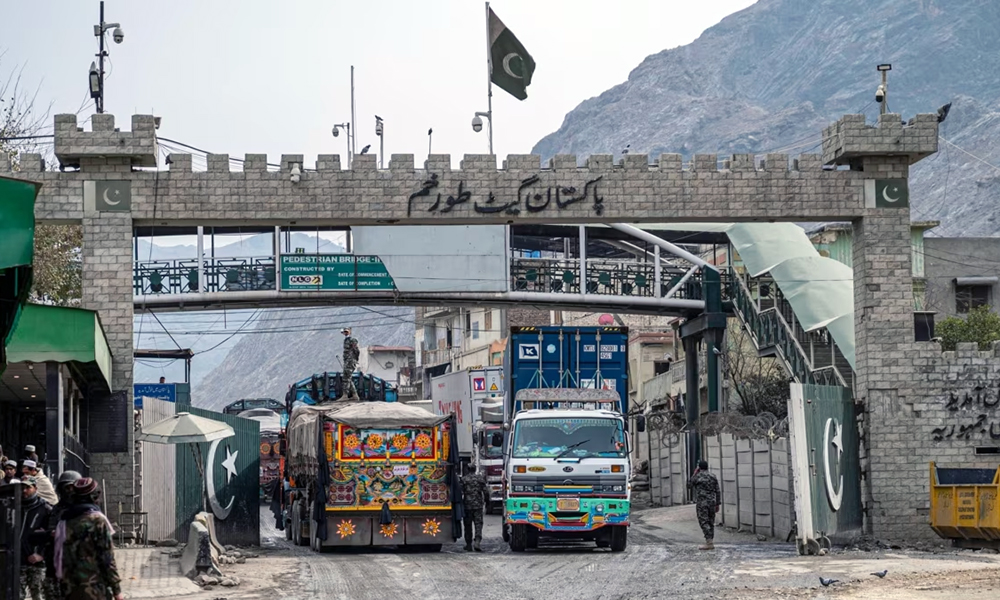
Five years after the Islamic Emirate of Afghanistan (IEA) returned to power in Kabul, Afghanistan’s economic relationship with Pakistan is undergoing a structural shift. For Khyber-Pakhtunkhwa, particularly Peshawar, the issue is increasingly one of industrial resilience and competitiveness.
The clearest evidence is Afghanistan’s transit trade through Pakistan. Container traffic reached a record 102,886 containers worth $6.7 billion in Fiscal Year 2023 (FY23), but fell to 54,114 in FY24 and 42,959 in FY25. In FY26, it collapsed to just 11,592 containers valued at $367 million, according to customs data cited by Dawn.
The figures indicate that Pakistan’s October 2025 border restrictions accelerated a decline that had already begun.
Afghanistan has increasingly diversified its trade routes, with Iran emerging as a major alternative. The World Bank’s Afghanistan Economic Monitor says the Iranian corridor has become a key part of the country’s import supply chain.
In FY25, Iran accounted for 31.3 percent of Afghan imports, while direct imports from Iran and goods transiting through Iran together represented 48.6 percent. Central Asian routes are also gaining importance.
For Pakistan, the loss extends beyond transit fees. It risks losing its traditional position as Afghanistan’s principal gateway to international markets.
The decline is also hitting businesses in Khyber-Pakhtunkhwa. For decades, Afghan demand supported manufacturers, wholesalers, transporters, clearing agents and warehouses linking Karachi’s ports with Peshawar and the border markets.
Cement, construction materials, food products, pharmaceuticals, textiles and consumer goods have traditionally found markets in Afghanistan. As Afghan orders decline, manufacturers face lower demand while already dealing with high energy, financing and transport costs, Dawn reported.
Agriculture is particularly vulnerable because fruits and vegetables cannot withstand prolonged border delays. In 2025, five southern Afghan provinces exported 44,225 tonnes of grapes worth $13.8 million, with nearly 43,000 tonnes going to Pakistan. So far in 2026, exports have fallen to just 256 tonnes valued at about $100,000, according to the Associated Press.
The disruption affects both sides of the border, including farmers, transporters, commission agents, wholesalers and retailers.
At the centre of the issue is the Afghanistan-Pakistan Transit Trade Agreement, designed to give Afghanistan access to Pakistani seaports while offering Pakistan a potential trade corridor to Central Asia. But security concerns, smuggling, regulatory disputes and political tensions have steadily weakened the arrangement.
Pakistan has legitimate concerns about transit cargo being diverted into its domestic market, while Afghan traders face higher costs and uncertainty from additional requirements, inspections and border delays.
If alternative routes through Iran and Central Asia become commercially viable, traders have an incentive to establish new supply chains – and winning that business back could prove difficult.
The consequences are particularly serious for Khyber-Pakhtunkhwa, where Peshawar’s commercial ecosystem has long depended on trade with Afghanistan and Central Asia.
The Pak-Afghan Joint Chamber of Commerce and Industry estimates Pakistani exporters suffered around $225 million in losses over eight months this year because of restrictions and blockades. It puts annual Pakistani exports to Afghanistan at around $1.5 billion and exports to Central Asian markets through Afghanistan at about $800 million.
Pakistan therefore cannot treat the decline in Afghan transit trade solely as a security or diplomatic issue.
Business
89 traders and industrialists invest $68 million in Afghanistan, creating over 4,000 jobs
According to Fitrat, the investments have so far generated direct employment for more than 4,000 people.
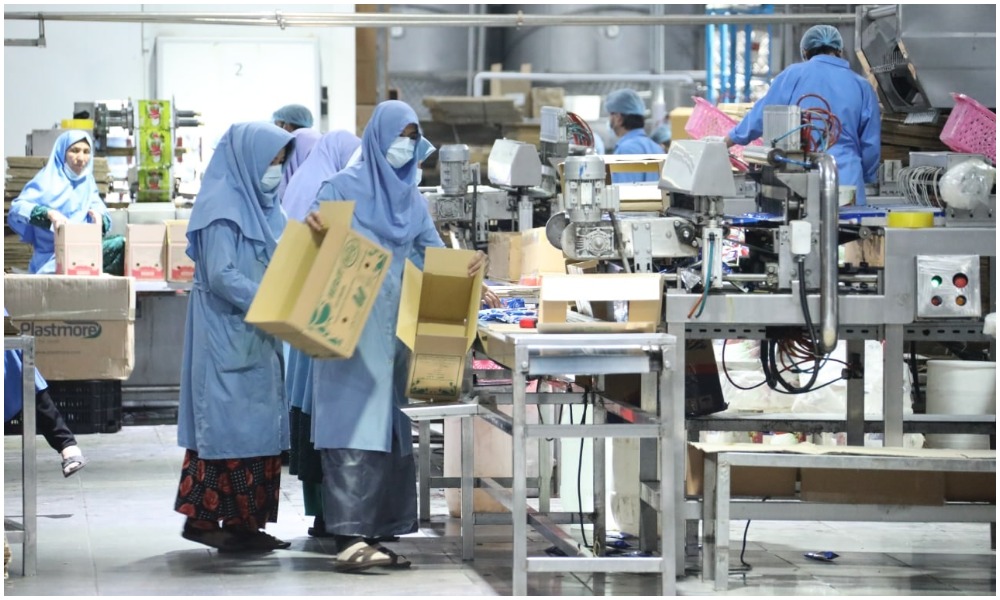
A total of 89 traders and industrialists have transferred capital to Afghanistan over the past two years, investing $68 million and directly creating more than 4,000 jobs, the Islamic Emirate said.
Hamdullah Fitrat, deputy spokesperson for the Islamic Emirate, said the investors had received the necessary facilities and support to establish and expand businesses in the country.
Fitrat said the group includes one large-scale investor, 74 medium-scale investors and 14 small-scale investors.
He added that 288 jeribs of land had been allocated to the investors in industrial parks across Afghanistan.
According to Fitrat, the investments have so far generated direct employment for more than 4,000 people.
He said the documents of a further 15 traders and investors are currently under review. Once the legal procedures are completed, they will also be eligible to receive similar facilities and incentives.


US Department of War says newly found classified documents could shed light on Abbey gate bombing

Nearly 1,500 missing in Nepal and China after devastating Himalaya flood

Uzbekistan delegation visits Kunduz to boost trade and investment

Trial for accused mastermind of 9/11 attacks set for June 2028

Qatar PM to visit Tehran to pursue mediation efforts

Pakistan’s governance system has ‘collapsed’: Mohsin Naqvi

Afghanistan exports first stone shipment to US in $100,000 trade milestone

AFC confirms clubs for 2026/27 competitions; draw set for August 18

Only two days to go before Afghanistan and Ireland begin ODI series

Four mediators struggle to secure lasting Pakistan-Afghanistan ceasefire

Tahawol: Calls for US engagement with the Islamic Emirate discussed

Saar: Call for dialogue to resolve issues with Afghanistan discussed

Tahawol: Aisha Wahab’s emphasis on US ties with IEA

Saar: Guterres’s concern regarding global conflicts discussed

Saar: Afghanistan’s uncertain future in SCO
-
 Latest News4 days ago
Four mediators struggle to secure lasting Pakistan-Afghanistan ceasefire
-
 Latest News5 days ago
US judge strikes down Trump visa suspension for 75 countries, including Afghanistan
-
 Business3 days ago
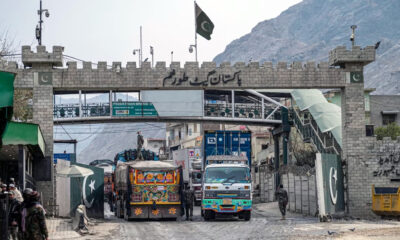
Afghanistan’s trade diversification challenges Pakistan
-

 Sport5 days ago
Afghanistan-India T20I series could see major schedule change
-
 Latest News5 days ago
Achakzai urges Pakistan to end hostility towards Afghanistan
-

 Latest News4 days ago
AfghanEvac warns US court ruling does not reopen door for Afghans
-
 Latest News3 days ago
SCO summit to be held without confirmed Afghan invitation
-
 Business4 days ago
Afghan, UAE buyers purchase $1.44 million worth of Turkmenistan diesel