Latest News
Rights watchdog calls on Pakistan to stop arresting Afghan refugees
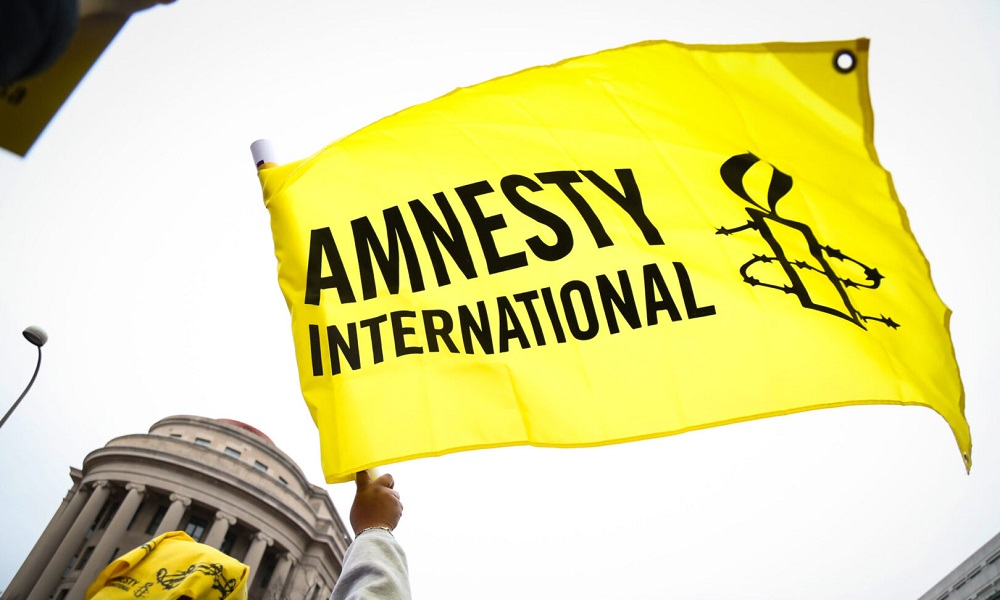
The Government of Pakistan must urgently stop arbitrarily arresting and harassing Afghan refugees and asylum seekers, Amnesty International said on Tuesday – on World Refugee Day.
The human rights group said in a report that in recent years, Afghans in Pakistan have been subjected to waves of arbitrary detentions, arrests, and the threat of deportation. Because of considerable delays in the registration process, most do not hold Proof of Registration (PoR) cards, the identity document entitling Afghan refugees to remain regularly in Pakistan. Many arrived in Pakistan with regular visas, which have since expired.
“It is deeply concerning that the situation of Afghan refugees in Pakistan is not receiving due international attention. Being unable to return home or stay permanently in Pakistan, they are caught in an impossible situation from which there is no escape. Their ambiguous legal status and arduous processes for asylum or third country relocation have made them even more vulnerable,” said Dinushika Dissanayake, Amnesty International’s Deputy Regional Director for South Asia.
Afghans seeking asylum must also endure a prolonged process when trying to obtain proof of registration from the United Nations High Commission for Refugees (UNHCR). Combined with lengthy visa renewals from the Pakistani government, these delays are making it easier for the police to harass them and for other authorities to extort money from them — practices that have been reported across Pakistan, including in Sindh, Karachi, Peshawar, Chaman, and Quetta, among others.
Afghans without documents to prove their legal status are unable to secure formal employment and often end up working in low-wage jobs where they are vulnerable to exploitation.
Without a PoR card or visa, it is also difficult to get SIM cards or set up bank accounts, which prevents Afghans from receiving money from their relatives. Landlords also take advantage of their lack of proof of regular status.
Many of the recent arrivals must travel to the border and officially leave Pakistan in order to renew their visas, which can prove both costly and dangerous. Two interviewees said border guards demanded bribes before allowing them to cross the border, even though they possessed valid visas.
“Amnesty International is calling on the United Nations High Commission for Refugees (UNHCR) to expedite registration and reviews of applications from Afghans seeking refugee status in Pakistan, on the Government of Pakistan to stop arbitrarily arresting and harassing Afghan refugees and on third countries offering relocation to Afghans abroad to expedite the issuance of visas,” Dinushika Dissanayake said.

Latest News
Karzai and Abdullah condemn Pakistani airstrikes, join calls for dialogue
Karzai described the reported attacks as a violation of Afghanistan’s national sovereignty and contrary to international law and accepted international norms.
Former Afghan President Hamid Karzai and former Chairman of the High Council for National Reconciliation Abdullah Abdullah have strongly condemned the reported Pakistani airstrikes in eastern Afghanistan, joining growing calls for dialogue amid rising tensions between the two neighbouring countries.
Their statements came after Pakistan carried out overnight airstrikes on residential areas in the eastern provinces of Paktia, Paktika and Kunar.
Afghan officials say at least 36 civilians, including women and children, were killed and 163 others wounded.
According to Afghan authorities, the deadliest strike occurred in Mandokhail village in Paktia’s Chamkani district, where an initial airstrike reportedly hit a civilian home before a second strike allegedly targeted villagers who had gathered to rescue the wounded.
Additional strikes were reported in Paktika’s Giyan district and Kunar’s Manogai district.
Karzai described the reported attacks as a violation of Afghanistan’s national sovereignty and contrary to international law and accepted international norms.
He extended his condolences to the families of those killed, wished a speedy recovery to the injured, and urged Pakistan to abandon what he described as confrontational policies and double standards toward extremism.
Karzai said it was in Pakistan’s own interest to pursue relations with Afghanistan based on good neighbourliness, mutual respect and constructive engagement.
Abdullah Abdullah also condemned the strikes, saying they had caused heavy civilian casualties and describing them as a hostile act that would only deepen tensions between the two countries.
He argued that military force has repeatedly failed to resolve disputes and called on both sides to embrace dialogue, diplomacy and the principles of good neighbourly relations to address their differences peacefully.
The condemnation follows similar criticism from former US Special Representative for Afghanistan Reconciliation Zalmay Khalilzad, who said Pakistan had once again resorted to military action despite repeated calls from the international community and many Pakistanis to resolve disputes through dialogue.
Khalilzad said he has consistently condemned the killing of Afghan civilians and questioned whether Islamabad is genuinely seeking a negotiated solution. He also argued that Pakistan had failed to respond to several proposals put forward by the Islamic Emirate to address bilateral security concerns.
The former US envoy further questioned whether Pakistan’s security establishment may be pursuing broader strategic objectives, including keeping Afghanistan unstable, warning that continued conflict could strengthen extremist groups such as ISIS-K and increase China’s influence in Afghanistan.
Relations between Afghanistan and Pakistan have remained tense in recent years, with both governments accusing each other of failing to address cross-frontier militant activity.
Pakistan has previously said its military operations target armed groups responsible for attacks inside its territory, while Afghan authorities have repeatedly condemned cross-frontier strikes as violations of Afghanistan’s sovereignty and say civilians continue to bear the brunt of the violence.
Latest News
Critically injured airstrike victims airlifted to Kabul for emergency treatment
The medical evacuations come as Afghan officials continue to assess the human toll of Pakistan’s overnight airstrikes against Afghanistan.
Thirty-three critically injured civilians have been airlifted to Kabul by helicopter for emergency medical treatment following reported airstrikes in eastern Afghanistan, health officials said on Monday.
According to officials, the patients are among 66 people initially identified as being in critical condition after the strikes, which reportedly hit residential areas in the eastern provinces of Paktia, Paktika and Kunar overnight.
The injured have been admitted to several hospitals across the capital, where specialist medical teams are providing emergency care. Authorities have not released details on the conditions of the remaining critically wounded patients or whether they will also be transferred to Kabul.
The medical evacuations come as Afghan officials continue to assess the human toll of Pakistan’s overnight airstrikes against Afghanistan.
The Islamic Emirate has accused Pakistan of carrying out the strikes, saying at least 36 civilians, including women and children, were killed and 163 others wounded. Officials said the deadliest attack occurred in Mandokhail village in Paktia’s Chamkani district, where a residential home was allegedly struck before a second strike hit as villagers gathered to help the wounded.
Additional strikes were reported in Paktika’s Giyan district and Kunar’s Manogai district, where authorities said several homes were damaged or destroyed.
Pakistan has not officially commented on the allegations, and the casualty figures released by Afghan authorities have not been independently verified.
The reported strikes have drawn widespread condemnation from senior Afghan officials and international figures, including former US Special Representative for Afghanistan Reconciliation Zalmay Khalilzad, who criticised the attacks and called for dialogue between the two neighbouring countries rather than military action.
The latest violence underscores the continuing tensions along the Afghanistan-Pakistan frontier, where both countries have repeatedly exchanged accusations over cross-border militancy and security threats.
Afghan authorities have described the reported strikes as violations of the country’s sovereignty, while Pakistan has previously maintained that its military operations target militant groups it says operate from Afghan territory.
Latest News
Khalilzad condemns Pakistani airstrikes, questions Islamabad’s intentions
He questioned whether Pakistan genuinely wanted a negotiated solution, asking whether the country’s leadership was seeking to resolve the dispute or pursuing broader strategic objectives.
Former US Special Representative for Afghanistan Reconciliation Zalmay Khalilzad has condemned Pakistan’s overnight airstrikes in eastern Afghanistan, saying the attacks have caused heavy civilian casualties despite repeated calls for dialogue to resolve tensions between the two countries.
In a statement posted on social media, Khalilzad said Pakistan had once again resorted to military action despite appeals from the international community and many Pakistanis to settle disputes through diplomatic means.
“I have always condemned the killing of Afghan civilians by Pakistan, and I condemn it again today,” he said.
His comments came after Afghanistan’s Islamic Emirate said Pakistani military aircraft carried out strikes in the eastern provinces of Paktia, Paktika and Kunar overnight.
According to Deputy Spokesman Hamdullah Fitrat, at least 36 civilians, including women and children, were killed and 163 others wounded.
The Islamic Emirate said the deadliest attack occurred in Mandokhail village in Paktia’s Chamkani district, where an initial strike hit a civilian home before a second strike allegedly targeted villagers responding to the scene. Officials also reported civilian casualties in Paktika province and the destruction of a residential home in Kunar province.
Khalilzad said Islamabad had also failed to respond to numerous proposals put forward by the Islamic Emirate aimed at addressing security concerns between the neighbouring countries.
He questioned whether Pakistan genuinely wanted a negotiated solution, asking whether the country’s leadership was seeking to resolve the dispute or pursuing broader strategic objectives.
“I also wish to point out that Islamabad has not responded to the numerous proposals and plans put forward by the Taliban (IEA) government, despite indicating that it agrees with them.
“In the continued absence of any constructive effort or response from Pakistan, it is time to ask an important question: Does Islamabad genuinely seek a solution and an agreement?”
Khalilzad further suggested that continued military action could indicate an effort to keep Afghanistan unstable, raising questions about whether such instability benefits foreign actors, including China, while running counter to US interests.
“Is this conflict really what Islamabad claims it is? Or is Pakistan’s security and military establishment pursuing other objectives? If so, what are those objectives?
“Is the goal to keep Afghanistan unstable?
“Is Pakistan’s security establishment being encouraged or rewarded by China to create conditions that would allow Afghanistan to fall further under Chinese influence? Or is it both?,” he asked.
Khalilzad warned that if this were the case, the consequences could include greater regional instability, an expansion of activities by extremist groups such as ISIS-Khorasan, and increased Chinese influence in Afghanistan.
Relations between Afghanistan and Pakistan have remained strained in recent years, with both sides accusing each other of failing to address cross-frontier security threats.
Pakistan has previously said its military operations target militant groups responsible for attacks inside its territory, while Afghan authorities have repeatedly condemned cross-Durand Line strikes as violations of Afghanistan’s sovereignty and say civilians continue to bear the brunt of the violence.
-
Latest News3 days agoTAPI project sees rapid progress in Afghanistan
-
International Sports2 days agoFIFA World Cup: Iran held by Egypt after controversial late goal Is disallowed
-
International Sports4 days agoFIFA World Cup: Messi turns 39, shows no signs of stopping
-
Latest News2 days agoDelawar says Afghanistan has achieved security and unity after 47 years
-
Business20 hours agoAfghanistan eyes direct Basmati rice imports from India amid tensions with Pakistan
-
Latest News3 days agoAshura observed across Afghanistan with calls for unity and justice
-
Latest News4 days agoAfghanistan ranks last in KidsRights Index 2026
-
Latest News2 days agoEU announces major funding to support Afghan small businesses