
Latest News
Stanikzai issues stern warning to Pakistan over refugee issue

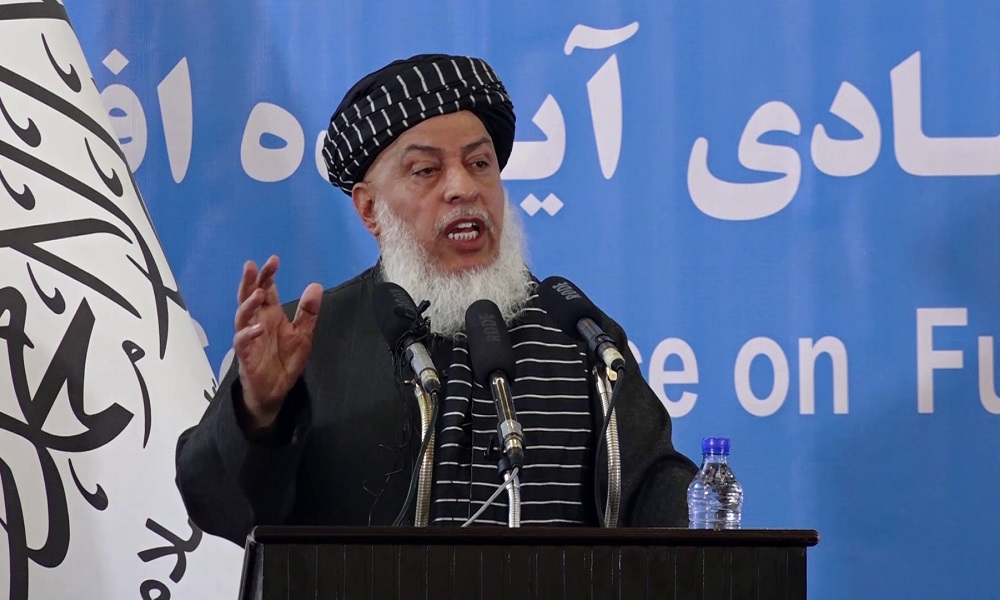
While condemning the forced expulsion of refugees and their mistreatment by Pakistan, Sher Mohammad Abbas Stanikzai, deputy foreign minister for political affairs, on Monday warned the country of strong reaction and said that Afghanistan now has a strong army.
Speaking at a conference on economic development in Kabul, Stanikzai said that Pakistan’s expulsion of refugees is cruel and a unilateral decision.
“We do not give anyone the right to do the atrocities on our sisters, brothers and children that the security forces are doing on the soil of Pakistan. We were very patient and did not react strongly. Our hope and expectation from the security forces and civil government of Pakistan is that they should change their behavior and not force us to respond to their actions. The reaction of Afghans is well known to the world. Afghans do not react much and if they do, it will be recorded in history. Thank God, we have a strong defense force today. Our Ministry of Defense is strong, thank God. We have more weapons than most of our neighbors. We have a trained force that defeated NATO and America two years ago,” Stanikzai said.
This senior official of the Ministry of Foreign Affairs said that Pakistani forces seize the property of Afghan refugees before expelling them.
He also emphasized that Pakistan has ignored the request of the United Nations and the world not to deport Afghan refugees, while it has made money from the presence of refugees in its soil for years.
“The United Nations, the world, human rights organizations all want Pakistan to reverse its decision. But they intensify their stubbornness unilaterally and now there is a lot of pressure and crowding at our borders including Spin Boldak and Torkham. Tens of thousands of people, including children, come to Afghanistan every day,” Stanikzai said.
Pakistan has cited security concerns as the reason for expelling illegal foreigners.
Officials of the Islamic Emirate, however, have said that Pakistan is making an excuse as IEA has already made a commitment to the world that it will not allow its soil to be used against any other country.
Visiting Torkham, Acting Minister of Refugees and Repatriation Khalil-ur-Rahman Haqqani called on Pakistani authorities to stop mistreating Afghan refugees.
“They should reconsider their decision and stop this process. They should not confiscate refugees’ property, but repatriate them in a dignified manner. They should stop beating or torturing them,” Haqqani said.
The Pakistani government had given illegal refugees until November 1 to leave the country.







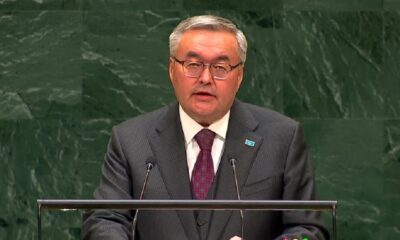




Kazakhstan’s Foreign Minister Mukhtar Tileuberdi has called for pragmatic and coordinated international engagement with Afghanistan, saying the country’s long-term stability is closely linked to the security and sustainable development of Central Asia.
Speaking during the general debate of the 81st session of the United Nations General Assembly in New York on Friday, Tileuberdi said humanitarian assistance to Afghanistan remains essential but alone cannot break the cycle of poverty, displacement and dependency.
He said Kazakhstan supports a “pragmatic, coordinated and step-by-step” approach to international engagement with Afghanistan, with the United Nations playing a central role.
Tileuberdi also said Kazakhstan is working with the UN to operationalize the United Nations Regional Centre for the Sustainable Development Goals for Central Asia and Afghanistan in Almaty.
He said the success of the centre should be measured by the results and assistance it delivers to the region.


Saar: Concerns over Pakistan’s political crisis discussed

Afghanistan Champions League: Omar Zawak Herat beat Toofan Herat 1-0

Blast in Pakistan’s Dera Ismail Khan kills 11, injures 30

Ariana Afghan Airlines increases Kabul-Delhi cargo flights

Khalilzad questions Pakistan’s commitment to Afghan welfare

Saudi energy group signs major Afghanistan deals covering gas exploration and pipeline plans

Trump floats idea of renaming Atlantic or Pacific Ocean

US hits Egyptian bank branches with Iran sanctions as war marks six months

Nepal flood rescue mission enters critical phase as thousands remain missing

Iranian clubs to face Gulf opponents at neutral venues in Asian Champions League Elite
Saar: Concerns over Pakistan’s political crisis discussed

Exclusive interview with Abdul Latif Mansoor, Minister of MRRD

Tawsia: Overview of Afghanistan’s iron mines

Tahawol: Discussion on fresh Pakistani airstrikes on Afghanistan

Saar: Calls for international support for Afghanistan discussed
-

 World5 days ago
CNN, MS NOW and Politico sue Trump, challenging White House ban
-

 Latest News3 days ago
Ariana Afghan Airlines ranks seventh among 45 Central Asian airlines
-

 Latest News4 days ago
UN reiterates call for respect for international law after Kunar airstrikes
-

 Regional3 days ago
US and Iran hold first talks since June after Trump’s ‘annihilation’ threat
-

 Latest News3 days ago
Silk Road highway in Wakhan corridor now reaches the China border
-

 Latest News4 days ago
Afghan Official: Pakistan’s airstrikes will not go unanswered
-

 Sport4 days ago
Afghan boxing referee heads to China for international festival
-
 Regional4 days ago
G7 foreign ministers call on Iran to stop arming Houthis