
Health
Women’s healthcare requires 75 percent female workers: Ebad

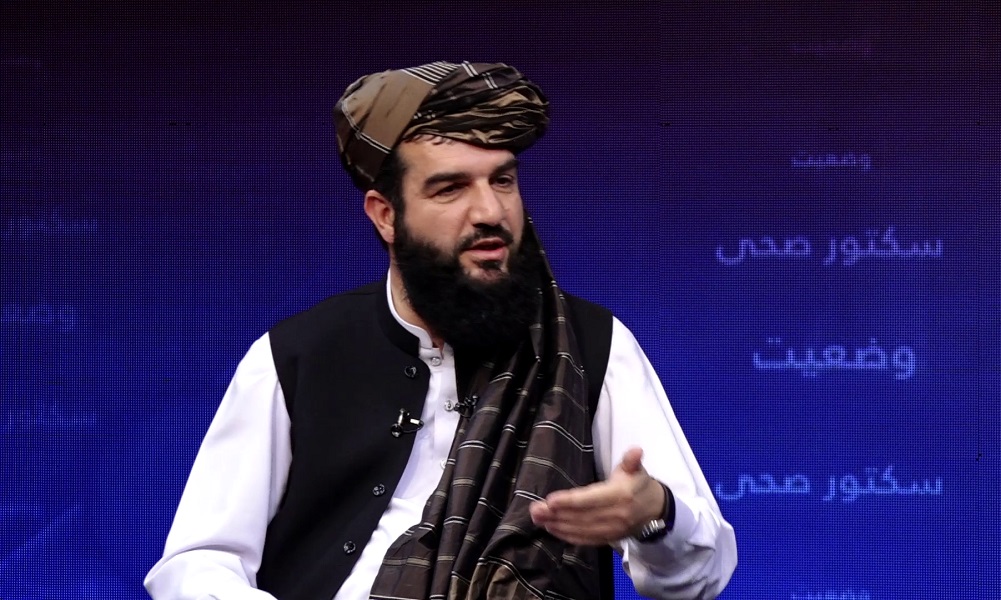
Acting Minister of Public Health Qalandar Ebad has said that the country’s health sector needs 75 percent female workers to provide health services to women.
Speaking in a debate program on Ariana News, Ebad said that the health sector has made progress but it is still facing some challenges.
According to him, after the political change in Afghanistan, access to health services has increased, but in provision of quality services, Afghanistan’s health sector is facing a shortage of female health workers, specialized medics, new technological equipment and medicines.
“I have said in many occasions that we need 75 percent presence of female workers for women’s healthcare. That means, if 75 percent of our sisters are not present in this area, we may not be able to reach the target,” Ebad said.
He also stated that there are about 70 specialty hospitals and 11,000 beds across the country, but 45,000 beds are needed to access standard health services.
According to him, the pharmaceutical industry in the country is very weak and only about three percent of the needed medicines are produced domestically.
Ebad admitted that there are problems in the field of cancer treatment. He said that Afghanistan needs international license for radiotherapy.
A large number of Afghans travel to other countries, especially to Pakistan and India, for the purpose of treating their patients, with expenses reaching millions of dollars.







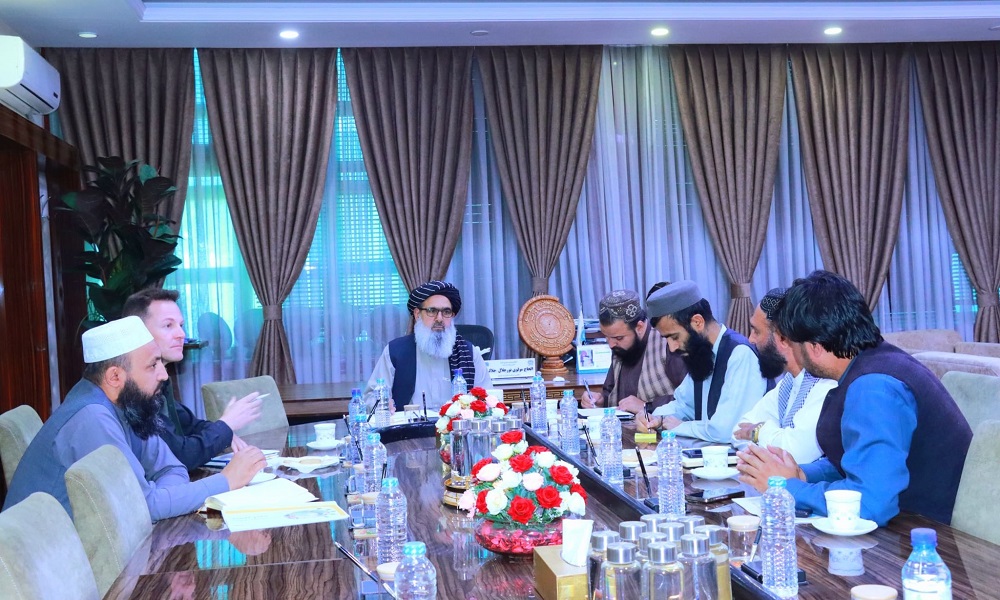
Noor Jalal Jalali, Minister of Public Health, met Thursday with Anthony Dutemple, Director General of the Chain of Hope (CDE), to discuss numerous issues around health.
Jalali discussed the organization’s strategy, maternal and child health activities, support for emergency obstetric and gynecological services, provision of training programs aimed at enhancing the capacity of healthcare workers, equipping the cardiac treatment department of Indira Gandhi Hospital, and expanding coordination and cooperation in the health sector.
The Ministry of Public Health stated that Jalali described the cooperation of partner institutions and organizations as important for strengthening the health sector and called for further collaboration in expanding adult cardiac treatment services at Ibn Sina Chest Hospital, equipping and standardizing the cardiac treatment department at Indira Gandhi Hospital, and improving the capacity of healthcare workers.
During the meeting, representatives of the Chain of Hope emphasized their continued support for Afghanistan’s health sector and pledged the necessary cooperation in the aforementioned areas.
Health
Midwives Day: UN urges greater investment to protect mothers and newborns in Afghanistan
UNFPA added that improving access to skilled midwives is key to ensuring safer pregnancies and addressing persistent gaps in healthcare services for women and children.
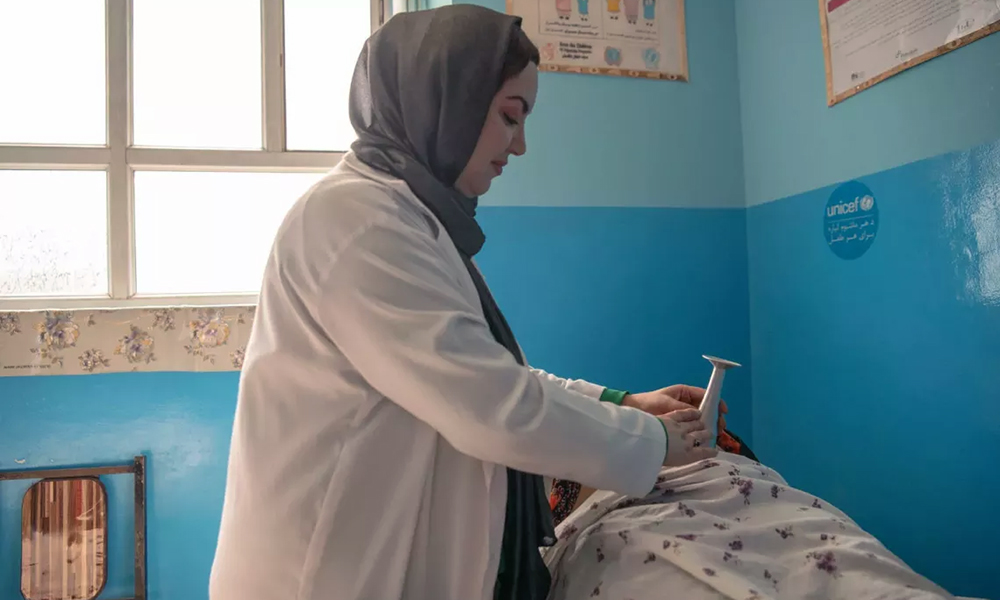
Marking the International Day of the Midwife, the United Nations Population Fund in Afghanistan has called for urgent investment in midwifery services to help reduce maternal and newborn deaths across the country.
In a message shared on X, UNFPA said expanding the global midwifery workforce — including the addition of up to one million midwives — would be one of the most effective ways to save lives by improving access to antenatal care, safe deliveries, and postnatal support.
The agency stressed that midwives are central to strengthening healthcare systems and preventing avoidable deaths, particularly in Afghanistan where maternal and child health indicators remain among the most challenging.
UNFPA added that improving access to skilled midwives is key to ensuring safer pregnancies and addressing persistent gaps in healthcare services for women and children.
The organization reaffirmed its commitment to maternal and newborn health programmes and called on international partners to sustain support for strengthening Afghanistan’s healthcare workforce.
Health
Three dead in suspected hantavirus outbreak on cruise ship
Hantavirus is a rare but potentially serious infection transmitted primarily through contact with rats or mice or their droppings.
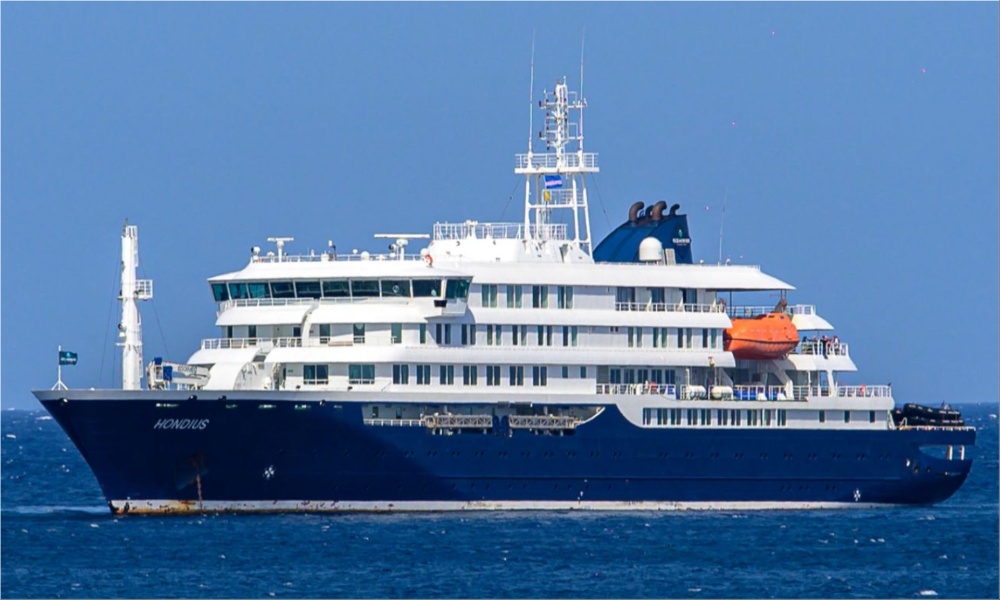
Three people have died following a suspected outbreak of hantavirus aboard a cruise vessel operated by Oceanwide Expeditions, as the ship remains stationed off the coast of Cape Verde island.
The vessel, which had been travelling from Argentina, has been halted near the archipelago for at least 24 hours, with no clearance granted for passengers to disembark, according to local reports and the operator.
Among the dead are a Dutch couple, aged 70 and 69, who fell ill during the voyage and were evacuated from the ship. A third Dutch national has also died, with their body still on board.
A 69-year-old British passenger—currently the only confirmed case of the virus—is being treated in intensive care at a hospital in Johannesburg, South Africa, after being medically evacuated. Two crew members on the ship have also fallen ill and are in urgent need of care.
Oceanwide Expeditions said it is working with health authorities to manage the situation, but emphasized that the vessel has not yet received authorization to dock in Cape Verde.
Hantavirus is a rare but potentially serious infection transmitted primarily through contact with rats or mice or their droppings. Symptoms can initially resemble flu but may rapidly progress to severe respiratory complications. There is no specific antiviral treatment, and care is typically supportive, with early medical intervention considered critical.
Health officials have not yet confirmed the source of the suspected outbreak, and investigations are ongoing as authorities monitor the condition of passengers and crew still aboard the ship.


US war in Iran has cost $29 billion so far, Pentagon says

Tahawol: China’s optimism on Kabul–Islamabad talks discussed

Saar: IEA high-ranking delegation’s visit to Kazan discussed

Muttaqi meets Norway’s new special envoy, discusses political and regional cooperation

UNICEF reports 70 children killed in West Bank and East Jerusalem since 2025

Bayat Power extends gas supply deal with Afghan Gas

New Afghanistan-China transport corridor launched via Turkmenistan

Germany to launch online visa system for Afghan study and work applicants in Pakistan

Afghanistan moves toward self-sufficiency in car battery production

War driving hidden climate crisis in Middle East, think tank warns
Tahawol: China’s optimism on Kabul–Islamabad talks discussed
Saar: IEA high-ranking delegation’s visit to Kazan discussed

Tahawol: Fresh Remarks About Ending the Ukraine War

Saar: US and Iran Negotiations Discussed

Tahawol: Afghanistan and Uzbekistan’s growing economic ties discussed
-
 Business5 days ago
New Afghanistan-China transport corridor launched via Turkmenistan
-

 Sport4 days ago
Canada to host opening ceremony for FIFA World Cup 2026 in Toronto
-

 Latest News4 days ago
SAARC failure pushes Pakistan toward trilateral ties with Afghanistan, China, Bangladesh: Dar
-

 Latest News2 days ago
Japan announces MEXT scholarships for Afghan students for 2027 academic year
-

 Business3 days ago
Afghanistan, Uzbekistan sign 13 trade MoUs worth over $100 million
-

 Sport4 days ago
Afghanistan rises 7 places to 21st in FIFA Futsal World Rankings
-

 Science & Technology5 days ago
James Webb Telescope captures clearest-ever view of exoplanet’s surface
-

 Sport4 days ago
Los Angeles to welcome the world with historic FIFA World Cup 2026 opening event