
World
South Korea’s Yoon apologises for martial law but does not resign ahead of impeachment vote

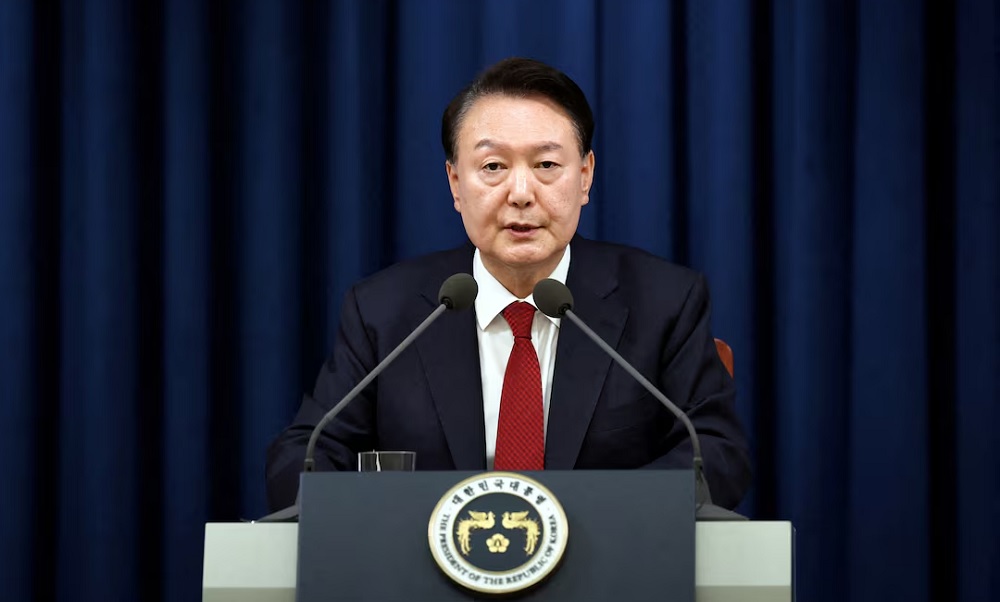
South Korean President Yoon Suk Yeol apologised on Saturday for his attempt to impose martial law this week but did not resign, defying intense pressure to step down even from some in his ruling party and only hours ahead of a planned impeachment vote.
Yoon said he would not seek to avoid legal and political responsibility for his decision to declare martial law for the first time in South Korea since 1980. He said the decision was born of desperation, Reuters reported.
The speech was the embattled leader’s first public appearance since he rescinded the martial law order early on Wednesday, just six hours after it was declared and after parliament defied military and police cordons to vote against the decree.
The move plunged Asia’s fourth-largest economy and key U.S. military ally into its greatest political crisis in decades, and threatened to shatter South Korea’s reputation as a democratic success story.
“I am very sorry and would like to sincerely apologise to the people who were shocked,” Yoon said in a televised address to the nation, promising there would be no second attempt to impose martial law.
“I leave it up to my party to take steps to stabilise the political situation in the future, including the issue of my term in office,” he said.
Standing in front of the South Korean flag, Yoon bowed after he finished his brief remarks, staring solemnly into the camera for a moment.
Han Dong-hoon, leader of Yoon’s People Power Party (PPP), said after the address that the president was no longer in a position to carry out his public duties and his resignation was now unavoidable.
On Friday Han said Yoon was a danger to the country and needed to be removed from power, increasing the pressure on Yoon to quit even though PPP members later reaffirmed a formal opposition to his impeachment.
Han met Prime Minister Han Duck-soo on Saturday, local Yonhap News reported. Under the constitution if Yoon resigns or is impeached then the prime minister, who was appointed by Yoon, becomes South Korea’s acting president.
If Yoon leaves office before his single five-year term ends in May 2027, the constitution requires a presidential election to be held within 60 days upon his departure.
Lawmakers are scheduled to vote at 5 p.m. (0800 GMT) on the main opposition Democratic Party’s motion to impeach Yoon. DP leaders said if the motion fails, they plan to revisit it again on Wednesday.
SURPRISE DECREE
Martial law has been declared more than a dozen times since South Korea was established as a republic in 1948.
But Yoon shocked the nation late on Tuesday when he gave the military sweeping emergency powers in order to combat unspecified threats from “North Korean communist forces”, and “to eradicate the shameless pro-North anti-state forces”.
He went on to accuse the National Assembly of launching an unprecedented number of impeachment efforts against members of his administration, effectively paralysing key operations, and of handling the budget in a way that undermined the fundamental functions of the government, including public safety.
Yoon has been dogged by personal scandals and strife, an unyielding opposition and rifts within his own party. Once regarded as a tough political survivor he has become increasingly isolated.
The martial law declaration also sent shockwaves around the world and drew rare criticism from senior American officials who had previously praised Yoon as a champion of democracy in Asia. Defense Secretary Lloyd Austin scrapped plans to travel to South Korea, two U.S. officials told Reuters on Thursday.
Some PPP members urged Yoon to resign before Saturday’s impeachment vote, saying they did not want a repeat of the 2016 impeachment of then-President Park Geun-hye, who left office after months of candle-lit protests over an influence-peddling scandal. Her downfall triggered the implosion of the party and a victory by liberals in presidential and general elections.
In scenes reminiscent of those protests, thousands of demonstrators holding candles assembled outside parliament on Friday night demanding Yoon’s impeachment. More demonstrations are expected on Saturday ahead of the vote.
To impeach Yoon, 200 of the assembly’s 300 lawmakers must vote in favour. With opposition parties controlling 192 seats, eight ruling party members would need to join the opposition to carry the vote.
Yoon has already lost the support of two lawmakers from his party, with PPP leader Han calling for him to be urgently suspended and Ahn Cheol-soo posting on Facebook that he would “follow the people’s will” unless Yoon announced detailed plans to step down before the vote.
If Yoon is impeached, a trial by the Constitutional Court would follow. The court can confirm an impeachment motion with a vote by six of the nine justices. The court currently only has six sitting judges, and it is unclear whether it would take on the case without at least seven.
In 2017, the court took three months to remove then-President Park from office.
Prosecutors, the police and the Corruption Investigation Office for High-ranking Officials have all launched probes, opens new tab into Yoon and senior officials involved in the martial law decree, seeking to pursue charges of insurrection and abuse of power, among others.
The officials face potential charges of insurrection, abuse of authority and obstructing other people from exercising their rights. If convicted, the crime of leading an insurrection is punishable by death or life imprisonment, with or without prison labour.



World
US Senate passes Russia sanctions championed by Graham; US House next
In a statement, the Ukrainian embassy in Washington welcomed passage, calling it “a timely and significant step that strengthens pressure on Russia.”
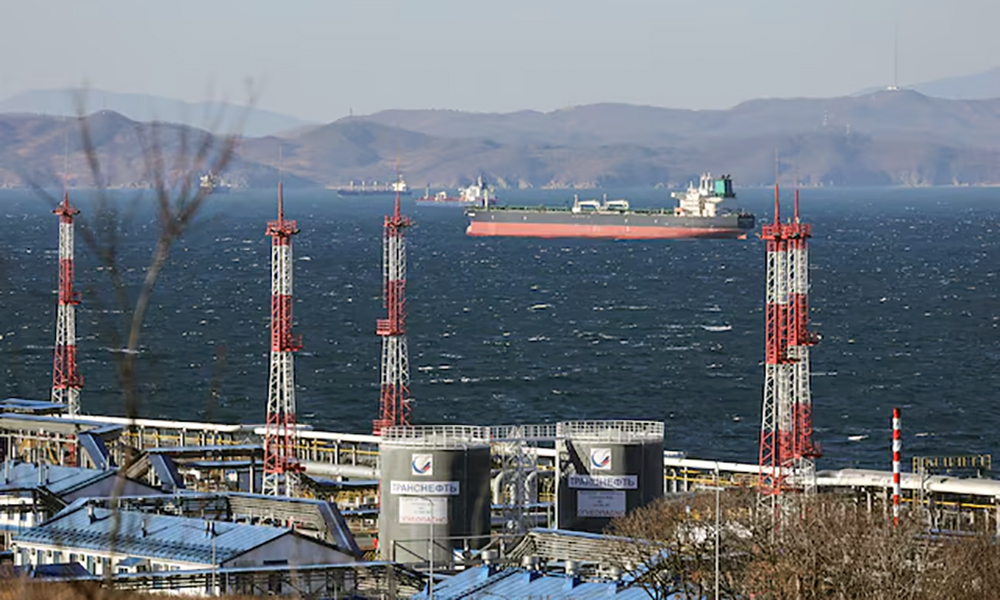
The U.S. Senate easily passed sweeping Russia sanctions legislation on Friday, advancing a long-delayed measure backed by late Senator Lindsey Graham and setting the stage for consideration by the House of Representatives within weeks, Reuters reported.
Graham, a South Carolina Republican who died last month, was among Kyiv’s most outspoken allies in Congress in its four-year-long war with Russia, and the bill aims to increase economic pressure on Moscow over its invasion of Ukraine.
It also includes expanded sanctions on Iran sought by President Donald Trump as lawmakers pushed for a vote on the measure well over a year since it was introduced in 2025.
The Senate’s Republican leaders had not brought the bill up because of resistance from Trump, who had kept decisions on sanctions at the White House, not Congress, since starting his second term in January 2025.
The Senate voted 86-11 to pass the “Lindsey O. Graham Sanctioning Russia and Iran Act of 2026,” to sanction Russian officials and authorize stiff tariffs on China, India and other countries to reduce their dependence on Russian oil and gas.
In a statement, the Ukrainian embassy in Washington welcomed passage, calling it “a timely and significant step that strengthens pressure on Russia.”
However, broad support may not be enough to secure House passage, with some lawmakers and industries wary that new tariff powers for Trump could raise costs for U.S. importers and consumers while exposing Republicans to political blowback.
Representatives Gregory Meeks of New York and Don Beyer of Virginia said in a statement they still had “fundamental concerns” about the tariff powers for Trump, who has made them a central piece of his “America First” approach to foreign policy, read the report.
“What the bill does grant … are sweeping new tariff authorities that the president could weaponize with abandon, as he has repeatedly done in the past,” said Meeks, the top Democrat on the House Foreign Affairs Committee, and Beyer, the senior Democrat on the Joint Economic Committee.
Trump’s fellow Republicans control only slim majorities in both the House and Senate.
Only one Senate Republican, Rand Paul of Kentucky, voted against the bill, likening tariffs to taxes on American consumers.
The chamber erupted into applause after Graham’s sister, Darline Graham, who was appointed to fill his seat, read out the final tally.
The Senate rejected an amendment sponsored by Paul and Democratic Senator Ron Wyden of Oregon that would have removed the tariff powers.
Democratic Senator Raphael Warnock of Georgia, who also sought to change the tariff language, said he had received a written commitment from Trump’s U.S. trade representative, Jamieson Greer, to put guardrails on the tariff authorities, Reuters reported.
If it is approved by the House and signed into law by Trump, the measure would allow the president to impose tariffs of up to 100% on countries that are major consumers of Russian energy, including India, Japan and some countries in the European Union, and leave it to his discretion to lift them.
The legislation’s backers insist that the tariffs are narrow enough that they would do their intended job of reducing Russian energy revenue that funds its war on Ukraine without negative consequences.
Supporters called the legislation the best opportunity to support Ukraine, and the strong bipartisan Senate vote provided momentum for it to pass the House after it returns from its summer recess on August 31.
Graham had announced shortly before his sudden death on July 11 that he and Trump agreed finally to move forward with the legislation.
The legislation lets the president impose targeted tariffs on imported goods from countries that buy the vast majority of Russian oil or gas and enable Russia’s evasion of sanctions.
The bill limits these tariffs to the five largest importers of Russian crude oil or gas and the top five countries that aid Russia’s energy sanctions evasion. The measure includes a provision to prevent a lapse in sanctions authority that restricts funding for Iranian energy and weapons.
World
Two dead, including gunman, at school shooting in Thailand, officials sayd
The incident took place in the Bang Kruai district of Nonthaburi province. Police identified the perpetrator as a student.
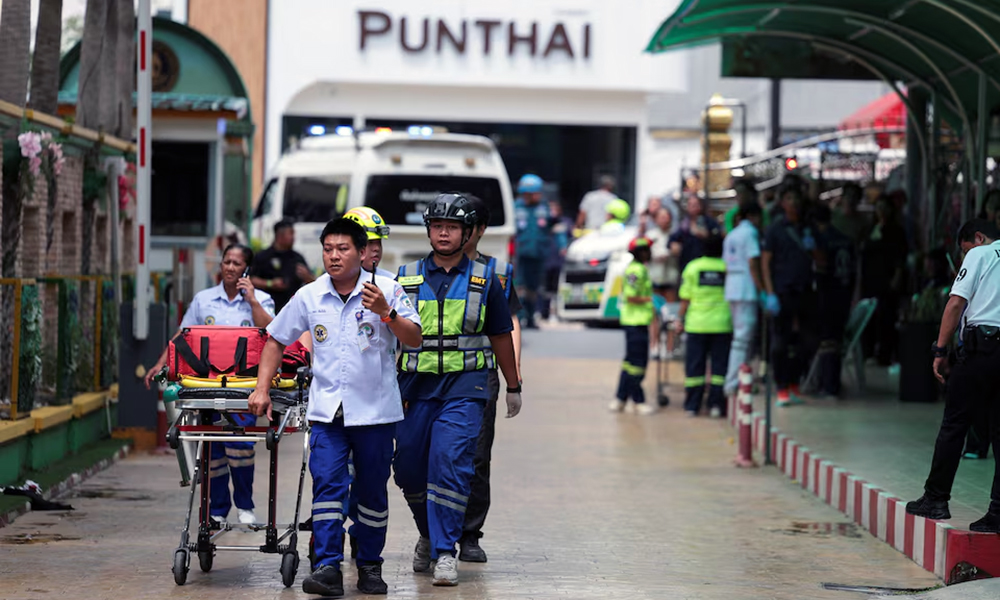
At least one teacher was killed and four other people injured by a student who opened fire at a school in Thailand north of Bangkok on Friday before killing himself, authorities said, Reuters reported.
Lt. Col. Dechrapee Kongdee Nonthaburi Provincial Police Commander confirmed the casualties to Reuters and said the suspected gunman had committed suicide. Among those injured were one teacher and three students, he said.
The incident took place in the Bang Kruai district of Nonthaburi province. Police identified the perpetrator as a student.
In photos circulated by emergency workers, students streamed out of the Debsirin Nonthaburi School, on the northwestern outskirts of Bangkok, as ambulances operated. In one photo, one person is seen lying down on a stretcher outside an ambulance, while another is attended to by a medic, read the report.
In the 2025 academic year, the school had an enrollment of around 3,100 students and 147 teachers, according to district authorities.
In February a teacher died and a student was injured in southern Thailand’s Hat Yai district after a gunman opened fire at a school.


Turkey, Pakistan, Saudi Arabia defence pact technically same as NATO’s Article 5, Turkish minister says

Afghanistan suspends 7 private universities for one year, revokes licenses of 2 others

Russia eyes railway route via Afghanistan as alternative to Strait of Hormuz

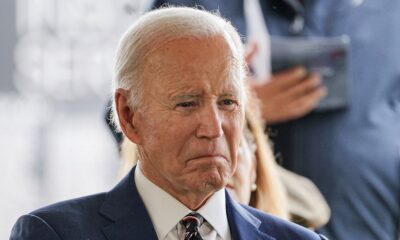
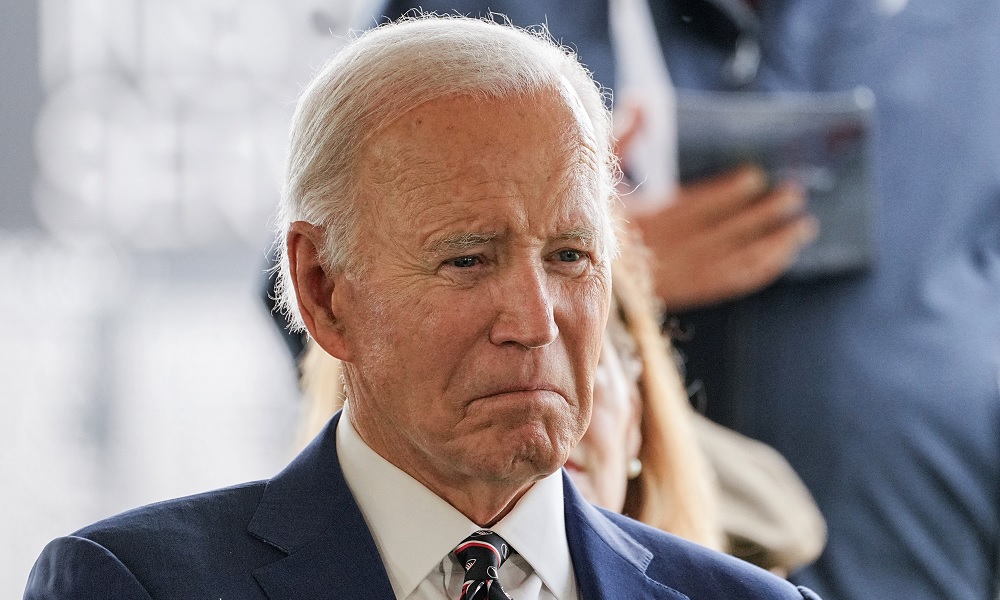
Ex-U.S. President Biden’s cancer has spread, is very painful, son says

Tahawol: Escalating disputes over Iran war discussed

Pakistan’s governance system has ‘collapsed’: Mohsin Naqvi

India offers 1,000 online scholarships for Afghan students for 2026-27 academic year

Turkey spent over $120 million to prepare airport for Qatar-donated U.S. presidential aircraft

FIFA’s inaugural YouTube Creator Cup to stream live on Ariana Television and Ariana Sport YouTube channels

FIFA World Cup semi-final line-up confirmed
Tahawol: Escalating disputes over Iran war discussed

Saar: Turkey, Saudi Arabia and Pakistan defense pact reviewed

Tahawol: End of US sanctions waiver for Chabahar Port discussed

Saar: US warns of ISIL-K threat in Afghanistan discussed

Tahawol: Limited choices of small states in global politics discussed
-

 Sport5 days ago
Afghanistan aim to strengthen ODI ranking in Ireland series
-
 Latest News4 days ago
Khalilzad says Pakistan needs ‘reset’ amid economic crisis and rising instability
-

 Latest News4 days ago
First Afghanistan-Ireland ODI abandoned without a ball bowled
-

 Sport4 days ago
Afghanistan aim for winning start against Ireland
-

 Latest News5 days ago
Afghan boxer charged over death of British woman found in suitcase in Greece
-

 Sport3 days ago
Afghanistan holds Russia to 3-3 draw, earns first point at Continental Futsal Championship
-

 Latest News4 days ago
Afghan boxer appears in Greek court over death of Scottish woman
-
 Business3 days ago
Uzbekistan’s Fergana region strengthens economic ties with Afghanistan