
Regional
Hamas frees hostages, Israel releases Palestinian prisoners on day one of ceasefire
The first phase of the truce took effect following a three-hour delay during which Israeli warplanes and artillery pounded the Gaza Strip.


Hamas released three Israeli hostages and Israel released 90 Palestinian prisoners on Sunday, the first day of a ceasefire suspending a 15-month-old war that has devastated the Gaza Strip and inflamed the Middle East, Reuters reported.
The truce allowed Palestinians to return to bombed-out neighborhoods to begin rebuilding their lives, while relief trucks delivered much-needed aid. Elsewhere in Gaza, crowds cheered Hamas fighters who emerged from hiding.
Hamas released three Israeli hostages and Israel released 90 Palestinian prisoners on Sunday, the first day of a ceasefire suspending a 15-month-old war that has devastated the Gaza Strip and inflamed the Middle East.
The truce allowed Palestinians to return to bombed-out neighborhoods to begin rebuilding their lives, while relief trucks delivered much-needed aid. Elsewhere in Gaza, crowds cheered Hamas fighters who emerged from hiding.
The Israeli military said Romi Gonen, Doron Steinbrecher and Emily Damari had been reunited with their mothers and released a video showing them in apparent good health. Damari, who lost two fingers when she was shot the day she was abducted, smiled and embraced her mother as she held up a bandaged hand.
“I would like you to tell them: Romi, Doron and Emily – an entire nation embraces you. Welcome home,” Prime Minister Benjamin Netanyahu told a commander by phone.
At Sheba Medical Center, the women were reunited with their families in long embraces that went from tears to laughter. A smiling Damari was draped in an Israeli flag. They were among more than 250 people abducted and 1,200 killed in a Hamas raid on Israel on Oct. 7, 2023, Israel has said.
More than 47,000 Palestinians have since been killed in Israeli attacks, according to medical officials in Gaza. Nearly the entire 2.3 million population of Gaza is homeless. Around 400 Israeli soldiers have also died, read the report.
The truce calls for fighting to stop, aid to be sent in to Gaza and 33 of the nearly 100 remaining Israeli and foreign hostages to go free over the six-week first phase in return for nearly 2,000 Palestinian prisoners held in Israeli jails. Many of the hostages are believed to be dead.
In the north of the Gaza Strip, Palestinians picked their way through a devastated landscape of rubble and twisted metal that had been bombed into oblivion in the war’s most intense fighting.
“I feel like at last I found some water to drink after being lost in the desert for 15 months,” said Aya, who said she had been displaced from her Gaza City home for more than a year.
The first phase of the truce took effect following a three-hour delay during which Israeli warplanes and artillery pounded the Gaza Strip.
That last-minute blitz killed 13 people, Palestinian health authorities said. Israel blamed Hamas for being late to deliver the names of hostages it would free, and said it had struck terrorists. Hamas said the holdup in providing the list was technical.
“Today the guns in Gaza have gone silent,” U.S. President Joe Biden said on his last full day in office, welcoming a truce that had eluded U.S. diplomacy for more than a year. “We’ve reached this point today because of the pressure Israel built on Hamas, backed by the United States.”
For Hamas, the truce provided an opportunity to emerge from the shadows after 15 months in hiding. Hamas policemen dressed in blue police uniforms swiftly deployed in some areas, and armed fighters drove through the southern city of Khan Younis, where a crowd cheered, “Greetings to Al-Qassam Brigades,” the group’s armed wing.
“All the resistance factions are staying in spite of Netanyahu,” one fighter told Reuters.
There is no detailed plan in place to govern Gaza after the war, much less rebuild it. Any return of Hamas will test the patience of Israel, which has said it will resume fighting unless the militant group is fully dismantled, Reuters reported.
Hardline National Security Minister Itamar Ben-Gvir quit the cabinet over the ceasefire, though his party said it would not try to bring down Netanyahu’s government. The other most prominent hardliner, Finance Minister Bezalel Smotrich, stayed in the government but said he would quit if the war ends without Hamas completely destroyed.
The truce took effect on the eve of Monday’s inauguration of U.S. President-elect Donald Trump. Trump’s national security adviser-designate, Mike Waltz, said that if Hamas reneges on the agreement, the United States would support Israel “in doing what it has to do.”
“Hamas will never govern Gaza. That is completely unacceptable,” he said.
The streets in shattered Gaza City were already busy with groups of people waving the Palestinian flag and filming the scenes on their mobile phones. Several carts loaded with household possessions travelled down a thoroughfare scattered with rubble and debris, read the report.
Ahmed Abu Ayham, 40, of Gaza City said that while the ceasefire may have spared lives, the losses and destruction made it no time for celebration.
“We are in pain, deep pain and it is time to hug one another and cry,” he said.




Regional
At least 15 infants killed in Islamabad hospital fire
WATCH VIDEO: There were 16 newborns at the hospital’s gynaecology ward when the fire broke out, one of whom was rescued.
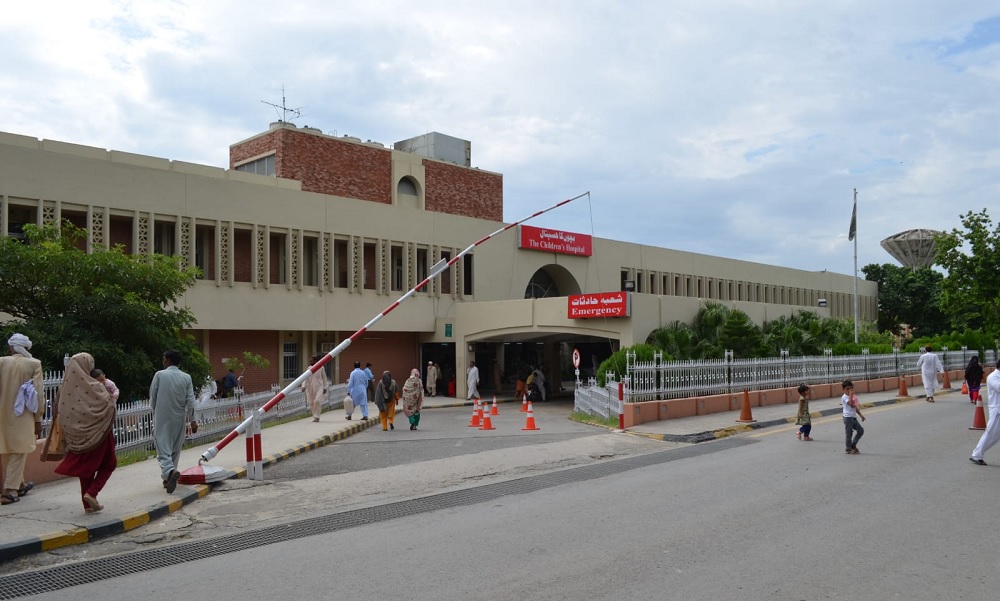
At least 15 infants were killed when a fire broke out at a state-run hospital in Pakistan’s capital city Islamabad, triggered by a fault in air conditioning systems, local broadcaster Geo TV reported on Wednesday.
The fire, which broke out at the Pakistan Institute of Medical Sciences (PIMS) hospital, started around two hours ago, the broadcaster said, adding that “cooling operations” were ongoing, Reuters reported.
There were 16 newborns at the hospital’s gynaecology ward when the fire broke out, one of whom was rescued, according to Geo.
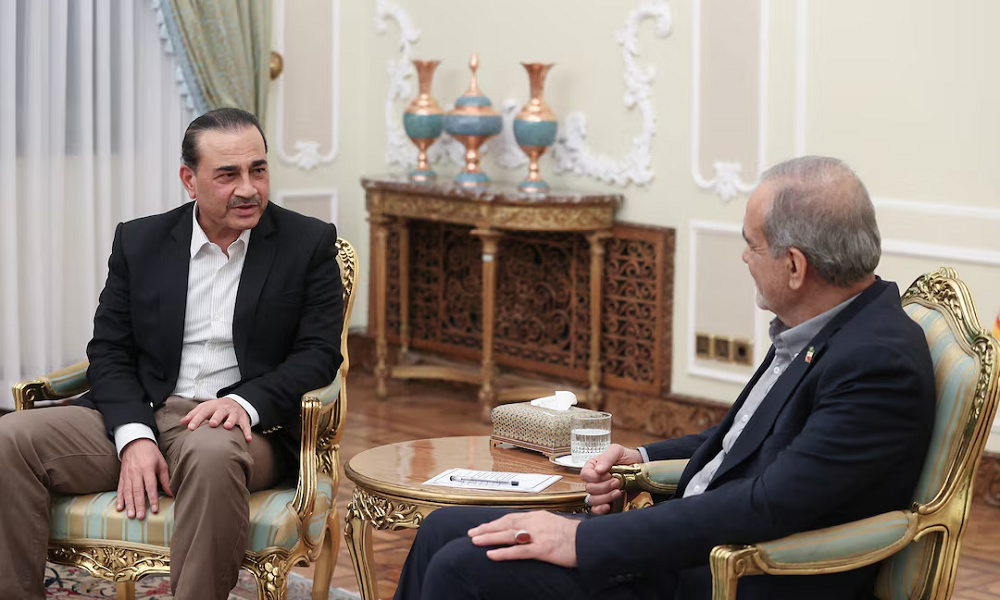
Pakistan and Iran have made “significant progress” in talks focused on the U.S.-Israeli war on Iran and efforts to find a path toward peace, Pakistan’s interior minister said on Tuesday after a visit to Tehran.
The discussions focused on measures to prevent further escalation, reopening the Strait of Hormuz and accelerating an end to the conflict, according to a statement from the Pakistani military following a meeting between army chief General Asim Munir and Iranian leaders.
The two sides also discussed regional peace and possible ways to reach a negotiated settlement to the conflict, the statement said.
“Iranian President candidly shared his government’s perspective and we had a very constructive exchange on the issues involved,” Interior Minister Mohsin Naqvi, who accompanied Munir, said in a post on X.
Munir spoke with U.S. President Donald Trump before travelling to Tehran, Reuters reported on Monday.
Trump last week warned of economic consequences for countries providing “any type of lifeline to Iran” as Washington seeks to isolate Tehran. Iran, meanwhile, has threatened to halt all oil exports from the Gulf.
Regional
Pakistan’s Munir spoke to Trump ahead of Tehran visit, sources say
The White House Office of the Press Secretary did not immediately respond to a request for comment. It was unclear what Munir and Trump discussed in detail.
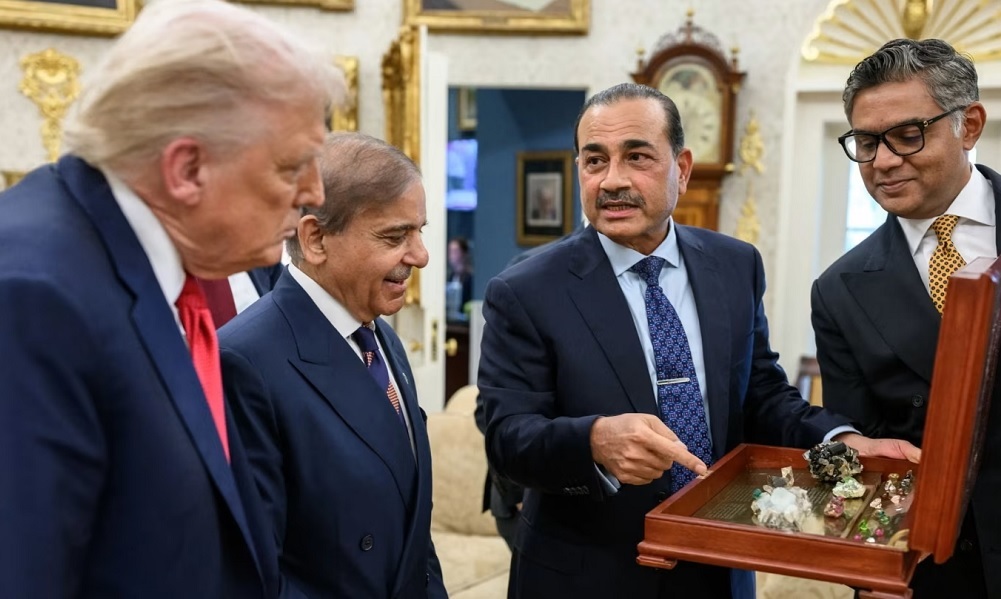
US President Donald Trump spoke with Pakistan’s army chief Asim Munir last week ahead of Munir’s trip to Tehran on Monday, according to three Pakistani sources, with one saying the main US request was to use Pakistan’s influence to bring Iran back to negotiations, Reuters reported.
Trump last week warned of economic consequences against any country that provided “any type of lifeline to Iran” as he seeks to isolate the Islamic Republic. Iran has in turn vowed to shut down all oil exports from the Gulf.
Last week’s call, which has not been previously reported, was initiated by Trump, according to two Pakistani sources.
The White House Office of the Press Secretary did not immediately respond to a request for comment. It was unclear what Munir and Trump discussed in detail.
Munir arrived in Tehran on Monday accompanied by Pakistan’s Interior Minister Mohsin Naqvi, Pakistan’s military confirmed, saying it was “part of Pakistan’s efforts to promote regional peace and stability.”
Pakistan, which has played a key mediating role between the US and Iran this year, has remained a trading partner of Iran throughout the recent fighting.
Munir was expected to meet with people close to Iran’s Supreme Leader Ayatollah Mojtaba Khamenei on Monday, one Pakistani source said.
Another Pakistani government source said while US-Iran tensions were a focus of the visit, Munir was also expected to discuss recent attacks by Iran-aligned Houthi fighters on Pakistan’s ally Saudi Arabia as well as the recently signed mutual defence agreement between Pakistan, Turkey and Saudi Arabia.
Pakistan’s earlier mediation efforts between the U.S. and Iran resulted in an interim peace agreement signed in June. But the Islamabad Memorandum quickly faltered, amid new fighting between Iran and the US that has threatened to spiral into a wider regional conflict in recent weeks.
“There is a trust deficit on both sides,” a third Pakistani source said about the US and Iran, adding that Munir’s aim was to mitigate the lack of mutual trust on Monday.


Badakhshan police say Pakistan is sheltering Islamic Emirate opponents in Chitral

Tottenham face Charlton as ATN brings live EFL Cup action to Afghan fans

Trump administration issues pause on visa appointments for applicants worldwide

UNICEF warns one million Afghan children at risk of death from malnutrition

US spy chief visits Russia for meetings, media reports

Pakistan’s governance system has ‘collapsed’: Mohsin Naqvi

Afghanistan exports first stone shipment to US in $100,000 trade milestone

AFC confirms clubs for 2026/27 competitions; draw set for August 18

Only two days to go before Afghanistan and Ireland begin ODI series

Four mediators struggle to secure lasting Pakistan-Afghanistan ceasefire

Tahawol: Aisha Wahab’s emphasis on US ties with IEA

Saar: Guterres’s concern regarding global conflicts discussed

Saar: Afghanistan’s uncertain future in SCO

Tahawol: IEA seeking Afghanistan seat at UN

Saar: U.S. sanctions against Iran
-
 Latest News3 days ago
Four mediators struggle to secure lasting Pakistan-Afghanistan ceasefire
-

 Latest News4 days ago
Syria and Saudi Arabia condemn Kabul bombing, express solidarity with Afghanistan
-

 Latest News4 days ago
US judge strikes down Trump visa suspension for 75 countries, including Afghanistan
-
 Business2 days ago
Afghanistan’s trade diversification challenges Pakistan
-

 Sport4 days ago
Afghanistan-India T20I series could see major schedule change
-
 Latest News4 days ago
Achakzai urges Pakistan to end hostility towards Afghanistan
-
 Latest News3 days ago
AfghanEvac warns US court ruling does not reopen door for Afghans
-

 Sport5 days ago
Abaseen Defenders clinch Khan Hospital Kabul Premier League Season 4 title