
Latest News
WFP navigates complex route to deliver emergency food aid to Afghan schoolchildren
WFP officials were forced to seek alternative routes to ensure the food reached vulnerable children without significant delays.

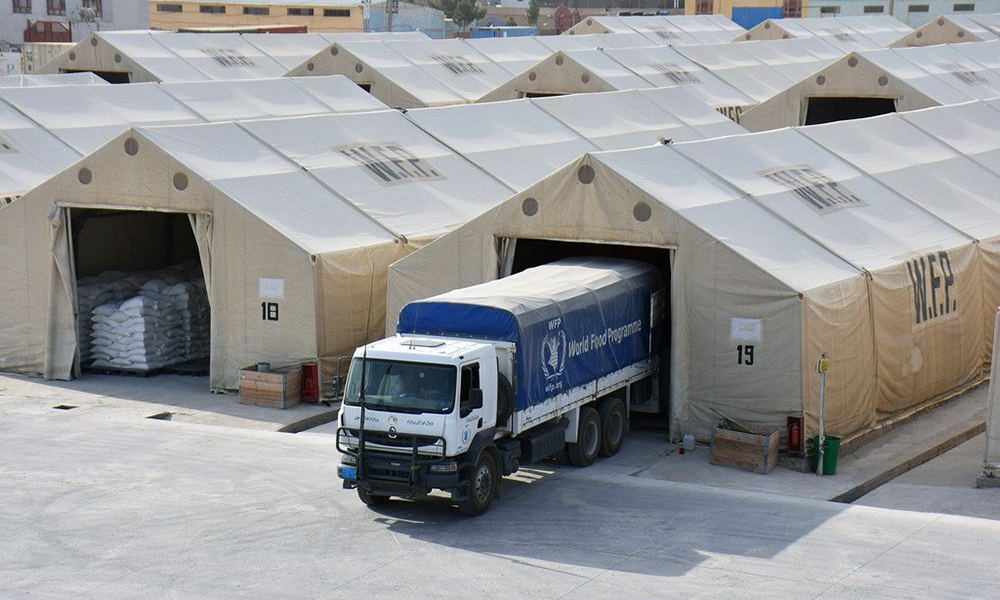
The World Food Programme (WFP) has detailed the complex journey required to deliver emergency food aid to Afghan schoolchildren, with a recent shipment traveling nearly 15,000 kilometers across nine countries amid regional instability, border closures and logistical challenges.
The shipment, consisting of 397 metric tons of fortified biscuits donated by Indonesia, was intended to support around 172,000 students in Afghanistan as part of a $3.5 million contribution from the Indonesian government to WFP’s school meals program.
According to the UN agency, the supplies began their journey at Indonesia’s Surabaya port before being shipped to Karachi, Pakistan. However, plans to transport the cargo overland into Afghanistan were disrupted when crossings between Pakistan and Afghanistan were closed amid tensions between the two countries.
WFP officials were forced to seek alternative routes to ensure the food reached vulnerable children without significant delays.
A second plan involving transport through the United Arab Emirates and Iran was later abandoned due to instability in the Middle East and disruptions affecting regional shipping routes.
Faced with mounting challenges, WFP logisticians developed a new overland corridor stretching from Dubai through Saudi Arabia, Jordan, Syria, Türkiye, Georgia, Azerbaijan and Turkmenistan before entering Afghanistan via the Torghundi border crossing.
The 21-truck convoy traveled thousands of kilometers across deserts, highways and ferry crossings, requiring customs clearances, security assessments and transport permits at multiple international borders.
“Hunger doesn’t wait for routes to reopen,” said Corinne Fleischer, Director of WFP Supply Chain and Delivery.
After weeks on the road, the convoy arrived in Kabul, where the biscuits were unloaded for distribution to schools in Ghor, Nuristan and Paktika provinces.
Abdul Ahad Monib, a WFP supply chain officer in Kabul, said the successful delivery reflected the organization’s determination to reach vulnerable communities despite difficult circumstances.
“For the children, it’s a packet of biscuits that helps them stay healthy,” Monib said. “For us, it’s a logistics feat.”
Afghanistan continues to face significant humanitarian challenges, including widespread poverty, food insecurity, natural disasters and declining international aid. For many students, WFP says the fortified biscuits provided through school feeding programs are among the most nutritious foods they receive each day.






Latest News
Afghanistan, Uzbekistan strengthen strategic energy cooperation through new partnership talks
Welcoming Uzbekistan’s proposals, DABS Chief Executive Officer Abdul Haq Hamkar said that the proposals were important and valuable for the development of Afghanistan’s energy sector.
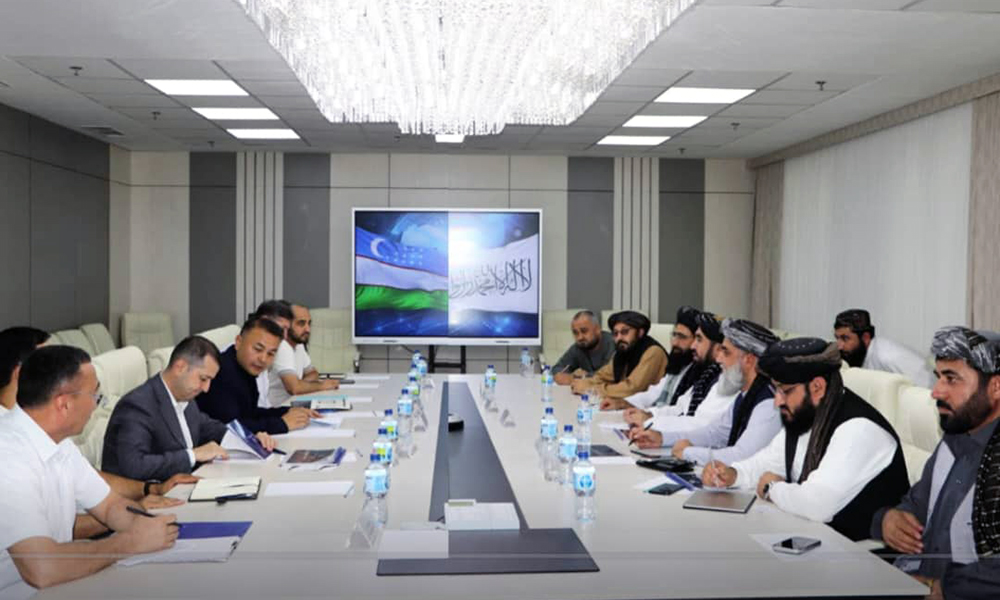
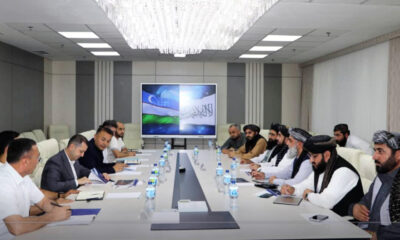
A high-level delegation from Da Afghanistan Breshna Sherkat (DABS), led by Chief Executive Officer Abdul Haq Hamkar, held a key meeting with Omid Mohammad Aminov, First Deputy Minister of Energy of the Republic of Uzbekistan, along with senior officials from Uzbekistan’s technical and engineering institutions, to discuss expanding strategic cooperation in the energy sector.
The meeting was also attended by Abdul Ghafar Bahr, Afghanistan’s Ambassador to Uzbekistan, who emphasized the importance of further strengthening bilateral relations, enhancing mutual cooperation, and expanding joint efforts in the energy sector between the two countries.
During the meeting, both sides discussed the development of electricity generation, transmission, and distribution networks, strengthening technical capacities, cooperation in engineering and design, implementation of smart metering systems, long-term energy planning, and modernization of Afghanistan’s electricity sector.
The Uzbek side announced its full support for the development of Afghanistan’s energy sector, stating that reliable and sustainable electricity is essential for Afghanistan’s economic growth, mining development, and industrialization.
Uzbek officials emphasized that their cooperation with Afghanistan would not be limited to electricity exports but would also include electricity generation, transmission, distribution, and technical capacity-building initiatives.
Welcoming Uzbekistan’s proposals, DABS Chief Executive Officer Abdul Haq Hamkar said that the proposals were important and valuable for the development of Afghanistan’s energy sector.
He stressed the need for a clear and practical roadmap for bilateral cooperation to move into the implementation phase.
Hamkar said Afghanistan requires extensive technical studies in electricity generation and called for comprehensive feasibility studies for small-scale (Micro) and medium-scale (Mini) hydropower projects, as well as solar, natural gas, and coal-based electricity generation projects in different parts of the country to develop a comprehensive national energy map.
He added that Afghanistan’s goal is not only to import electricity but also to strengthen its domestic electricity generation, transmission, and distribution capacities.
According to Hamkar, technical cooperation and capacity-building in engineering, design, generation, operations, and maintenance are among Afghanistan’s key priorities.
“With a joint plan, strong technical coordination, and swift practical decisions, Afghanistan’s energy future will become brighter, and the economic ties between the two countries will be further strengthened,” Hamkar said.
The meeting also included discussions on the progress of the Surkhan–Pul-e-Khumri 500 kV Power Transmission Project. Both sides stressed the importance of accelerating the implementation of the project and pledged to address existing challenges through close technical coordination and joint efforts.
The First Deputy Minister of Energy of Uzbekistan said that a comprehensive 15-year Energy Development Plan would be prepared for Afghanistan.
He added that after completing the required technical studies and feasibility assessments, the technical specifications and estimated costs of priority projects would be shared with Da Afghanistan Breshna Sherkat.
At the end of the meeting, both sides reaffirmed their commitment to establishing joint technical working groups, exchanging expertise and technology, strengthening technical capacities, and continuing practical cooperation to modernize Afghanistan’s energy sector.
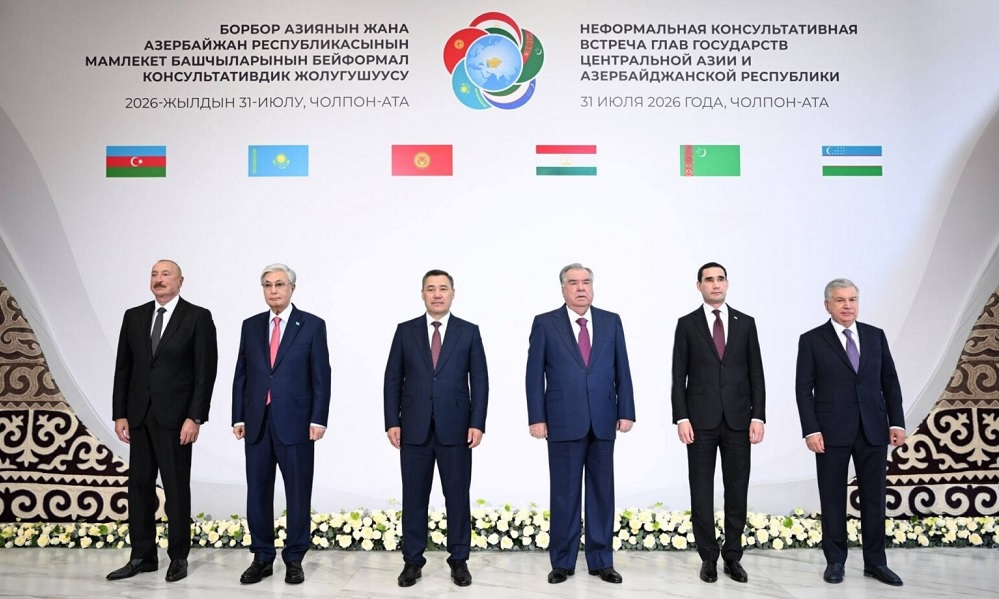
Uzbek President Shavkat Mirziyoyev has called for closer cooperation between Central Asia, the South Caucasus and Afghanistan, saying a historic opportunity has emerged to create a shared development space in the heart of Eurasia.
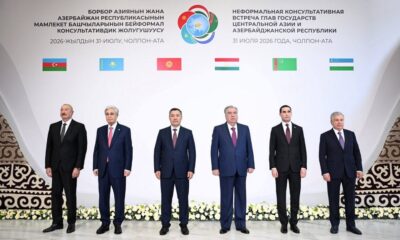
Speaking at an informal consultative meeting of Central Asian leaders and the President of Azerbaijan in Kyrgyzstan on Friday, Mirziyoyev said Central Asia should now be viewed within a broader geopolitical framework.
He said the region, which was once divided, is gradually moving toward greater cooperation around a common development agenda, while Azerbaijan’s participation expands this process beyond Central Asia.
“A historic opportunity is opening before us to create a common space for development linking Central Asia, the South Caucasus, and Afghanistan. We must seize this moment to build lasting ties and good-neighborly relations in the heart of Eurasia,” Mirziyoyev said.
The Uzbek leader emphasized the importance of strengthening regional connectivity, economic cooperation and long-term relations among neighboring countries.
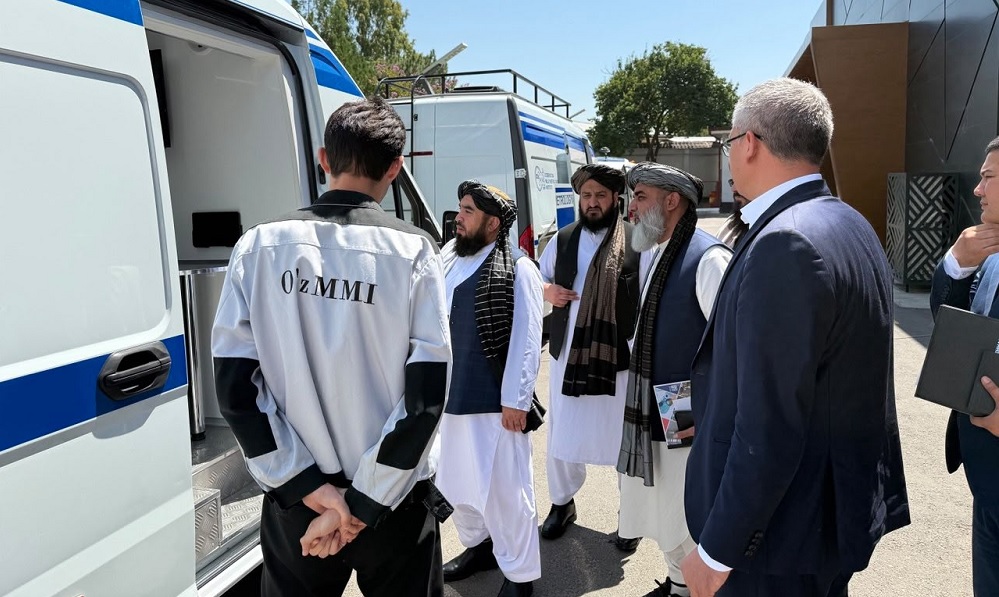
The head of Afghanistan’s power utility company has requested Uzbekistan’s cooperation in identifying and resolving technical problems in Afghanistan’s electricity network.
Haji Mullah Abdul Haq Hamkar, Chief Executive Officer of Da Afghanistan Breshna Sherkat (DABS), held talks with Dr. Akmal Jumanazarov, head of Uzbekistan’s Technical Regulation Agency under the Cabinet of Ministers, during his visit to Uzbekistan.
The two sides discussed technical standards in the electricity sector, improving the capacity of testing laboratories, implementing international standards, and expanding technical cooperation.
Hamkar called on Uzbekistan to support DABS in calibrating testing equipment, standardizing laboratories, and establishing mobile laboratories to help detect and resolve technical problems in the power network more quickly and accurately.
Uzbekistan’s Technical Regulation Agency also expressed readiness to cooperate in enhancing the technical capacity of DABS employees, calibrating equipment, organizing specialized training programs, and providing mobile laboratory facilities.
Both sides emphasized the importance of continued cooperation, exchange of technical expertise, implementation of international standards, and improving the quality and reliability of Afghanistan’s electricity sector.


Afghanistan, Uzbekistan strengthen strategic energy cooperation through new partnership talks

Trump says he will hold off on fresh Iran attack in hope of quick deal

Three killed, two injured in shooting at Idaho shopping center

Saar: Trade shifts from Pakistan to Central Asia and Iran discussed

Afghanistan currently transits internet traffic to Central Asia, says MCIT

Pakistan’s governance system has ‘collapsed’: Mohsin Naqvi

India offers 1,000 online scholarships for Afghan students for 2026-27 academic year

Cricket world pays tribute to Afghanistan fast bowler Shapoor Zadran

Turkey spent over $120 million to prepare airport for Qatar-donated U.S. presidential aircraft

Thousands pay final respects as Afghan cricketer Shapoor Zadran buried in Kabul
Saar: Trade shifts from Pakistan to Central Asia and Iran discussed

Tawsia: Efforts to increase Ghori cement production discussed

Tahawol: Germany’s deportation of non-criminal Afghan refugees

Saar: Discussion on ongoing US-Iran tensions

Tahawol: Calls for implementation of development projects in Afghanistan
-
 Latest News2 days ago
Pakistan’s governance system has ‘collapsed’: Mohsin Naqvi
-

 Sport4 days ago
Afghanistan set for crucial five-match ODI series against Ireland
-
 Latest News5 days ago
UNAMA: 57 civilians killed in Pakistan attacks in three months
-
 Sport4 days ago
Afghanistan futsal team heads to Thailand for Continental Championship
-
 Latest News4 days ago
MSF urges Pakistan to halt forced returns of Afghan refugees
-
 Business4 days ago
Afghanistan exports first stone shipment to US in $100,000 trade milestone
-
 Business5 days ago
Afghanistan, Uzbekistan sign $50 million worth of trade agreements at Mazar-e-Sharif forum
-

 International Sports5 days ago
Zidane appointed France head coach after 2026 World Cup