
Regional
A familiar face for the US as China’s Wang returns as foreign minister

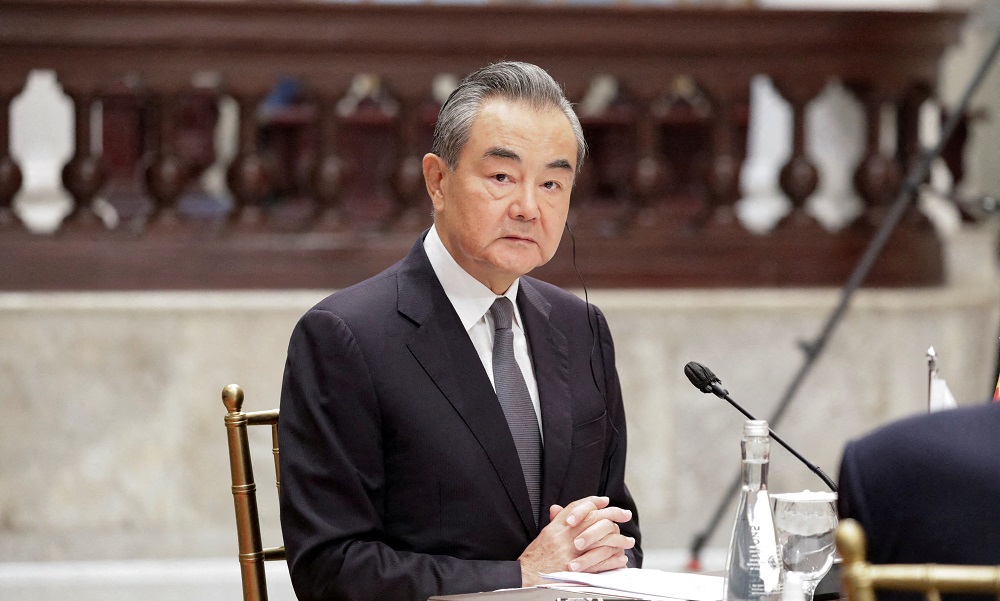
China’s decision to reappoint its top diplomat Wang Yi as foreign minister one month after former rising star Qin Gang disappeared from public view means Washington will be dealing with a familiar face in its bid to steady relations with its main strategic rival.
But Wang’s return to a post he held for most of the past decade is unlikely to alter the trajectory of a troubled bilateral relationship or dispel concerns about the opaque workings of President Xi Jinping’s government, Reuters reported.
The removal of Qin, reputedly a Xi protege, on Tuesday came barely half a year after he assumed the role. The 57-year-old former ambassador to the United States and Xi aide took over the ministry in December but has not been seen in public since June 25 when he met visiting diplomats in Beijing.
The ministry has said he was off work for health reasons but has given no details.
Wang, known in Washington for his sharp intellect and his sometimes aggressive defense of China’s positions, has been a fixture in U.S.-China relations for years.
Washington-based analysts say Wang’s return to the ministry should help China’s foreign ministry resume normal operations after weeks of international speculation about Qin’s fate.
But it is unlikely to yield any major improvement in tense U.S.-China relations, which have hit their lowest point in decades.
“None of this changes the structural reasons for friction in the relationship,” said Joseph Torigian, an expert on China’s Communist leaders at American University in Washington.
China’s embassy in Washington did not respond to a Reuters request for comment.
At a briefing on Tuesday U.S. State Department deputy spokesperson Vedant Patel said it was up to China to choose its foreign minister and Blinken had met Wang multiple times.
Wang’s second stint as foreign minister suggests an eagerness in Beijing for stable U.S. relations ahead of Xi’s likely meetings with U.S. President Joe Biden later this year on the sidelines of global summits, including the G20 in India in September and a gathering of APEC leaders in California in November.
“With a series of major international meetings coming up, Xi defaulted to someone who has relationships with many of his foreign counterparts,” said Rorry Daniels, Managing Director of Asia Society Policy Institute. “In times of uncertainty, China wants continuity and predictability in this position.”
U.S. and Chinese diplomats are grappling with a range of contentious issues, including China’s increasingly aggressive actions over Taiwan, the self-governed island it claims as its own, and the United States’ export controls aimed at hobbling China’s ability to develop advanced semiconductors.
Given these challenges, Wang’s seniority in China’s ruling Communist Party could be helpful to the U.S.
In the Chinese system, the top diplomat is not foreign minister but rather the director of the Chinese Communist Party’s foreign affairs commission, a role Wang will continue to hold.
Jude Blanchette, a China expert at Washington’s Center for Strategic and International Studies, said Wang’s concurrent perch atop the country’s two top foreign policy positions removed a layer of bureaucracy for U.S. interlocutors.
And as a member of the Communist Party’s 24-man ruling Politburo, Wang is a diplomat with arguably more sway with China’s top leaders than his predecessor.
Even while Qin was foreign minister, Blinken had contacts with Wang, though exchanges had been frosty at times, particularly after an alleged Chinese spy balloon crossed U.S. airspace and was shot down earlier this year, prompting Wang to scold Washington for its “hysterical” reaction, Reuters reported.
Still, Wang’s reappointment is a sign of problems in China’s foreign policy establishment, said Blanchette.
“The bigger story here is the sheer unpredictability and opacity of the Chinese system, which can see a top foreign policy official be thrown into a black hole for a month with absolutely zero information from Beijing,” he said.
On Tuesday, content mentioning Qin was quickly removed from China’s foreign ministry website after Wang’s appointment. The tab on the website that typically holds the biography of the foreign minister simply read “Updating.”
The choice of Wang for the role also reflected a lack of good options for Beijing, said Craig Singleton, deputy director of the China program at the Foundation for Defense of Democracies.
“Simply put, there remains a dearth of seasoned Chinese diplomats that are both trusted by Xi and possess the requisite U.S. experience for this highly visible role,” he said.





Regional
Floods, landslides kill 56 in India and 14 in Nepal
In India, the Central Water Commission said 30 river-monitoring stations across seven states indicated a “severe situation”.
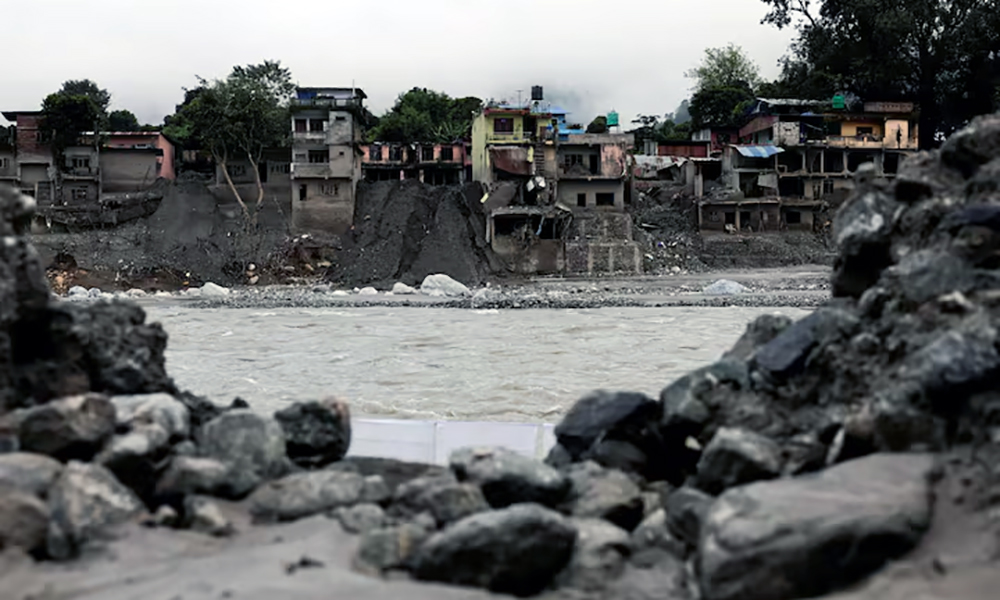
Heavy rain and storms have triggered floods and landslides that killed 56 people in India, while in Nepal, 14 have died and another 11 are missing, with authorities there warning on Sunday that more flash floods are possible, Reuters reported.
India’s northern state of Uttar Pradesh recorded 66.5 mm of rain between September 25 and the morning of September 27, compared with a normal 7.6 mm for the period, Hrishikesh Bhaskar Yashod, the state’s relief commissioner, said on Sunday.
Authorities are carrying out rescue operations in waterlogged areas and distributing relief, while officials have been told to assess crop damage and provide compensation.
In addition to the 56 deaths, 46 people have been injured and more than 1,000 houses have been damaged.
Nepali authorities warned of possible flash floods in 49 of the country’s 77 districts, with more than half facing high flood or flash-flood risks as water levels in major rivers and tributaries continued to rise.
Shanti Mahat, a spokesperson for the National Disaster Risk Reduction and Management Authority, said Rasuwa and Nuwakot, areas hit by last month’s deadly floods that killed more than 1,450 people and left thousands still missing, should remain “alert” but were not currently considered high-risk areas.
Power supply has been completely disrupted in the Manang, Mustang, Myagdi and Baglung districts, with authorities working to restore electricity, energy ministry officials said.
Flooding of the Rahuganga River damaged the structure and transmission-line towers of a 40-megawatt hydropower project, Water Resources and Energy Minister Biraj Bhakta Shrestha said.
In India, the Central Water Commission said 30 river-monitoring stations across seven states indicated a “severe situation”.
Several major rivers, including the Ganga, Gandak, Kosi, Bagmati and Narmada, were above danger levels, read the report.
Floods and landslides also disrupted telecommunications in parts of Nepal after damage to optical fibres and power supplies, Communications Minister Bikram Timilsinha said.
In a separate incident in Nepal, 10 local workers were also missing after an avalanche buried the base camp of the 7,126-metre (23,379-ft) Himlung Himal in the northern Manang district, hiking officials said.
The workers had been setting up tents for foreign climbers, who were not present when the avalanche struck.
Regional
Aimal Wali Khan calls Dera Ismail Khan attack a ‘state failure’
Khan called on the federal and Khyber Pakhtunkhwa governments to take greater responsibility for protecting citizens and addressing the deteriorating security situation in the province.

Awami National Party (ANP) President and Senator Aimal Wali Khan has condemned the suicide attack on the Aman Mela checkpoint in the Darazinda area of Pakistan’s Dera Ismail Khan district, describing it as a failure by the state to ensure the security of citizens.
According to Dawn, Khan called on the federal and Khyber Pakhtunkhwa governments to take greater responsibility for protecting citizens and addressing the deteriorating security situation in the province.
In a statement, Khan said Khyber Pakhtunkhwa is experiencing one of the darkest periods in its history. He alleged that the Pashtun population is facing systematic violence and said prolonged insecurity has left the province deeply affected by terrorism.
Khan also condemned an attack on an ambulance reportedly carrying the body of a person killed in the blast, describing it as an “inhumane act.”
The ANP leader questioned the government’s response to the worsening security situation, saying that blaming groups referred to by authorities as “Fitna al-Khawarij” and “Fitna al-Hindustan” does not absolve the state of its responsibility to protect citizens.
He urged the federal and provincial governments to stop blaming each other and instead focus on restoring peace and strengthening security across Khyber Pakhtunkhwa.
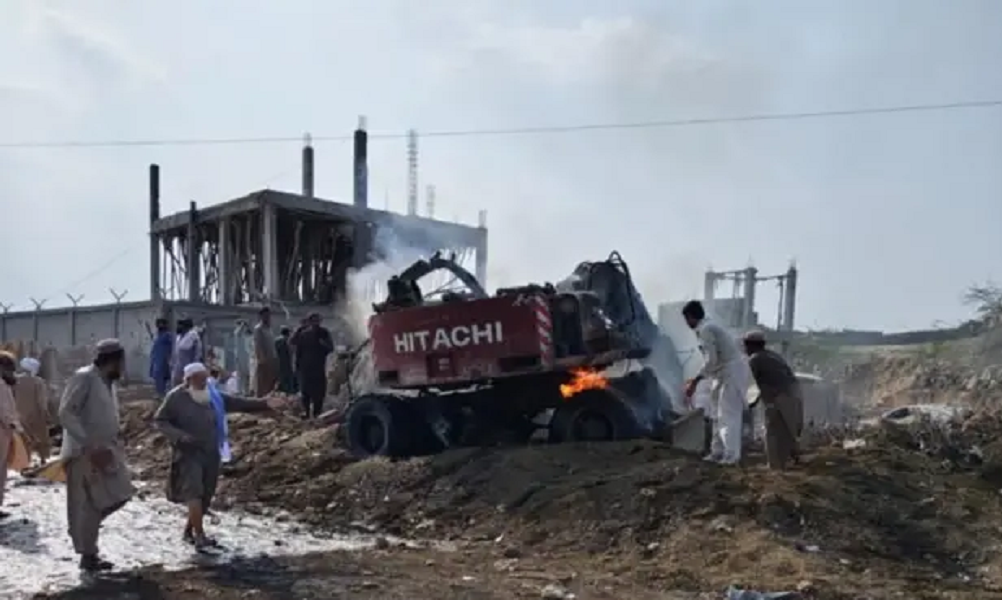
Eleven people were killed and 30 injured in a blast in Dera Ismail Khan in northwestern Pakistan on Saturday, emergency service Rescue 1122 said.
The Tehreek-e-Taliban Pakistan claimed responsibility for Saturday’s attack.
The blast occurred near Aman Mela in the Darazinda area of the district, Rescue 1122 said in a statement.
Rescue teams from the Darazinda station reached the scene and began relief operations, providing medical assistance to the wounded and taking them to hospital, the service said.
Security incidents have continued in the district this month, including attacks involving the Pakistani Taliban.


Afghanistan-Kazakhstan trade reaches $581 million in six months

Trump says men arrested at UK air base used by US planned ‘big damage’

Serbia’s President Vucic resigns ahead of October parliamentary elections

Floods, landslides kill 56 in India and 14 in Nepal

Afghanistan central bank and ACGF sign cooperation agreement

Saudi energy group signs major Afghanistan deals covering gas exploration and pipeline plans

Trump floats idea of renaming Atlantic or Pacific Ocean

Nepal flood rescue mission enters critical phase as thousands remain missing

Iranian clubs to face Gulf opponents at neutral venues in Asian Champions League Elite

Khalilzad: Afghanistan ready to attract major investment

Saar: Afghanistan’s image at UNGA

Saar: Concerns over Pakistan’s political crisis discussed

Exclusive interview with Abdul Latif Mansoor, Minister of MRRD

Tawsia: Overview of Afghanistan’s iron mines

Tahawol: Discussion on fresh Pakistani airstrikes on Afghanistan
-

 Latest News5 days ago
Ariana Afghan Airlines ranks seventh among 45 Central Asian airlines
-

 Regional4 days ago
Iran airlines cancel flights as US sanctions hit
-

 Latest News5 days ago
Silk Road highway in Wakhan corridor now reaches the China border
-

 Sport4 days ago
Afghanistan open Asian Games cricket campaign with win over Japan
-
 World4 days ago
Trump welcomes Chinese President Xi as US-China summit gets underway
-
 Latest News5 days ago
OIC Contact Group reaffirms support for Afghan people
-
 Latest News5 days ago
Refugees minister, UNAMA deputy discuss challenges facing returnees
-
 Latest News4 days ago
Khalilzad warns Pakistan-Afghanistan tensions likely to worsen after fresh airstrikes