
Latest News
Afghan army collapse ‘took us all by surprise,’ US defense secretary says

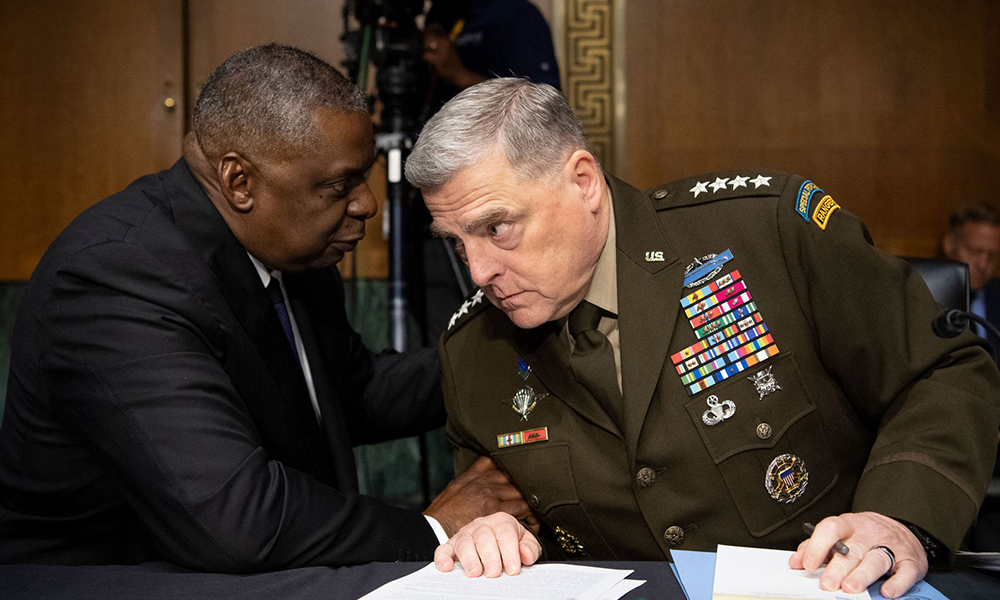
U.S. Defense Secretary Lloyd Austin told Congress on Tuesday that the Afghan army’s sudden collapse caught the Pentagon “by surprise,” as military leaders confronted a contentious Senate hearing about how and why America lost its longest war.
Republican lawmakers accused President Joe Biden of lying about recommendations from his military that some troops should be kept in Afghanistan. Even Biden’s Democrats expressed frustration with a chaotic withdrawal that left U.S. troops dead and American citizens behind.
General Mark Milley, chairman of the Joint Chiefs of Staff, and General Frank McKenzie of U.S. Central Command also acknowledged being caught off-guard by the speed of the Taliban takeover and collapse of the U.S.-backed government in Kabul.
It was their first public congressional testimony since the Islamic Emirate of Afghanistan (IEA) won the war in August.
“The fact that the Afghan army we and our partners trained simply melted away – in many cases without firing a shot – took us all by surprise,” Austin, told the Senate Armed Services Committee.
“It would be dishonest to claim otherwise.”
McKenzie and Milley testified that they had believed it would have been best to keep a minimum of 2,500 troops in the country. In an August interview Biden denied his commanders had recommended that, saying: “No. No one said that to me that I can recall.”
Milley refused to be drawn on whether Biden had lied when pressed by Republican Senator Dan Sullivan
“I’m not going to categorize a statement of the President of the United States,” Milley said.
He said that the U.S. missed warning signs about the coming failure of “leadership and will” in its Afghan allies that ultimately led to their collapse.
Republican Senator Joni Ernst said Biden’s decision to keep former President Donald Trump’s unconditional withdrawal agreement with the IEA had squandered U.S. sacrifices for what he thought would be “a cheap political victory.”
“The loss of our service members, and abandonment of Americans and Afghan allies last month was an unforced, disgraceful humiliation that didn’t have to happen,” Ernst said.
Senator James Inhofe, the panel’s top Republican, described it as a “horror of the president’s own making.”
White House spokesperson Jen Psaki said Biden’s military experts had provided “a range of viewpoints” about Afghanistan, and that Biden believed leaving troops there would “mean war with the Taliban (IEA).”
Milley, the top U.S. military officer, noted military warnings since late 2020 that an accelerated, unconditional withdrawal could precipitate the collapse of the Afghan military and government.
“That was a year ago. My assessment remained consistent throughout,” Milley said.
Austin, Milley and senators – many of whom oversaw the war effort for years – seemed full of questions about what went wrong, citing failures to appreciate the impact of corruption and damaged morale in the ranks.
“There’s a series of strategic lessons to be learned,” Milley said.
Democrats faulted Republicans for blaming Biden, who has been president since January, for everything that went wrong during the 20 years U.S. troops have been in Afghanistan, including under Trump.
“Anyone who says the last few months were a failure, but everything before that was great, clearly hasn’t been paying attention,” Democratic Senator Elizabeth Warren said.
Austin praised U.S. personnel who helped airlift 124,000 people out of the country.
But Milley acknowledged that while the evacuation effort was a logistical accomplishment, the withdrawal was a “strategic defeat”.
He warned that the IEA has not broken ties with al Qaeda.
A reconstituted al Qaeda in Afghanistan with aspirations to attack the United States was “a very real possibility” – perhaps in as little as a year, he said.

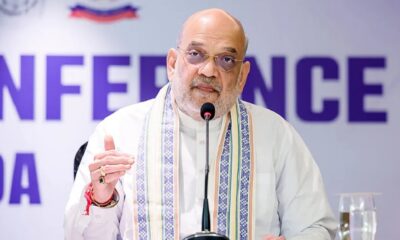

India says a fugitive drug-trafficking kingpin accused of smuggling heroin and methamphetamine from Afghanistan into India has been deported from Turkey and brought back to the country.
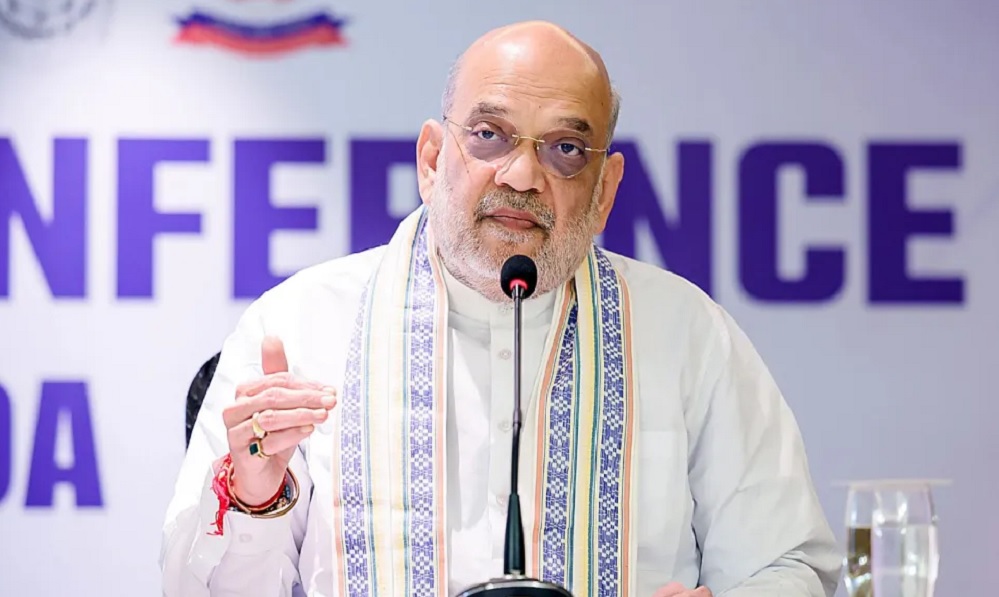
Indian Home Minister Amit Shah said on Saturday that Navpreet Singh, also known as “Nav,” was deported from Turkey after Indian authorities tracked him down.
Shah said Singh had obtained Turkish citizenship using the fake identity “Navab Virk” and continued to smuggle heroin and methamphetamine from Afghanistan to India.
The 34-year-old, a native of Punjab, had been wanted in several narcotics cases and was on the run for more than two years. Indian authorities allege that he headed an international narcotics syndicate whose operations in India were managed by his cousin, Prabhdeep Singh.
Prabhdeep Singh, also known as “Harry,” was extradited from Azerbaijan to India in May in connection with a case involving the seizure of 358 kilograms of heroin in 2021.
India submitted its request for Navpreet Singh’s extradition to Turkish authorities in 2023-24, according to officials familiar with the case.
Shah described Singh’s deportation as a “historic milestone” and said the Indian government was committed to dismantling drug-trafficking networks.
The Indian Home Ministry says 288 fugitives from 36 countries have been brought back to India between 2019 and August 2026 as part of efforts to pursue wanted criminals abroad.
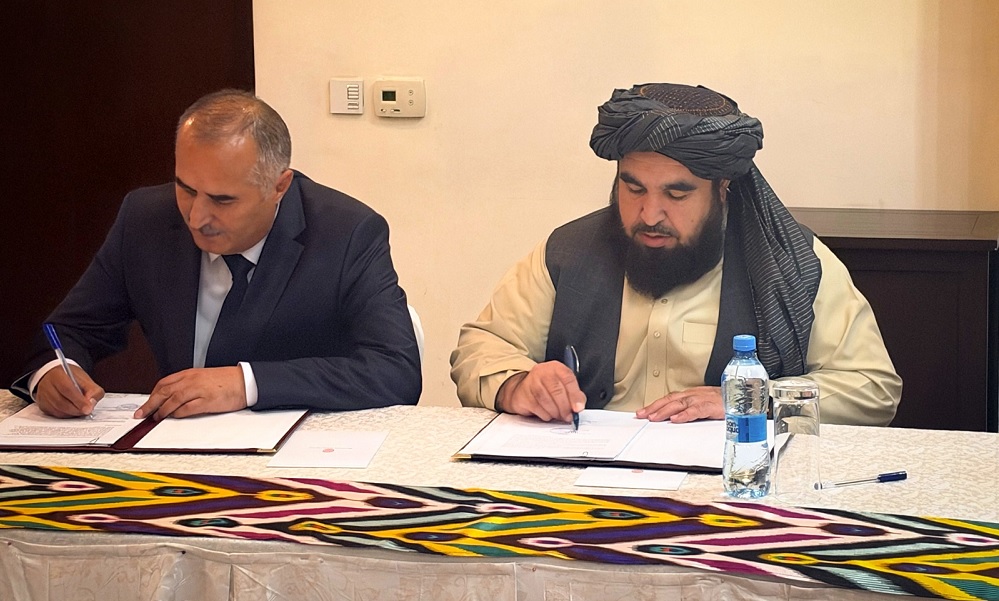
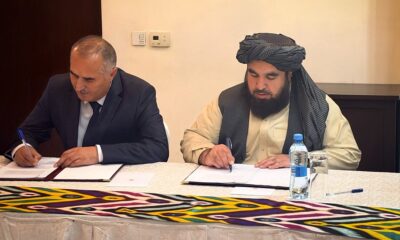
Da Afghanistan Breshna Sherkat (DABS) and Tajikistan-based Pamir Energy Company have signed a cooperation agreement to provide electricity to border districts of Badakhshan province.
The agreement was signed in Dushanbe, Tajikistan, by Abdul Haq Hamkar, Chief Executive Officer of DABS, and Amir Khan Rahim, President of Pamir Energy.
The agreement is aimed at expanding cooperation, improving electricity supply and creating the necessary conditions for providing power services to residents of Badakhshan’s border districts.
On the sidelines of the signing ceremony, the two sides also discussed extending a 110-kilovolt power transmission line to Faizabad, the provincial capital of Badakhshan.
Hamkar emphasized the importance of the project in strengthening the province’s electricity infrastructure.
Pamir Energy said it would share relevant proposals with DABS following technical assessments.
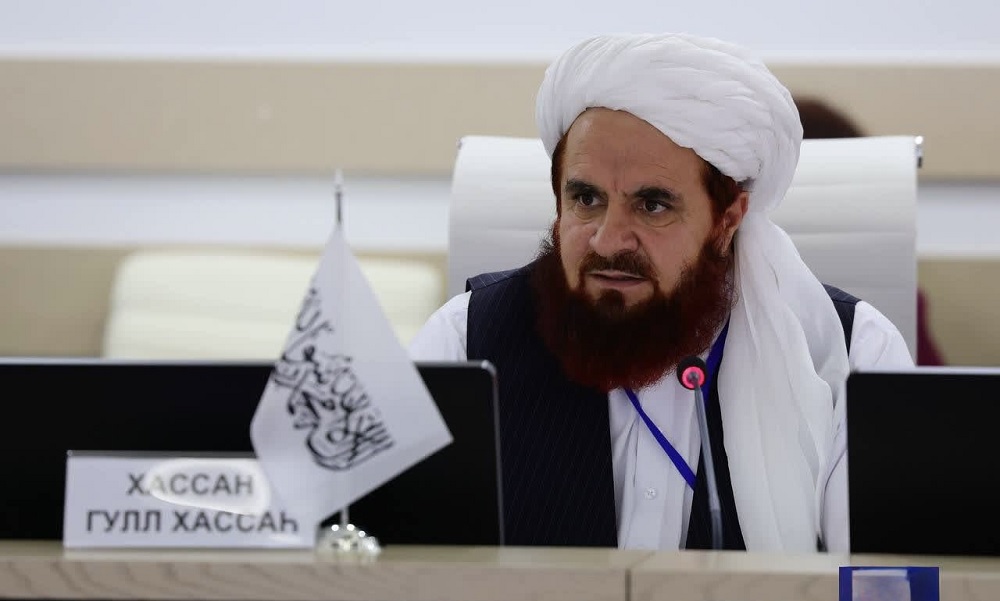
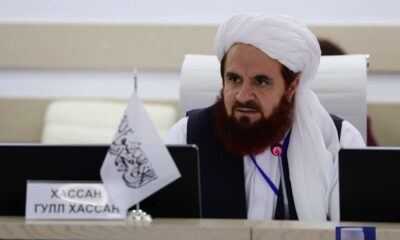
In his speech, Hassan emphasized the importance of mutual respect, dialogue, economic cooperation and joint development between Afghanistan and countries in the region.
On the sidelines of the forum, the Afghan ambassador met with Anton Borisovich Doronin, Minister of Economic Development of Russia’s Stavropol region. The two discussed ways to expand trade, investment and economic cooperation.
Hassan also met with a number of Afghan businessmen and representatives of the Afghan community in Russia, listening to their concerns and suggestions.
He assured them that the Afghan embassy would provide necessary support and cooperation in addressing their concerns.


India says drug kingpin linked to Afghan heroin, meth deported from Turkey

DABS, Tajikistan’s Pamir Energy sign agreement on electricity supply to Badakhshan

Afghan envoy in Moscow stresses economic cooperation with region

Russian embassy expresses concern over civilian casualties in Pakistani airstrikes on Afghanistan

India, Pakistan summon top diplomats over border incident

Saudi energy group signs major Afghanistan deals covering gas exploration and pipeline plans

Khalilzad: Afghanistan ready to attract major investment

Messi returns to Inter Miami after Argentina retirement

Imam Abu Hanifa exhibition to draw exhibitors from more than 20 countries

Maryam Nawaz says Punjab faces greater security threats from neighbouring provinces

Tahawol: Escalation of internal political crisis in Pakistan discussed

Saar: Continuation of crisis in the Middle East discussed

Tawsia: Review of three key economic developments in Afghanistan

Tahawol: Pakistan’s airstrikes on civilians in Afghanistan discussed

Tahawol: Improvement in Afghanistan-China relations discussed
-
 Regional4 days ago
US imposes sanctions on 13 tied to Iran weapons procurement
-
 Latest News3 days ago
Four members of one family killed in Helmand in Pakistan airstrike
-

 Sport5 days ago
Istiqlal Kabul beat Khurasan Faryab 2-0 with late goals
-

 Sport5 days ago
Afghanistan Champions League: Toofan Herat and Aino Mina Kandahar draw 1-1
-
 Business5 days ago
Russia accuses West of double standards over deportation of Afghans
-

 Business5 days ago
Kazakhstan grain shipments to Afghanistan rise over 4-fold
-
 Business4 days ago
Afghanistan, Tajikistan seek stronger trade and investment ties
-
 Latest News3 days ago
Moscow to host 8th meeting of Afghanistan consultations on October 5