
Latest News
Afghan Peace Conference in China Delayed After Moscow 4-Party Meeting

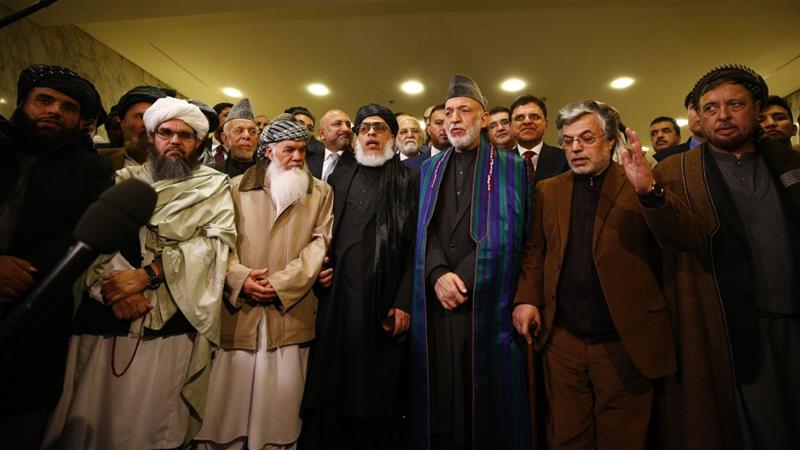
 An intra-Afghan meeting that was scheduled to be held in China delayed for an unspecified period of time after representatives of United States, China, Russia, and Pakistan met in Moscow on Friday.
The two-day conference was scheduled for October 28 between representatives of Taliban and Afghan politicians including Kabul government officials.
Haji Din Mohammad, an Afghan politician who is invited to the Beijing conference told Ariana News that the intra-Afghan conference has delayed for a couple of days.
Mawlawi Qalamuddin, a former Taliban official who is also invited to the conference confirmed the postponement.
“There might be 25 participants close to [Former President Hamid] Karzai, 10 government representatives and 15 Taliban representatives that will participate at the conference,” said Mohammad Hassan Haqyar, a pro-Taliban analyst.
Both the Afghan government and the Taliban insurgent group say their representatives will take part in the meeting.
“The Afghan government is working to prepare a proper list of participants for China conference,” said Najia Anwari, a spokesperson of State Ministry for Peace Affairs.
The Taliban said in a statement that Beijing has invited them to the conference and its delegation will participate under the leadership of Mullah Abdul Ghani Baradar.
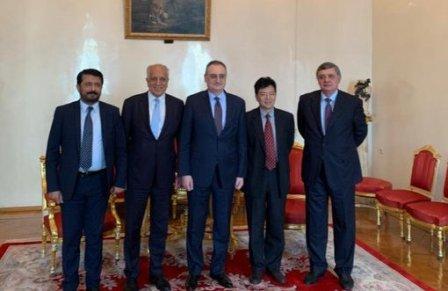 In addition, on Friday meeting, Russia, China and Pakistan have called for an early resumption of talks between the United States and the Taliban to reach an agreement about ending the war in Afghanistan.
“Russia, China and Pakistan expressed their support for the earliest resumption of negotiation process and reaching an agreement between the United States of America and the Taliban movement, which will pave the way for launching intra-Afghan talks,” a post-meeting statement noted.
Meanwhile, the four-party meeting have called on all warring parties in Afghanistan to observe a ceasefire for the duration of intra-Afghan negotiations.
The participants of Moscow meeting have also called on the Afghan government and Taliban to release “significant numbers of prisoners at the start of intra-Afghan negotiations.”






Latest News
Afghanistan seeks closer trade cooperation with Uzbekistan
Uzbek officials also unveiled plans to open trade chambers in Russia, Kazakhstan, and Kyrgyzstan to help boost exports and improve market access for regional products.
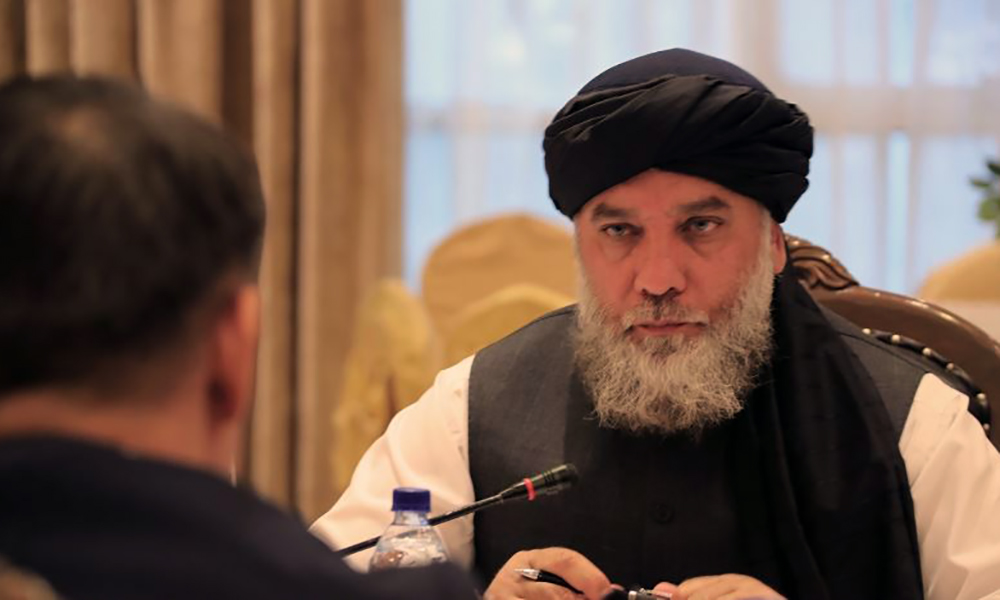
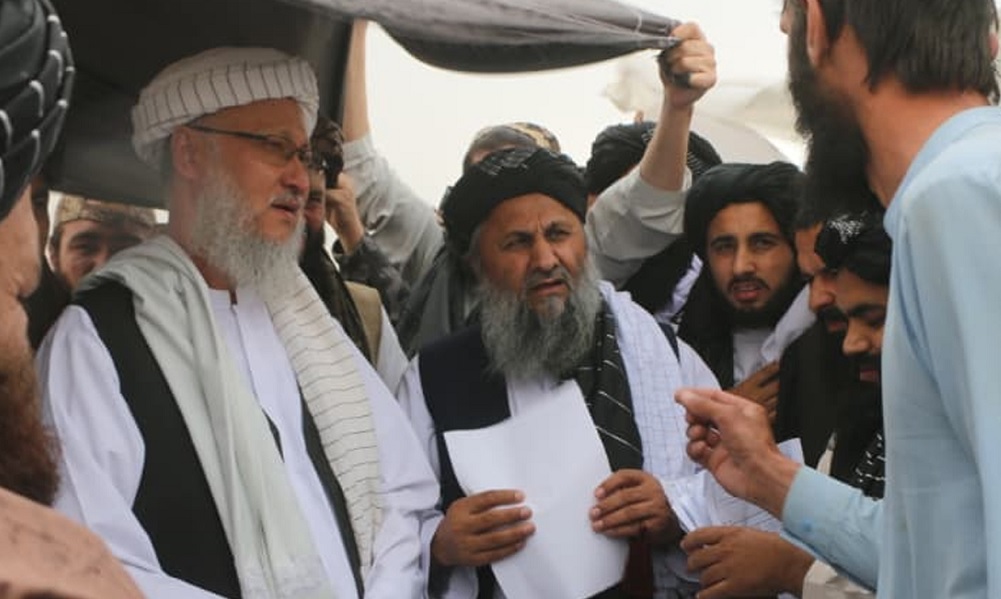
Afghanistan has called on Uzbekistan to establish a coordination and liaison office at the Termez border market to strengthen direct business ties between the private sectors of the two countries.
The proposal was discussed during a meeting in Mazar-i-Sharif between Nooruddin Azizi, Afghanistan’s Minister of Industry and Commerce, and Amanbai Orynbaev, Chairman of the Supreme Council of Uzbekistan’s Karakalpakstan region.
During the talks, both sides explored opportunities to expand cooperation in the export of Afghan cotton, coal, fresh and dried fruits, as well as joint projects in food production, construction materials, tourism, pharmaceutical manufacturing, mineral processing, and investment in key economic sectors.
Uzbek officials also unveiled plans to open trade chambers in Russia, Kazakhstan, and Kyrgyzstan to help boost exports and improve market access for regional products.
As part of the visit, the Uzbek delegation inaugurated an expo of national products in Mazar-i-Sharif aimed at promoting trade and economic cooperation between the two neighbouring countries.
The Embassy of Japan in Afghanistan has announced scholarship opportunities for Afghan students under the Japanese Government (MEXT) Scholarship Program for the 2027 academic year.
According to the embassy, the Ministry of Education, Culture, Sports, Science and Technology (MEXT) of Japan is offering scholarships for graduate-level study at Japanese universities under the research student category, including both regular and non-regular students.
Interested and eligible applicants can download the application guidelines and forms from the official Study in Japan website and are advised to carefully review all requirements before applying.
Applicants who meet the eligibility criteria and have prepared all required documents must submit their applications by 25 May 2026. The embassy said late or incomplete submissions will not be accepted.
The first screening process will include a written examination in Kabul on 18 June 2026, followed by interviews scheduled for July 2026 (date to be confirmed).
The Embassy of Japan noted that the Aga Khan Foundation Afghanistan will assist in collecting applications and facilitating written examinations, but will not be involved in the selection process.
It further emphasized that the selection will be conducted independently by the embassy and the Japanese government, based on academic merit, quality of application documents, and performance in written and interview examinations, without consideration of religious, linguistic, or ethnic background.
The scholarship program is fully funded and free of charge. The embassy warned applicants to remain cautious against scams, stressing that no financial contributions are required at any stage of the application process.


Afghanistan seeks closer trade cooperation with Uzbekistan

Japan announces MEXT scholarships for Afghan students for 2027 academic year

New township to provide over 1,000 land plots for returnees in Logar

Ariana Afghan Airlines lowers cargo rates on Kabul–Delhi route to boost exports

Pakistan ambassador urges Afghan authorities to act against militant threats

Bayat Power extends gas supply deal with Afghan Gas

New Afghanistan-China transport corridor launched via Turkmenistan

Afghanistan’s new cricket head coach Richard Pybus arrives in Kabul

Afghanistan moves toward self-sufficiency in car battery production

Germany to launch online visa system for Afghan study and work applicants in Pakistan

Tahawol: Afghanistan and Uzbekistan’s growing economic ties discussed

Saar: Afghanistan’s relations with the world discussed

Tahawol: Discussion on unknown fate of Middle East crisis

Saar: Problems and challenges of Afghan refugees in the world discussed

Tawsia: Discussion on Afghanistan’s economic path and position
-
 Business3 days ago
New Afghanistan-China transport corridor launched via Turkmenistan
-

 Sport2 days ago
Canada to host opening ceremony for FIFA World Cup 2026 in Toronto
-
 Latest News2 days ago
SAARC failure pushes Pakistan toward trilateral ties with Afghanistan, China, Bangladesh: Dar
-
 Regional4 days ago
US and Iran closing in on one-page memo to end war, Axios reports
-

 Science & Technology3 days ago
James Webb Telescope captures clearest-ever view of exoplanet’s surface
-

 Sport2 days ago
Afghanistan rises 7 places to 21st in FIFA Futsal World Rankings
-

 Sport2 days ago
Los Angeles to welcome the world with historic FIFA World Cup 2026 opening event
-

 Sport2 days ago
Afghan cricket delegation travels to China for technical cooperation