
Latest News
Afghanistan’s commerce minister keen to attend BRICS Summit
Nooruddin Azizi said that Afghanistan is interested in participating as an observer nation

Afghanistan’s Acting Minister of Industry and Commerce Nooruddin Azizi says a delegation from Afghanistan may participate in this year’s BRICS Summit in Kazan, Russia or attend the next event.
Speaking to Russia’s TASS news agency, Azizi said: “We have actually composed a letter [requesting participation in the BRICS Summit in Kazan] and sent it, now it is under consideration by BRICS officials.
“Respectively, when we get a reply from BRICS, when it makes a certain decision, we will make our certain decision as well. Perhaps we will participate [in the BRICS Summit] this time or next time,” he said.
He went on to state that Afghanistan is interested in “participating as an observer”.
Earlier this month the Russian Deputy Foreign Minister Andrey Rudenko said the invitation of guests to the summit is decided by consensus of the BRICS members.
He told reporters that the unrecognized status of the Islamic Emirate is a problem that needs to be taken into account when deciding on its participation.
In September, the Islamic Emirate formally asked to attend the BRICS summit in Kazan.
BRICS Summit Underway
This year’s summit officially opened on Tuesday and will run from October 22 to 24.
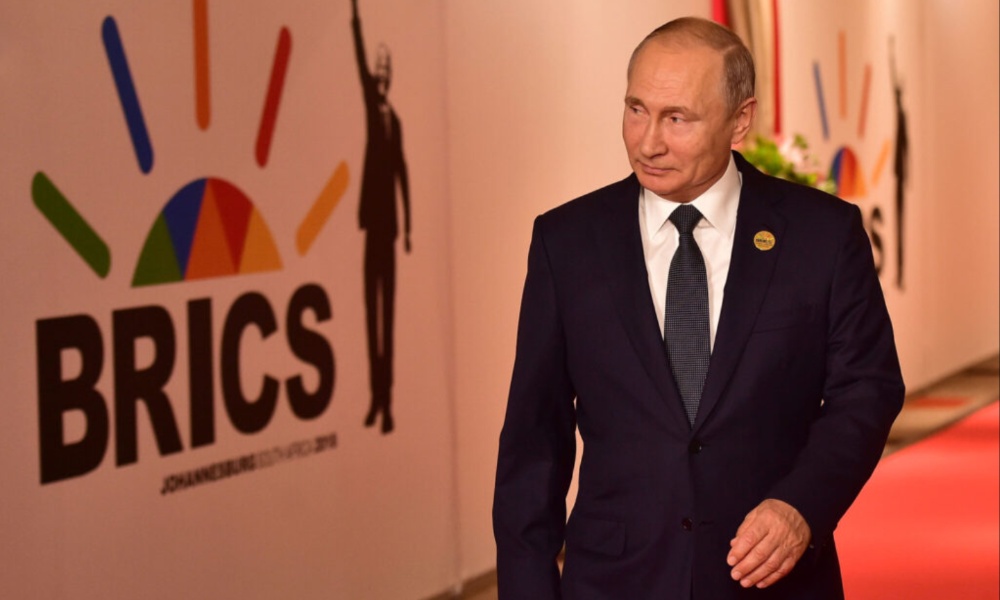
Russian President Vladimir Putin is hosting the event in Russia’s southwestern city of Kazan.
The three-day conclave will be the largest gathering of world leaders in Russia in decades and will be held at a time when the Kremlin is locked in a war on Western-backed Ukraine.
BRICS stands for Brazil, Russia, India, China and South Africa.
The group started in 2006, and Brazil, Russia, India and China convened for the first BRIC summit in 2009. South Africa joined a year later.
The aim of the alliance is to challenge the economic and political monopoly of the West. The group sets priorities and has discussions once every year during the summit, which members take turns hosting.
Last year, BRICS extended invitations to include Egypt, Ethiopia, Iran, Saudi Arabia and the United Arab Emirates. Saudi Arabia has yet to formally join, but the others have.
Leaders of BRICS member countries – including Indian Prime Minister Narendra Modi, Chinese President Xi Jinping and South African President Cyril Ramaphosa – are attending the summit.
UAE President Mohamed bin Zayed Al Nahyan, Iranian President Masoud Pezeshkian, Egyptian President Abdel Fattah el-Sisi and Ethiopian Prime Minister Abiy Ahmed have also all arrived.
Leaders of several other countries that have shown an interest in deepening ties with BRICS are also participating, including Turkish President Recep Tayyip Erdogan and Vietnamese Prime Minister Pham Minh Chinh.
Brazilian President Luiz Inacio Lula da Silva canceled his trip to Russia after suffering a head injury in a fall at home on October 19. Minister of Foreign Affairs Mauro Vieira will now represent the country at the summit.
United Nations Secretary-General Antonio Guterres is also attending – and is expected to meet Putin on Thursday.












Kazakhstan’s Foreign Minister Mukhtar Tileuberdi has called for pragmatic and coordinated international engagement with Afghanistan, saying the country’s long-term stability is closely linked to the security and sustainable development of Central Asia.
Speaking during the general debate of the 81st session of the United Nations General Assembly in New York on Friday, Tileuberdi said humanitarian assistance to Afghanistan remains essential but alone cannot break the cycle of poverty, displacement and dependency.
He said Kazakhstan supports a “pragmatic, coordinated and step-by-step” approach to international engagement with Afghanistan, with the United Nations playing a central role.
Tileuberdi also said Kazakhstan is working with the UN to operationalize the United Nations Regional Centre for the Sustainable Development Goals for Central Asia and Afghanistan in Almaty.
He said the success of the centre should be measured by the results and assistance it delivers to the region.


Abu Muslim Farah defeat Khurasan Faryab 2-0 in ACL season six

Saar: Concerns over Pakistan’s political crisis discussed

Afghanistan Champions League: Omar Zawak Herat beat Toofan Herat 1-0

Blast in Pakistan’s Dera Ismail Khan kills 11, injures 30

Ariana Afghan Airlines increases Kabul-Delhi cargo flights

Saudi energy group signs major Afghanistan deals covering gas exploration and pipeline plans

Trump floats idea of renaming Atlantic or Pacific Ocean

US hits Egyptian bank branches with Iran sanctions as war marks six months

Nepal flood rescue mission enters critical phase as thousands remain missing

Iranian clubs to face Gulf opponents at neutral venues in Asian Champions League Elite
Saar: Concerns over Pakistan’s political crisis discussed

Exclusive interview with Abdul Latif Mansoor, Minister of MRRD

Tawsia: Overview of Afghanistan’s iron mines

Tahawol: Discussion on fresh Pakistani airstrikes on Afghanistan

Saar: Calls for international support for Afghanistan discussed
-

 World5 days ago
CNN, MS NOW and Politico sue Trump, challenging White House ban
-

 Latest News3 days ago
Ariana Afghan Airlines ranks seventh among 45 Central Asian airlines
-

 Latest News4 days ago
UN reiterates call for respect for international law after Kunar airstrikes
-

 Regional3 days ago
US and Iran hold first talks since June after Trump’s ‘annihilation’ threat
-

 Latest News3 days ago
Silk Road highway in Wakhan corridor now reaches the China border
-

 Latest News5 days ago
Afghan Official: Pakistan’s airstrikes will not go unanswered
-

 Sport4 days ago
Afghan boxing referee heads to China for international festival
-

 Regional5 days ago
G7 foreign ministers call on Iran to stop arming Houthis