
Latest News
Afghanistan’s last Jew leaves after Taliban takeover

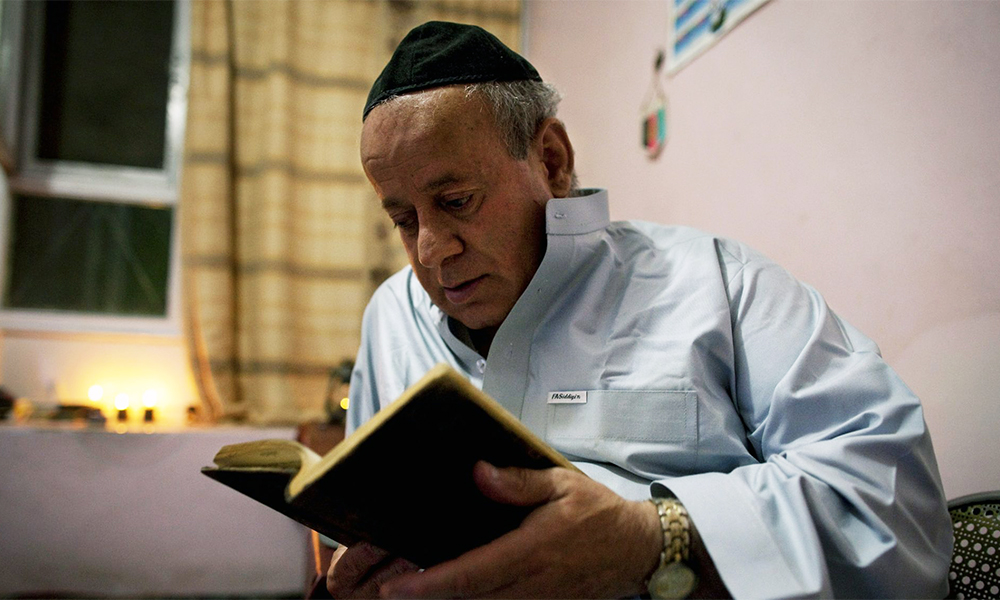
The last member of Afghanistan’s Jewish community has left the country, AP reported.
Zebulon Simentov, who lived in a dilapidated synagogue in Kabul, kept kosher and prayed in Hebrew, endured decades of war as the country’s centuries-old Jewish community rapidly dwindled.
Moti Kahana, an Israeli-American businessman who runs a private security group that organized the evacuation, told The Associated Press on Wednesday that the 62-year-old Simentov and 29 of his neighbors, nearly all of them women and children, have been taken to a “neighboring country.”
Kahana said Simentov, who had lived under Taliban rule before, was not worried about them. But Kahana warned him that he was at risk of being kidnapped or killed by the far more radical Islamic State group (Daesh).
He said Simentov’s neighbors also pressed him to leave, so that their children could join him on the bus.
Kahana said his group is reaching out to U.S. and Israeli authorities to find a permanent home for Simentov, whose estranged wife and children live in Israel.
Hebrew manuscripts found in caves in northern Afghanistan indicate a thriving Jewish community existed there at least 1,000 years ago. In the late 19th century, Afghanistan was home to some 40,000 Jews, many of them Persian Jews who had fled forced conversion in neighboring Iran.
The community’s decline began with an exodus to Israel after its creation in 1948.
In an interview with The Associated Press in 2009, Simentov said the last Jewish families left after the 1979 Soviet invasion.












Kazakhstan’s Foreign Minister Mukhtar Tileuberdi has called for pragmatic and coordinated international engagement with Afghanistan, saying the country’s long-term stability is closely linked to the security and sustainable development of Central Asia.
Speaking during the general debate of the 81st session of the United Nations General Assembly in New York on Friday, Tileuberdi said humanitarian assistance to Afghanistan remains essential but alone cannot break the cycle of poverty, displacement and dependency.
He said Kazakhstan supports a “pragmatic, coordinated and step-by-step” approach to international engagement with Afghanistan, with the United Nations playing a central role.
Tileuberdi also said Kazakhstan is working with the UN to operationalize the United Nations Regional Centre for the Sustainable Development Goals for Central Asia and Afghanistan in Almaty.
He said the success of the centre should be measured by the results and assistance it delivers to the region.


Abu Muslim Farah defeat Khurasan Faryab 2-0 in ACL season six

Saar: Concerns over Pakistan’s political crisis discussed

Afghanistan Champions League: Omar Zawak Herat beat Toofan Herat 1-0

Blast in Pakistan’s Dera Ismail Khan kills 11, injures 30

Ariana Afghan Airlines increases Kabul-Delhi cargo flights

Saudi energy group signs major Afghanistan deals covering gas exploration and pipeline plans

Trump floats idea of renaming Atlantic or Pacific Ocean

US hits Egyptian bank branches with Iran sanctions as war marks six months

Nepal flood rescue mission enters critical phase as thousands remain missing

Iranian clubs to face Gulf opponents at neutral venues in Asian Champions League Elite
Saar: Concerns over Pakistan’s political crisis discussed

Exclusive interview with Abdul Latif Mansoor, Minister of MRRD

Tawsia: Overview of Afghanistan’s iron mines

Tahawol: Discussion on fresh Pakistani airstrikes on Afghanistan

Saar: Calls for international support for Afghanistan discussed
-

 World5 days ago
CNN, MS NOW and Politico sue Trump, challenging White House ban
-

 Latest News3 days ago
Ariana Afghan Airlines ranks seventh among 45 Central Asian airlines
-

 Latest News4 days ago
UN reiterates call for respect for international law after Kunar airstrikes
-

 Regional3 days ago
US and Iran hold first talks since June after Trump’s ‘annihilation’ threat
-

 Latest News3 days ago
Silk Road highway in Wakhan corridor now reaches the China border
-

 Latest News5 days ago
Afghan Official: Pakistan’s airstrikes will not go unanswered
-

 Sport4 days ago
Afghan boxing referee heads to China for international festival
-
 Regional5 days ago
G7 foreign ministers call on Iran to stop arming Houthis