
Latest News
Atmar wraps up Riyadh trip, claims it was a significant success

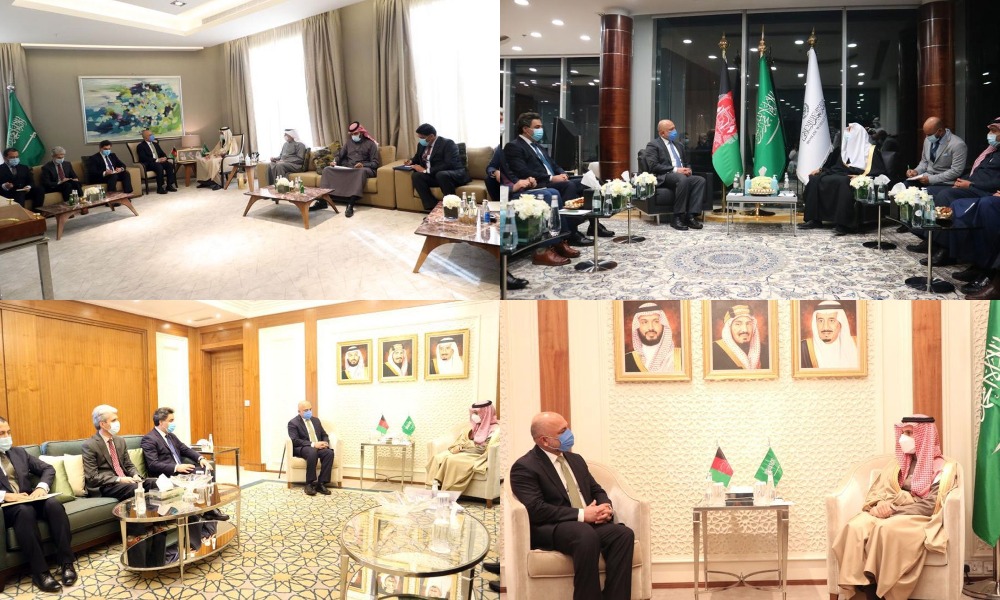
Foreign Minister Haneef Atmar has wrapped up his official visit to Saudi Arabia and reported back on a number of new developments, including Saudi’s support of a historic Muslim World League summit to end the war in Afghanistan
In his report, Atmar said: “The Muslim World League shall hold a historic international conference of leading thinkers, scholars, and muftis of the Islamic World to support the cessation of hostilities, the end of bloodshed, and the success of the Afghan peace process.
“The government of Saudi Arabia announced its support for the International Ulema Conference and the global consensus to end the war in Afghanistan.
“Mohammad bin Abdulkarim Al-Issa the Secretary-General of the Muslim World League, rejected the crimes and terrorist acts in Afghanistan from the Islamic point of view,” Atmar stated.
According to his report, the head of the Organization of Islamic Cooperation (OIC) “supported the government’s flexible stance on peace and political participation.”
In another major development, Atmar said both sides “agreed to send a technical team (from Saudi Arabia) to Afghanistan to expertly examine the investment opportunities in the mineral resources (mining sector) and assess the comparative advantages in producing and exporting agricultural and food products, and Afghanistan’s accession to regional supply and value chain.”
Atmar also stated it was agreed Riyadh would send a technical team from the Islamic Development Bank (IsDB) to examine Afghanistan’s capacities and assess possible opportunities in various sectors to allow Afghanistan to join the Member Country Partnership Strategy and enter into partnership with the IsDB.
He stated that he had signed a Memorandum of Understanding on Scientific and Educational Cooperation with the Saudi ministry of education.
As stated in his report, the MoU will increase consultations and collaboration on scholarships, teacher training, as well as specialized and vocational training programs.
“Saudi Arabia pledged to build a specialist hospital along with a medical school in Kabul.
“Both sides agreed to expedite the establishment of the International Islamic University in Nangarhar. In this regard, both decided to establish a technical group in cooperation with OIC, IsDB, and SDF to provide specialized advice and assistance in financing, design, and management of the university,” he stated.
Atmar was in Saudi Arabia from January 20 to 23 and met with various Saudi Arabian officials.
In his meeting with his Saudi counterpart it was agreed to increase contact on ongoing bilateral consultations in order to realize the vision of the two countries’ leaders to further strengthen political relations and economic cooperation, and contribute to peace and stability, Atmar stated.
Afghan and Saudi officials also agreed to finalize a mutual Comprehensive Economic Cooperation Framework involving four sectors: trade; investment; guest workers; and development cooperation.
Both sides agreed to hold semi-annual meetings at the level of the Co-Chairs of the Joint Commission to evaluate agreements and progress and they stressed the need to expand transportation lines and remove barriers around shipment of Afghanistan’s primary export goods to Saudi Arabia.
On his first day in Saudi, Atmar performed the Hajj Umrah and pilgrimage to Medina.Atmar wraps up Riyadh trip, claims it was a significant success
Foreign Minister Haneef Atmar has wrapped up his official visit to Saudi Arabia and reported back on a number of new developments, including Saudi’s support of a historic Muslim World League summit to end the war in Afghanistan
In his report, Atmar said: “The Muslim World League shall hold a historic international conference of leading thinkers, scholars, and muftis of the Islamic World to support the cessation of hostilities, the end of bloodshed, and the success of the Afghan peace process.
“The government of Saudi Arabia announced its support for the International Ulema Conference and the global consensus to end the war in Afghanistan.
“Mohammad bin Abdulkarim Al-Issa the Secretary-General of the Muslim World League, rejected the crimes and terrorist acts in Afghanistan from the Islamic point of view,” Atmar stated.
According to his report, the head of the Organization of Islamic Cooperation (OIC) “supported the government’s flexible stance on peace and political participation.”
In another major development, Atmar said both sides “agreed to send a technical team (from Saudi Arabia) to Afghanistan to expertly examine the investment opportunities in the mineral resources (mining sector) and assess the comparative advantages in producing and exporting agricultural and food products, and Afghanistan’s accession to regional supply and value chain.”
Atmar also stated it was agreed Riyadh would send a technical team from the Islamic Development Bank (IsDB) to examine Afghanistan’s capacities and assess possible opportunities in various sectors to allow Afghanistan to join the Member Country Partnership Strategy and enter into partnership with the IsDB.
He stated that he had signed a Memorandum of Understanding on Scientific and Educational Cooperation with the Saudi ministry of education.
As stated in his report, the MoU will increase consultations and collaboration on scholarships, teacher training, as well as specialized and vocational training programs.
“Saudi Arabia pledged to build a specialist hospital along with a medical school in Kabul.
“Both sides agreed to expedite the establishment of the International Islamic University in Nangarhar. In this regard, both decided to establish a technical group in cooperation with OIC, IsDB, and SDF to provide specialized advice and assistance in financing, design, and management of the university,” he stated.
Atmar was in Saudi Arabia from January 20 to 23 and met with various Saudi Arabian officials.
In his meeting with his Saudi counterpart it was agreed to increase contact on ongoing bilateral consultations in order to realize the vision of the two countries’ leaders to further strengthen political relations and economic cooperation, and contribute to peace and stability, Atmar stated.
Afghan and Saudi officials also agreed to finalize a mutual Comprehensive Economic Cooperation Framework involving four sectors: trade; investment; guest workers; and development cooperation.
Both sides agreed to hold semi-annual meetings at the level of the Co-Chairs of the Joint Commission to evaluate agreements and progress and they stressed the need to expand transportation lines and remove barriers around shipment of Afghanistan’s primary export goods to Saudi Arabia.
On his first day in Saudi, Atmar performed the Hajj Umrah and pilgrimage to Medina.







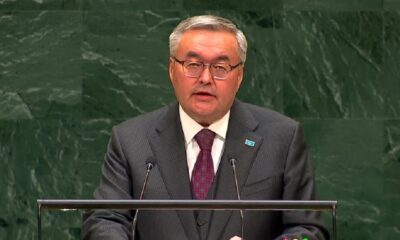




Kazakhstan’s Foreign Minister Mukhtar Tileuberdi has called for pragmatic and coordinated international engagement with Afghanistan, saying the country’s long-term stability is closely linked to the security and sustainable development of Central Asia.
Speaking during the general debate of the 81st session of the United Nations General Assembly in New York on Friday, Tileuberdi said humanitarian assistance to Afghanistan remains essential but alone cannot break the cycle of poverty, displacement and dependency.
He said Kazakhstan supports a “pragmatic, coordinated and step-by-step” approach to international engagement with Afghanistan, with the United Nations playing a central role.
Tileuberdi also said Kazakhstan is working with the UN to operationalize the United Nations Regional Centre for the Sustainable Development Goals for Central Asia and Afghanistan in Almaty.
He said the success of the centre should be measured by the results and assistance it delivers to the region.


Saar: Concerns over Pakistan’s political crisis discussed

Afghanistan Champions League: Omar Zawak Herat beat Toofan Herat 1-0

Blast in Pakistan’s Dera Ismail Khan kills 11, injures 30

Ariana Afghan Airlines increases Kabul-Delhi cargo flights

Khalilzad questions Pakistan’s commitment to Afghan welfare

Saudi energy group signs major Afghanistan deals covering gas exploration and pipeline plans

Trump floats idea of renaming Atlantic or Pacific Ocean

US hits Egyptian bank branches with Iran sanctions as war marks six months

Nepal flood rescue mission enters critical phase as thousands remain missing

Iranian clubs to face Gulf opponents at neutral venues in Asian Champions League Elite
Saar: Concerns over Pakistan’s political crisis discussed

Exclusive interview with Abdul Latif Mansoor, Minister of MRRD

Tawsia: Overview of Afghanistan’s iron mines

Tahawol: Discussion on fresh Pakistani airstrikes on Afghanistan

Saar: Calls for international support for Afghanistan discussed
-

 World5 days ago
CNN, MS NOW and Politico sue Trump, challenging White House ban
-

 Latest News3 days ago
Ariana Afghan Airlines ranks seventh among 45 Central Asian airlines
-

 Latest News4 days ago
UN reiterates call for respect for international law after Kunar airstrikes
-

 Regional3 days ago
US and Iran hold first talks since June after Trump’s ‘annihilation’ threat
-

 Latest News3 days ago
Silk Road highway in Wakhan corridor now reaches the China border
-

 Latest News4 days ago
Afghan Official: Pakistan’s airstrikes will not go unanswered
-

 Sport4 days ago
Afghan boxing referee heads to China for international festival
-
 Regional4 days ago
G7 foreign ministers call on Iran to stop arming Houthis