
Latest News
Ghani gives UNICEF’s polio unit boss 24 hours to leave Afghanistan

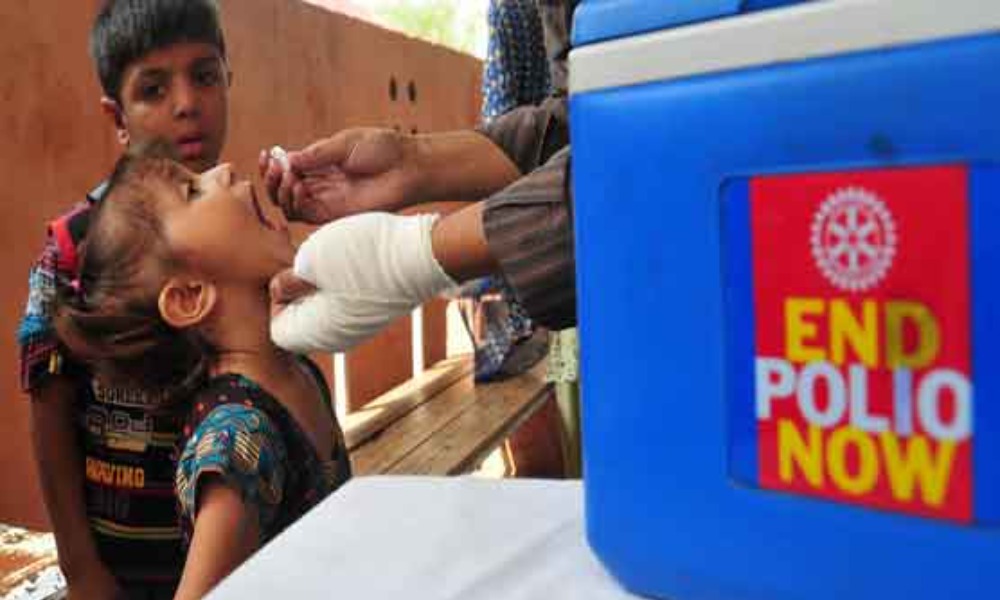
President Ashraf Ghani gave Mohammed Mohammedi, the head of the United Nations Children’s Fund’s (UNICEF) polio eradication team in Afghanistan, 24 hours to leave the country, a presidential spokesman said.
According to a Facebook post on Wednesday by Dawa Khan Menapal, Mohammedi was given notice to leave the country for “ignoring the president and for the lack of transparency in his work.”
Meanwhile the Ministry of Public Health said that UNICEF had spent $22 million on an awareness campaign around polio but failed to provide a report to government.
According to Masooma Ghafari, the deputy spokeswoman for the health ministry, there was still an increase in the number of cases despite money having been spent on polio campaigns.
“We need to bring changes in the section,” she said.
Ghani’s sudden move to have Mohammedi expelled drew sharp criticism from some analysts who felt the move would have a negative effect on aid coming in from international organizations.
“Unfortunately, President Ghani’s act with an international organization was startling, and the act will affect the planning of international organizations badly,” said Asif Mobaligh, an international affairs analyst.
Ghani chats to Bill and Melinda Gates about polio concerns
The sudden move to expel Mohammedi also comes just days after Ghani held a telephone conference call with Bill and Melinda Gates whose Foundation is a key donor in Afghanistan’s drive to rid the country of wild polio.
During the meeting the Gates and Ghani expressed their concerns over the surge in polio cases in Afghanistan due to restrictions imposed by the Taliban in areas under their control, the Presidential Palace said in a statement after the virtual meeting.
“The two sides also held a comprehensive discussion on reforming the polio vaccine implementation process and increasing facilities in this regard,” the statement read.
Bill and his wife Melinda run the Bill and Melinda Gates Foundation – a funding organization. Polio eradication is one of their top priorities.
The virtual meeting on Monday night came after the Afghan Ministry of Public Health claimed that more than 3.5 million children have been deprived of anti-polio vaccinations due to Taliban restrictions.
Lancet reports 2020 was a bad year for polio
Earlier this month, the world’s leading medical journal, The Lancet, reported that there is growing concern about the effect the COVID-19 pandemic could have on global efforts to eradicate the disease.
Polio vaccination campaigns in Afghanistan were stopped in March last year for several months before being restarted in August.
Speaking to The Lancet, Mohammedi said the decision to halt vaccinations had been “a precautionary measure” as they did not want to contribute towards the spread of COVID-19.
“We didn’t want to replace one virus with another,” he said.
In 2020, 56 polio cases were reported in Afghanistan; in 2019 the number was 29.
UNICEF however estimates that last year, about 50 million children in Afghanistan and Pakistan missed out on vaccines because of the disruption in immunisation due to the pandemic.
Abdul Quayum Pokhla, director of the Regional Emergency Operation Centre for polio in
Kandahar, meanwhile told The Lancet that “2020 was another bad year not just for the south, but for the whole country.”
He said: “The virus spread not just to endemic areas in Afghanistan, but to some free zones. We’ve missed so many children and it will lead to reduced immunity. We are expecting more cases – the virus is circulating in the environment.”
UNICEF states that since 2018, approximately one million children just in southern Afghanistan have missed out on polio vaccinations because of insecurity.
“When it comes to a rise in polio cases, does it make a difference to have 50 or 100 cases? It’s the same root causes,” Mohammedi said.
“We have issues with access and this lack of access has been underestimated by the polio programme. For more than two and a half years some areas have had no access [to vaccines] but the strategy is the same”.
He said “polio is not a priority except for people working for the programme. We have donors that have become massively passive. We need active donors. The UN talks about polio as
if it’s a priority, but it’s not at all. If it were a top priority, the game would change.





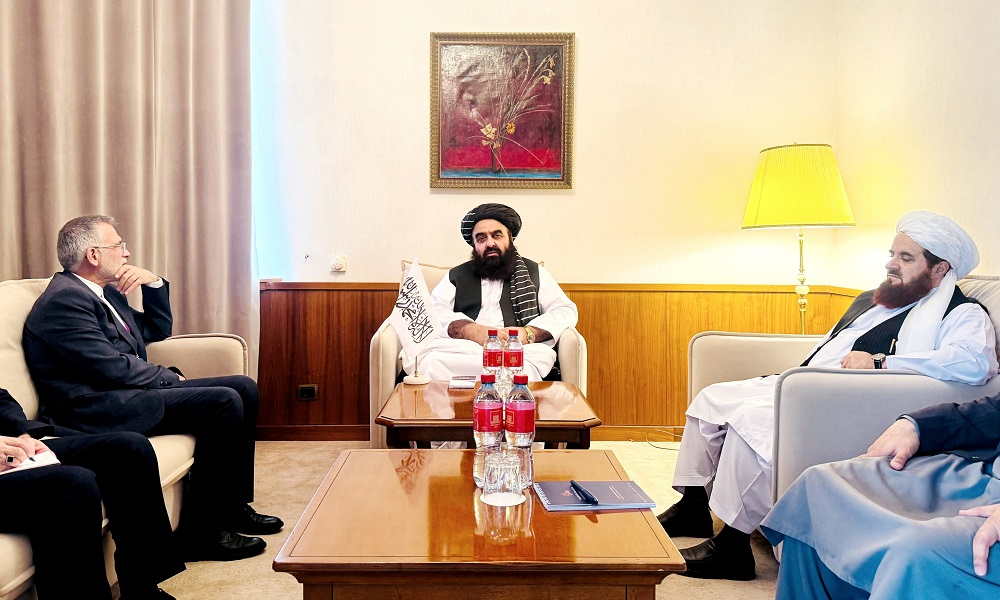
Amir Khan Muttaqi, Minister of Foreign Affairs, met on Wednesday with Mohammad Reza Bahrami, a representative of Iran’s Ministry of Foreign Affairs, on the sidelines of the eighth meeting of the Moscow Format and discussed ways to expand bilateral relations.
The Ministry of Foreign Affairs said the two sides exchanged views on Afghanistan-Iran relations, regional developments, and ways to strengthen mutual cooperation between the two countries.
Muttaqi expressed appreciation for Iran’s engagement with Afghanistan and its constructive participation in regional meetings, emphasizing the need to further expand relations between Kabul and Tehran.
Meanwhile, Mohammad Reza Bahrami stressed the importance of relations between the two countries and shared Iran’s views on regional cooperation, stability, and expanding economic engagement between Afghanistan and Iran.
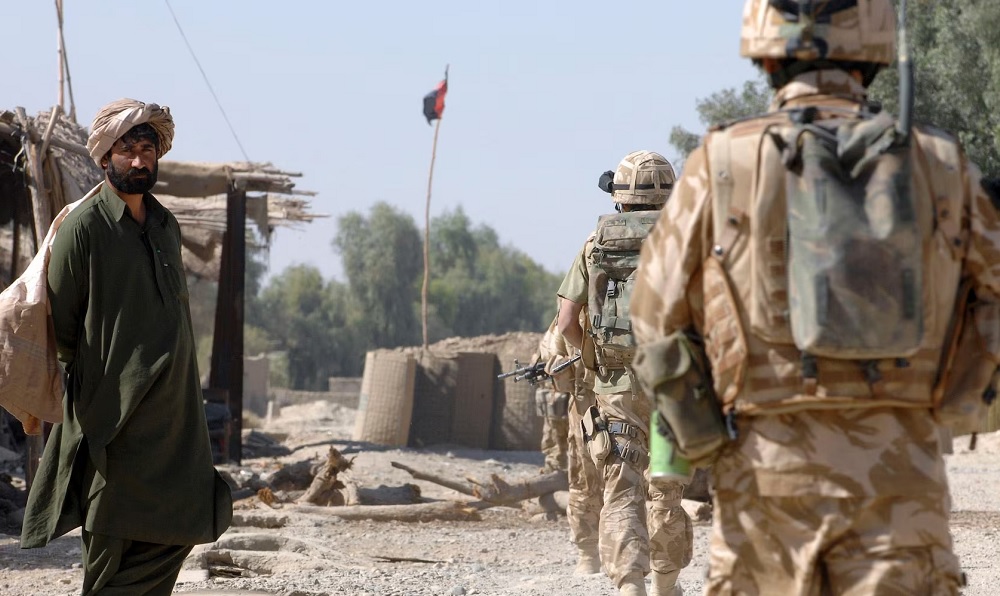
The UK Ministry of Defence identified material suggesting that British service personnel may have committed “serious offences” in Afghanistan, including possible murder, manslaughter and grievous bodily harm, a High Court hearing in London was told.
The information was referred by UK Special Forces (UKSF) to the Defence Serious Crime Command earlier this year, The Independent reported.
According to the court, any criminal investigation into the allegations has been paused pending the outcome of the Afghanistan Inquiry.
The inquiry, chaired by Lord Justice Haddon-Cave, is examining allegations that UK special forces unlawfully killed people during operations in Afghanistan between 2010 and 2013, as well as claims of a subsequent cover-up.
It is also investigating allegations of inadequate investigations by the Royal Military Police.
The latest court proceedings relate to a senior British soldier, identified only as Witness IIA126, who is challenging the inquiry’s decision to restrict his and his lawyers’ access to certain evidence.
His lawyer, Kate Grange KC, argued that the restrictions had prevented the soldier from reviewing evidence concerning an allegation that a person was shot in the head while possibly asleep during a “deliberate detention operation.”
The inquiry is opposing the legal challenge, arguing that the restrictions were necessary to protect the identities of witnesses whose evidence was considered highly sensitive.
Jonathan Glasson KC, representing the inquiry, told the court that the discovery of material potentially indicating serious offences did not mean that any particular individual would necessarily face criminal charges.
The inquiry is expected to continue its examination of the allegations, with a written judgment on the latest legal challenge due at a later date.
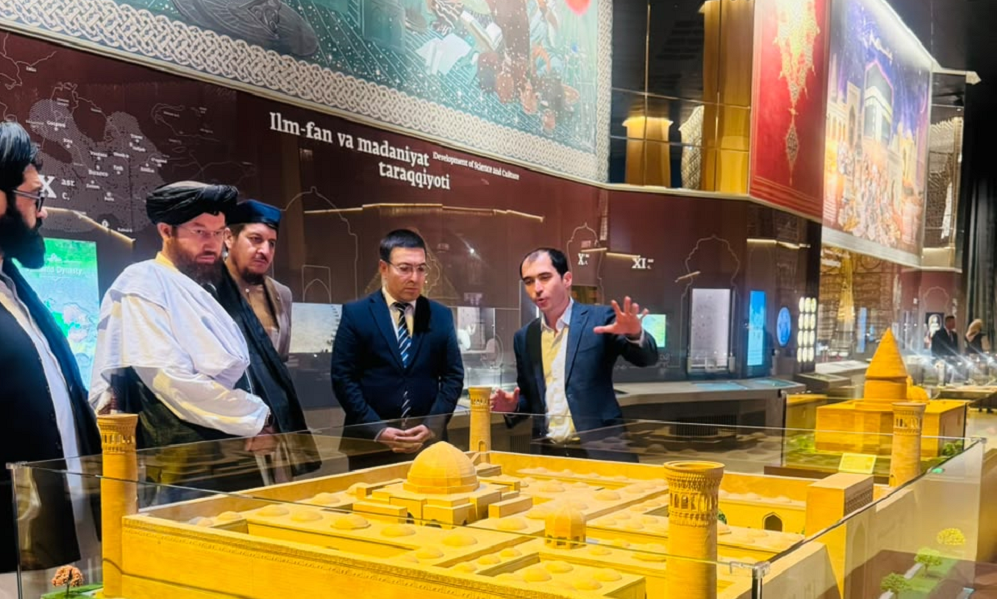
Afghanistan’s Minister of Agriculture, Irrigation and Livestock, Attaullah Omari, has arrived in Uzbekistan’s capital, Tashkent, to attend an international forum on food security and sustainable development.
Omari is visiting Tashkent at the invitation of Uzbekistan’s Ministry of Agriculture and is scheduled to participate in the Global Technical Forum for Landlocked Countries on Food Security and Sustainable Development Goals, being held from October 7 to 8.
Afghanistan’s Ministry of Agriculture said the visit will provide an opportunity to discuss expanding bilateral and regional cooperation with Uzbekistan in agriculture, irrigation, livestock, trade and investment.
The Afghan delegation is also expected to meet officials and representatives from participating countries to discuss agricultural exports, trade, investment opportunities, and the exchange of technical knowledge and expertise.


Tahawol: Consequences of US war in Afghanistan reviewed

Saar: Expulsion of Afghan refugees from Pakistan discussed

Kohi shines as Toofan Herat beat Abu Muslim Farah 2–0

Muttaqi and Iranian representative discuss expansion of bilateral relations

Baradar opens Fifth Imam Abu Hanifa International Exhibition in Kabul

UAE firm eyes investment in Salang’s second tunnel and pharmaceutical factories

US Treasury ratchets up pressure on Iran with sweeping new aviation sanctions

AI could pose ‘existential’ risk to humanity, UN rights chief warns

EU and FAO launch €5m programme to strengthen Afghanistan’s agrifood sector

Omar Zawak, Toofan Herat secure victories in Afghanistan Champions League
Tahawol: Consequences of US war in Afghanistan reviewed
Saar: Expulsion of Afghan refugees from Pakistan discussed

Tahawol: Discussion on outcome of Moscow Format meeting

Saar: Expansion of relations between Kabul and Moscow discussed

Tahawol: Afghanistan-Iran: shared opportunities and challenges discussed
-

 Sport3 days ago
Cricket Bonanza: Afghanistan set for packed international schedule
-
 Latest News5 days ago
Kazakhstan, Uzbekistan and UAE sign MoU on CASA railway project via Afghanistan
-
 Regional5 days ago
Pakistan says Mecca pact members to hold emergency talks on engaging Houthis
-
 Regional4 days ago
India, Pakistan summon top diplomats over border incident
-
 Latest News4 days ago
Afghanistan inaugurates 121 km Wakhan road to China border
-
 Sport5 days ago
Rashid Khan plans to build cricket academy and stadium in Nangarhar
-

 Sport3 days ago
ACL: Sorkh Poshan extend perfect run with 1-0 win over Khurasan
-
 Sport3 days ago
Afghanistan U19 to face Bangladesh, Oman in Youth ODIs