
Latest News
Australia announces compensation plan for Afghan war crime victims

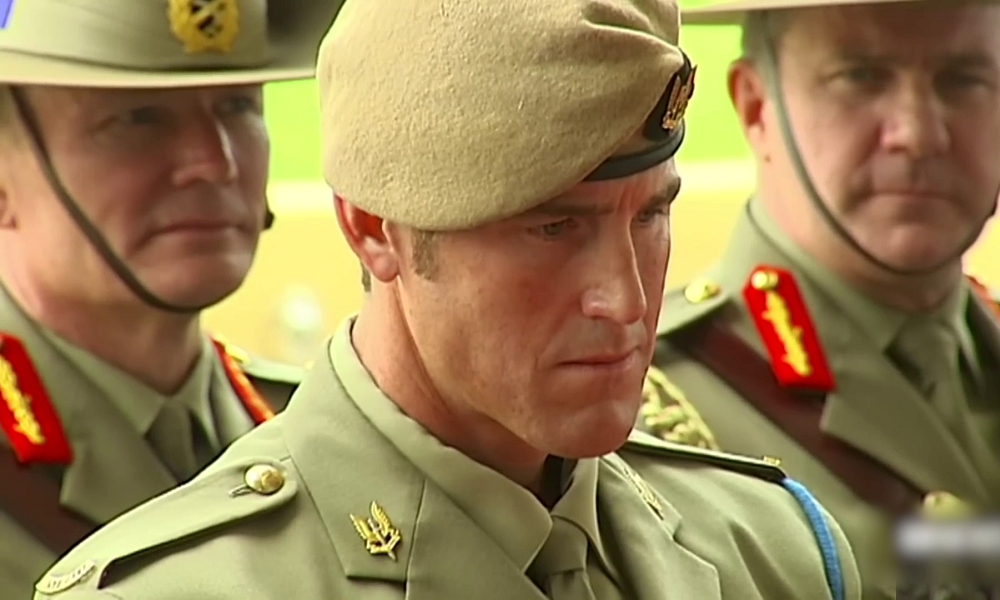
The Australian Defense Department has unveiled a compensation plan for families of victims who were unlawfully killed or abused by Australian special forces in Afghanistan, Australian media reported Sunday.
Over the past 20 years, more than 39,000 Australian soldiers served in Afghanistan. As part of peacekeeping efforts alongside the United States and other allies, 400 Australian soldiers were deployed until their withdrawal in 2021.
During that time, an investigation revealed that Australian soldiers committed war crimes, including the murder and abuse of numerous Afghan civilians. Incidents included shooting prisoners, planting weapons, radios, and grenades next to bodies to suggest they were legitimate
targets.
The investigation highlighted systemic issues, such as inadequate mentorship and a “warrior culture” focused on status and power rather than exemplary soldiering.
The 2020 Brereton Report, led by Major General Paul Brereton, implicated 25 Australian soldiers in the murders of 39 Afghans and recommended criminal investigations.
Before pursuing legal action, the Australian Defense Force Inspector General recommended compensating the victims’ families. A defense department spokesperson confirmed the government’s commitment to implementing the report’s findings “to the fullest possible extent,”
including compensation.
The Australian government is expected to make further announcements in the coming months.
Deputy Spokesman of the Islamic Emirate Hamdullah Fitrat, however, says that this action is not enough and that Australia’s crimes in Afghanistan are far more.
“Australian government has confessed to its crimes and announced the compensation, but this is a small issue and it [paying compensation] cannot cover all their crimes in Afghanistan,” said Fitrat.
Related Stories:
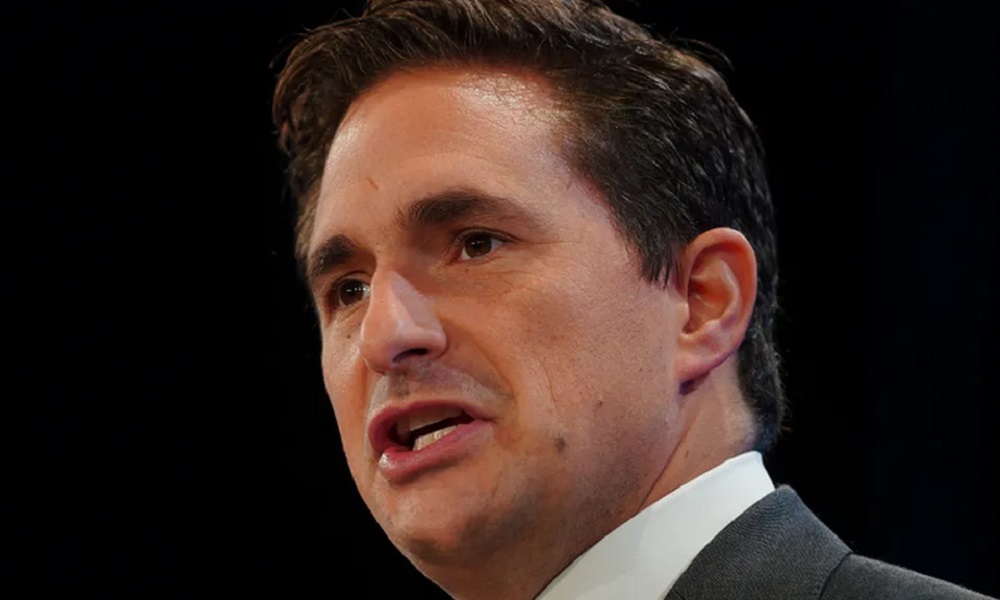
UK’s Mercer faces 10-day deadline in Afghanistan war crimes inquiry
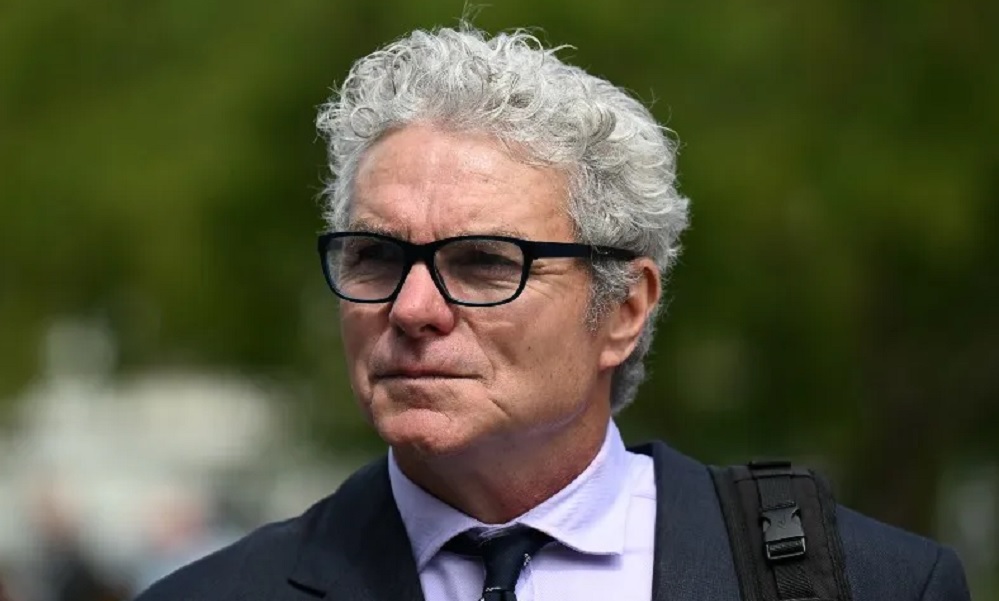
Australian who blew whistle on alleged war crimes in Afghanistan pleads guilty






Latest News
Mujahid: Pakistan attacking Afghanistan to evade Mecca Pact responsibilities
He warned that the Islamic Emirate would give an “appropriate response” to what he called the Pakistani military regime’s “bullying.”
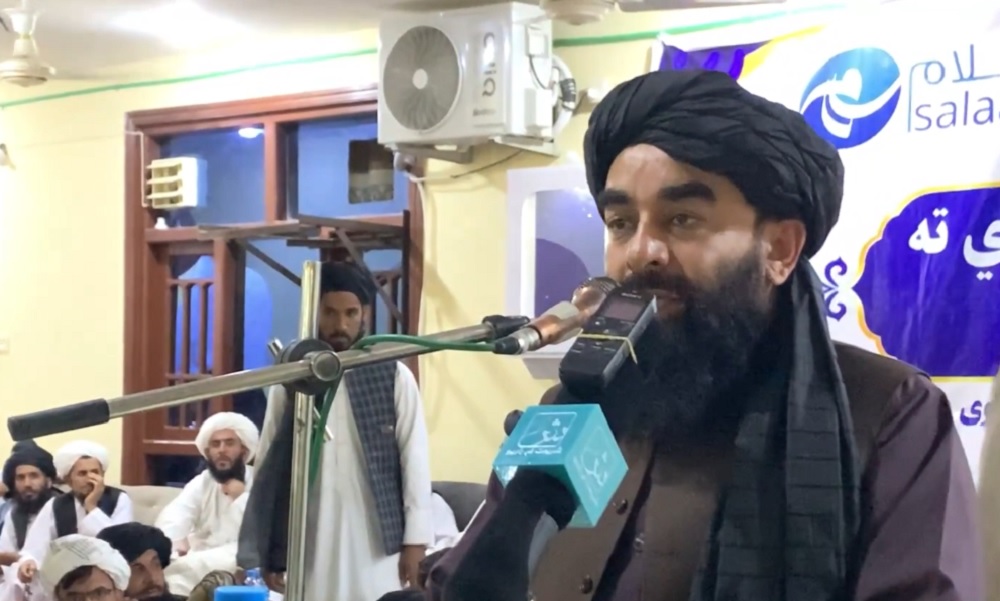
Islamic Emirate spokesperson Zabihullah Mujahid has accused Pakistan of carrying out attacks on Afghanistan to divert attention from its domestic problems and to evade responsibilities under the “Mecca Pact.”
Speaking at a religious seminary in Kandahar, Mujahid said Pakistan was facing political and economic challenges at home and was using attacks on Afghanistan to shift public attention away from protests and its internal problems.
“Pakistan, by violating the territory of its neighboring Islamic country, wants to divert attention from its failures,” he said.
Mujahid also criticized Pakistan’s political situation, claiming that political space had been restricted and that freedoms guaranteed under the country’s laws were not being allowed.
He said Pakistan’s economic problems had also increased significantly and accused the country of seeking to distract the public from those problems by engaging in conflict with Afghanistan.
Mujahid further accused Pakistan’s military leadership of putting the Pakistani people at risk through what he described as its “false position.”
He warned that the Islamic Emirate would give an “appropriate response” to what he called the Pakistani military regime’s “bullying.”
His remarks followed Pakistani airstrikes on Kandahar, Paktia and Khost provinces on Thursday, which Afghan authorities said killed four civilians.
The strikes came three days after attacks on Kunar and Paktika provinces, in which Afghan authorities said three civilians were killed.
Latest News
Kabul rejects U.S. claim that meth seized in Pakistan was of Afghan origin
Balkhi said the Islamic Emirate of Afghanistan (IEA) has imposed an absolute ban on the production, trafficking and use of all types of narcotics in Afghanistan.
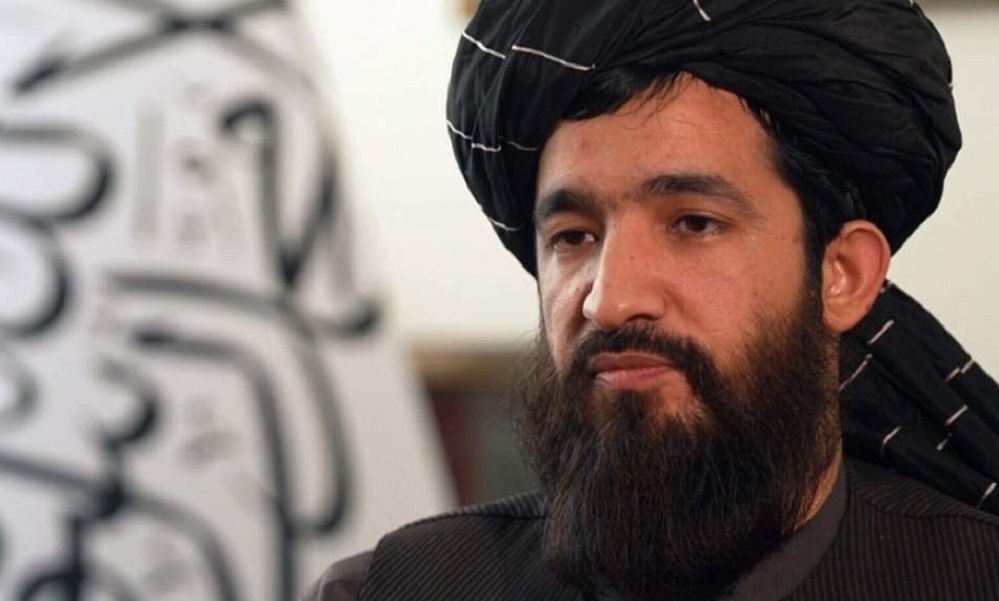
Afghanistan’s Foreign Ministry spokesperson Abdul Qahar Balkhi has rejected a U.S. claim that 463 kilograms of synthetic drugs seized in Pakistan were of Afghan origin, calling the attribution “unfounded and politically motivated.”
Balkhi said the U.S. Embassy in Islamabad should investigate the origin of the seized drugs in Pakistan rather than attributing them to Afghanistan.
“The attribution by the U.S. Embassy in Islamabad of the synthetic drugs bound for Sri Lanka and intercepted in Pakistan through joint U.S.-Pakistani efforts as ‘Afghan-origin’ is an unfounded and politically motivated allegation,” Balkhi said.
He said the Islamic Emirate of Afghanistan (IEA) has imposed an absolute ban on the production, trafficking and use of all types of narcotics in Afghanistan.
Balkhi also claimed that following the ban in Afghanistan, the cultivation, production and trafficking of narcotics have increased “on the other side of the Durand Line.”
He further argued that Afghanistan does not have the capacity to produce synthetic drugs and said crossing points along the Durand Line have been completely closed to all movement for nearly a year.
His remarks came after the U.S. Embassy in Islamabad said U.S. and Pakistani anti-narcotics authorities had seized 463 kilograms of crystal methamphetamine worth an estimated $21 million and bound for Sri Lanka.
The embassy said the operation led to multiple arrests and highlighted ongoing U.S. cooperation and training with Pakistani authorities to disrupt international drug-trafficking networks.
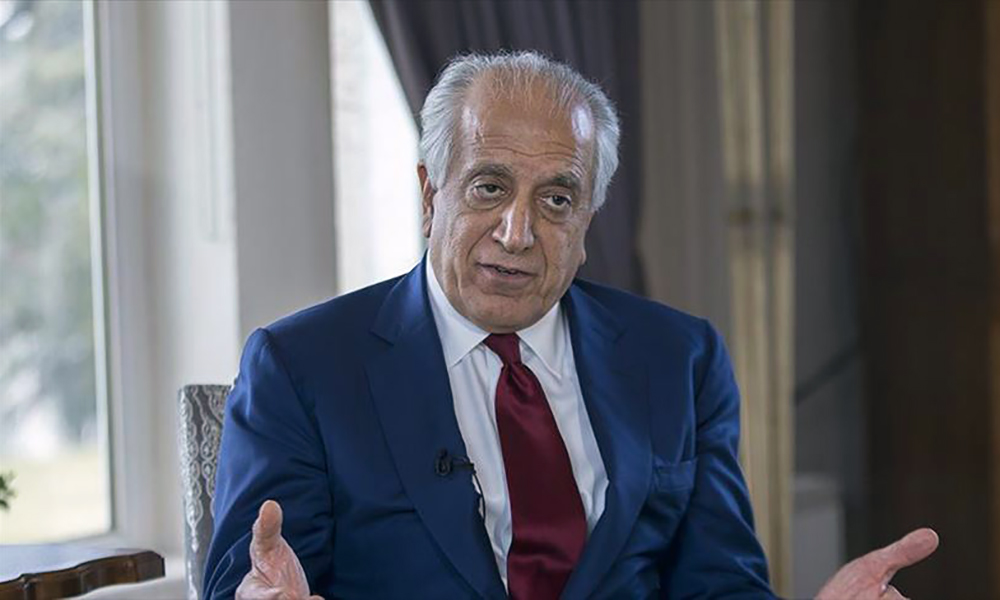
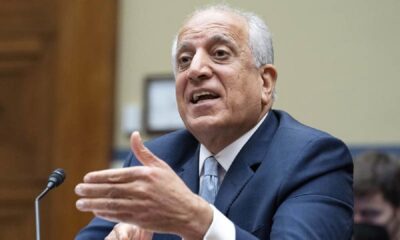
Former U.S. special representative for Afghanistan reconciliation Zalmay Khalilzad has warned that the latest Pakistani airstrikes in Afghanistan and recent violence inside Pakistan are part of a wider crisis, saying he sees no indication that the situation is about to change.
In a post on X on Thursday, Khalilzad described the Pakistani airstrikes that have killed Afghan civilians and the increasing use of force against civilians in Pakistan as “interconnected tragedies,” implying both effected by Pakistan’s establishment.
“Unfortunately, I do not see any signs of change,” Khalilzad said, adding that current indicators suggested the use of force against Pakistanis would “likely get worse” in the coming days.
His comments came after Pakistan carried out a new wave of airstrikes inside Afghanistan overnight Thursday, saying it had targeted 10 locations used to launch and store drones.
Pakistani Information Minister Attaullah Tarar said the strikes were conducted in response to drones launched from Afghan territory a day earlier and described them as “deliberate, precise, calibrated and proportionate.”
Afghan officials said the strikes killed four civilians. The attacks reportedly hit locations including Kandahar, Khost and Paktia provinces. Afghanistan’s Islamic Emirate authorities have denied launching the drones cited by Pakistan and have condemned the strikes.
The latest attacks follow Pakistani airstrikes earlier this week in Kunar and Paktika. Pakistan said those operations killed 28 militants, while the United Nations confirmed that three Afghan civilians — a man, a woman and a girl — were killed, with four others injured.
The renewed airstrikes come amid a sharp deterioration in relations between Kabul and Islamabad. Pakistan has accused Afghanistan of allowing militant groups, including the Tehreek-e-Taliban Pakistan (TTP), to operate from its territory and launch attacks inside Pakistan.
Afghan authorities reject the allegations and say militancy inside Pakistan is an internal issue.
Khalilzad has previously called for a change in Pakistan’s strategy toward both its internal security problems and Afghanistan.


Mujahid: Pakistan attacking Afghanistan to evade Mecca Pact responsibilities

Kabul rejects U.S. claim that meth seized in Pakistan was of Afghan origin

Saudi Grand Mufti tells troops to be ready to sacrifice their lives fighting Houthis

Afghanistan wins two bronze medals in wushu at Asian Games

White House reinstates access to CNN, MS NOW and Politico following judge’s order

Saudi energy group signs major Afghanistan deals covering gas exploration and pipeline plans

ATN secures exclusive rights to broadcast T20I series in India across Afghanistan

Trump floats idea of renaming Atlantic or Pacific Ocean

US hits Egyptian bank branches with Iran sanctions as war marks six months

Nepal flood rescue mission enters critical phase as thousands remain missing

Tahawol: Discussion on fresh Pakistani airstrikes on Afghanistan

Saar: Calls for international support for Afghanistan discussed

Tahawol: Opening of the 81st UN General Assembly Session

Saar: OIC Assessment of Afghanistan’s humanitarian and development situation discussed

Tahawol: Reactions to Pakistan’s attacks on Afghanistan discussed
-

 Sport4 days ago
Afghanistan to face Japan and Nepal in Asian Games cricket group stage
-
 Latest News5 days ago
Pakistan says Kohat attackers had roots in Afghanistan
-
 Regional4 days ago
Iran and US trade threats after Houthi attacks escalate regional conflict
-

 World3 days ago
CNN, MS NOW and Politico sue Trump, challenging White House ban
-
 Business5 days ago
Dogharoun handles 60% of Iran’s exports to Afghanistan
-
 World5 days ago
World leaders return to UN amid wars in Middle East and Ukraine
-
 Health4 days ago
Four-day polio vaccination campaign begins across Afghanistan
-
 Latest News4 days ago
Khalilzad condemns Pakistan airstrikes, says current strategy is not working