
Latest News
Baradar begins process of distributing land ownership documents to industrialists

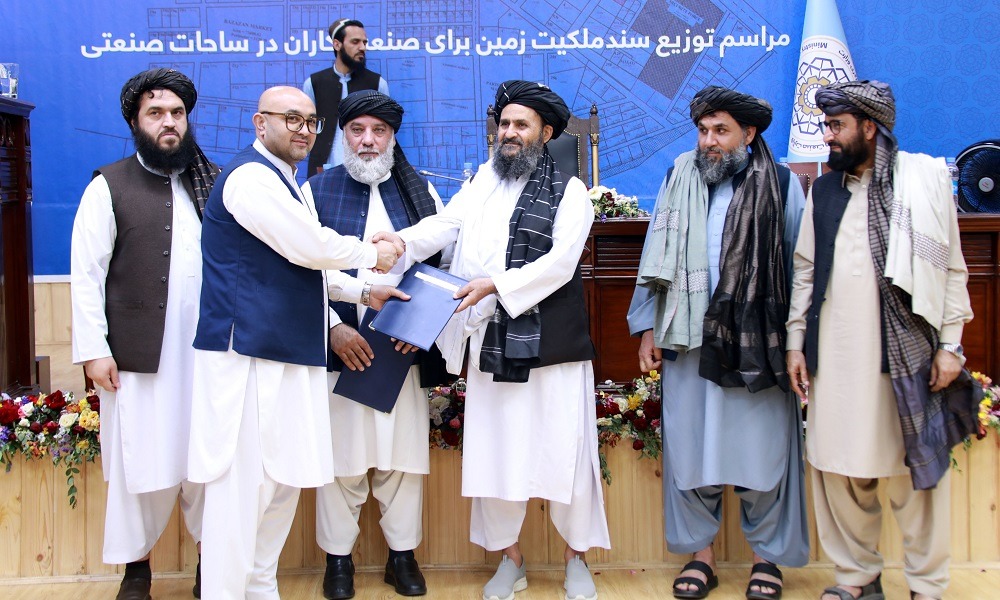
Deputy Prime Minister for Economic Affairs, Mullah Abdul Ghani Baradar, on Wednesday launched the process of distributing land ownership documents to industrialists in the country’s industrial zones.
In a statement, the deputy PM’s office quoted Abdul Ghani Baradar as saying that the growth of industry is the most effective path toward achieving economic self-sufficiency, social stability, and reducing unemployment in a country.
Baradar stated that the objective of the Islamic Emirate is to create an environment for the private sector where they can invest with confidence, establish factories, and become part of the country’s productive workforce.
He added that to regulate industrial zones, ensure economic growth and development, attract and mobilize private capital, and manage, maintain, and safeguard these zones, IEA’s supreme leader has ratified the Industrial Zones Law.
This law facilitates the necessary conditions and services for industrial activities and investment, thereby creating job opportunities for citizens and enabling significant achievements in the country’s economic growth and development, Baradar said.
He noted that under the directive of IEA’s supreme leader and in line with the newly approved law, environmental protection, and the urban master plan, 2,000 jeribs of land will be allocated in each of the four directions of Kabul.
“20,000 jeribs each in Nangarhar, Kandahar, and Balkh provinces; 10,000 jeribs in Kunduz; and, where possible, 1,000 jeribs in each of the remaining provinces for industrial parks,” he stated.
According to him, between 10 to 50 jeribs in each province will be designated for small industries and enterprises.
The Deputy PM stated: “As part of these efforts, today we witness the distribution of land ownership documents for industrial purposes to 91 industrialists in industrial zones.” He added that this distribution marks a new chapter and will further enhance the country’s industrial strength.
Emphasizing the importance of proper utilization, Baradar urged beneficiaries of industrial land to use it effectively in the areas of production and industrial strengthening.
He assured industrialists that IEA has already initiated major electricity infrastructure projects to meet the power demands of industry, and these projects are progressing significantly.
He emphasized that IEA has considered numerous facilities and incentives to empower the private sector, foster economic growth, and advance national industry.
The goal is to provide investors with a reliable, stable, and secure environment, he said adding that IEA guarantees all industrialists and investors that, once domestic products meet the required standards of affordability, quality, and quantity, tariffs will be increased on similar foreign goods to achieve self-sufficiency.
Meanwhile, Baradar called on Afghan investors both inside the country and abroad to bring their industry, expertise, and capital to Afghanistan and play an active role in strengthening the country’s economic foundations, generating employment opportunities, and expanding the industrial sector.









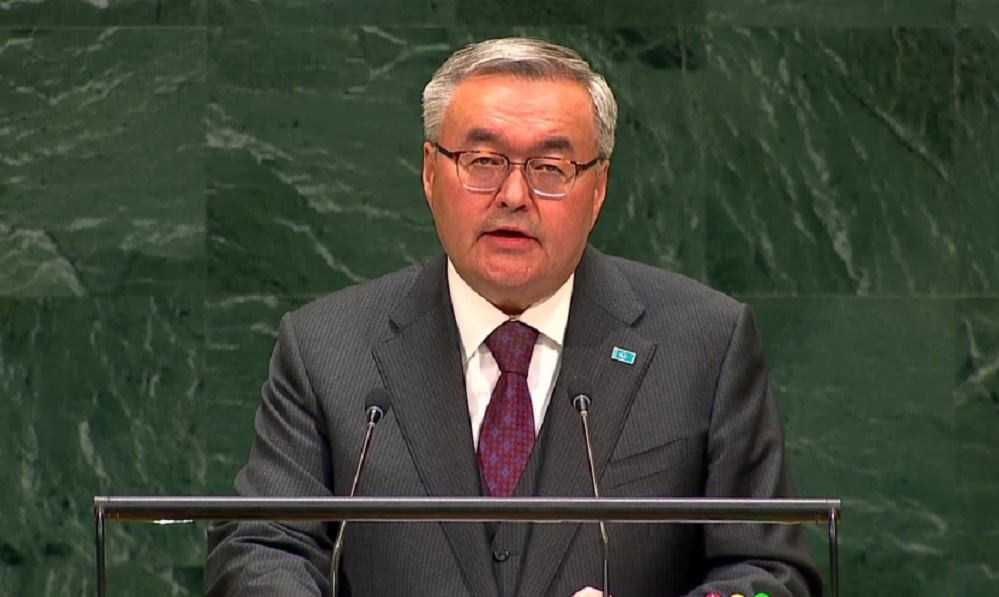
Kazakhstan’s Foreign Minister Mukhtar Tileuberdi has called for pragmatic and coordinated international engagement with Afghanistan, saying the country’s long-term stability is closely linked to the security and sustainable development of Central Asia.
Speaking during the general debate of the 81st session of the United Nations General Assembly in New York on Friday, Tileuberdi said humanitarian assistance to Afghanistan remains essential but alone cannot break the cycle of poverty, displacement and dependency.
He said Kazakhstan supports a “pragmatic, coordinated and step-by-step” approach to international engagement with Afghanistan, with the United Nations playing a central role.
Tileuberdi also said Kazakhstan is working with the UN to operationalize the United Nations Regional Centre for the Sustainable Development Goals for Central Asia and Afghanistan in Almaty.
He said the success of the centre should be measured by the results and assistance it delivers to the region.


Abu Muslim Farah defeat Khurasan Faryab 2-0 in ACL season six

Saar: Concerns over Pakistan’s political crisis discussed

Afghanistan Champions League: Omar Zawak Herat beat Toofan Herat 1-0

Blast in Pakistan’s Dera Ismail Khan kills 11, injures 30

Ariana Afghan Airlines increases Kabul-Delhi cargo flights

Saudi energy group signs major Afghanistan deals covering gas exploration and pipeline plans

Trump floats idea of renaming Atlantic or Pacific Ocean

US hits Egyptian bank branches with Iran sanctions as war marks six months

Nepal flood rescue mission enters critical phase as thousands remain missing

Iranian clubs to face Gulf opponents at neutral venues in Asian Champions League Elite
Saar: Concerns over Pakistan’s political crisis discussed

Exclusive interview with Abdul Latif Mansoor, Minister of MRRD

Tawsia: Overview of Afghanistan’s iron mines

Tahawol: Discussion on fresh Pakistani airstrikes on Afghanistan

Saar: Calls for international support for Afghanistan discussed
-

 World5 days ago
CNN, MS NOW and Politico sue Trump, challenging White House ban
-

 Latest News4 days ago
Ariana Afghan Airlines ranks seventh among 45 Central Asian airlines
-

 Latest News5 days ago
UN reiterates call for respect for international law after Kunar airstrikes
-

 Regional4 days ago
US and Iran hold first talks since June after Trump’s ‘annihilation’ threat
-

 Latest News4 days ago
Silk Road highway in Wakhan corridor now reaches the China border
-

 Regional3 days ago
Iran airlines cancel flights as US sanctions hit
-

 Latest News5 days ago
Afghan Official: Pakistan’s airstrikes will not go unanswered
-
 Sport5 days ago
Afghan boxing referee heads to China for international festival