
Business
Envoy says Pakistan and Afghanistan will have to resolve trade issues themselves

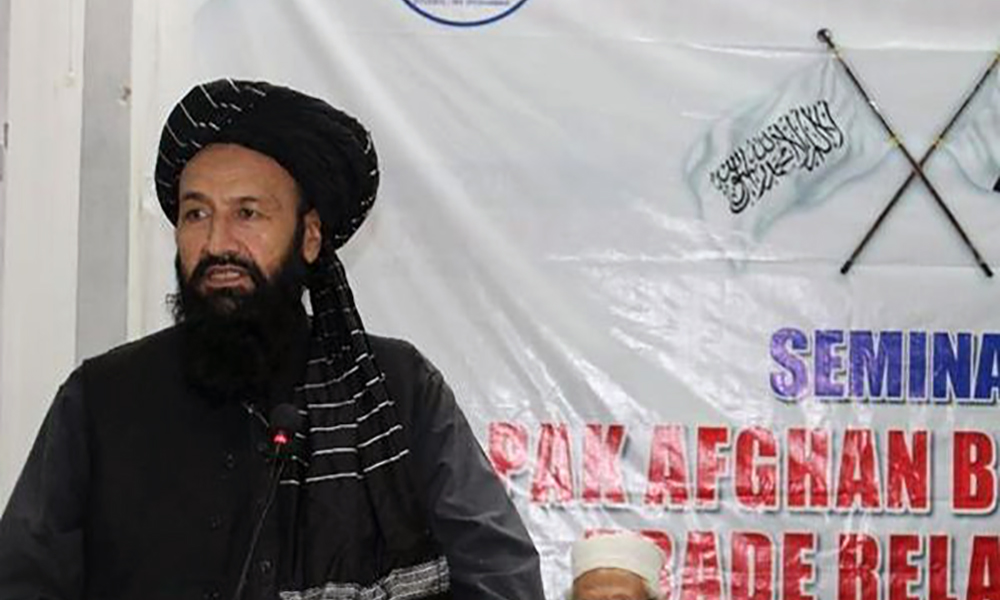
Pakistan and Afghanistan would have to resolve their problems themselves, especially trade issues. International community and regional powers want to keep the two neighboring countries engaged in minor issues while the policymakers of the two countries need to sit together and remove the hurdles in the way of beneficially mutual trade.
This was the crux of the seminar on ‘Pak-Afghan Bilateral Trade Relations’ organized by the Institute of Regional Studies on Wednesday.
Afghan Consul General in Peshawar, Hafiz Mohibullah, was the guest of honor.
IRA Chairman Dr Mohammad Iqbal Khalil, Director Pak-Afghan Chamber Ziaul Haq Sarhadi, member of the chamber Shahid Hussain and a columnist Alamgir Afridi spoke at the event.
The speakers said that certain elements want to create and maintain tension between the two countries.
They said the leadership of the two Muslim countries should work out a solution to the economic challenges faced by them.
Hafiz Mohibullah said that instead of looking to others, the two countries would have to solve their political and economic problems themselves.
He said during America’s 20-year occupation of the country, the US and NATO could not establish a single institution or hospital in Afghanistan. Also, he added, the US and NATO failed to take any steps for the economic betterment of Afghanistan.
“All that the US and NATO did in Afghanistan during their stay was to spread destruction. On the other hand the government of Islamic Emirate carried out such projects during its one-year rule in the country which could not be done by the occupation forces and their puppet government(s) during 20 years,” he claimed.
He said the former president of Afghanistan, Ashraf Ghani had control over just one-third of the country, while the Islamic Emirate’s control extended to every nook and corner of the country. The diplomat said the world nations have not yet formally recognised the rule of the Islamic Emirate. But, interestingly they were making various demands to the Taliban government, he added.
About Afghanistan-Pakistan relations, Hafiz Mohibullah said both the countries needed the help and support of each other. The way the people of the two countries supported each other in the past, they should have mutual cooperation for promotion of bilateral trade.
“If they support each other to promote their mutual trade, they would not be in need of looking towards others,” he remarked.
He said that the US and NATO wanted to create problems, but the leadership of the two countries would not allow them to interfere in their affairs. This way they would overcome their economic issues, he said.
Dr Iqbal Khalil said the two countries were connected with each other in all the sectors and their cooperation would result in the development of both the countries. He said that Afghanistan and Pakistan were confronting trade and economic challenges which they should mutually overcome.
The speaker said that despite their important geo-strategic position, the mutual trade between the two countries has decreased instead of showing an increase.
He said that Afghanistan was the major market for trade and industry of Khyber Pakhtunkhwa.
Dr Iqbal Khalil expressed his optimism that peace would be restored in Afghanistan and the government of Islamic Emirate would give a roadmap for trade relations with Pakistan.
Ziaul Haq Sarhadi said the trade volume between Afghanistan and Pakistan during 2022-23 was $968 million, while it was $2.5 billion in 2012.
He said the trade agreement of 1965 between the countries functioned smoothly for 45 years. But in 2010 a new agreement was signed, which was protested by traders and chambers of both the countries. This agreement is not useful and it has become virtually ineffective, he said. This issue needs to be resolved, he added.


Business
Afghanistan, Belarus discuss expanding industrial and trade cooperation
Particular attention was given to companies producing tractors, industrial machinery, and equipment and vehicles used in the mining sector.
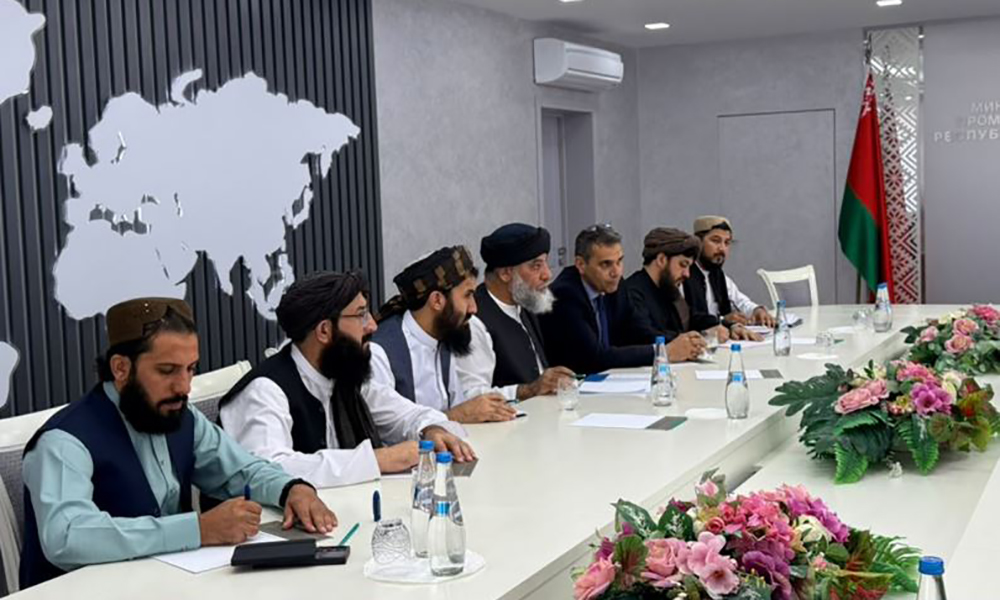
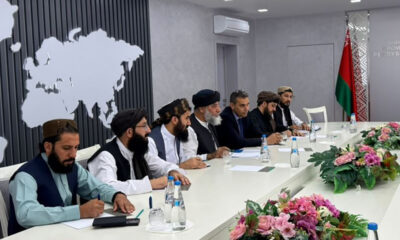
Afghanistan’s Minister of Industry and Commerce, Nooruddin Azizi, met with Belarus’ Minister of Industry during an official visit to the country.
The two sides discussed the establishment of manufacturing plants in Afghanistan, the regular organization of the Afghanistan-Belarus Business Forum, and follow-up on issues raised through the countries’ economic commission.
Belarusian officials expressed appreciation for Afghanistan’s participation in the country’s international industrial exhibition and voiced interest in expanding the presence of Belarusian manufacturing companies in Afghanistan.
Particular attention was given to companies producing tractors, industrial machinery, and equipment and vehicles used in the mining sector.
The second International Industrial Exhibition of Belarus is being held with the participation of around 500 companies from different countries. The exhibition has also attracted visitors from European and Asian countries.
Business
Afghanistan, Tajikistan seek stronger trade and investment ties
The two sides discussed increasing trade exchanges, establishing direct links between traders and investors, and organizing joint economic programs.
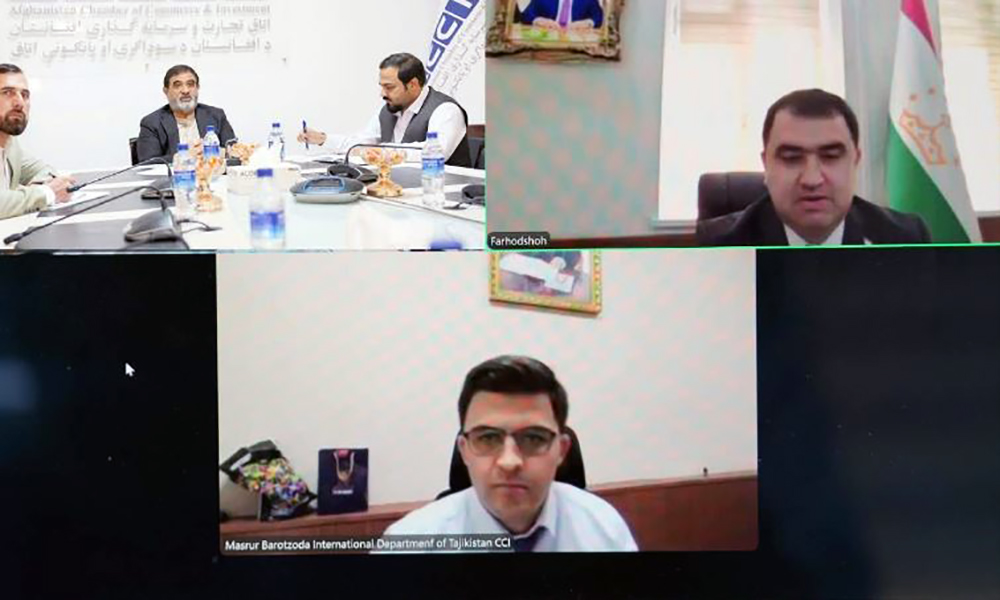
The heads of the chambers of commerce and industry of Afghanistan and Tajikistan have agreed to strengthen bilateral trade, promote investment and expand cooperation between the private sectors of the two countries.
Sayed Karim Hashemi, head of the Afghanistan Chamber of Commerce and Investment (ACCI), held an online meeting with Farhad Shah Rahman Alizoda, head of the Chamber of Commerce and Industry of Tajikistan, to discuss ways to expand economic ties.
The two sides discussed increasing trade exchanges, establishing direct links between traders and investors, and organizing joint economic programs.
Hashemi invited Tajik traders and investors to participate in the fifth Imam Abu Hanifa International Exhibition in Kabul.
Alizoda, meanwhile, invited an Afghan business delegation to attend a major trade and industrial exhibition in Dushanbe.
The two sides also stressed the importance of exchanging business delegations and developing long-term cooperation between the private sectors of Afghanistan and Tajikistan.
Business
Kazakhstan grain shipments to Afghanistan rise over 4-fold
Of the total, 7.2 million tons were transported for export, while 2.1 million tons were supplied to the domestic market.
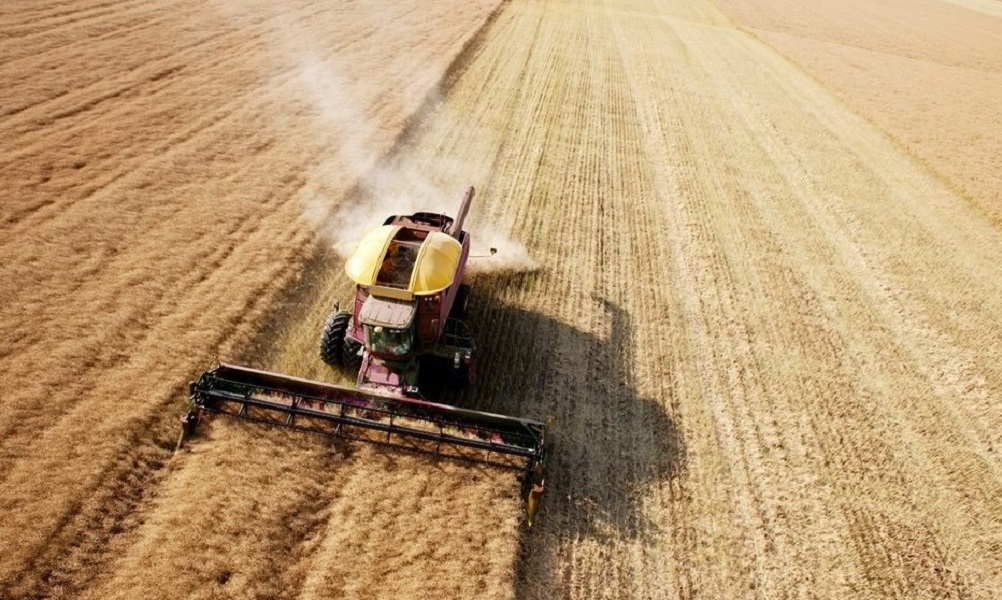
Grain shipments from Kazakhstan to Afghanistan increased 4.4 times in the first eight months of the year, reaching 655,000 tons, according to Kazakhstan’s Transport Vice Minister Zhanibek Taizhanov.
Speaking at a government meeting, Taizhanov said Kazakhstan transported 9.3 million tons of grain by rail during the period, a 13% increase compared with the same period in 2025.
Of the total, 7.2 million tons were transported for export, while 2.1 million tons were supplied to the domestic market.
Taizhanov said grain shipments to Central Asia increased by 37%, while shipments to China rose by 34%. Grain exports through Russian ports also increased by 9%.
Meanwhile, combined fodder exports rose by 38% to 2.6 million tons.
Earlier, Kazakhstan’s Vice Minister of Agriculture Azat Sultanov said the country plans to commission 15 additional vegetable storage facilities by the end of 2026, with a combined capacity of 129,000 tons.


Trump: Unlike Afghanistan, US took all equipment from Iraq

Afghanistan, Belarus discuss expanding industrial and trade cooperation

Karzai condemns Pakistani airstrikes on Kunar and Helmand

Moscow to host 8th meeting of Afghanistan consultations on October 5

Da Afghanistan Bank reports increase in public bank deposits

Saudi energy group signs major Afghanistan deals covering gas exploration and pipeline plans

Iranian clubs to face Gulf opponents at neutral venues in Asian Champions League Elite

Khalilzad: Afghanistan ready to attract major investment

Ariana Television Network secures exclusive rights to Afghanistan’s 2026/27 cricket series

El Niño likely to intensify, may become strongest ever recorded, WMO says

Tahawol: Improvement in Afghanistan-China relations discussed

Saar: Expanding ties with regional and global countries discussed

Tahawol: Absence of Afghanistan’s envoy at UNGA discussed

Saar: Assessment of war between Afghanistan and US discussed

Saar: Afghanistan’s image at UNGA
-

 Sport4 days ago
Afghan bodybuilder Ali Bilal finishes runner-up at Mr Olympia for third straight year
-

 Latest News4 days ago
Afghanistan says 28 killed, 32 captured in Nuristan operation
-
 World4 days ago
Trump rejects Iranian proposal to open Hormuz and end fighting
-

 Sport5 days ago
Afghanistan Champions League: Omar Zawak Herat beat Toofan Herat 1-0
-
 Latest News4 days ago
UNDP, UN Women launch financing initiative for Afghan women entrepreneurs
-
 Sport3 days ago
Afghanistan vs India Asian Games quarter-final abandoned without a toss
-
 Latest News4 days ago
Germany reports 488 Afghans for possible deportation, 267 have no criminal convictions
-
 Regional4 days ago
Aimal Wali Khan calls Dera Ismail Khan attack a ‘state failure’