
Latest News
Famine may have been averted, but Afghan economic crisis deepens: UN envoy

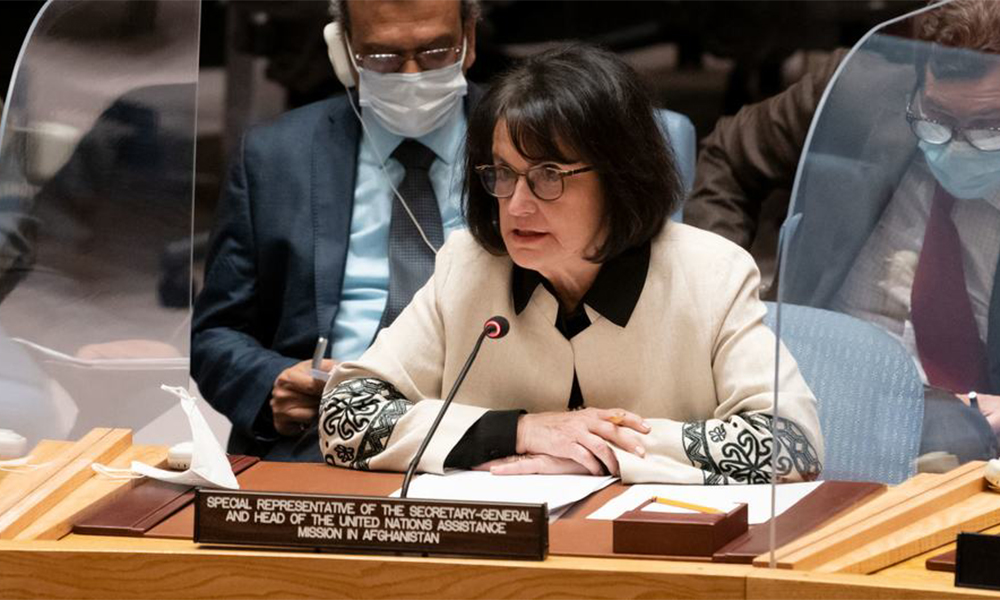
Humanitarian agencies may have distributed enough aid in Afghanistan to avert famine and large-scale starvation, but the country’s economic collapse is “approaching a point of irreversibility,” the UN envoy to Kabul said on Wednesday.
UN Special Representative Deborah Lyons told the UN Security Council that it is “most urgent” to resolve the root problems of the economic crisis, but doing so will require cooperating on all issues with the Islamic Emirate of Afghanistan (IEA) who seized power in August, Reuters reported.
“We do not believe that we can truly assist the Afghan people without working with the defacto authorities,” Lyons said in urging the council to approve a new mandate for her mission.
The IEA authorities lack international recognition six months after taking control of Kabul as the last US-led international troops departed, ending 20 years of war, Reuters reported.
According to Reuters donors cut financial aid constituting more than 70% of government expenditures and about $9 billion in Afghan central bank assets were frozen. Many of IEA’s leaders remain under US and UN sanctions.
The moves accelerated an economic collapse, fueling a cash shortage, joblessness and hunger, prompting UN warnings that more than half of the 39 million people faced starvation, Reuters reported.
Lyons told the council that UN agencies and their partners have supplied aid to nearly 20 million Afghans across the country.
“We believe, as the winter season comes to an end, that we have perhaps averted our worst fears of famine and widespread starvation,” she said.
Lyons, however, said that urgent steps must be taken to address the liquidity crisis, restrictions on international payments and constraints on the central bank.
“Six months of indecision, marked by continued sanctions albeit with some relief, and unstructured political engagement, are eroding the vital social and economic coping systems and pushing the population into greater uncertainty,” she said.
“What we have done has been only to buy a little time.”












Kazakhstan’s Foreign Minister Mukhtar Tileuberdi has called for pragmatic and coordinated international engagement with Afghanistan, saying the country’s long-term stability is closely linked to the security and sustainable development of Central Asia.
Speaking during the general debate of the 81st session of the United Nations General Assembly in New York on Friday, Tileuberdi said humanitarian assistance to Afghanistan remains essential but alone cannot break the cycle of poverty, displacement and dependency.
He said Kazakhstan supports a “pragmatic, coordinated and step-by-step” approach to international engagement with Afghanistan, with the United Nations playing a central role.
Tileuberdi also said Kazakhstan is working with the UN to operationalize the United Nations Regional Centre for the Sustainable Development Goals for Central Asia and Afghanistan in Almaty.
He said the success of the centre should be measured by the results and assistance it delivers to the region.


Abu Muslim Farah defeat Khurasan Faryab 2-0 in ACL season six

Saar: Concerns over Pakistan’s political crisis discussed

Afghanistan Champions League: Omar Zawak Herat beat Toofan Herat 1-0

Blast in Pakistan’s Dera Ismail Khan kills 11, injures 30

Ariana Afghan Airlines increases Kabul-Delhi cargo flights

Saudi energy group signs major Afghanistan deals covering gas exploration and pipeline plans

Trump floats idea of renaming Atlantic or Pacific Ocean

US hits Egyptian bank branches with Iran sanctions as war marks six months

Nepal flood rescue mission enters critical phase as thousands remain missing

Iranian clubs to face Gulf opponents at neutral venues in Asian Champions League Elite
Saar: Concerns over Pakistan’s political crisis discussed

Exclusive interview with Abdul Latif Mansoor, Minister of MRRD

Tawsia: Overview of Afghanistan’s iron mines

Tahawol: Discussion on fresh Pakistani airstrikes on Afghanistan

Saar: Calls for international support for Afghanistan discussed
-

 World5 days ago
CNN, MS NOW and Politico sue Trump, challenging White House ban
-

 Latest News3 days ago
Ariana Afghan Airlines ranks seventh among 45 Central Asian airlines
-

 Latest News5 days ago
UN reiterates call for respect for international law after Kunar airstrikes
-

 Regional4 days ago
US and Iran hold first talks since June after Trump’s ‘annihilation’ threat
-

 Latest News3 days ago
Silk Road highway in Wakhan corridor now reaches the China border
-

 Regional3 days ago
Iran airlines cancel flights as US sanctions hit
-

 Latest News5 days ago
Afghan Official: Pakistan’s airstrikes will not go unanswered
-
 Regional5 days ago
G7 foreign ministers call on Iran to stop arming Houthis