
Health
Global organizations warn of health crisis due to aid cuts in Afghanistan

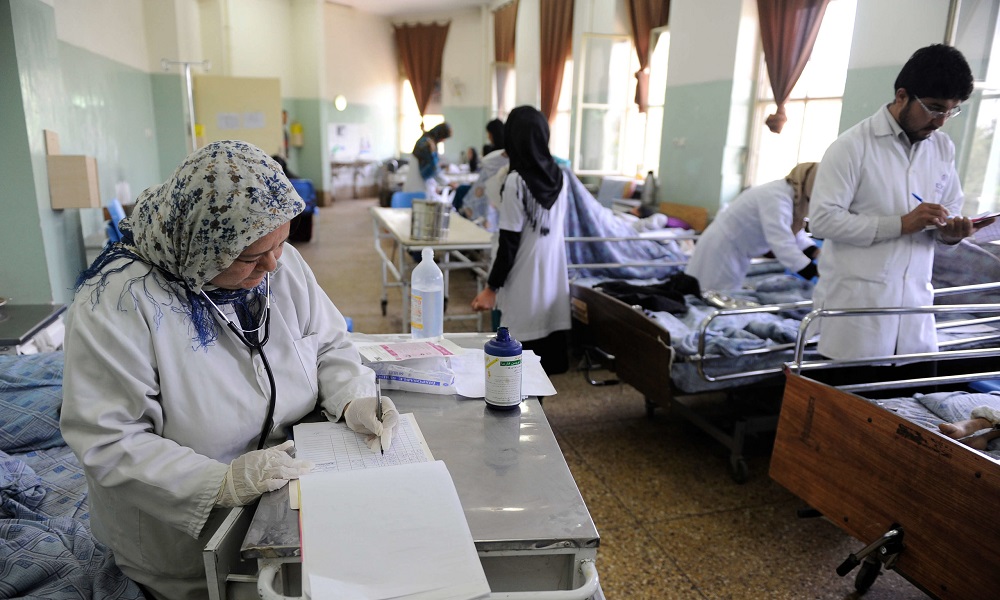
Global organizations are raising alarms about the impact of aid cuts on Afghanistan’s health sector and the reduction in funding for humanitarian organizations operating in the country.
UN-affiliated bodies have stated that the complete suspension of aid from the United States and the reduction of the 2025 budget could lead to the closure or suspension of nearly 2,000 healthcare centers across Afghanistan.
The United Nations Office for the Coordination of Humanitarian Affairs (OCHA) has further warned that if only 25 percent of the required funding is provided, 7 million out of the 9.3 million people in need of medical services will be left without access to healthcare.
The report highlights that without immediate and sufficient funding, child mortality rates could rise sharply, as malnutrition remains one of the leading causes of death for children under the age of five.
The World Food Programme (WFP) has also warned that Afghanistan is facing a severe malnutrition crisis among children, with the number of malnourished children expected to reach 3.5 million by 2025.
Recent reports from the WFP reveal that 8 out of 10 families in Afghanistan are unable to afford a sufficient diet, and 3 out of 4 families are being forced to borrow money to purchase basic food items.
UN agencies have stressed the urgent need for the international community to address the humanitarian crisis in Afghanistan and provide the necessary aid.
This comes after Afghanistan’s Ministry of Economy dismissed reports from some international organizations about the growing poverty in the country, labeling them as exaggerated and far from reality.






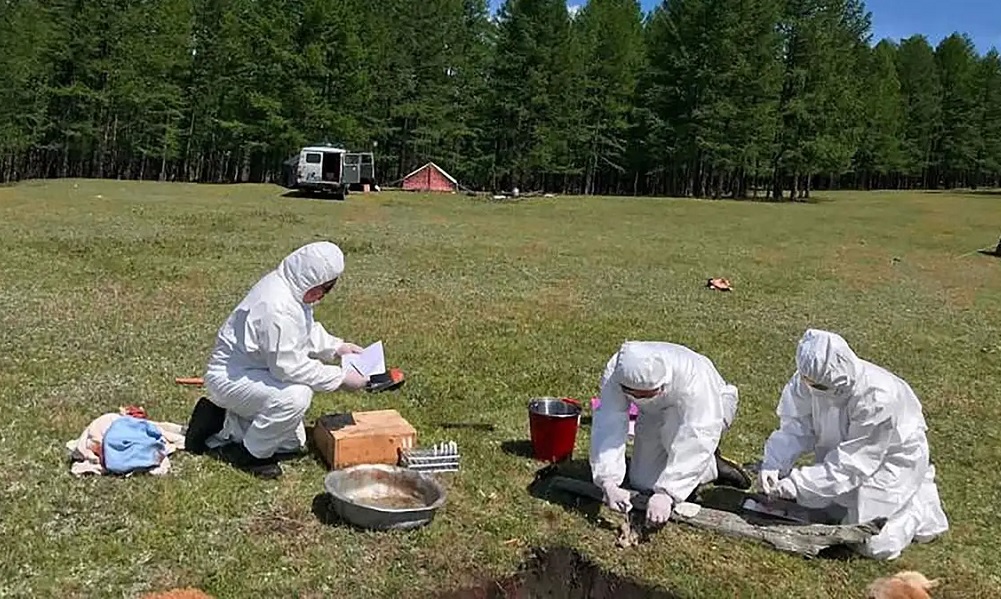
President Donald Trump says the United States is ready to help Russia after reports of a suspected pneumonic plague case in Siberia, as authorities monitor nearly 200 people who may have come into contact with the woman who died.
The woman, a laboratory worker at the Irkutsk Anti-Plague Research Institute, identified in reports as 28-year-old Darya Shipilova, became seriously ill while working at the institute and later died in hospital.
Reports initially suggested she may have been exposed to plague bacteria following an incident at the laboratory. However, Russian health authorities have rejected that account and said she died from pneumonia of unknown origin.
Officials said testing had not detected microorganisms associated with her professional activities and that there was no confirmed laboratory accident involving dangerous pathogens.
As a precaution, authorities have placed people who may have had contact with the woman under medical observation. Five hospitals in the region have also been placed under quarantine measures.
No additional cases of plague have been confirmed, and officials have said those under observation are not showing symptoms associated with the disease.
Pneumonic plague is a severe form of plague that affects the lungs and can spread between people through respiratory droplets. It can, however, be treated with antibiotics when treatment begins promptly.
Trump offers US assistance
The reports have also drawn attention in Washington.
Trump said the United States was closely monitoring the situation and was prepared to assist Russia.
“We’re looking at it very strongly, we just heard about it,” Trump told reporters when asked about the reported risk of pneumonic plague coming from Russia.
“We’ll help them, we’ll help them as much as we can,” he said.
Trump also said he had not spoken with Russian President Vladimir Putin about the reported case.
US Secretary of State Marco Rubio said Washington was monitoring developments but indicated there was no immediate cause for alarm. The US State Department said it was coordinating with the Centers for Disease Control and Prevention and other agencies.
No confirmed outbreak
Despite reports describing the incident as a plague outbreak, Russian authorities have not confirmed a wider outbreak of pneumonic plague.
The cause of the laboratory worker’s illness remains a key point of uncertainty. Russian officials maintain that she died from pneumonia of unknown origin and that tests have not established a connection to plague bacteria.
The monitoring and quarantine measures are precautionary and are intended to identify any potential infections while the investigation continues.
Nearly 200 people are being monitored — but there are currently no confirmed cases of pneumonic plague among them.

Noor Jalal Jalali, Minister of Public Health of Afghanistan, met with Russian Health Minister Mikhail Albertovich Murashko during his official visit to Russia.
The two sides discussed expanding long-term health cooperation between Afghanistan and Russia, including medicines, vaccines, medical equipment, health-worker training and the transfer of modern medical technologies, Afghanistan’s Public Health Ministry said in a statement.
Jalali briefed his Russian counterpart on the needs and priorities of Afghanistan’s health sector and called for greater Russian cooperation to improve the quality of health services, strengthen the professional capacity of health workers and develop modern medical facilities.
Murashko expressed Russia’s readiness to expand technical cooperation with Afghanistan and support efforts to strengthen the country’s health sector.
Health
Kandahar Red Crescent: More than 3,000 mental health patients treated in five years
Doctors said patients considered a serious danger to society are kept at the center on a permanent basis and receive regular treatment.
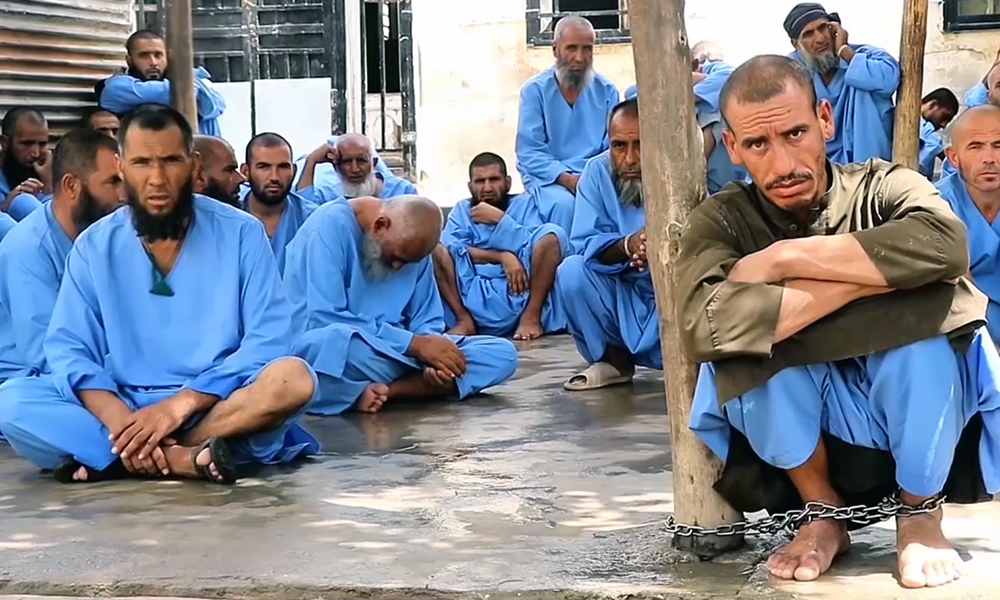
The Kandahar branch of the Afghan Red Crescent Society says more than 3,000 mental health patients, including men and women, have received treatment at home across southern Afghanistan over the past five years.
Officials said 405 patients were also treated at the Afghan Red Crescent’s mental health treatment center in Kandahar and returned to their homes. The center is the only facility in southern Afghanistan providing treatment to mental health patients from the region.
According to officials, during the past five years, 1,936 male and 1,331 female mental health patients received treatment at their homes.
Currently, 158 patients, including men and women who pose a risk to themselves or others, are being kept and treated at the center, while treatment for another 804 patients is continuing at their homes.
Doctors said patients considered a serious danger to society are kept at the center on a permanent basis and receive regular treatment.
Meanwhile, some patients who were previously brought to the center in poor condition are now recovering and have expressed satisfaction with the services they have received.
The development comes as officials from the Red Crescent’s southern regional branch say mental health problems linked to poverty and family difficulties are increasing.
Despite the challenges, they said efforts are underway to expand mental health services so that more patients can receive treatment.


US imposes sanctions on ICC amid dispute over international prosecutions

Former ICC judge Navi Pillay wins 2026 Nobel Peace Prize

Bangladesh reach 317/8 on Day One against Afghanistan in Test match

Kyrgyz President calls for continued regional support for Afghanistan

Afghanistan, Iran seek to expand trade and transit through western border crossings

EU and FAO launch €5m programme to strengthen Afghanistan’s agrifood sector

Omar Zawak, Toofan Herat secure victories in Afghanistan Champions League

Houthi advance in Yemen puts U.S. in a new bind

Cricket Bonanza: Afghanistan set for packed international schedule

Afghanistan Champions League Season 6 kicks off today: Abu Muslim Farah face Sarsabz Yashlar

Tahawol: CSTO meeting on Afghanistan reviewed

Saar: Guterres’s talks with Pakistani officials on Afghanistan discussed

Tahawol: Consequences of US war in Afghanistan reviewed

Saar: Expulsion of Afghan refugees from Pakistan discussed

Tahawol: Discussion on outcome of Moscow Format meeting
-
 Sport5 days ago
Cricket Bonanza: Afghanistan set for packed international schedule
-

 Sport5 days ago
Afghanistan U19 to face Bangladesh, Oman in Youth ODIs
-

 Regional5 days ago
Yemeni government launches offensive to seize all areas from Iran-backed Houthis
-

 Latest News4 days ago
Ariana Afghan Airlines ends 15-year control of ticketing and operational systems by Pakistani firm
-
 World4 days ago
▶️Saudi Arabia, Turkey, Pakistan activate Mecca defense pact
-

 Sport5 days ago
ACL: Abu Muslim Farah maintain momentum with 2-0 win over Arman FC
-

 World5 days ago
Trump picks John Coale as special presidential envoy for hostage affairs
-

 Regional4 days ago
Yemeni government forces seize strategic strait from Houthis