
Latest News
Hardline judge wins landslide in Iran presidential vote amid low turnout

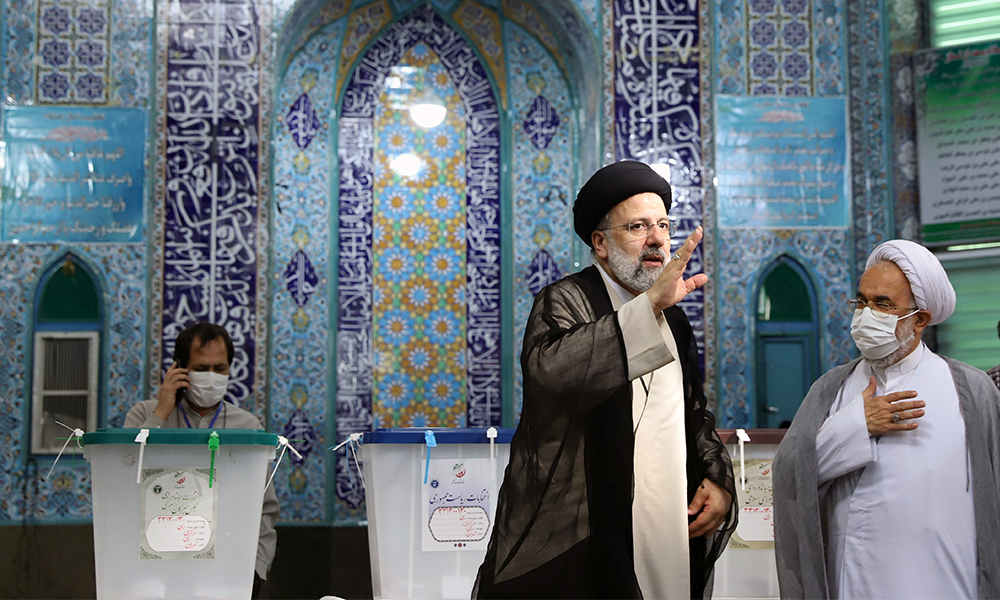
Ebrahim Raisi, a hardline judge under U.S. sanctions for human rights abuses, secured a landslide victory on Saturday in Iran‘s presidential election after a contest marked by voter apathy over economic hardships and political restrictions.
With some 90% of the 28.6 million ballots counted, Raisi’s tally was 17.8 million, interior ministry official Jamal Orfi said, giving him an unassailable lead.
Turnout in Friday’s four-man race was a record low of around 48%.
Appointed by Supreme Leader Ayatollah Ali Khamenei to the high-profile job of judiciary chief in 2019, Raisi was placed under U.S. sanctions a few months later over human rights violations.
Those included the role that human rights group say Raisi played in the executions of thousands of political prisoners in the 1988 and in the violent suppression of unrest in 2009.
Iran has never acknowledged the mass executions, and Raisi himself has never publicly addressed allegations about his role.
Seen by analysts and insiders as representing the security establishment at its most fearsome, Raisi had been widely tipped to win the contest, thanks to Khamenei’s endorsement.
Amnesty International’s Secretary General Agnès Callamard said Raisi’s election win was “a grim reminder that impunity reigns supreme in Iran“.
“We continue to call for Ebrahim Raisi to be investigated for his involvement in past and ongoing crimes under international law, including by states that exercise universal jurisdiction,” she said in a statement.
Outgoing pragmatist President Hassan Rouhani visited Raisi at his office to congratulate him, and Foreign Minister Mohammad Javad Zarif said he would lead Iran well.
“We will stand by and cooperate fully with the president-elect for the next 45 days, when the new government takes charge,” state media quoted Rouhani as saying.
NUCLEAR TALKS
Raisi’s election comes at a critical time.
Iran and six major powers are in talks to revive their 2015 nuclear deal. Then U.S. President Donald Trump abandoned the deal in 2018 and reimposed crippling sanctions that have squeezed Iran‘s oil income.
With Iran‘s ruling clerics aware their political fortunes rely on tackling worsening economic hardships, Raisi’s win will not disrupt Iran‘s effort to revive the pact and break free of tough U.S. oil and financial sanctions.
Khamenei, not the president, has the last say on all issue of state such as Iran‘s foreign and nuclear policies.
“We will make every effort in the new government to solve the problem of people’s livelihoods,” Raisi said, according to state media.
Seeking to win over voters preoccupied by bread-and-butter issues, Raisi has promised to create millions of jobs and tackle inflation, without offering a detailed political or economic programme.
Hoping to boost their legitimacy, the country’s clerical rulers had urged people to turn out and vote on Friday, but simmering anger over economic hardships and curbs on freedoms kept many Iranians at home.
Hundreds of dissidents, at home and abroad, had called for a boycott. However, Khamenei said the turnout displayed the clerical establishment’s popularity.
Another deterrent for many pro-reform voters was a lack of choice, after a hardline election body barred heavyweight moderates and conservatives from standing.
A U.S. State Department spokesperson said on Friday: “Iranians were denied their right to choose their own leaders in a free and fair electoral process” – a likely reference to the disqualification of candidates.
Many pro-reform Iranians fear Raisi’s presidency could usher in more repression.
“I am scared. I don’t want to go back to jail again. I am certain that any kind of dissent will not be tolerated,” said Hamidreza, who declined to give his full name. He was jailed for participating in unrest in 2019 that broke out over fuel price hikes and quickly turned political.
Analysts say the election win could increase Raisi’s chances of succeeding Khamenei, who himself served two terms as president before becoming supreme leader in 1989.











Kazakhstan’s Foreign Minister Mukhtar Tileuberdi has called for pragmatic and coordinated international engagement with Afghanistan, saying the country’s long-term stability is closely linked to the security and sustainable development of Central Asia.
Speaking during the general debate of the 81st session of the United Nations General Assembly in New York on Friday, Tileuberdi said humanitarian assistance to Afghanistan remains essential but alone cannot break the cycle of poverty, displacement and dependency.
He said Kazakhstan supports a “pragmatic, coordinated and step-by-step” approach to international engagement with Afghanistan, with the United Nations playing a central role.
Tileuberdi also said Kazakhstan is working with the UN to operationalize the United Nations Regional Centre for the Sustainable Development Goals for Central Asia and Afghanistan in Almaty.
He said the success of the centre should be measured by the results and assistance it delivers to the region.


Trump rejects Iranian proposal to open Hormuz and end fighting

Abu Muslim Farah defeat Khurasan Faryab 2-0 in ACL season six

Saar: Concerns over Pakistan’s political crisis discussed

Afghanistan Champions League: Omar Zawak Herat beat Toofan Herat 1-0

Blast in Pakistan’s Dera Ismail Khan kills 11, injures 30

Saudi energy group signs major Afghanistan deals covering gas exploration and pipeline plans

Trump floats idea of renaming Atlantic or Pacific Ocean

US hits Egyptian bank branches with Iran sanctions as war marks six months

Nepal flood rescue mission enters critical phase as thousands remain missing

Iranian clubs to face Gulf opponents at neutral venues in Asian Champions League Elite
Saar: Concerns over Pakistan’s political crisis discussed

Exclusive interview with Abdul Latif Mansoor, Minister of MRRD

Tawsia: Overview of Afghanistan’s iron mines

Tahawol: Discussion on fresh Pakistani airstrikes on Afghanistan

Saar: Calls for international support for Afghanistan discussed
-

 Latest News4 days ago
Ariana Afghan Airlines ranks seventh among 45 Central Asian airlines
-

 Latest News5 days ago
UN reiterates call for respect for international law after Kunar airstrikes
-

 Regional4 days ago
US and Iran hold first talks since June after Trump’s ‘annihilation’ threat
-

 Latest News4 days ago
Silk Road highway in Wakhan corridor now reaches the China border
-

 Regional3 days ago
Iran airlines cancel flights as US sanctions hit
-

 Latest News5 days ago
Afghan Official: Pakistan’s airstrikes will not go unanswered
-

 Sport5 days ago
Afghan boxing referee heads to China for international festival
-
 Latest News5 days ago
22 Russian tourists arrive in Badakhshan’s Wakhan